
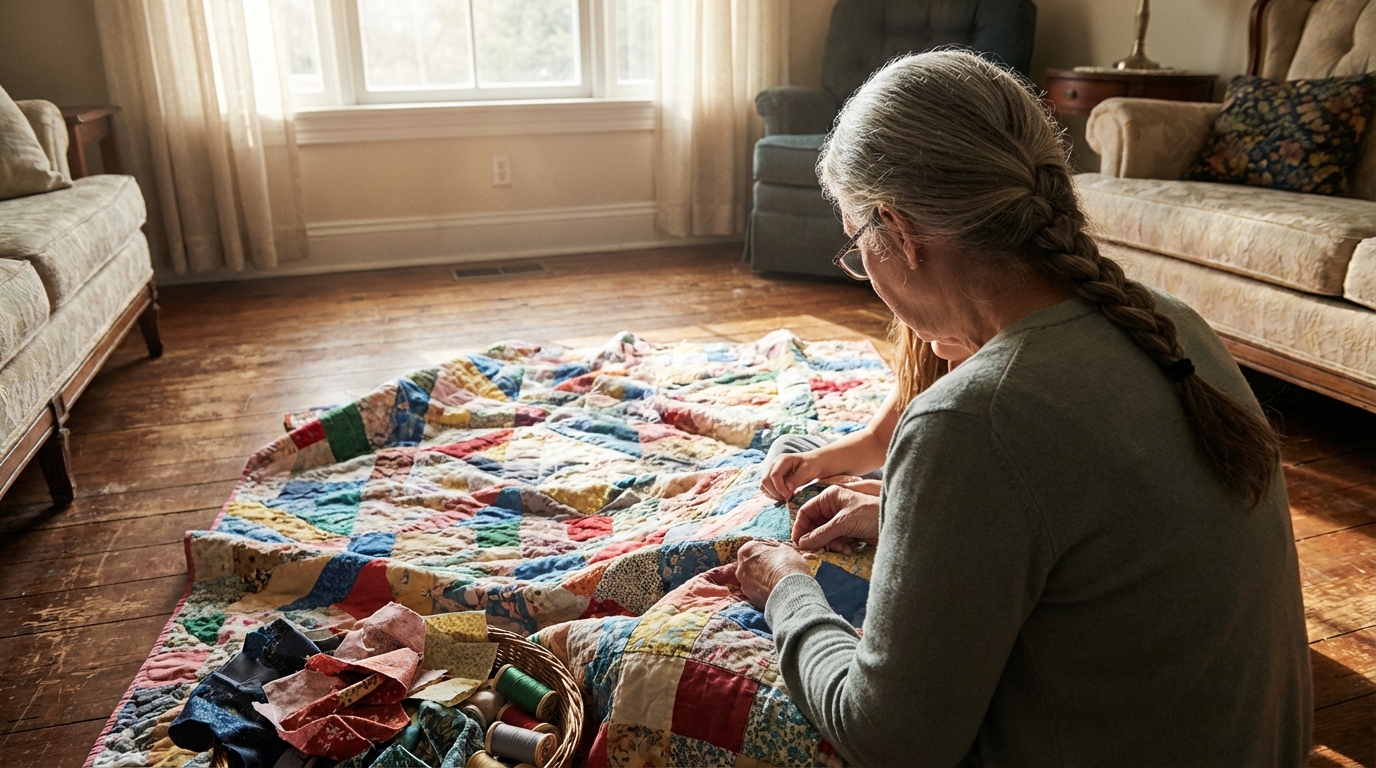
Some handcrafts invite a brief burst of attention and then quietly fade into a drawer. Others stay close to daily life, ready to be picked up again on a quiet afternoon or a rainy morning. These are the projects that grow familiar through use. They offer comfort not because they are exciting, but because they are steady. Choosing crafts that can be returned to again and again is less about finding the most impressive project and more about understanding how hands, time, and ordinary household rhythms work together.
In a home where routines matter, a good craft does not demand constant novelty. It waits patiently. It allows skills to build slowly. It fits into the pauses between meals, chores, and rest. When chosen with care, these projects become part of daily life rather than special occasions, and that is what gives them lasting value.
What Makes a Craft Worth Returning To
A revisitable craft has certain quiet qualities. These are not always obvious at first glance, especially when colorful kits or quick results seem appealing. The most enduring projects tend to share a few practical traits that support repeated use.
It welcomes uneven attention
Daily life is full of interruptions. A craft that can be set down and picked up without losing its place is far more likely to be revisited. Projects with clear stopping points, such as a row of stitches or a single page, respect the natural rhythm of the home. They do not punish a pause.
This is why activities like hand sewing, drawing, or simple woodworking endure. Each session can be as short or as long as time allows. There is no pressure to finish in one sitting, and no harm done if days pass between attempts.
It shows progress slowly
Quick results can be satisfying, but they often end the relationship with the craft just as quickly. A project that reveals progress in small increments encourages patience. Each return offers a sense of continuity rather than completion.
For example, a knitting piece grows row by row. A sketchbook fills page by page. A carved object takes shape through many careful passes. The slow reveal makes each return meaningful, because there is always something left to do.
It tolerates mistakes
Fear of doing something wrong is one of the fastest ways to lose interest. Crafts that allow for correction or adaptation feel safer to return to. When a mistake can be undone, covered, or worked into the design, the project remains inviting.
This tolerance also teaches an important household lesson: not everything must be perfect to be useful or beautiful. A slightly uneven stitch still holds. A crooked line still tells a story.
Materials That Encourage Long-Term Use
The materials chosen for a craft quietly shape whether it becomes a regular companion or a forgotten object. Some supplies invite careful handling and long-term care. Others are consumed quickly and leave nothing to return to.
Tools that feel good in the hand
A tool that is uncomfortable or poorly made discourages repeat use. Simple, well-balanced tools tend to age well and become familiar over time. A smooth wooden pencil, a sturdy needle, or a small hand saw with a solid handle all encourage confidence.
These tools also teach respect through use. When an item is clearly meant to last, it naturally invites careful storage and gentle handling. This sense of care is part of what makes a craft sustainable within the home.
Supplies that can be replenished easily
A craft becomes difficult to return to when a missing supply stops progress. Materials that are commonly available and easy to replace reduce frustration. Thread, paper, fabric scraps, and wood offcuts can usually be found without much effort.
Using everyday materials also helps a craft feel connected to the household rather than separate from it. When supplies come from familiar places, the project feels less precious and more approachable.
Natural wear that adds character
Some materials improve with use. Leather softens, wood gains a smooth patina, and fabric shows gentle signs of handling. This kind of wear tells a story and makes returning to the craft feel rewarding.
When materials are chosen with this in mind, wear becomes part of the appeal rather than a reason to stop. The project carries visible evidence of time spent, which reinforces the habit of returning.
Creating a Place for Ongoing Projects
A craft that must be fully packed away each time is less likely to be revisited. Thoughtful storage that balances order and accessibility makes a significant difference.
Visible but tidy storage
Keeping a project within sight serves as a gentle reminder. A basket near a chair, a box on a shelf, or a folder tucked beside books can quietly invite another session. At the same time, clear boundaries prevent the craft from taking over shared spaces.
The key is finding a place where the project looks at home. When storage feels intentional, the craft becomes part of the room rather than a mess to be avoided.
Keeping pieces together
Nothing discourages a return like searching for missing parts. Storing tools and materials together saves time and preserves momentum. Even a simple cloth bag can hold everything needed for a project.
This habit also teaches the value of preparation. When everything is ready, starting again feels easy, and that ease supports consistency.
Allowing for partial completion
Storage should accommodate work in progress. A drawing pad that lies flat, a sewing project folded carefully, or a woodworking piece resting safely ensures that nothing is damaged between sessions.
Respecting unfinished work sends a quiet message that the process matters as much as the result.
Crafts That Naturally Invite Return
Some types of handcrafts lend themselves particularly well to ongoing engagement. They fit easily into household routines and offer depth without demanding constant instruction.
Hand sewing and mending
Simple sewing projects are endlessly revisitable because they connect directly to everyday needs. A small sewing kit can be used to repair clothing, add a patch, or practice stitches on scrap fabric.
Each session can focus on a single task. Over time, stitches become more even, and confidence grows. Because the results are useful, the craft earns its place in daily life.
Drawing and sketching
A sketchbook is a quiet companion. It does not require setup beyond a pencil and paper. Pages can be filled with careful drawings or quick observations.
Returning to the same book over time shows progress in a natural way. Earlier pages remain, offering a gentle reminder that improvement comes through regular practice rather than sudden skill.
Fiber crafts with simple patterns
Knitting, crocheting, or weaving with straightforward patterns allows for repetition without boredom. The hands learn the movements, freeing the mind to relax.
Projects can be paused at the end of a row or section, making them easy to resume. The rhythm of the work itself becomes familiar, which is often what draws people back.
Woodworking at a small scale
Simple woodworking projects, such as carving small objects or assembling basic boxes, can be returned to over long periods. Each session might involve sanding, shaping, or fitting pieces together.
Because wood responds visibly to work, even short sessions feel productive. Care must be taken with tools, but this care reinforces patience and attention.
Paper crafts with room to grow
Bookbinding, card making, or paper folding can begin simply and expand over time. Early projects might be rough, but later ones benefit from accumulated skill.
Paper is forgiving and widely available, which makes it easy to experiment without fear of waste.
Introducing a Craft Without Pressure
The way a craft is introduced often determines whether it becomes a long-term habit. Gentle beginnings set the tone for future returns.
Start with the basics only
Offering too many tools or instructions at once can overwhelm. Beginning with the simplest version of a craft allows focus on the core skills.
For example, a sewing project might begin with a single stitch on scrap fabric rather than a finished item. Mastery of basics builds confidence.
Allow exploration before instruction
Hands learn through doing. Allowing time to explore materials freely helps build familiarity. Instruction can follow naturally once curiosity is engaged.
This approach respects the natural learning process and reduces resistance.
Set aside regular, low-pressure time
Consistency matters more than duration. A short, regular time slot fits better into household routines than occasional long sessions.
When a craft becomes part of the weekly rhythm, returning to it feels normal rather than forced.
Understanding When a Craft Loses Its Appeal
Not every craft remains engaging forever. Recognizing why interest fades can help guide future choices.
When results feel disconnected from daily life
If a finished project has no place in the home, motivation often drops. Crafts that produce useful or displayable items tend to hold attention longer.
Choosing projects with a clear purpose helps maintain interest.
When difficulty rises too quickly
A sudden increase in complexity can discourage return. Gradual progression keeps the challenge manageable.
Breaking larger goals into smaller steps makes progress visible and attainable.
When cleanup outweighs enjoyment
Lengthy setup or cleanup can become a barrier. Crafts that require minimal preparation are easier to return to on busy days.
Keeping cleanup simple preserves the pleasure of the activity.
Repairing and Renewing Interest
Sometimes a small adjustment can make a craft inviting again.
Refreshing materials
Introducing a new color of thread or a fresh notebook can renew interest without changing the craft itself. Small changes provide a sense of novelty while maintaining familiarity.
Revisiting earlier work
Looking back at completed or partially completed projects can remind the hands of what they know. This reflection often sparks the desire to continue.
Connecting the craft to a new purpose
Finding a practical use for the work, such as making a gift or repairing a household item, can restore relevance.
Purpose gives direction to effort.
Patience as a Quiet Teacher
Crafts that invite return teach patience without lectures. Progress comes through repetition, care, and time.
In a home where such crafts are valued, patience becomes part of the environment. The slow accumulation of skill mirrors other household routines, from cooking to maintenance.
This shared rhythm creates a sense of steadiness that extends beyond the craft itself.
Allowing the Craft to Evolve
A revisitable craft does not remain static. As skills grow, the project naturally changes.
Letting complexity grow gradually
Adding new techniques only when the basics feel comfortable prevents frustration. Growth should feel like a natural next step rather than a leap.
Accepting changing interests
It is normal for focus to shift. A craft may rest for a season and return later with renewed appeal.
Allowing this ebb and flow keeps the relationship with the craft healthy.
Integrating Crafts Into Daily Life
The most enduring crafts fit into the spaces between responsibilities.
Pairing with quiet moments
Handcrafts often pair well with calm times of day. The stillness supports focus and makes the activity feel restorative rather than demanding.
Sharing space without distraction
Crafting alongside other quiet activities allows companionship without interruption. This shared presence reinforces the habit of returning.
Respecting the pace of the home
A craft should adapt to the household, not compete with it. When it flows with daily rhythms, it remains welcome.
Choosing handcrafts that can be returned to over time is an act of care. These projects support patience, build skill slowly, and create a sense of continuity within the home. Through thoughtful selection and gentle routines, a simple craft can become a steady presence, ready whenever hands are free and time allows.