
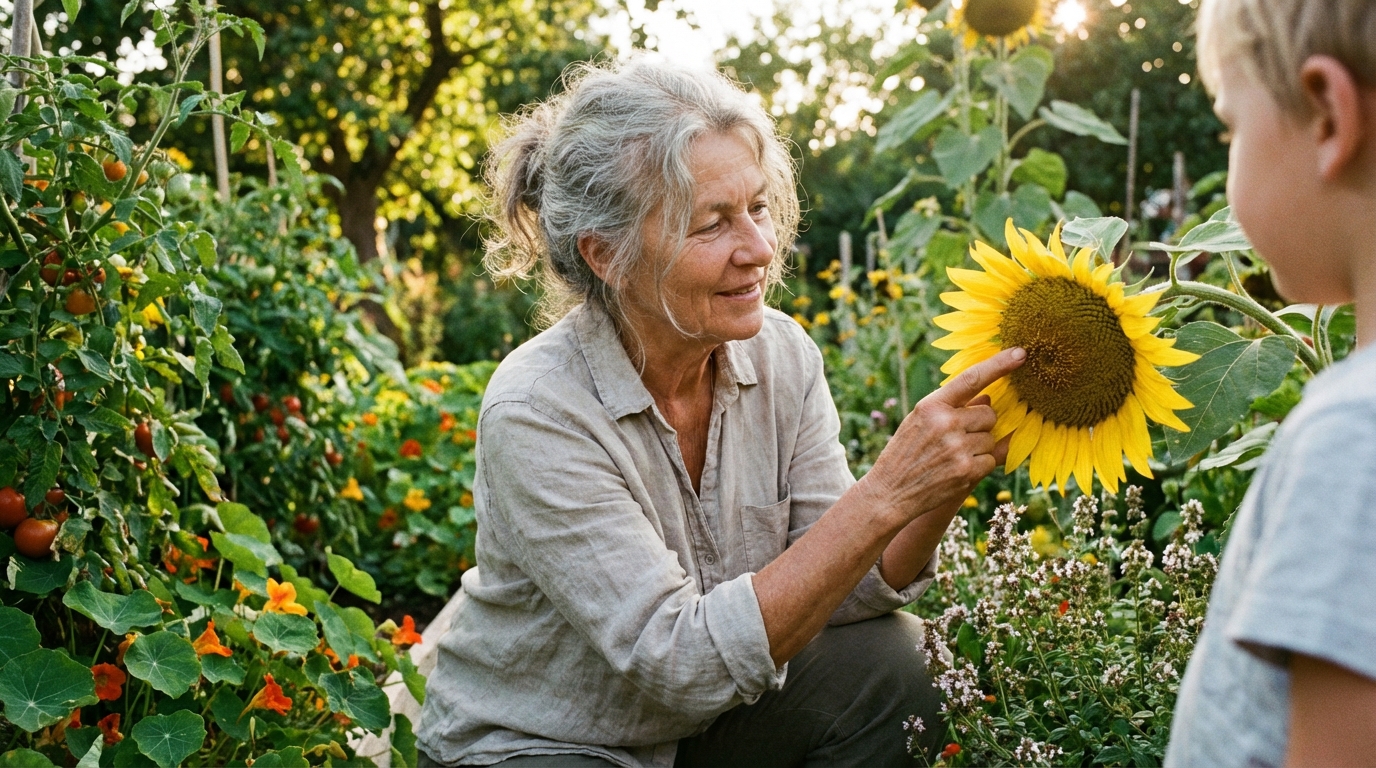
There is a quiet confidence that grows when children can name what they see outside. A leaf with a familiar shape, a flower that returns each year, a plant that smells the same every time it is touched. These small recognitions turn outdoor spaces from something uncertain into something welcoming. Choosing plants that are easy to recognize helps build that comfort in steady, lasting ways.
Familiar plants act like landmarks. They help children orient themselves, remember where they are, and trust their own observations. When the garden or yard contains plants that behave predictably and look consistent, it becomes a place where learning feels safe rather than overwhelming.
This approach is not about creating a perfect garden or teaching formal lessons. It is about selecting plants that quietly support curiosity, memory, and calm exploration through everyday contact.
Why Familiar Plants Matter
Recognition comes before understanding. When a child can point to a plant and say its name, even loosely, that plant becomes part of their known world. This sense of knowing reduces hesitation and encourages closer observation.
Familiar plants provide reassurance because they stay consistent. They return each season in expected ways. Their leaves feel the same from year to year. Their flowers open when the days grow longer. This consistency helps children form mental patterns, which is the foundation of learning.
Plants that are easy to recognize also invite repeated interaction. A child who knows what a plant is called is more likely to touch it again, notice changes, and ask questions. Over time, these small interactions build confidence outdoors without pressure or instruction.
Not all plants offer this kind of reliability. Some change dramatically from season to season. Others look similar to many nearby varieties, making them hard to distinguish. Choosing plants with clear, stable features makes recognition more likely.
What Makes a Plant Easy to Recognize
Recognition depends on clear signals. Plants that are easy to identify tend to have at least one strong feature that stays the same most of the year.
These features may include:
- A distinct leaf shape that does not vary much
- A strong scent released when touched
- A predictable growth pattern
- A clear difference between it and surrounding plants
Plants with simple shapes often work better than those with fine or complex leaves. Broad leaves, sturdy stems, and clear outlines are easier for young eyes to remember.
Color can help, but it should not be the only identifying feature. Flowers come and go. Leaves, bark, and overall form tend to last longer and provide better cues.
Texture is another powerful tool. Plants that feel rough, soft, waxy, or fuzzy leave a strong impression. Texture is especially helpful when names are forgotten, because the plant can still be recognized through touch.
Plants That Return the Same Way Each Year
Consistency builds trust. Plants that come back reliably each year help children understand the rhythm of seasons without needing explanation.
Perennial plants are especially useful for this purpose. They disappear and return, but they do so in expected ways. The first leaves appear around the same time. The plant grows to a familiar size. The flowers, if any, look the same year after year.
This reliability allows children to notice subtle changes. They may remember when the leaves usually appear or notice if a plant is slower than usual. These observations come naturally when the plant’s usual behavior is well known.
Annual plants can also be familiar, but only if they are planted in the same place each year and allowed to grow in a similar way. Changing varieties too often can disrupt recognition.
When Familiarity Breaks Down
Recognition can be lost when plants are moved frequently or replaced without explanation. A child who expects a plant in a certain spot may feel confused if it disappears suddenly.
This does not mean changes should be avoided entirely. It simply means that stable elements should remain. Keeping a few key plants in the same place year after year helps maintain continuity even as other parts of the garden change.
Choosing Plants With Clear Names
Names matter, but simplicity matters more. Plants with short, clear names are easier to remember and repeat. Names that sound like what the plant does or looks like often stick better.
For example, plants named for their scent, shape, or use are easier to associate with real experience. When a name connects directly to a sensory detail, it becomes part of memory rather than an abstract label.
It also helps when adults use the same name consistently. Switching between common names or nicknames can confuse recognition. Choosing one name and sticking with it allows the plant to settle into memory.
Correcting mistakes too quickly can interrupt confidence. If a child uses a slightly incorrect name, gentle repetition of the correct one during normal conversation is usually enough. Recognition grows through repeated exposure, not correction.
Plants That Invite Touch and Smell
Sight is only one way children recognize plants. Touch and smell often leave stronger impressions.
Plants with safe, interesting textures encourage gentle handling. Soft leaves, sturdy stems, or springy growth make exploration enjoyable. These plants should be placed where touching is allowed, so curiosity does not lead to constant warnings.
Scented plants are especially memorable. A plant that releases fragrance when brushed or rubbed creates a direct connection between action and response. This cause-and-effect experience strengthens recognition.
However, not all scented plants behave the same way. Some release scent only at certain times of day or when flowers are open. Others need direct contact. Explaining this difference helps children understand why a plant sometimes smells strong and sometimes does not.
Setting Clear Boundaries
Not every plant should be touched. Clear boundaries prevent confusion. When some plants are meant for touching and others are not, it helps to explain why.
For example, a plant may have fragile stems or sharp edges. Naming these reasons helps children learn to assess plants on their own rather than memorizing rules.
Placing touch-friendly plants near paths or seating areas makes them easy to access. More delicate plants can be placed slightly farther away, signaling that they are for looking rather than handling.
Using Everyday Tasks to Build Recognition
Routine tasks provide natural opportunities for recognition. Watering, trimming, and cleaning up fallen leaves all involve close contact with plants.
During watering, children notice which plants need more water and which stay dry longer. Over time, this builds an understanding of individual plant needs.
When leaves fall or flowers fade, it becomes clear that these changes belong to specific plants. Cleaning up is not just maintenance; it is a way to observe cycles.
Simple routines work best when they happen at the same time and in the same order. This predictability helps children focus on the plants themselves rather than the process.
Why Repetition Matters
Recognition strengthens through repetition. Seeing the same plant daily, even briefly, builds familiarity faster than long, occasional visits.
Passing a plant on the way to the door, noticing it while hanging laundry, or seeing it from a window all contribute to recognition. These casual encounters are often more effective than planned activities.
Over time, children may begin to point out changes on their own. This shows that the plant has become part of their awareness.
Avoiding Overcrowding
Too many plants can blur recognition. When everything competes for attention, individual plants become harder to distinguish.
Spacing plants so their shapes are clear helps each one stand out. This does not require large gaps, just enough room for each plant to express its natural form.
Grouping similar plants together can also help. When several of the same plant grow in one area, recognition comes more easily. The group acts as a visual cue.
Mixing too many varieties with similar shapes can create confusion. Choosing fewer types and allowing them to repeat creates a calmer, more readable space.
Seasonal Changes and What They Teach
Seasonal change can either support or disrupt recognition, depending on how it is handled.
Plants that change gradually help children track time. Leaves that slowly turn color or plants that die back and return offer visible signs of the season shifting.
Sudden changes, such as removing plants without explanation, can feel unsettling. When possible, letting plants complete their natural cycle helps maintain continuity.
Explaining that a plant is resting or saving energy can help children understand why it looks different. These explanations work best when tied directly to what can be seen.
Winter Visibility
In colder months, many plants disappear. Choosing a few plants with winter presence helps maintain familiarity.
Evergreen plants, visible stems, or distinctive bark provide visual anchors when leaves are gone. These features remind children that the garden or yard is still alive, just quieter.
Pointing out these details during winter walks keeps recognition active year-round.
Choosing Plants That Match the Space
A plant that struggles is harder to recognize. When plants are well-suited to their environment, they grow in predictable ways.
Matching plants to light, soil, and moisture conditions reduces stress on the plant. Healthy plants show clearer shapes, better color, and more consistent growth.
When a plant constantly wilts or fails to thrive, its appearance changes often. This makes recognition difficult and can lead to frustration.
Choosing plants that naturally fit the space allows them to behave as expected, which supports learning and confidence.
Letting Children Participate in Choices
Involving children in selecting plants increases interest and recognition. When they have a role in choosing, they pay closer attention.
Offering a limited set of options works better than open-ended choices. Too many options can be overwhelming.
Discussing simple differences between plants helps guide selection. For example, one plant may smell stronger, while another has bigger leaves. These contrasts make the final choice more meaningful.
Once chosen, returning to the plant regularly reinforces the connection. The plant becomes familiar not just by sight, but by memory of the choice itself.
Allowing Plants to Show Their Purpose
Plants that serve a clear purpose are easier to remember. This purpose might be visual, sensory, or practical.
A plant that shades a sitting area, attracts certain insects, or marks the edge of a path becomes part of daily experience.
Explaining what a plant does helps children see it as active rather than decorative. This understanding strengthens recognition.
However, purpose should be observable. Abstract explanations are less effective than pointing out real effects, such as cooler shade or a pleasant smell.
Respecting Natural Curiosity
Curiosity does not follow a schedule. Sometimes a plant that has been ignored for months suddenly becomes interesting.
Allowing time for this curiosity to develop without pressure helps build a relaxed relationship with the outdoor space.
Answering questions simply and honestly supports exploration. It is fine to say when something is not known and look it up later together.
Over time, recognition grows into understanding, and understanding grows into care.
Keeping the Environment Calm and Readable
A calm environment supports focus. Reducing visual clutter helps plants stand out.
This can be done by limiting decorations, keeping paths clear, and maintaining consistent layout.
When the environment is easy to read, children can focus on noticing details rather than sorting through distractions.
Small, thoughtful choices add up to a space that feels steady and welcoming.
Patience as the Main Ingredient
Recognition cannot be rushed. It develops through repeated, gentle exposure.
Some children may recognize plants quickly, while others take longer. Both responses are natural.
Allowing recognition to grow at its own pace prevents pressure and keeps the experience positive.
Over time, familiar plants become trusted companions in the outdoor space, offering comfort, curiosity, and a sense of belonging through simple, everyday presence.