
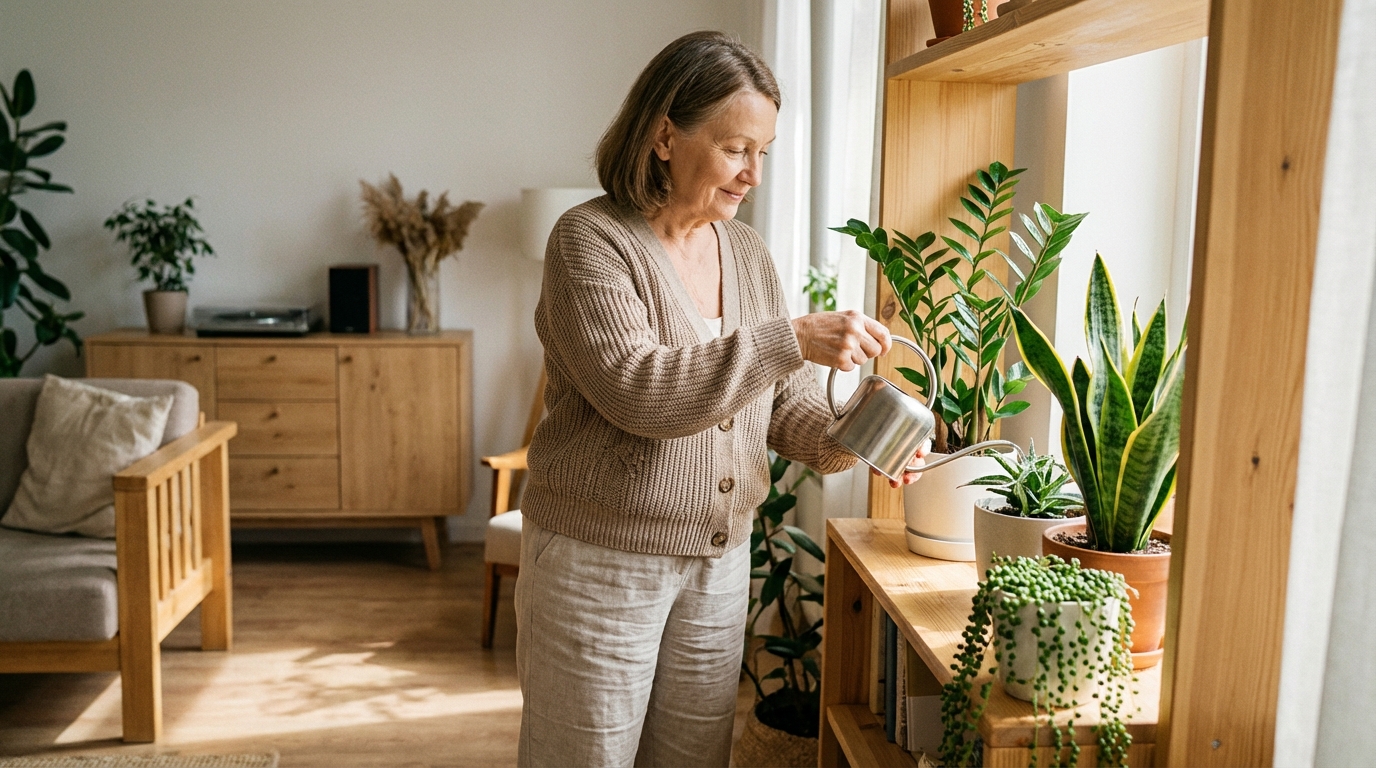
There is a quiet comfort in tending to plants that ask little and give steadily. These are the plants that fit into the rhythm of everyday home life, rather than demanding a special schedule or constant attention. Choosing plants that require gentle care is not about lowering standards. It is about matching living things with the pace of a home, the light that naturally fills the rooms, and the time that can realistically be given without strain.
Plants with modest needs have been part of households for generations because they make sense. They forgive small lapses, adjust to changing seasons, and respond well to steady, simple habits. Understanding why these plants thrive, and how to choose them wisely, can turn gardening from a source of pressure into a source of quiet satisfaction.
What Gentle Care Really Means
Gentle care does not mean neglect, and it does not mean doing nothing. It means providing steady, predictable conditions rather than frequent adjustments. Plants that thrive under gentle care tend to prefer consistency over perfection.
These plants usually share a few key traits:
- They tolerate irregular watering without immediate damage.
- They adapt to a range of light conditions rather than requiring exact placement.
- They grow at a manageable pace, neither racing ahead nor stalling easily.
- They show early, visible signs when something is wrong.
This combination allows daily life to take priority without causing harm. A missed watering or a cloudy week does not undo months of care. Instead, the plant continues quietly, adjusting as needed.
Why Low-Demand Plants Support Calm Routines
Homes run on routines, whether carefully planned or loosely followed. Plants that require gentle care fit naturally into these patterns. Watering becomes part of regular chores, like wiping counters or airing out rooms, rather than a special event.
High-maintenance plants often require close monitoring. Soil moisture must be checked daily. Light exposure must be exact. Small mistakes lead to quick decline. This creates tension and can turn plant care into a task that feels heavy.
Low-demand plants, by contrast, allow for a relaxed approach. Care happens when it fits naturally into the day. The plant responds slowly and predictably, giving time to notice changes and adjust.
This slower feedback loop is important. It teaches observation and patience. Changes in leaf color, posture, or growth are gradual, making it easier to understand cause and effect.
Understanding the Home Environment Before Choosing
Choosing plants that require gentle care begins with understanding the home itself. The most important factors are light, temperature, and air movement. These elements shape which plants will settle in comfortably.
Light Patterns Throughout the Day
Light in a home is rarely constant. Morning light is softer and cooler. Afternoon light is stronger and warmer. Some rooms receive light only indirectly, reflected from walls or neighboring buildings.
Plants that require gentle care are often adaptable to these changes. They may prefer bright conditions but tolerate lower light without distress. Understanding where light naturally falls helps prevent unnecessary movement or adjustment.
For example, a plant placed near a window that receives gentle morning light may thrive with minimal attention. Moving it repeatedly in search of perfection often causes more harm than good.
Temperature Stability
Most homes experience daily temperature shifts. Doors open and close. Heating systems cycle on and off. Plants that prefer narrow temperature ranges struggle in these conditions.
Gentle-care plants tend to handle these shifts well. They are comfortable within the typical range of indoor temperatures and do not react strongly to short-term changes.
Avoid placing any plant directly next to heaters, vents, or drafty doors. Even the most tolerant plant benefits from a stable spot where temperature changes happen gradually.
Air and Humidity
Air movement and humidity are often overlooked. Homes with dry air, especially during colder months, can stress certain plants.
Plants that require gentle care often have thicker leaves or protective surfaces that slow moisture loss. This allows them to manage drier air without special measures.
Simple habits help here. Grouping plants together slightly raises local humidity. Allowing air to circulate gently prevents stagnant conditions without chilling the leaves.
Soil and Containers: Quiet Foundations
Healthy plants begin below the surface. Soil and containers play a central role in gentle care because they regulate water, air, and nutrients.
Choosing Soil That Forgives
Soil for low-demand plants should drain well while holding enough moisture to support steady growth. Heavy soils stay wet too long, while very light mixes dry too quickly.
A balanced soil allows small watering mistakes without lasting damage. Excess water drains away, and moisture remains available between waterings.
Adding materials like coarse sand or small bark pieces improves structure. This encourages air pockets, which roots need to breathe. Healthy roots make plants more resilient overall.
The Role of Containers
Containers affect how soil behaves. Pots without drainage trap water and create conditions where roots suffocate. For gentle care, drainage holes are essential.
The size of the container matters as well. Oversized pots hold moisture longer, increasing the risk of overwatering. Slightly snug containers help soil dry at a reasonable pace.
Simple clay pots offer a practical advantage. Their porous surface allows excess moisture to evaporate, adding another layer of protection against waterlogged soil.
Watering as a Steady Habit
Watering is often the most misunderstood part of plant care. Gentle-care plants succeed when watering is regular but not rigid.
Rather than following a strict schedule, watering should respond to the plant and the soil. This requires attention, not precision.
Learning the Weight of a Pot
One reliable method is noticing the weight of a pot before and after watering. Dry soil feels lighter. Moist soil feels heavier.
Over time, this becomes second nature. Lifting the pot slightly tells more than a calendar ever could. This method adapts naturally to seasonal changes.
Watering Thoroughly, Not Frequently
Gentle-care plants benefit from deep watering followed by a period of drying. This encourages roots to grow downward and outward in search of moisture.
Light, frequent watering keeps moisture near the surface, leading to weak roots. Strong roots make plants more resilient to missed waterings.
Allow excess water to drain fully. Never let pots sit in standing water unless the plant specifically prefers it.
Recognizing Signs of Need
Plants communicate their needs quietly. Leaves may soften, lose some shine, or droop slightly when water is needed.
These early signs are helpful. They appear before lasting damage occurs, giving time to respond calmly.
Gentle-care plants recover well when water is provided at this stage. Overreacting with too much water causes more harm than waiting a short while.
Choosing Plants Known for Resilience
Some plants are naturally suited to gentle care because of how they grow in nature. Understanding their original conditions explains their adaptability.
Plants with Thick or Waxy Leaves
Plants with thicker leaves store water within their tissues. This allows them to handle uneven watering without stress.
These leaves also reduce moisture loss, making them well suited to indoor air. They tend to grow steadily and maintain their shape with minimal care.
Plants with Slow, Steady Growth
Fast-growing plants often need frequent feeding, pruning, and adjustments. Slower growers require less intervention.
Steady growth means fewer surprises. The plant changes gradually, allowing care routines to remain simple and consistent.
Plants Adapted to Filtered Light
Plants that naturally grow under larger plants or tree cover are accustomed to indirect light. Indoors, this translates to flexibility.
They tolerate less-than-perfect lighting without becoming weak or leggy. This makes placement easier and reduces the need for frequent moving.
Feeding Plants Without Overdoing It
Plants that require gentle care do not need frequent feeding. In fact, too much fertilizer often causes more problems than too little.
Slow, steady nourishment supports balanced growth. Overfeeding leads to soft, weak growth that attracts pests and requires more care.
Understanding Natural Growth Cycles
Plants grow more actively during brighter months and slow down when light decreases. Feeding should follow this rhythm.
During periods of slow growth, fertilizer remains unused in the soil. This can damage roots over time.
Applying a diluted fertilizer occasionally during active growth is usually enough. This supports health without forcing growth.
Using Soil as a Nutrient Source
Quality soil contains organic matter that breaks down slowly, releasing nutrients over time. This reduces the need for frequent feeding.
Refreshing the top layer of soil once a year often provides enough nutrition for gentle-care plants.
Responding Calmly to Common Problems
Even the easiest plants encounter occasional problems. The key is responding thoughtfully rather than urgently.
Yellowing Leaves
Yellow leaves often signal overwatering or poor drainage. Checking soil moisture and container drainage usually resolves the issue.
Removing yellow leaves helps the plant focus energy on healthy growth. Avoid changing multiple factors at once.
Slow or No Growth
Slow growth is not always a problem. Many gentle-care plants naturally grow at a measured pace.
If growth has stopped entirely during bright months, consider light levels and soil quality before adding fertilizer.
Dust and Airborne Build-Up
Indoor plants collect dust, which interferes with light absorption. Gently wiping leaves with a damp cloth keeps them functioning well.
This simple habit also encourages regular observation. Changes in texture or color become easier to notice.
Making Plant Care Part of Daily Life
The most successful plant care routines blend into existing habits. Watering plants while cleaning, opening curtains, or tidying rooms keeps care consistent without effort.
Gentle-care plants reward this approach. They respond best to calm, repeated actions rather than occasional bursts of attention.
Placing plants where they are seen daily helps. A plant near a window, sink, or table becomes part of the visual rhythm of the home.
When Gentle Care Is Not Enough
Some plants simply do not suit every home. Recognizing this early prevents frustration.
If a plant consistently struggles despite steady care, the issue may be a mismatch rather than a mistake. Light, temperature, or space may not align with its needs.
Choosing a different plant better suited to the environment is a practical decision, not a failure. Homes change, and plant choices can change with them.
Living with Plants, Not Managing Them
Plants that require gentle care invite a different mindset. They encourage attention without urgency and responsibility without pressure.
These plants become part of the household, quietly marking time as seasons shift and light changes. Their presence supports a sense of steadiness and patience.
By choosing plants that align with everyday life, care becomes less about control and more about companionship. Small, consistent actions sustain growth, and in return, the home feels more settled and alive.