
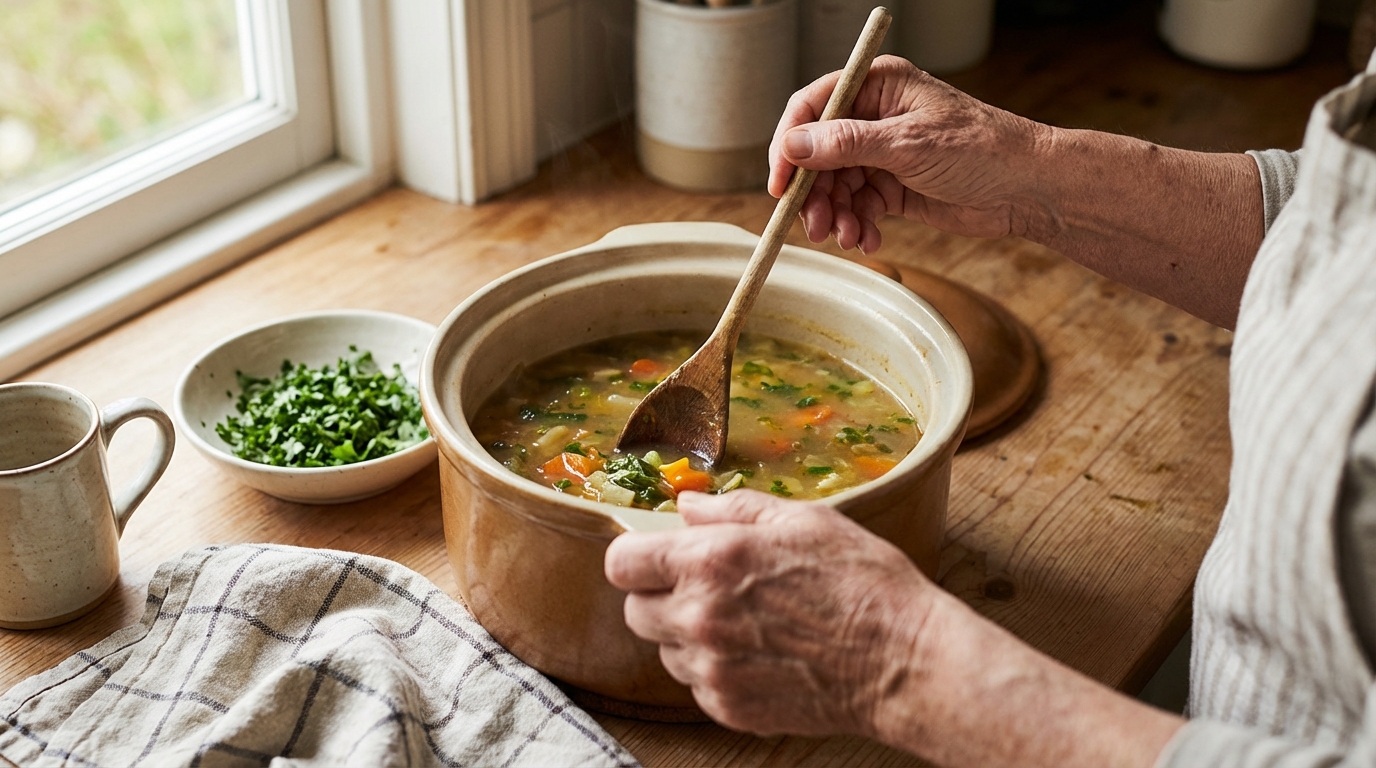
In many homes, cooking is not treated as a performance or a project. It is something quieter. It happens at certain hours of the day, often without much discussion, and it follows familiar patterns shaped by need, taste, and care. Food is prepared because people must be fed, but also because the act itself brings steadiness. Chopping, stirring, waiting, and tasting all ask for attention in a way that settles the mind. Over time, these small acts support emotional wellbeing in ways that are easy to miss but deeply felt.
Cooking does not need to be elaborate to be meaningful. In fact, the most supportive meals are often the simplest ones, prepared with regularity and intention. When cooking becomes a daily act of care, it helps structure the day, anchor emotions, and create a sense of continuity. Understanding why this works can help make cooking feel less like a chore and more like a form of quiet support woven into everyday life.
The Emotional Structure of Daily Cooking
Emotional wellbeing often depends on predictability. The human mind finds comfort in knowing what comes next. Cooking provides this in a natural way. Meals tend to happen at similar times each day, and the steps involved are familiar. Even when the menu changes, the rhythm remains.
This structure matters because it reduces decision fatigue. When part of the day is already shaped by routine, there is less mental effort required. Knowing that breakfast involves heating oats or slicing fruit, or that dinner begins with washing vegetables, creates a gentle framework. The mind can rest within that structure, which helps lower stress and quiet anxious thinking.
Cooking also divides the day into clear segments. Preparing a meal marks a transition, such as the move from work to rest or from morning to afternoon. These transitions help emotions adjust. Without them, days can feel blurred and unsettled. Cooking gives the body and mind a signal that one phase is ending and another is beginning.
Why Hands-On Tasks Calm the Mind
Cooking requires the use of hands, eyes, and attention in a steady, coordinated way. This kind of activity has a grounding effect. Unlike tasks that keep the mind racing ahead, cooking pulls attention into the present moment. The sound of a knife against a cutting board, the feel of dough becoming smooth, or the smell of onions softening in a pan all anchor awareness.
This grounding works because the senses are engaged in a balanced way. There is enough stimulation to hold interest, but not so much that it overwhelms. The pace is usually moderate, with natural pauses while something simmers or bakes. These pauses allow breathing to slow and thoughts to settle.
Hands-on cooking also creates a clear link between effort and result. When vegetables are chopped, they become ready to cook. When batter is mixed, it becomes something that can be baked. This visible progress can be reassuring, especially on days when other efforts feel uncertain or unseen. The mind responds well to tasks where cause and effect are clear.
Familiar Foods and Emotional Safety
Familiar foods play an important role in emotional wellbeing. They carry memories of past meals, routines, and moments of comfort. Preparing foods that are known and trusted can create a sense of safety, especially during times of stress or change.
This does not mean eating the same thing every day. It means returning to certain dishes or methods that feel dependable. A pot of soup made the same way each time, or bread prepared using a familiar process, provides reassurance because the outcome is predictable. The body relaxes when it knows what to expect.
Familiarity also reduces pressure. When a recipe is well known, there is no need to worry about perfect results. Small variations are accepted. This allows cooking to feel forgiving rather than demanding. Emotional wellbeing benefits when activities allow room for imperfection.
Cooking as a Way to Care for the Body
Emotional wellbeing is closely tied to physical wellbeing. Cooking supports this connection by making nourishment more intentional. Preparing food at home allows attention to be paid to balance, portion, and timing. Meals can be adjusted based on energy levels, appetite, and the needs of the day.
Cooking encourages regular eating, which helps stabilize mood. Skipping meals or relying on irregular eating patterns can lead to irritability, fatigue, and difficulty concentrating. A routine of preparing meals helps ensure that the body receives steady fuel, which in turn supports emotional balance.
The act of cooking also creates awareness of ingredients. When food is handled in its raw form, there is a clearer understanding of what goes into a meal. This awareness can build trust in what is being eaten. Trust reduces anxiety around food and supports a calmer relationship with eating.
The Quiet Satisfaction of Providing
Preparing food for others, or even for oneself, carries a sense of providing. This feeling is deeply connected to emotional wellbeing. Providing does not require praise or recognition to be meaningful. The knowledge that a meal will nourish someone is often enough.
This sense of providing works because it creates purpose. Purpose does not need to be large or dramatic. Small, daily purposes are often more sustaining. Knowing that dinner will be ready at a certain time, or that lunch has been prepared in advance, gives the day direction.
Even when cooking is done for oneself, the act communicates care. Taking the time to prepare a meal rather than skipping it sends a message of worth. Over time, these small messages build a foundation of self-respect and emotional steadiness.
Repetition and Emotional Stability
Repetition is sometimes viewed as dull, but in daily life it provides stability. Cooking often involves repeated actions: washing, cutting, heating, seasoning. These actions become almost automatic with practice. This automatic quality is helpful because it frees mental space.
When tasks are familiar, the mind does not need to stay alert for every step. This allows thoughts to slow down. For many people, this is one of the few times in the day when the mind is not pulled in multiple directions. Emotional wellbeing benefits from these periods of mental rest.
Repetition also builds confidence. Knowing how to prepare a handful of meals well creates a sense of competence. This confidence can carry into other areas of life. Feeling capable in one area often supports emotional resilience overall.
Cooking During Difficult Days
On difficult days, cooking can feel harder to begin. Energy may be low, and motivation may be lacking. This is when simple routines matter most. Choosing meals that require minimal effort helps maintain the supportive aspects of cooking without adding strain.
During these times, it can help to rely on basic building blocks. A pot of grains, a tray of roasted vegetables, or a simple broth can be prepared with little attention. These foods can be combined in different ways over several days, reducing the need to cook from scratch each time.
Cooking during difficult days is not about achieving comfort through elaborate meals. It is about maintaining care. Even a very simple meal, prepared gently, can provide a sense of normalcy. This normalcy helps emotions settle by reminding the body that basic needs are being met.
The Importance of Timing and Pace
The timing of cooking affects its emotional impact. Rushed cooking often leads to tension, while unhurried cooking supports calm. Allowing enough time for meals to be prepared without haste makes the experience more supportive.
This does not mean cooking must take a long time. It means matching the meal to the available time. On busy days, quick methods such as sautéing or simmering are more suitable than slow baking. Choosing the right approach prevents frustration and preserves a sense of control.
Pace also matters during the cooking process itself. Moving steadily, rather than quickly, reduces mistakes and allows attention to remain present. When pace matches the task, cooking feels smoother and more satisfying. This smoothness contributes to emotional ease.
Shared Meals and Emotional Connection
When meals are shared, cooking becomes a bridge between people. The act of preparing food creates an opportunity for connection, even before the meal is eaten. Knowing that others will sit down to eat what has been prepared adds meaning to the process.
Shared meals create a regular space for conversation and presence. The predictability of eating together helps maintain relationships. Emotional wellbeing is supported by these steady points of contact, especially when daily life is otherwise busy or fragmented.
Even when words are few, the shared experience of eating the same food at the same time fosters a sense of belonging. Cooking makes this possible by bringing people to the table.
Cooking Alone and Emotional Reflection
Cooking alone offers a different kind of emotional support. Without the need to coordinate with others, attention can turn inward. The repetitive actions of cooking create space for reflection without pressure.
This quiet reflection can be helpful for processing emotions. Thoughts may arise naturally while hands are busy. Because the task is familiar, these thoughts can come and go without overwhelming attention. Cooking provides a container for emotional processing.
Cooking alone also allows personal preferences to guide choices. Selecting flavors, textures, and portion sizes based on personal needs reinforces self-awareness. This awareness strengthens emotional understanding over time.
Seasonal Cooking and Emotional Alignment
Cooking that responds to the seasons supports emotional balance. Seasonal foods often match the body’s needs at different times of the year. Warm, hearty meals provide comfort during colder months, while lighter dishes suit warmer days.
Aligning cooking habits with the seasons helps the body feel in sync with its environment. This alignment reduces internal tension. When food matches the weather and available ingredients, meals feel appropriate rather than forced.
Seasonal cooking also brings variation without complexity. As ingredients change naturally, menus shift in a gradual way. This gentle change supports emotional adaptability while maintaining routine.
The Role of Preparation in Reducing Stress
Preparation is a quiet form of care that often happens before cooking begins. Washing vegetables, soaking beans, or planning simple menus reduces stress later. These small steps spread effort over time, making cooking feel manageable.
When ingredients are ready to use, the cooking process becomes smoother. This smoothness reduces frustration and supports a calmer mood. Emotional wellbeing benefits from environments where obstacles are minimized.
Preparation also creates a sense of readiness. Knowing that meals are planned and ingredients are available provides reassurance. This reassurance frees mental energy for other parts of life.
Learning Through Daily Practice
Cooking teaches through repetition. Over time, small adjustments are made based on experience. Salt levels are corrected, cooking times are refined, and textures are learned. This gradual learning process builds patience.
Patience developed in the kitchen often carries into emotional life. Understanding that improvement comes through steady practice encourages a forgiving attitude toward mistakes. This attitude supports emotional resilience.
Daily practice also sharpens intuition. Eventually, less measuring and more sensing is involved. This intuitive approach reduces mental effort and makes cooking feel natural. Emotional wellbeing benefits when activities flow rather than require constant control.
Maintaining Care Without Perfection
Cooking as a daily act of care does not depend on perfection. Meals may burn, flavors may be uneven, and plans may change. What matters is the intention to provide nourishment and maintain routine.
Letting go of perfection reduces pressure. When cooking is allowed to be imperfect, it becomes more sustainable. Sustainability is key to emotional wellbeing. Activities that can be continued without strain offer long-term support.
Accepting imperfections in cooking can also soften attitudes in other areas of life. The kitchen becomes a place where effort is valued over outcome, and this perspective can ease emotional burdens.
The Steady Comfort of Ordinary Meals
Ordinary meals, prepared day after day, form the backbone of home life. They may not stand out, but their consistency provides comfort. Emotional wellbeing is often supported more by these ordinary moments than by special occasions.
Cooking ordinary meals reinforces the idea that care is ongoing. It does not require special circumstances. This understanding creates a sense of reliability. Knowing that food will be prepared again tomorrow brings quiet reassurance.
In this way, cooking becomes less about the individual meal and more about the pattern it creates. That pattern, built through small daily actions, supports emotional wellbeing in a steady, lasting way.