
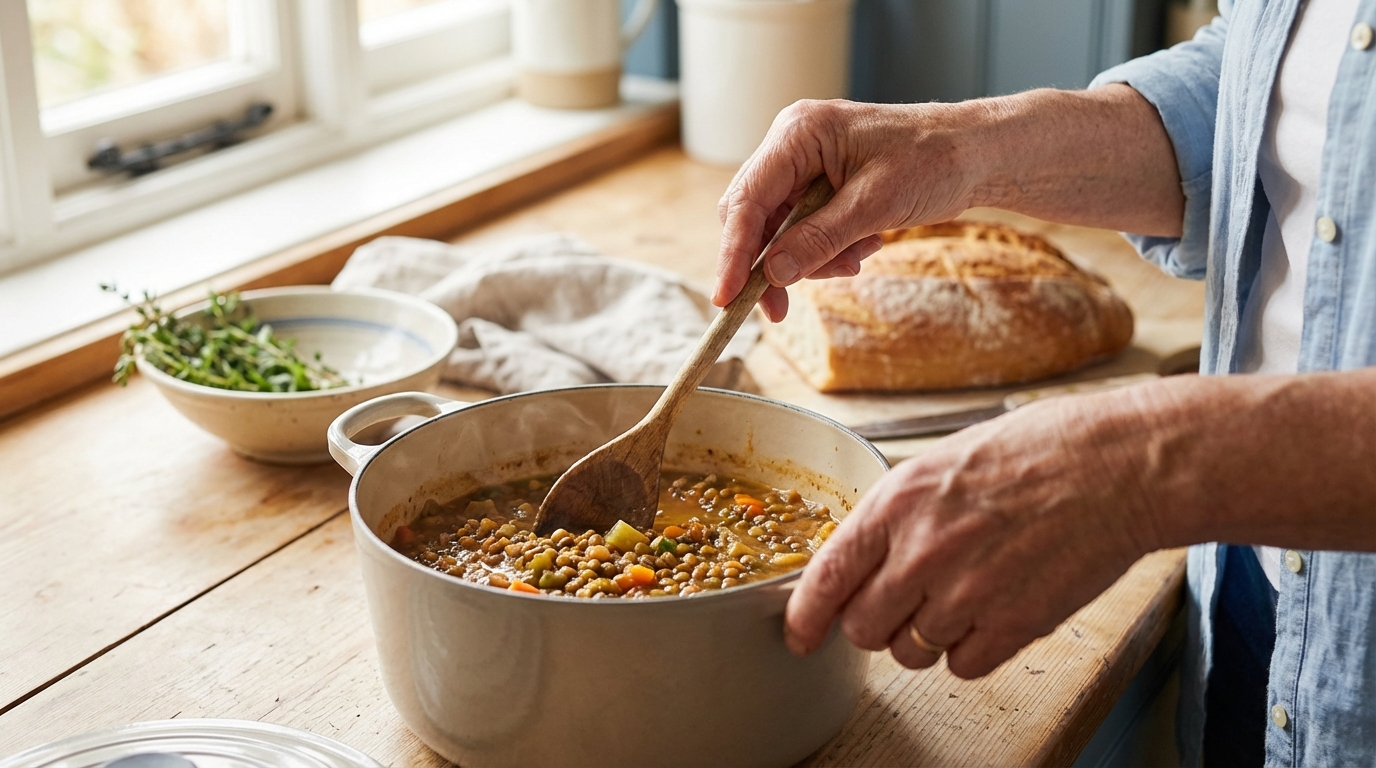
There is a quiet strength in meals that feel familiar. They do not ask for attention or praise. They simply arrive on the table, steady and reliable, offering nourishment that goes beyond calories. These are the meals built from habit, memory, and repetition. They come from knowing how a pot should smell when it is ready, how long bread needs to rest before slicing, and how a simple soup can settle an unsettled day.
Familiar cooking is not about copying the past exactly. It is about understanding why certain foods have stayed in regular rotation and how small, thoughtful routines make them dependable. When cooking feels familiar, it supports the household in quiet ways. It saves energy, reduces waste, and creates a rhythm that makes daily life smoother.
Why Familiar Meals Feel Comforting
Familiar meals provide comfort because they reduce decision-making. When the body and mind recognize what is coming, there is less tension. The senses know what to expect. This sense of predictability can be especially helpful on busy or uncertain days.
There is also a physical reason familiar foods feel steady. Meals cooked the same way, with similar ingredients, tend to be easier to digest. The body recognizes the balance of fat, salt, and warmth. Over time, this builds trust. A bowl of well-seasoned beans or a simple roast does not surprise the system.
Comfort also comes from timing. Familiar dishes often match the pace of the day. A slow-cooked meal suits an afternoon at home. A quick skillet supper fits an evening with limited time. These meals align with daily rhythms rather than interrupting them.
Building a Small Set of Reliable Dishes
Most homes benefit from having a short list of meals that can be prepared without much thought. These are not special-occasion dishes. They are everyday foods that work in many situations.
A reliable dish usually has three qualities: simple ingredients, flexible seasoning, and forgiving cooking time. It can handle small substitutions and still turn out well. It does not require exact measurements or constant attention.
Choosing the Right Foundations
Familiar meals often begin with humble foundations: grains, beans, root vegetables, eggs, or simple cuts of meat. These ingredients have been used for generations because they store well, cook predictably, and adapt to many flavors.
For example, rice can be plain, toasted before cooking, or simmered in broth. Each method creates a slightly different result while keeping the process recognizable. The same pot, the same heat, and the same timing can be used day after day.
When selecting foundational dishes, it helps to consider what is already comfortable to prepare. A meal should not feel like a project. If a dish requires frequent checking or complicated steps, it may not become truly familiar.
Repeating Without Becoming Boring
Repetition does not have to mean sameness. Small changes keep familiar meals interesting without disrupting their reliability.
- Changing the cooking fat can shift flavor gently, such as using butter one day and oil another.
- Adding one seasonal vegetable keeps the dish tied to the time of year.
- Adjusting texture, such as cooking grains a bit softer or firmer, can change how a meal feels.
These small variations work because the structure of the meal stays the same. The hands still know what to do. The timing stays predictable.
The Role of Routine in the Kitchen
Routine is what allows familiar meals to happen regularly. It reduces effort by turning decisions into habits.
A kitchen routine does not need to be strict. It simply needs to be consistent enough to support daily cooking. This might mean cooking at roughly the same time each day or using the same tools for certain tasks.
Prep as a Quiet Habit
Small amounts of regular preparation make familiar meals easier to cook. This is not about large, complicated prep sessions. It is about small actions done often.
Washing greens when they come into the house, rather than right before cooking, saves time later. Keeping onions stored properly and ready to chop prevents last-minute frustration. These habits reduce the effort needed to start a meal.
Preparation also helps with pacing. When ingredients are ready, cooking can begin calmly. There is less rushing, which often leads to mistakes.
Using the Same Tools on Purpose
Familiar meals are often tied to familiar tools. A well-used pan or pot heats in a known way. The cook understands its hot spots and how it responds to different heat levels.
Using the same tools builds skill without conscious effort. Over time, it becomes easier to judge when food is ready by sound, smell, or weight rather than by timers alone.
This quiet understanding is part of what makes a meal feel familiar. The kitchen becomes a place of confidence rather than uncertainty.
Cooking with Patience and Attention
Familiar meals reward patience. They do not rush. Allowing food to cook at the right pace improves both flavor and texture.
For example, letting onions soften slowly draws out sweetness. Rushing this step leads to sharpness rather than depth. Once this is understood, it becomes easier to wait.
Patience also applies to resting food. Many dishes benefit from a few minutes off the heat. This allows juices to settle and flavors to come together. Familiar cooks know this and plan for it without stress.
Listening to the Food
Experienced home cooks often rely less on written instructions and more on sensory cues. This does not require special talent. It develops through repetition.
The sound of a simmer tells whether the heat is right. The smell of toasted flour signals when it is ready. The feel of dough indicates whether it needs more moisture or rest.
These cues are easier to notice when cooking familiar dishes. The baseline is known, so small changes stand out.
Making Meals That Support Daily Life
Familiar meals work best when they support the needs of the household. This means considering energy levels, schedules, and appetites.
A heavy meal may be comforting in the evening but tiring at midday. Lighter, simpler foods often work better earlier in the day. Familiar cooking respects these patterns.
Adjusting Portions Thoughtfully
Cooking familiar meals makes it easier to judge portions. Over time, it becomes clear how much food is actually eaten.
Cooking slightly less can reduce leftovers that go uneaten. Cooking slightly more of certain dishes can be useful if they reheat well. This balance comes from paying attention, not from strict rules.
Portion awareness also helps with seasoning. A pot filled to the right level is easier to season evenly.
Planning for Leftovers That Work
Some familiar meals improve after resting. Soups, stews, and braised dishes often deepen in flavor overnight. Knowing this allows them to be cooked ahead without feeling like a compromise.
Other foods do not hold as well. Crisp textures soften, and delicate flavors fade. Familiar cooks learn which dishes to eat fresh and which can wait.
This knowledge prevents disappointment and makes leftovers feel intentional rather than accidental.
Keeping Ingredients Simple and Honest
Familiar meals rely on ingredients that are easy to understand. This does not mean bland or plain. It means ingredients that behave predictably.
Using fewer ingredients allows each one to matter. When a dish has five elements instead of fifteen, each step becomes clearer. This clarity builds confidence.
Seasoning with Care
Seasoning familiar meals is about balance, not intensity. Salt, in particular, works best when added gradually. This allows flavors to develop without becoming harsh.
Adding a small amount of salt early helps ingredients release their natural flavors. Adjusting again near the end fine-tunes the dish. This two-step approach prevents over-seasoning.
Acidity, such as vinegar or citrus, should be added carefully. A small amount brightens a dish, but too much can overwhelm familiar flavors. Knowing when to stop comes from experience.
Cooking for the Senses, Not Perfection
Familiar meals do not aim for visual perfection. They aim for satisfaction.
A stew does not need to look the same every time. A loaf of bread does not need an even shape to be nourishing. Letting go of appearance allows attention to focus on taste and texture.
This approach reduces pressure. It makes cooking a supportive task rather than a performance.
Texture as Comfort
Texture plays a large role in how food feels. Soft foods often feel soothing. Crisp elements add interest and contrast.
Familiar meals usually balance texture in a gentle way. A creamy base with a bit of chew. A soft grain with a lightly crisp topping.
Understanding these combinations helps in adjusting dishes without changing their character.
Passing Down Knowledge Through Practice
Traditional kitchen knowledge is often passed through observation and repetition rather than written instruction. Familiar meals are a natural way this knowledge continues.
Watching how a dish comes together, noticing when heat is lowered, or seeing how leftovers are stored teaches more than a recipe alone.
Practicing the same dishes allows these details to sink in. Over time, the knowledge becomes part of daily routine.
Learning from Mistakes Without Judgment
Familiar cooking allows room for mistakes. When a dish is cooked often, one imperfect version does not discourage future attempts.
Overcooked vegetables, under-seasoned soup, or a loaf that did not rise properly all offer information. Noticing what happened and why helps refine the process.
This gentle learning builds confidence. It encourages continued cooking rather than avoidance.
Creating a Calm Cooking Environment
The feeling of a meal often begins before cooking starts. A calm kitchen supports familiar cooking.
This does not require silence or strict order. It simply means having enough space and time to work without rushing.
Setting the Kitchen Before Cooking
Taking a few minutes to clear the workspace helps focus attention. This small act signals that cooking is about to begin.
Placing tools within reach and reading through the steps of a familiar dish refreshes memory. This prevents mid-cooking confusion.
These habits make cooking feel grounded and steady.
Seasonal Awareness Without Complexity
Familiar meals naturally adjust with the seasons. Heavier foods suit colder months. Lighter preparations fit warmer days.
This does not require special planning. It happens through ingredient availability and appetite changes.
Root vegetables appear more often when they store well. Fresh greens are used when they are abundant. Familiar dishes adapt by welcoming these changes.
Respecting Natural Limits
Cooking familiar meals means accepting that some ingredients are better at certain times. Forcing out-of-season foods often leads to disappointment.
Working within natural limits keeps cooking grounded. It also makes meals feel more satisfying because ingredients taste as they should.
The Quiet Nourishment of Familiar Food
Familiar meals nourish in ways that are easy to overlook. They provide steady energy, emotional comfort, and a sense of care.
They support daily life by being dependable. They allow attention to rest elsewhere because the food is taken care of.
In this way, familiar cooking becomes a form of household care. It is not dramatic or showy. It is steady, thoughtful, and deeply practical.
By returning to the same dishes, refining them over time, and understanding why they work, cooking becomes less about effort and more about ease. Familiar meals remind the household that nourishment does not need to be complicated to be meaningful.