
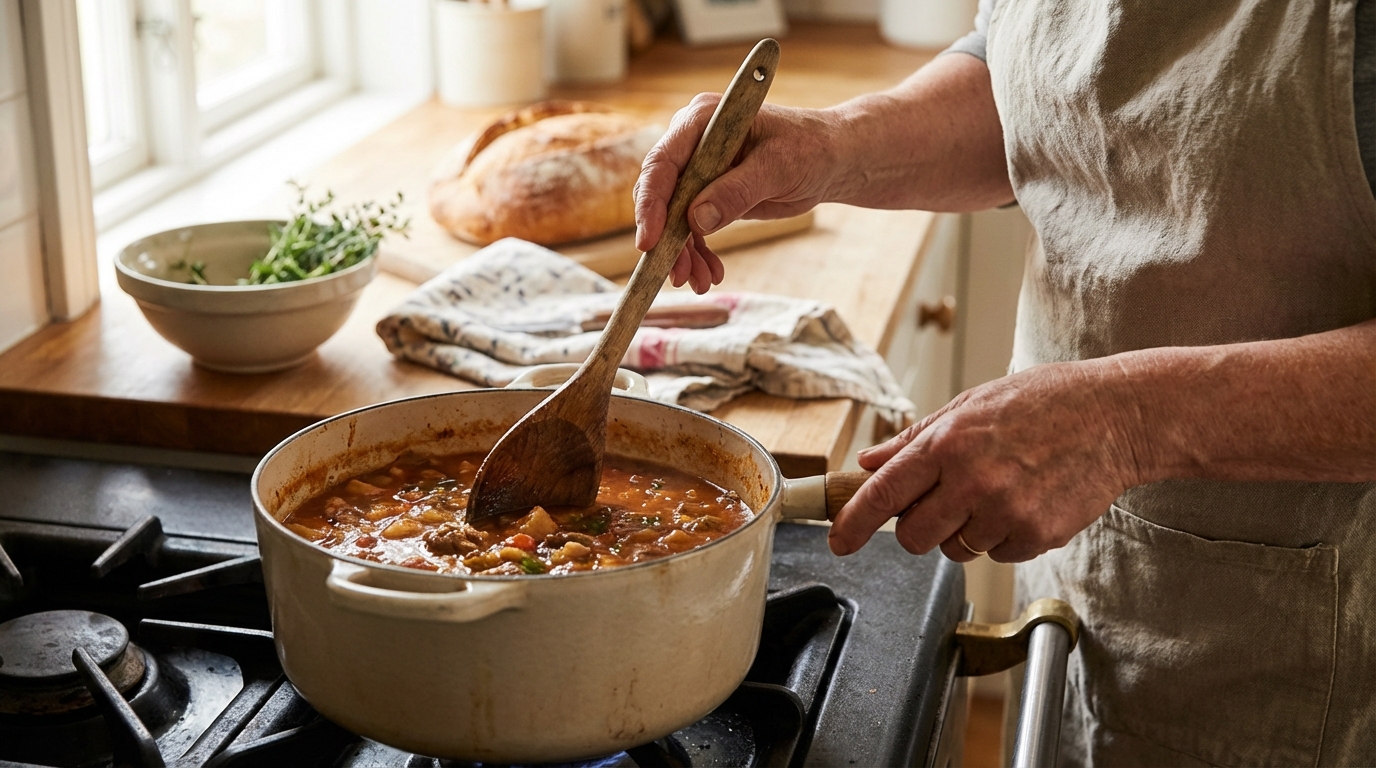
There is a quiet comfort in meals that arrive at the table without surprise. They are not meant to impress or perform. They are meant to nourish, steady the day, and give the body and mind something dependable to lean on. These meals grow from repetition, from understanding how ingredients behave, and from small habits practiced often enough to feel natural.
Cooking this way is not about limiting variety. It is about building a dependable core of dishes that can be adjusted gently as needed. When the foundation is solid, cooking becomes calmer. Decisions feel lighter. Time in the kitchen feels purposeful rather than rushed.
Why Familiar Meals Matter in Daily Life
Familiar meals reduce mental strain. When the steps are known, the cook does not need to measure every thought. Hands move with confidence, and attention can rest on details like smell, texture, and timing.
This kind of cooking supports daily rhythms. On busy days, it prevents skipped meals or hurried substitutions that leave people unsatisfied. On slower days, it provides space to notice small improvements without pressure.
Reliability in food also supports the body. Familiar combinations are easier to digest because the body recognizes them. Meals that are too rich or unpredictable can feel exciting at first, but they often lead to discomfort or fatigue later.
There is also a quiet emotional effect. Steady meals signal care. They say that someone has thought ahead, even just a little, and made sure nourishment would be there.
Building a Core Set of Dependable Dishes
A reliable kitchen usually rests on a small group of meals that are cooked often. These are not recipes followed word for word. They are patterns.
Each dish should meet a few simple standards:
- Ingredients are easy to keep on hand.
- The steps are forgiving if interrupted.
- The dish tastes good even when slightly altered.
- It reheats well or holds safely if timing shifts.
Examples might include a simple soup that accepts many vegetables, a baked chicken dish that works with different seasonings, or a pot of beans that can stretch across several meals.
These dishes act as anchors. When planning feels overwhelming, returning to one of them restores balance.
Understanding the Structure of a Dish
To make a meal reliable, it helps to understand its structure rather than memorizing instructions.
For example, many comforting dishes follow a similar pattern:
- A base for flavor, such as onions cooked slowly.
- A main ingredient that provides substance.
- Liquid or fat to carry heat and flavor.
- Seasoning adjusted near the end.
When this structure is clear, substitutions feel safer. If carrots are missing, another firm vegetable can take their place. If broth runs low, water with extra seasoning can work.
Planning Without Pressure
Planning steady meals does not require a strict schedule. It works better when it stays flexible.
A simple approach is to keep a short list of trusted meals in mind for the week. The list is not a promise. It is a guide.
Ingredients can be purchased with overlap. Onions, garlic, oils, grains, and a few proteins can support several meals without creating waste.
This kind of planning reduces last-minute decisions. It also allows the cook to respond to the day. If energy is low, a simpler dish moves forward. If time opens up, a longer-cooking option becomes possible.
Knowing When to Repeat and When to Pause
Repeating meals builds ease, but repetition should feel supportive, not dull.
It helps to notice signs of fatigue. If a dish feels heavy or unappealing, it may be time to rest it for a while. Often, a short pause is enough to renew appreciation.
Small changes can also refresh a familiar meal. A different herb, a new side, or a change in cooking method can shift the experience without creating stress.
Stocking the Kitchen for Steady Cooking
A dependable kitchen is not overfilled. It is thoughtfully stocked.
Dry goods that store well provide security. Grains, beans, and simple pasta shapes can sit quietly until needed. When chosen carefully, they cook evenly and predictably.
Oils and fats deserve attention. Using one or two reliable options simplifies decisions and creates consistent results. Oils should be stored away from heat and light to maintain flavor.
Seasonings are most useful when they are familiar. A small group used often will develop depth over time. Knowing how much to add comes naturally with repetition.
The Role of Fresh Ingredients
Fresh ingredients add life to steady meals, but they do not need to be rare or expensive.
Choosing vegetables that last longer, such as cabbage, carrots, or squash, reduces waste. These ingredients also change slowly as they cook, which makes them forgiving.
Fresh herbs can be treated gently. Even when not perfectly fresh, they can still contribute aroma when added at the right moment.
Timing as a Quiet Skill
One of the most overlooked aspects of reliable cooking is timing.
Steady meals often allow space. They do not demand constant attention. They simmer, bake, or rest.
Understanding how long a dish can wait without harm reduces anxiety. Soups often improve if held warm. Roasted meats benefit from resting before cutting. Grains can be covered and left to finish steaming.
This knowledge allows the cook to step away briefly without fear. It also helps meals arrive at the table calmly rather than all at once.
Adjusting When the Day Changes
Not every day follows plan.
When a meal is delayed, lowering heat and adding a small amount of liquid can prevent overcooking. When a meal must be rushed, increasing heat briefly and simplifying steps can help.
These adjustments come from familiarity. The more often a dish is cooked, the easier it becomes to guide it through unexpected changes.
Seasoning With Care and Restraint
Seasoning is often treated as a finishing touch, but in steady cooking it is a process.
Salt added early helps ingredients release moisture and develop flavor. Salt added later sharpens and balances. Knowing when to add it matters.
Other seasonings should support, not dominate. When a dish is cooked often, subtlety becomes more satisfying than intensity.
Tasting throughout cooking builds confidence. Small adjustments made gradually prevent the need for heavy correction at the end.
Learning the Personality of Ingredients
Different ingredients accept seasoning differently.
Starchy foods often need more salt than expected. Acidic ingredients may need a pinch of sweetness to feel balanced. Fat carries flavor but can dull brightness if not balanced.
Observing these tendencies over time makes seasoning feel intuitive rather than technical.
Cooking Techniques That Support Reliability
Some techniques are naturally more forgiving.
Braising allows tough cuts to soften slowly. Roasting brings out sweetness without constant attention. Simmering blends flavors gently.
These methods tolerate variation in timing and ingredient size. They also encourage even cooking.
Learning a few of these techniques well is more useful than attempting many complex ones.
Heat Control as a Foundation
Consistent heat is key to steady results.
Cooking over medium or medium-low heat gives room to adjust. High heat can be useful, but it requires focus and speed.
Understanding how a stove behaves helps prevent surprises. Some burners run hotter than others. Noticing this allows for better placement of pots and pans.
Making Peace With Leftovers
Leftovers are part of reliable cooking, not an afterthought.
Meals designed to be eaten more than once save effort and reduce waste. They also provide ready nourishment on days when cooking feels difficult.
Storing leftovers properly matters. Cooling food before sealing prevents excess moisture. Using shallow containers helps food cool evenly.
Labeling or placing food where it can be seen prevents it from being forgotten.
Using Leftovers Thoughtfully
Leftovers do not need to be repeated exactly.
Soup can become a sauce with reduced liquid. Roasted vegetables can be folded into grains or eggs. Cooked meat can be stretched with vegetables and broth.
These transformations rely on understanding the original dish. Knowing its seasoning and texture helps guide changes without guesswork.
Keeping the Kitchen Calm
A steady approach to cooking is supported by a calm kitchen.
Cleaning as you go reduces buildup. Wiping surfaces while food cooks prevents clutter from becoming overwhelming.
Keeping tools simple also helps. Using the same knife, pan, or pot regularly builds familiarity. Movements become efficient without conscious thought.
When the kitchen feels orderly, cooking feels less demanding.
Small Habits That Make a Difference
Simple habits support reliability:
- Reading through a recipe or plan before starting.
- Gathering ingredients ahead of time.
- Keeping a towel nearby for spills.
- Setting a timer to prevent forgetting.
These habits are quiet and practical. They reduce mistakes without adding pressure.
Respecting Personal Appetite and Rhythm
Steady meals should match the household’s rhythm.
Portion sizes that are too large create waste. Portions that are too small create dissatisfaction. Adjusting amounts over time helps find balance.
Paying attention to how people feel after meals provides guidance. Heavy meals late in the day may disrupt rest. Lighter meals may need more frequent snacks.
Reliability includes listening and adjusting.
When Simplicity Is Enough
Not every meal needs multiple components.
A bowl of soup with bread, a plate of eggs with vegetables, or a pot of grains with simple toppings can be complete.
Allowing simplicity prevents burnout. It also highlights the quality of basic ingredients.
The Quiet Satisfaction of Steady Cooking
Cooking meals that feel reliable is not about perfection.
It is about showing up consistently, using what is available, and trusting small, practiced actions.
Over time, these meals shape the day. They offer comfort without spectacle and nourishment without excess.
In a world that often pushes for constant novelty, there is strength in the familiar rhythm of a well-cooked meal that does exactly what it is meant to do.