
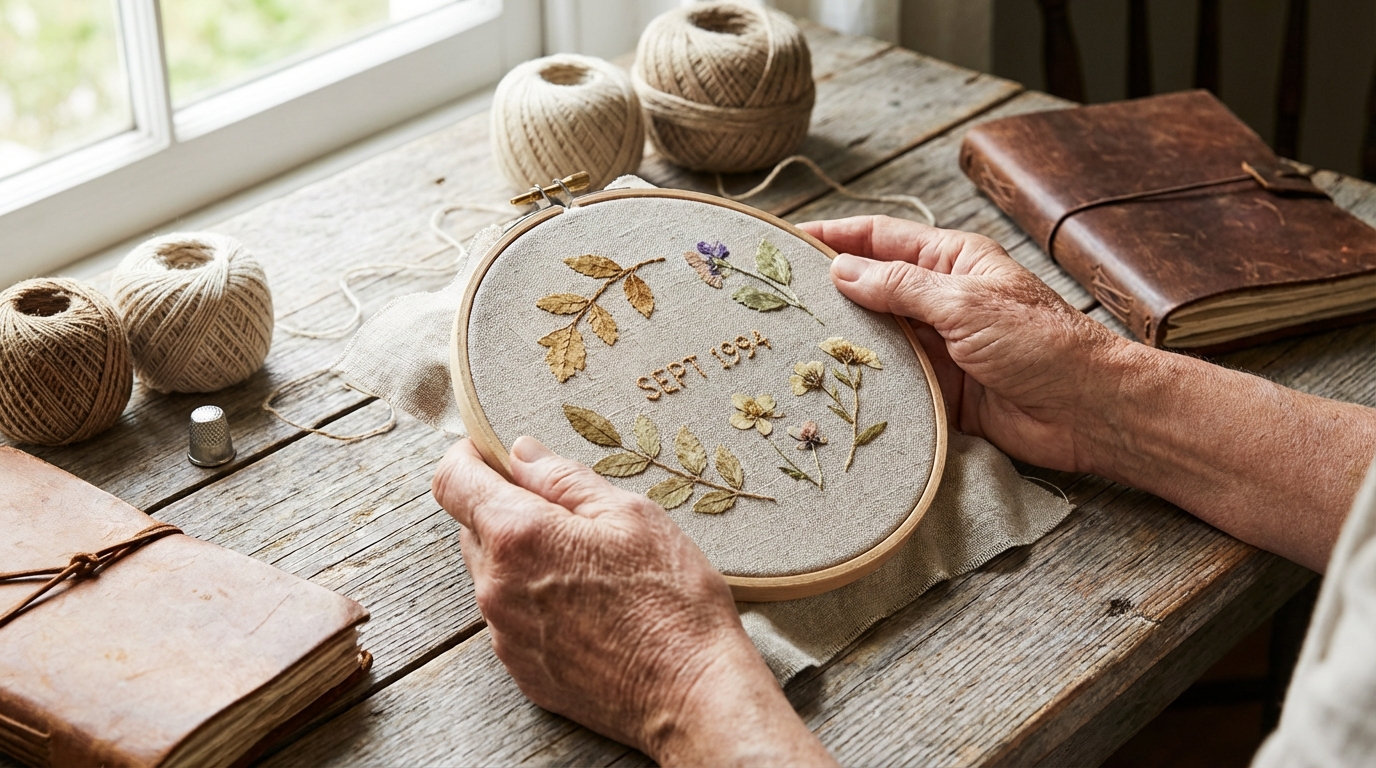
There is a quiet way that time passes through a home. It moves not only by calendars and clocks, but by what is made, mended, and kept. Crafting, in its simplest form, has long been part of how people notice the passing of days and seasons. A stitched hem, a repaired handle, a folded paper star, or a knitted square can hold more than function. These small acts become markers of when something happened, how the days felt, and what mattered enough to tend by hand.
This way of marking time does not depend on speed or perfection. It depends on repetition, attention, and patience. A handmade project often takes longer than expected. It waits for the right light, a free afternoon, or a steady mood. In doing so, it quietly fits itself into the rhythms of daily life. Over time, the hands remember what the calendar forgets.
Handwork and the Rhythm of the Year
Seasonal changes are easier to notice when hands are involved. Crafting often shifts naturally with the year, guided by temperature, daylight, and the needs of a home. This is not about decorating for a season, but about making or repairing what the season asks for.
In cooler months, hands tend to reach for tasks that can be done close to warmth. Stitching, mending, knitting, or sorting small items feel right when evenings are longer. These activities invite stillness and make use of indoor time. The slow progress matches the pace of shorter days.
As light returns and windows open, crafting often moves toward tasks that involve cleaning, organizing, or preparing. Simple repairs to outdoor tools, refreshing cushions, or setting aside materials for future use become more common. These are not flashy projects, but they quietly prepare the home for change.
Warm months invite different kinds of making. Pressing flowers, labeling jars, repairing baskets, or sewing light fabrics are all tasks that tolerate open windows and interruptions. They can be picked up and set down as the day allows. The work adapts to the season rather than forcing the season to adapt to the work.
This seasonal shift helps anchor time. When hands expect certain tasks at certain points in the year, the body begins to recognize the season before the calendar confirms it.
Why Seasonal Crafting Feels Grounding
Seasonal crafting works because it aligns effort with environment. When the work matches the weather and light, it feels less like a task and more like a natural response. This reduces resistance and makes the work easier to return to.
It also creates gentle anticipation. Knowing that a certain project waits each year gives shape to time. The project does not rush. It returns when conditions are right.
Small Projects as Timekeepers
Large projects often get attention, but it is the small, repeatable ones that mark time most clearly. A single project completed once may be remembered, but a small task done often becomes part of the fabric of daily life.
Consider a simple example: replacing worn buttons. This task may happen a few times a year. Each time, it reflects a moment when care was needed. Over time, those replaced buttons become markers. They remind the hands of when the garment was worn most, when it was worth keeping, and when attention was given instead of replacement.
The same is true for small sewn repairs, patched linens, or refreshed labels. These tasks do not announce themselves. They quietly record use, wear, and care.
Because these projects are small, they fit into ordinary days. They can be done in ten minutes, during a pause, or while waiting. This makes them reliable companions to routine rather than special events.
Choosing Projects That Return Naturally
Not every craft works well as a timekeeper. The most effective ones share certain qualities:
- They respond to real use or need.
- They can be repeated without feeling stale.
- They allow for small variations each time.
- They do not require perfect conditions to begin.
Projects like mending, simple sewing, paper folding, tool care, or basic woodworking repairs meet these needs. They change slightly each time, reflecting what the home requires in that moment.
When a project returns on its own, without being scheduled, it becomes a natural marker of passing time.
Materials That Carry Memory
The materials used in crafting play a quiet role in how time is remembered. Natural materials tend to change with use. Fabric softens, wood darkens, metal dulls, and paper yellows. These changes are not flaws. They are records.
A fabric that has been stitched and washed many times holds a different weight and drape than new cloth. Hands can feel the difference immediately. This physical memory is stronger than visual memory. It tells how long something has been part of the home.
Wood that has been handled often becomes smoother at the edges. A handle repaired with care may feel better than it did originally. These subtle changes reward attention and reinforce the value of maintenance.
Using materials that age visibly helps crafting mark time more clearly. The passage of time becomes part of the object, not something hidden.
When Modern Materials Change the Experience
Some modern materials are designed to resist change. They stay the same for a long time. While this can be practical, it can also flatten the sense of time passing.
This does not mean such materials should be avoided. It simply means they mark time differently. They may rely more on context than on physical change. A repaired plastic item may not show age, but the memory of repairing it still exists.
Combining materials can balance this. A modern item paired with a natural repair or container can still carry a sense of time through the handmade element.
Routine Crafting and the Shape of Days
Crafting becomes most meaningful when it settles into routine. This does not require a set schedule. It requires predictability of return.
For example, setting aside one small task each week creates a gentle structure. The task can change, but the habit remains. Over time, the hands come to expect this pause. It becomes a marker within the week.
Daily routines can also include craft, even briefly. Sharpening a pencil, wiping down tools, or sorting materials for a few minutes can be enough. These small acts keep projects alive without demanding long stretches of time.
Routine crafting works because it connects effort to care. It reinforces the idea that the home is tended gradually, not all at once.
How Routine Reduces Overwhelm
Large, infrequent projects can feel heavy. They demand preparation, time, and energy all at once. Routine crafting spreads this effort out.
When a task is broken into small, repeatable actions, it becomes manageable. Progress may be slow, but it is steady. This steady movement gives a clearer sense of time passing than sudden bursts of activity.
The mind learns that care is ongoing. There is no rush to finish everything. This reduces pressure and allows attention to settle.
Marking Moments Without Saving Everything
Not every handmade item needs to be kept forever. In fact, crafting marks time most honestly when some things are allowed to wear out, be used up, or be passed along.
Paper crafts, temporary decorations, or simple seasonal items serve their purpose and then leave. Their value lies in the making and using, not in preservation.
This approach prevents clutter and keeps crafting connected to life rather than storage. It also mirrors how time works. Moments arrive, are lived, and then move on.
Keeping only what continues to serve or hold clear meaning helps the home stay balanced.
Deciding What to Keep
A useful way to decide is to notice whether an item still invites care. If it does, it likely belongs. If it feels like an obligation, it may be time to let it go.
Items that are used, repaired, or adapted tend to remain relevant. Items that are only stored often lose their connection to time.
This is not about minimalism. It is about keeping the relationship between effort and meaning clear.
Crafting as a Record of Change
Over months and years, handmade items quietly record changes in taste, need, and circumstance. Early projects may be simpler or more tentative. Later ones often show confidence or adaptation.
This progression is not something to judge. It is something to notice. Seeing how techniques evolve or how choices shift can be reassuring. It shows growth without requiring documentation.
A repaired item that has been fixed in different ways over time tells a story of problem-solving. Each solution reflects what was known and available at the time.
This record is especially valuable because it is unintentional. It exists without effort to capture it.
Why Imperfection Matters
Imperfections make this record readable. A perfectly uniform object hides its history. A handmade one reveals it.
Slightly uneven stitches, mismatched materials, or visible repairs show when and how something was made. They invite memory without demanding it.
Allowing these imperfections to remain keeps crafting connected to lived experience rather than display.
Shared Crafting and Quiet Connection
Crafting often happens alongside others, even when done individually. A table with multiple small projects, a shared workspace, or a simple exchange of tools creates a quiet connection.
This shared presence marks time socially. Certain projects become associated with certain periods because of who was nearby or what conversations happened during the work.
These associations do not need to be discussed to be felt. The object itself holds the memory.
Even solitary crafting can feel connected when it uses shared spaces or common materials. The home becomes a witness to the work.
Creating Space for Shared Making
Shared crafting does not require coordination. It benefits from accessibility.
- Keep basic tools where they can be reached easily.
- Leave space on a table for small projects.
- Choose tasks that allow for pauses and conversation.
This openness allows crafting to happen naturally rather than as an event.
Using Craft to Slow Transitions
Transitions in life often feel rushed. Crafting can slow them down enough to be noticed.
Preparing for a change by making or adjusting items gives shape to the transition. It turns anticipation into action.
For example, adjusting storage, repairing containers, or making simple organizers before a busy period helps the mind prepare. The hands work through the change gradually.
After a transition, crafting can help settle. Repairing what was strained or reorganizing what was disturbed restores balance.
Why Hands Help the Mind Adjust
Hands move at a human pace. They resist the speed of sudden change.
When hands are busy with simple, repetitive actions, the mind has space to process. This makes transitions less abrupt.
The resulting objects become reminders that change was handled with care.
Passing Time Through Maintenance
Maintenance is often overlooked as craft, but it is one of the clearest ways time is marked in a home.
Oiling wood, sharpening blades, tightening screws, or cleaning tools are all acts of care. They happen repeatedly and respond directly to use.
These tasks do not create new objects. They preserve existing ones. This preservation extends the life of items and deepens familiarity with them.
Maintenance creates a cycle: use, wear, care, and return. This cycle mirrors the passage of time itself.
Learning Through Repetition
Maintenance teaches by repetition. Each time a task is done, small details become clearer.
Hands learn how much pressure is needed, when a tool is ready, and when it is not. This knowledge accumulates quietly.
Over time, maintenance becomes quicker and more intuitive. This efficiency is not about speed. It is about understanding.
Crafting Without an End Goal
Some crafting is most meaningful when it is not aimed at completion. Simple practices like sorting materials, practicing stitches, or testing repairs may not produce a finished item.
These practices still mark time. They fill moments with attention and prepare for future needs.
Allowing crafting to exist without a product reduces pressure. It keeps the focus on the process rather than the result.
This approach fits well into daily life, where time is often fragmented.
Making Space for Practice
Practice requires permission to be unfinished.
Keeping a small basket of scrap materials or practice tools allows hands to work without commitment. These moments of practice still carry memory, even if nothing is kept.
The skill gained becomes the lasting result.
Time, Care, and the Everyday Home
Crafting marks time most clearly when it is woven into ordinary care. It does not stand apart from daily life. It supports it.
When crafting responds to real needs, respects natural rhythms, and allows for change, it becomes a quiet record of how time is lived.
This record is not written down. It is held in objects, habits, and hands.
Through simple projects, repeated routines, and patient care, crafting becomes a way to notice time without measuring it.