
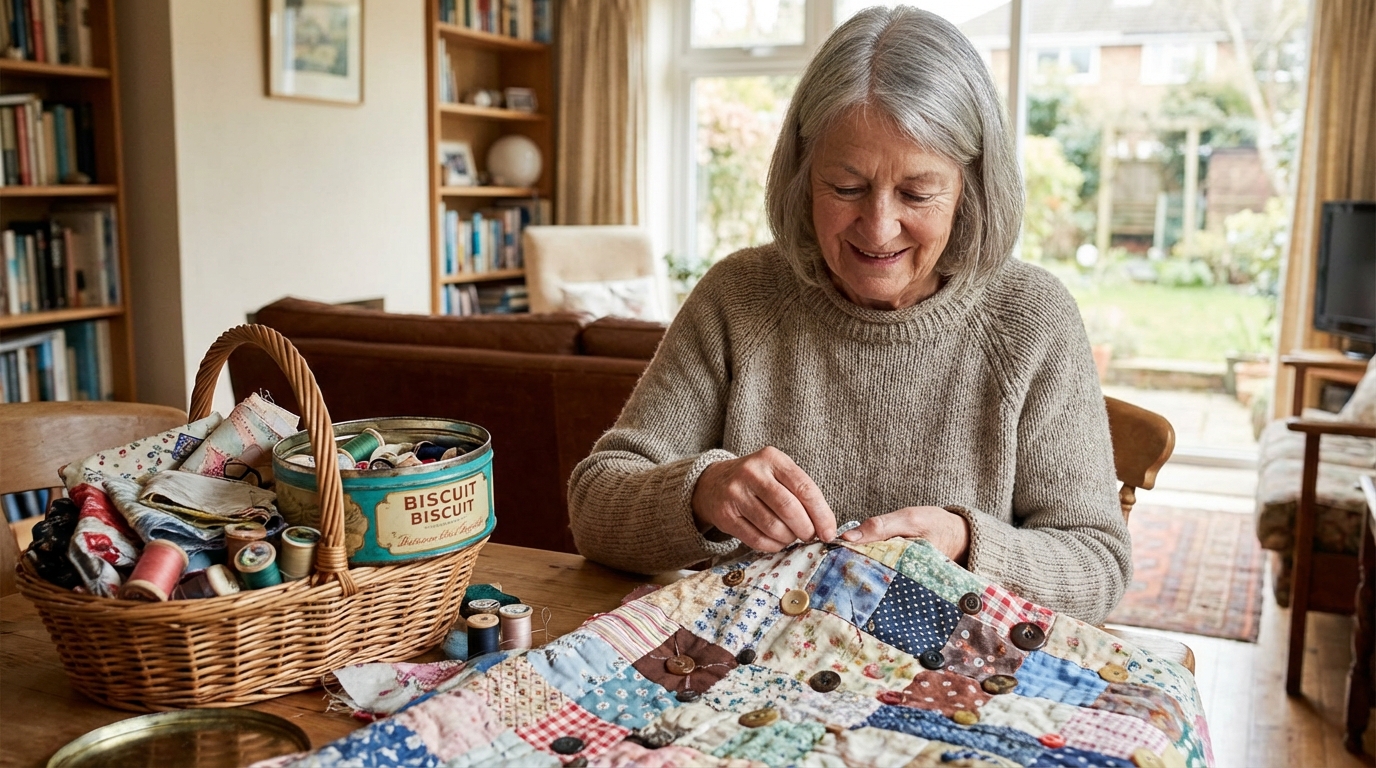
There is a quiet satisfaction in making something useful or beautiful from what is already at hand. It grows out of noticing, saving, and caring for the small things that pass through a home each day. Crafting this way is not about stretching creativity to its limits. It is about settling into a rhythm where hands and materials meet naturally, guided by patience and common sense.
Using what is already available does more than reduce waste. It builds familiarity with the home itself. Drawers, shelves, and baskets stop being cluttered storage and start becoming a kind of working pantry for making. Over time, this approach encourages steady habits, thoughtful choices, and a sense of calm that carries into other parts of daily life.
Seeing Materials With Fresh Eyes
Most homes hold far more crafting potential than first appears. The challenge is not lack of supplies, but learning how to see them differently. An empty jar is often treated as a problem to discard, rather than a container with weight, balance, and durability. Scraps of fabric are seen as leftovers, instead of future patches, ties, or soft edges for small projects.
This shift in thinking comes from slowing down. When something is about to be thrown away, it helps to pause and ask a simple question: what is this made to do? Cardboard is made to protect and support. Fabric is made to bend and soften. Wood offcuts are made to hold shape. When materials are understood by their purpose rather than their original use, new ideas surface naturally.
It also helps to handle items before deciding their fate. The thickness of paper, the flexibility of wire, or the sturdiness of a lid can only be judged by touch. This kind of attention builds practical knowledge over time, making future projects easier to imagine and plan.
Creating a Gentle System for Saving Materials
Saving materials works best when it follows simple rules. Without a system, even useful items become overwhelming. The goal is not to keep everything, but to keep the right things in a way that stays manageable.
A good starting point is to choose a few broad categories that match common household needs. For example, paper, fabric, containers, and natural materials. Each category can have a designated place, such as a box, basket, or shelf. The container should fit the space, not the other way around. If it fills up, it is time to sort rather than add more.
Materials should be clean and dry before being saved. This prevents odors, pests, and frustration later. A quick rinse of a jar or a shake of crumbs from fabric makes a difference. Drying items fully before storing them is a small habit that protects everything around it.
It also helps to save with intention. If a household never uses ribbon or twine, there is no need to keep it. On the other hand, if small repairs are common, buttons and sturdy thread become valuable. The best system reflects real routines, not imagined projects.
Understanding the Value of Limits
Working with what is available naturally sets limits. These limits are often seen as obstacles, but they serve an important role. They narrow choices and reduce hesitation. When there are only three colors of fabric or a single size of box, decisions become simpler.
Limits also encourage problem-solving. If a piece of wood is slightly too short, a design can be adjusted. If there is not enough matching paper, patterns or layers can be introduced. These small adjustments build confidence and flexibility, skills that carry over into other areas of home life.
There are times when limits truly prevent a project from working. A tool may be unsafe, or a material too weak. Recognizing these moments is part of practical wisdom. Crafting with what is available does not mean forcing unsuitable materials into service. It means knowing when to adapt and when to wait.
Paper: The Everyday Material With Many Lives
Paper enters the home daily in many forms. Envelopes, packaging, notebooks, and newspapers all offer different strengths and textures. Learning which types suit which tasks prevents frustration.
Thicker paper, such as packaging or folders, holds structure well. It can be cut into templates, used for labels, or folded into small boxes. Thinner paper works better for wrapping, layering, or decorative details. Mixing the two can create balance, such as a sturdy base with a softer outer layer.
Paper also responds well to simple tools. A bone folder, spoon, or even a fingernail can create sharp folds. Scissors give cleaner edges than tearing, but tearing has its place when a softer look is desired. Understanding these small differences allows paper to be used thoughtfully rather than hurriedly.
Humidity affects paper more than many expect. In damp conditions, it may warp or lose strength. Storing paper in a dry area, away from kitchens or bathrooms, helps preserve its usefulness. This is especially important for items saved for future projects.
Fabric Scraps and the Language of Cloth
Fabric carries memory through wear, texture, and color. Even small scraps can serve practical roles when their qualities are understood. Cotton absorbs well, making it suitable for cleaning cloths or liners. Wool insulates and cushions. Synthetic fabrics often resist moisture and wear.
Before using a fabric scrap, it helps to consider how it behaves. Does it stretch? Does it fray easily? These traits guide how it should be cut and finished. A fabric that frays may need folded edges or stitching, while a stable fabric can be left raw for certain uses.
Keeping fabric scraps sorted by size saves time. Very small pieces can be kept for patching or stuffing. Medium pieces suit pouches or covers. Larger remnants can become napkins, bags, or quilt components. This sorting does not need to be exact, only practical.
Washing fabric before crafting is often worthwhile, especially if it comes from clothing or linens. This removes residues and reveals how the fabric reacts to water. Shrinking or color bleeding is better discovered before a project is finished.
Containers: Jars, Tins, and Boxes
Containers are among the most versatile items in a home. Glass jars offer visibility and cleanliness. Tins provide durability and protection from light. Cardboard boxes bring lightness and flexibility.
When choosing a container for a project, weight matters. Glass is stable but heavy, making it better for stationary uses. Cardboard is light but sensitive to moisture, suited for dry storage. Matching the container to its environment prevents disappointment.
Lids deserve special attention. A tight seal keeps contents fresh, but can also trap moisture if not fully dry. For craft storage, a slightly loose fit may be preferable. Hinges, clasps, and threads should be checked for smooth operation before committing them to a project.
Cleaning containers well is essential. Residues, especially from food, can attract pests or interfere with adhesives. Warm water and patience usually work better than harsh scrubbing, which can scratch surfaces and reduce usefulness.
Natural Materials From Daily Surroundings
Natural materials often appear during ordinary routines. Twigs from yard work, stones brought in on shoes, or dried plant stems from bouquets all hold potential. Using them thoughtfully requires attention to condition and safety.
Wood and plant materials should be dry before use. Moisture can lead to mold or warping. Allowing items to air dry over time, rather than forcing them with heat, preserves strength and shape. This waiting period also offers time to consider how they might be used.
Stones and shells add weight and texture. Washing and drying them removes grit that could damage tools or surfaces. Their irregular shapes can be an advantage, offering natural variety that manufactured items lack.
Natural materials do not suit every project. They may change over time, fade, or break down. Accepting this impermanence is part of working with them. Some creations are meant to be used briefly and returned to the earth.
Simple Tools and Their Care
Crafting with available materials depends more on tools than supplies. A small set of reliable tools, kept in good condition, supports many kinds of work. Scissors, needles, basic cutting tools, and simple measuring devices form a solid foundation.
Tool care is often overlooked. Cleaning blades after use, storing them dry, and keeping them in consistent places prevents accidents and frustration. Sharp tools work better and require less force, making them safer and more precise.
Using the right tool for a task matters. Cutting fabric with dull scissors meant for paper leads to uneven edges. Forcing a tool to do work it was not designed for increases wear and risk. Understanding these limits protects both tools and materials.
It is also helpful to pause before reaching for a tool. Sometimes a simpler method, like folding instead of cutting, achieves the same result with less effort. This kind of restraint develops with practice and attention.
Planning Without Overplanning
Projects made from available materials benefit from light planning. Too little planning can waste materials. Too much can stifle creativity. A balance comes from sketching ideas mentally or on scrap paper, without committing to exact measurements too soon.
It helps to lay materials out before beginning. Seeing colors and textures together reveals possibilities and conflicts. This step often leads to small adjustments that improve the final result.
Flexibility is key. If something does not fit as expected, it is usually better to adapt the design than to force the material. This approach reduces stress and preserves the enjoyment of making.
There are times when stepping away is the best choice. Allowing a project to rest overnight can bring clarity. Many solutions appear after a pause, when the mind has time to settle.
Everyday Uses That Strengthen the Habit
Using crafted items in daily routines reinforces the value of making them. A hand-sewn cloth used for cleaning, a repurposed jar holding utensils, or a paper label organizing a shelf all serve practical roles.
These uses also provide feedback. If something wears out quickly, it suggests a need for stronger materials or different construction. If it works well, it builds confidence and informs future projects.
Repair is an important companion to crafting. Fixing a loose seam or reinforcing a weak corner extends the life of an item. These small acts of care deepen understanding of how things are made and why they fail.
Over time, the home becomes filled with items that carry both function and familiarity. This creates a sense of continuity and calm that store-bought items rarely provide.
Teaching the Hands to Work Calmly
Crafting is as much about pace as outcome. Rushing leads to mistakes and tension. Working calmly allows hands to learn and remember. Simple practices support this rhythm.
Good lighting reduces strain and errors. A clear workspace prevents lost tools and damaged materials. Sitting comfortably supports focus. These conditions are not luxuries; they are practical needs.
Listening to the body matters. Stiff fingers or tired eyes signal a need to pause. Short breaks protect long-term enjoyment and ability. Crafting should fit into life gently, not demand endurance.
As hands become more skilled, movements grow quieter and more efficient. This calm efficiency often spreads into other household tasks, reinforcing a steady way of living.
When to Let Materials Go
Not every saved item will find a use. Holding onto materials out of guilt creates clutter and unease. Letting go is part of maintaining a healthy system.
Regular sorting helps. If an item has not been used or considered in a long time, it may no longer fit current routines. Passing it along, recycling it, or returning it to nature clears space for what is truly useful.
This process also sharpens judgment. Over time, it becomes easier to recognize which items deserve saving and which do not. This discernment reduces accumulation and supports a balanced home.
Letting go is not a failure. It is a sign of attention and care, ensuring that what remains is valued and ready to be used.
Building a Lasting Relationship With Making
Crafting with what is already available is not a single practice, but a relationship that develops over time. It grows through repetition, observation, and adjustment. Each small project adds to a quiet store of knowledge.
This relationship supports patience. Results may not be perfect, but they are honest. They reflect the materials, the moment, and the care invested. Over time, this honesty becomes more important than polish.
The home benefits from this approach. Spaces feel lived-in rather than staged. Objects earn their place through use and repair. There is comfort in knowing how things came to be and how they can be maintained.
In this way, crafting becomes part of daily life rather than a separate activity. It aligns with routines, supports care, and reinforces the simple truth that much of what is needed is already close at hand.