
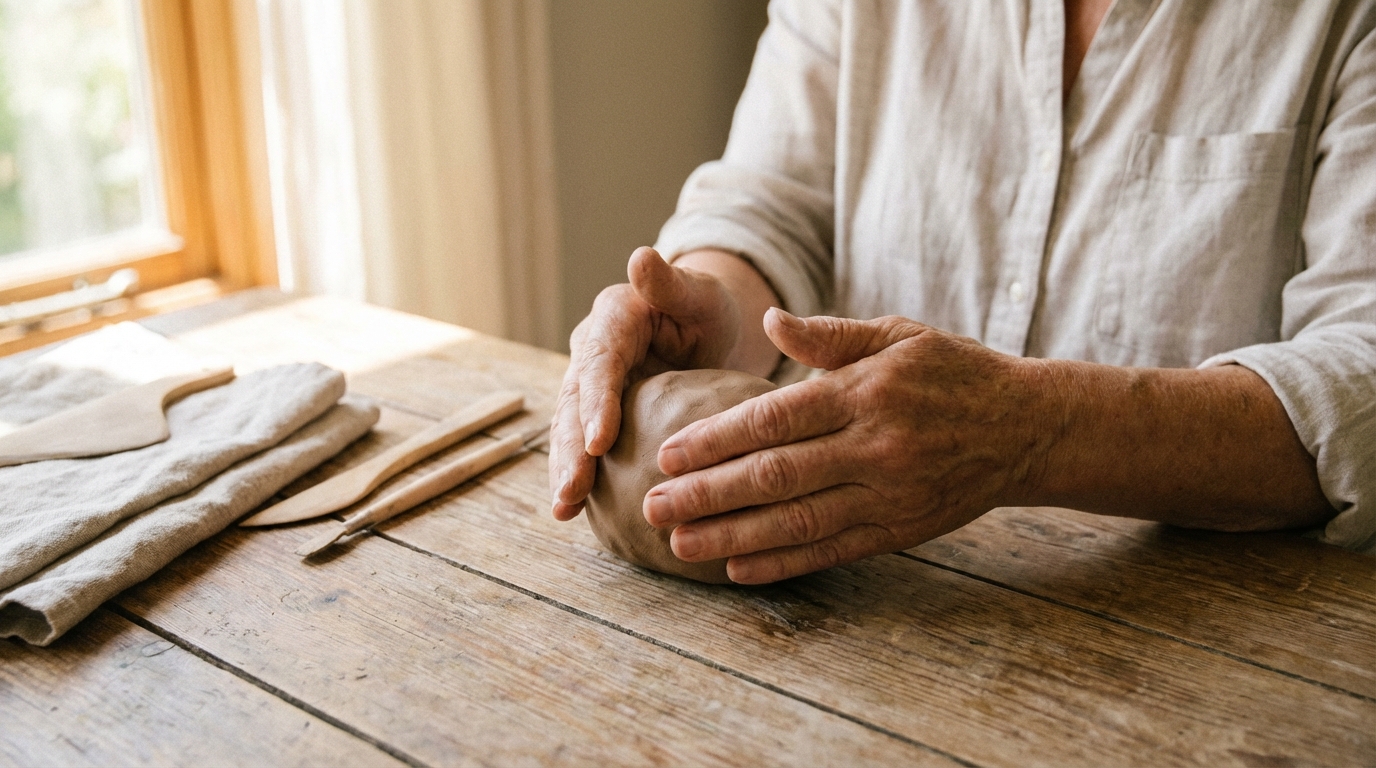
There is a quiet kind of learning that happens when hands are busy and the room feels unhurried. Craft moments, when approached with ease, can become a steady part of home life rather than a special event that needs planning or praise. When creativity is offered without pressure, young hands learn more than how to cut or glue. They learn how to try, how to pause, and how to trust themselves with simple tools.
Creating these moments does not require talent, special supplies, or a schedule filled with projects. It rests on atmosphere, habit, and the understanding that skill grows best when it is allowed to arrive slowly. The aim is not to produce something impressive but to make space for effort, curiosity, and quiet satisfaction.
The Meaning of “Without Pressure”
Pressure often enters craft time in subtle ways. It can appear as an expectation that something should look a certain way, or that a task should be finished quickly. It can hide in praise that focuses only on results, or in instructions that leave no room for choice.
Without pressure means that the hands are free to explore materials without being watched too closely. It means the activity can end unfinished and still be considered worthwhile. It means mistakes are treated as part of the process, not something to correct right away.
When pressure is removed, attention shifts from outcome to experience. The mind becomes more patient, and the hands move with less hesitation. This is where confidence quietly forms.
Preparing the Space Before Offering the Activity
A calm craft moment often begins long before any materials are set out. The room itself plays a role. A space that is familiar and easy to clean allows everyone to relax. A cleared table, a washable surface, and good light all reduce tension without being noticed.
Keeping supplies within reach but not overwhelming is important. Too many choices can make it hard to begin. A small selection encourages focus and reduces the feeling that something must be used correctly.
Useful considerations include:
- A stable surface that does not wobble
- Tools that fit comfortably in small hands
- Materials that respond easily, such as soft paper or pliable dough
- A nearby place for scraps and used tools
When the space feels ready, the activity can begin without explanation. Often, the simple presence of materials is invitation enough.
Choosing Materials That Teach Through Touch
Some materials welcome experimentation, while others resist it. For relaxed creativity, forgiving materials are best. They allow repeated attempts without consequence.
Paper that is slightly thick but not stiff folds and tears easily, teaching control without demanding precision. Crayons glide more smoothly than hard pencils, encouraging longer lines and steady movement. Yarn and fabric scraps invite wrapping, knotting, and sorting, which build coordination without any finished goal.
Natural textures add another layer of learning. Wood, cotton, paper, and clay all respond differently to pressure. Feeling these differences helps hands learn how much force to use. This awareness carries over into daily tasks like buttoning, pouring, and holding tools.
It helps to introduce materials slowly. Offering one new item alongside familiar ones allows attention to settle. Too many unfamiliar tools can make hands freeze, unsure where to begin.
Timing Matters More Than Duration
Craft moments fit best into the natural rhythm of the day. Hands are more willing when bodies are rested and the room is quiet enough to focus. Starting when energy is already scattered makes frustration more likely.
Short sessions often work better than long ones. Ten calm minutes can be more valuable than an hour filled with restlessness. Stopping while interest is still present leaves a positive memory and builds anticipation for next time.
It is helpful to watch for signs that attention is fading. Slower movements, wandering eyes, or unnecessary noise often signal that it is time to pause. Ending gently, without insisting on finishing, teaches respect for limits.
Inviting, Not Directing
The way a craft is introduced sets the tone. An invitation feels different from a lesson. Placing materials on the table and stepping back allows curiosity to lead.
Instead of explaining what to make, it is often enough to demonstrate a single action, such as folding paper or rolling dough. This shows possibility without defining the result. Young hands can then repeat, adapt, or ignore the example as they choose.
When instructions are needed for safety, they can be brief and clear. Long explanations tend to interrupt flow. Once hands are moving, learning happens through doing rather than listening.
Letting Hands Solve Small Problems
Confidence grows when hands are allowed to work through difficulty. A piece of tape that sticks to itself, a knot that tightens too soon, or a paper edge that tears unevenly are all chances to practice problem-solving.
Resisting the urge to step in right away gives space for adjustment. Often, a pause is enough for hands to find a new approach. When help is truly needed, offering guidance rather than taking over preserves ownership of the task.
Simple questions can support this process:
- What happens if it is turned the other way?
- Does pressing lighter or harder change it?
- Would another piece help here?
These questions focus attention on the material rather than the mistake. Over time, hands learn to trust their ability to fix small problems independently.
Understanding the Role of Repetition
Repeating the same activity may look unproductive, but it is often where the deepest learning occurs. Folding paper again and again teaches precision. Threading beads repeatedly builds steady movement. Drawing the same shape many times refines control.
Repetition provides familiarity. When hands know what to expect, they relax. This relaxation allows for small improvements that would not appear under pressure.
It helps to keep certain materials available regularly. Seeing the same tools week after week turns craft into routine rather than performance. Skills build quietly in the background.
Handling Mess Without Tension
Mess is part of hands-on work, but it does not need to become a source of stress. Preparing for cleanup in advance changes how mess is experienced.
Using aprons, old shirts, or washable surfaces removes worry about spills. Keeping a damp cloth nearby allows quick wiping without interrupting the activity.
When cleanup is included as part of the routine, it becomes another skill rather than a punishment. Showing how to return tools, shake scraps into the bin, and wipe the table teaches responsibility in a calm way.
It helps to avoid comments that suggest mess is a problem. Neutral language keeps the focus on care rather than blame.
Watching Without Hovering
Presence matters, but constant observation can make hands self-conscious. Being nearby without watching every movement creates a sense of safety without pressure.
Engaging in a quiet task alongside, such as folding laundry or preparing materials, allows shared space without scrutiny. This models focus and patience without instruction.
When attention is given, it can be specific and process-focused. Noticing effort, persistence, or careful movement supports confidence more than praising the final piece.
Allowing Projects to Remain Unfinished
Not every craft needs to be completed. Leaving a project unfinished teaches that effort itself has value. It also respects natural limits of attention.
Partially finished work can be stored and returned to later. This shows that creativity does not disappear when a task pauses. It waits.
When returning to an unfinished piece, hands often approach it with new ideas. This builds flexibility and reduces fear of starting over.
Repair as a Learning Tool
Repairing a torn edge, reattaching a loose piece, or smoothing a rough surface teaches patience and care. These small acts show that mistakes are not endings.
Keeping simple repair tools nearby, such as tape, glue, or extra paper, encourages problem-solving. Using them slowly and deliberately demonstrates that fixing takes time.
Repair also teaches restraint. Knowing that something can be fixed reduces the urge to rush.
Storing Materials in a Way That Encourages Use
How supplies are stored affects how often they are used. Materials that are visible and easy to reach invite spontaneous creativity.
Clear containers, shallow boxes, and labeled jars make it easy to see what is available. This reduces the need to ask for help and builds independence.
Keeping tools in consistent places creates familiarity. When hands know where to find scissors or paper, starting feels less daunting.
Seasonal Rhythm and Everyday Materials
Craft moments can follow the natural rhythm of the year. Leaves, seed pods, and twigs in certain seasons offer different textures and challenges than paper and yarn.
Using everyday materials shows that creativity is not limited to special supplies. Cardboard, newspaper, and fabric scraps all have potential. This approach teaches resourcefulness and reduces waste.
Seasonal changes also refresh interest without introducing pressure. The materials themselves suggest new possibilities.
Noticing Readiness Without Forcing Progress
Readiness shows itself in small ways: steadier hands, longer focus, or curiosity about new tools. These signs guide what to offer next.
Introducing slightly more challenging materials when readiness appears supports growth. Doing so too early can create frustration. Waiting allows confidence to lead.
It is helpful to let interest guide progress rather than a timeline. Skills develop unevenly, and that is natural.
Supporting Confidence Through Language
Words shape how effort is remembered. Language that describes actions rather than judgments keeps focus on learning.
Comments that notice careful cutting, patient tying, or steady coloring reinforce useful habits. Avoiding comparisons keeps attention on personal progress.
Silence also has value. Sometimes the most supportive response is simply allowing the moment to unfold.
Making Craft Part of Daily Life
When creativity is woven into daily routines, it loses its sense of performance. A few minutes at the table after tidying up, or a quiet activity before the day winds down, becomes familiar.
Regularity builds comfort. Over time, hands approach materials with ease rather than hesitation. This ease is the foundation of confidence.
Craft moments do not need to be special to be meaningful. Their power lies in repetition, patience, and the freedom to explore without pressure.