
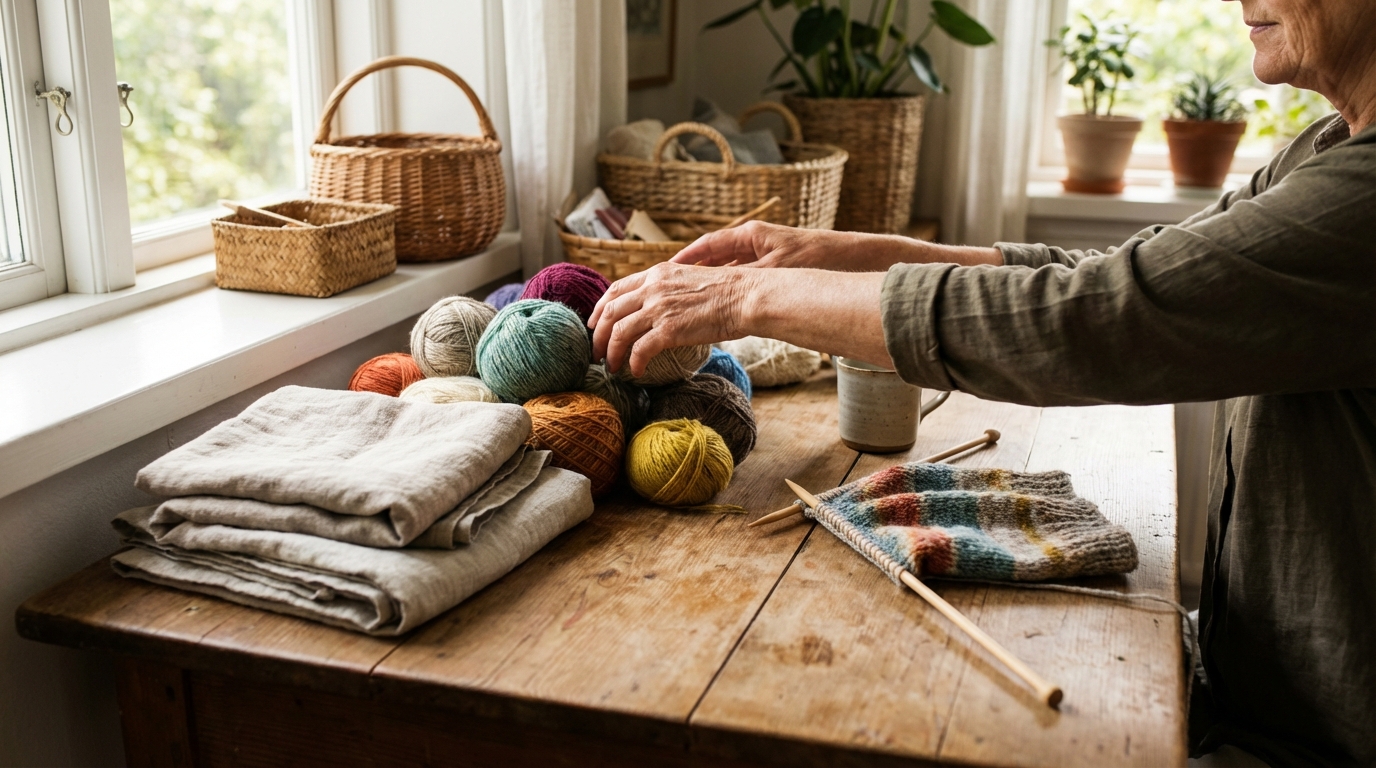
Craft time often begins with good intentions: a quiet hour, a basket of supplies, and the hope of making something useful or beautiful. Yet many people find that the moment a clock is involved, the pleasure fades. What should be steady and absorbing turns rushed or restless. Removing deadlines from handcraft does not mean giving up purpose or progress. It means letting the work fit naturally into daily life, rather than forcing daily life to bend around the work.
In a home, time already moves in patterns. Meals happen, laundry cycles through, floors need sweeping, and hands stay busy. Crafting can belong to these rhythms instead of sitting outside them. When pressure is lifted, the work becomes calmer, more thoughtful, and often better made. Understanding why this happens helps make space for craft time that truly restores rather than drains.
Why Time Pressure Changes How Hands Work
Hands respond to the mind. When there is a deadline, even a small one, attention shifts from the task itself to the finish line. Stitches tighten. Cuts become less careful. Small mistakes feel larger. This happens because the mind is dividing its focus between doing and finishing.
Without a deadline, the mind stays with the process. The hands move at a natural pace. This allows muscles to relax and memory to guide movement. Many traditional skills depend on this relaxed repetition. Knitting, mending, carving, stitching, and shaping all improve when movements are unhurried.
Time pressure also changes decision-making. When rushed, there is a tendency to choose what is fastest rather than what is most suitable. This might mean using the wrong thread, skipping a pressing step, or ignoring grain direction. Over time, these small choices affect durability and appearance. Removing deadlines allows better decisions because there is time to notice and adjust.
Understanding Craft as Part of Daily Flow
Crafting does not need a special block of empty hours. In many homes, it works best when it fits into small spaces of time. Ten minutes of mending while waiting for water to boil. A few rows of knitting before bed. Sorting fabric scraps during a quiet afternoon.
When craft is treated as something that must be finished in one sitting, it becomes hard to begin. When it is seen as something that can be picked up and set down, it becomes approachable. This shift removes pressure before it even starts.
Daily flow matters because energy rises and falls. Hands are steadier at some times of day than others. Eyes focus better in good natural light. Removing deadlines allows crafting to happen when conditions are right, rather than forcing it into poor light or tired hours.
Setting Up a Space That Welcomes Slow Work
A calm craft space does not need to be large or separate. It does need to be easy to return to. This means supplies are stored in a way that allows work to pause without becoming a mess. A basket, tray, or shallow box works well. The project stays contained, and the space can be cleared quickly if needed.
Keeping tools close to the project reduces friction. When scissors, needles, measuring tools, or thread are missing, restarting feels harder. This often leads to rushing once everything is found. A simple habit of returning tools to the same place after each use supports relaxed pacing.
Lighting matters more than many realize. Poor light leads to eye strain, which creates tension. Good light allows slower, more careful work. Natural light is ideal, but a steady lamp placed to avoid shadows helps when daylight fades.
Choosing Projects That Suit Open-Ended Time
Not all projects benefit equally from deadline-free work. Some tasks require continuity, such as wet felting or certain finishes. Others are naturally suited to slow progress. Choosing projects that tolerate pauses makes it easier to remove time pressure.
Good examples include:
- Mending clothing, where small sections can be completed independently.
- Knitting or crocheting simple patterns that are easy to remember.
- Hand sewing seams that do not require precise timing.
- Wood sanding or shaping that benefits from careful attention.
- Embroidery with repeating motifs.
Projects with many irreversible steps can create hidden pressure. If mistakes are hard to undo, there is a tendency to rush out of nervousness. Setting these aside for days when focus is high helps protect the calm of everyday craft time.
Letting Materials Set the Pace
Different materials respond to time in different ways. Fabric relaxes after pressing. Wood adjusts to humidity. Yarn behaves differently depending on tension and handling. When deadlines are removed, materials are allowed to settle, which often improves results.
For example, fabric that has been handled benefits from resting flat before final cutting. This allows fibers to return to their natural position. Rushing this step can lead to twisting seams later. Similarly, letting a knitted piece rest before finishing helps stitches even out.
Working slowly also makes it easier to notice how materials behave. A thread that frays easily suggests shorter lengths. A stiff fabric may need a different needle. These observations come naturally when there is no rush.
Using Small Rituals to Begin and End
Without deadlines, craft time needs gentle structure. Small rituals mark the beginning and end of work without imposing pressure. This might be as simple as clearing the table, washing hands, or laying out tools in a familiar order.
Ending rituals matter just as much. Taking a moment to straighten the project, note where to begin next time, and store it carefully makes returning easier. This reduces the mental load of remembering what was last done.
These rituals create continuity. Even if days pass between sessions, the work feels present rather than forgotten.
Understanding When Slowness Improves Skill
Skill grows through repetition, but repetition only helps when it is attentive. Rushed repetition reinforces mistakes. Slow repetition allows correction. This is especially true for handcrafts where muscle memory plays a role.
For instance, learning even tension in knitting requires feeling the yarn pass through fingers. When rushed, tension varies. When slow, the hands adjust naturally. Over time, this leads to consistent results without conscious effort.
The same applies to cutting, measuring, and joining. Slowness gives time to notice alignment and fit. This awareness builds skill more reliably than speed.
Making Peace With Pauses
Pauses are often seen as interruptions, but in craft, they can be useful. Stepping away allows the eyes to reset. Returning later makes uneven areas easier to spot. This is why many experienced makers prefer to finish edges or details on a different day than the main work.
Pauses also prevent fatigue. Tired hands make more mistakes. Short sessions spread over time protect joints and reduce strain. This is especially important for repetitive motions.
Allowing pauses without guilt removes the sense of unfinished business. The project becomes something that waits patiently rather than demands attention.
Balancing Craft With Household Responsibilities
In a busy home, craft time often competes with other needs. Removing deadlines helps crafting coexist with responsibilities rather than clash with them. When there is no fixed end time, it is easier to stop when needed and return later.
This flexibility prevents resentment. Crafting remains a source of calm instead of another task on a list. It also models patience and care within the household, showing that not all work needs to be hurried.
Placing craft near everyday activity helps. A small project kept near the living area allows a few minutes of work while waiting for something else. This integrates crafting into daily life instead of isolating it.
Knowing When a Deadline Is Helpful
Removing deadlines does not mean avoiding them entirely. Some projects benefit from gentle time boundaries. For example, repairs needed before regular use, or seasonal items with a narrow window, may require some planning.
The key difference is how the deadline is held. A flexible target supports steady progress without urgency. Breaking the work into small, manageable parts prevents last-minute rushing.
Understanding the purpose of the deadline matters. If the purpose is usefulness rather than perfection, the pressure stays low. This keeps the work grounded in practical needs.
Teaching Hands to Trust Time
Many people feel uneasy without a schedule. This often comes from a belief that progress only happens under pressure. Crafting offers a way to challenge this belief gently.
By returning to a project regularly without forcing speed, progress becomes visible. Stitches accumulate. Seams close. Pieces take shape. This builds trust in steady effort.
Over time, this trust extends beyond craft. It reinforces the idea that careful, patient work leads to lasting results.
Using Craft to Mark Quiet Moments
Crafting without deadlines pairs naturally with quiet moments in the day. Early mornings, late afternoons, or calm evenings often suit handwork. These times encourage slower movement and focused attention.
Associating craft with these moments strengthens the habit. The mind begins to settle as soon as the project is picked up. This makes it easier to let go of outside concerns.
Keeping projects simple during these times prevents mental overload. Familiar patterns and techniques support relaxation.
Allowing Projects to Change Over Time
When there is no deadline, projects can evolve. Colors may be adjusted. Details reconsidered. This flexibility often leads to better outcomes because the work responds to insight gained along the way.
For example, a garment may be tried on midway and adjusted for comfort. A decorative piece may be simplified after seeing how it sits in the room. These changes require time and openness.
Deadlines discourage this kind of responsiveness. Removing them allows the project to find its natural form.
Recognizing the Quiet Satisfaction of Completion
Finishing a project without rushing brings a different kind of satisfaction. The work feels settled. There is confidence in how it was made. This feeling lasts longer than the brief relief of meeting a deadline.
This satisfaction comes from knowing the work was given proper attention. Seams lie flat. Edges are neat. The piece feels right in the hands.
Allowing completion to arrive naturally makes the result feel earned rather than forced.
Passing Along a Calmer Approach to Making
Crafting without deadlines quietly teaches patience, care, and respect for materials. These qualities are visible to others in the home. They show that making things well matters more than making them quickly.
This approach encourages shared understanding. Craft becomes part of home life rather than a separate activity. It supports a household rhythm that values steady effort.
Over time, this calm approach shapes how tasks are handled more broadly. It reminds everyone that good work takes the time it needs.