
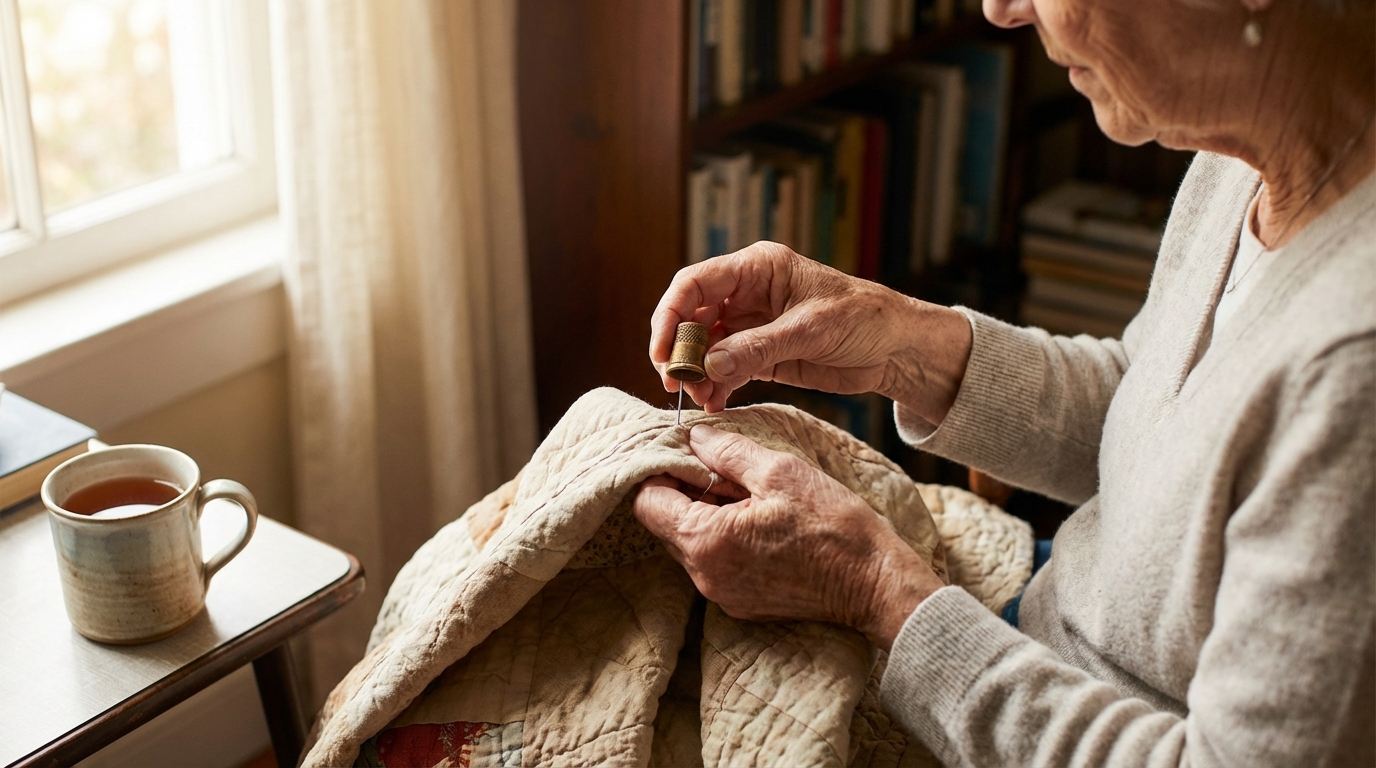
Some of the most satisfying things made at home are not finished quickly. They take shape over days, sometimes weeks, through steady hands and quiet attention. These kinds of projects are not meant to keep pace with the clock. They ask for patience, and in return they offer a different kind of reward: a sense of steadiness, focus, and care that settles into everyday life.
Slow crafts fit naturally into a home routine. They can be picked up and set down without pressure. They allow for pauses, mistakes, and small adjustments along the way. More than the finished piece, the process itself becomes part of the day, like brewing tea or folding laundry. It is not about producing more, but about making something well and with intention.
What Makes a Craft “Slow”
A slow craft is not defined by how long it takes on the calendar. It is defined by how it asks to be made. These projects resist rushing. They rely on repeated motions, careful observation, and small decisions that build on one another.
Hand sewing, knitting, mending, wood sanding, paper folding, and hand stitching all fall into this category. The materials respond to touch. The work changes slightly depending on pressure, angle, and timing. This responsiveness is what slows the process in a helpful way.
Unlike projects designed for speed or efficiency, slow crafts often include natural pauses. Yarn tangles and must be straightened. Glue needs time to set. Paint must dry between layers. These pauses are not interruptions; they are part of the rhythm.
This rhythm teaches patience without forcing it. There is always something small to do, but rarely a reason to hurry.
Why Speed Works Against Care
Speed has its place in daily life, but it often works against careful making. When a craft is rushed, the hands tense, mistakes multiply, and materials are pushed beyond what they can handle.
Thread pulls too tight and puckers fabric. Wood splinters when cut too fast. Wet clay collapses under hurried pressure. These are not failures of skill so much as signs that the material needed more time.
Slow crafts allow materials to behave as they are meant to. Fabric relaxes when handled gently. Fibers align when twisted patiently. Layers build strength when allowed to dry fully before the next is added.
Understanding this reduces frustration. Instead of fighting the material, the maker works alongside it, adjusting pace to match what the material requires.
The Role of Repetition in Focus
Many slow crafts rely on repeating the same motion again and again. This repetition is not boring when approached with the right expectation. It creates a steady pattern that helps the mind settle.
For example, knitting the same stitch row after row gives the hands something predictable to do. This frees attention to notice small changes, like tension or texture. Over time, the hands begin to correct themselves without conscious effort.
Repetition also reduces decision fatigue. When the next step is already known, there is no rush to choose. This makes it easier to stay present and attentive.
In a busy household, this kind of focus can be grounding. It offers a quiet counterbalance to tasks that require constant adjustment and quick thinking.
Choosing Projects That Welcome Pauses
Not every craft suits a slow approach. Some projects are designed to be completed in one sitting and lose momentum if paused. Slow crafts, by contrast, should welcome being set aside.
Projects that work well in short sessions include:
- Hand sewing small sections at a time
- Knitting or crocheting simple patterns
- Embroidery with clear stopping points
- Paper crafts that dry or set between steps
- Light woodworking that involves sanding and fitting
The key is that the project can be paused without losing place. A stitch marker, a folded edge, or a clearly defined section helps the work wait patiently until it is picked up again.
This makes it easier to fit crafting into everyday life. Ten minutes after dishes are done or a half hour before bed becomes enough.
Setting Up a Space That Encourages Slowness
The environment where a craft is done influences how it feels. A space that encourages slowness does not need to be large or special. It needs to be comfortable and predictable.
Good lighting reduces eye strain and allows details to be seen clearly, which naturally slows the hands to a careful pace. A chair that supports the back and allows feet to rest flat on the floor keeps the body relaxed.
Keeping tools within reach prevents unnecessary movement and interruption. When scissors, needles, or sandpaper are always in the same place, the work flows more smoothly.
It also helps to store projects in a way that makes starting again easy. A basket with the project, tools, and instructions together removes the barrier of setup. When beginning is simple, there is less temptation to rush through the work.
Working With Natural Limits
Slow crafts respect natural limits, both of the body and of the materials. Hands tire. Eyes need rest. Materials change with temperature and humidity.
Stopping when the hands feel stiff or the eyes grow tired prevents mistakes. It also preserves enjoyment. Pushing past these signals often leads to errors that take longer to fix than the break would have taken.
Materials also have limits. Yarn behaves differently in dry air than in damp. Wood expands and contracts. Paint thickens as it sits. Paying attention to these changes informs when to continue and when to pause.
This awareness grows with experience. Over time, the maker learns to sense when conditions are right for certain tasks and waits when they are not.
The Quiet Skill of Mending
Mending is one of the clearest examples of a craft that benefits from slowness. It requires close attention to what is already there and small, careful adjustments.
Repairing a tear or reinforcing a worn spot begins with observation. The fabric’s weave, thickness, and stress points must be understood before any stitch is made. Rushing this step often leads to repairs that fail.
Slow mending allows stitches to follow the original structure of the fabric. Thread tension can be adjusted stitch by stitch. The repair becomes part of the item rather than a weak point.
This approach also changes how items are valued. When time and care are invested in repair, objects are treated more thoughtfully in daily use.
Learning Through Hands, Not Instructions Alone
Slow crafts teach through doing. Written instructions and diagrams provide a starting point, but real understanding comes from the hands.
For example, a pattern might specify a certain tension or pressure, but the hands must feel what that means. Only by working slowly can these sensations be noticed and remembered.
Mistakes become lessons rather than setbacks when there is time to examine them. A stitch pulled too tight shows how the fabric responds. A joint that does not fit reveals where alignment matters.
This kind of learning stays with the maker. It builds confidence not just in one project, but in the ability to approach future tasks with patience and care.
Managing Expectations About Progress
One of the challenges of slow crafting is adjusting expectations about progress. When a project advances inch by inch, it can feel as though little is happening.
Breaking the work into small, meaningful steps helps. Instead of focusing on finishing the entire piece, attention can be given to completing a section or mastering a technique.
Keeping track of these small milestones provides a sense of movement without pressure. A row completed, a seam finished, or a surface smoothed is enough for one session.
This way of measuring progress aligns with daily life, where many tasks are ongoing and rarely finished all at once.
How Slow Crafts Support Attention in Other Tasks
The patience practiced in slow crafting often carries over into other parts of the day. Folding laundry becomes more orderly. Cooking feels less rushed. Listening becomes easier.
This happens because slow crafts train attention to stay with one thing at a time. The hands learn to move deliberately, and the mind follows.
Over time, this steadiness becomes familiar. It does not require special effort. It simply becomes the default pace for careful tasks.
In a home where many things compete for attention, this skill is valuable. It helps create a sense of calm that spreads quietly through daily routines.
Balancing Slow Projects With Household Life
Slow crafts work best when they are woven into household life rather than set apart from it. They should not compete with daily responsibilities but complement them.
Choosing projects that can be paused quickly allows for flexibility. If something needs attention, the craft can wait without frustration.
It also helps to accept that some days will not include crafting at all. Slowness means allowing gaps without guilt. The project will still be there when time returns.
This balance keeps crafting from becoming another demand. It remains a supportive presence rather than an obligation.
Understanding When Slowness Is Not Helpful
While slowness offers many benefits, it is not always the right approach. Some tasks require decisiveness or benefit from momentum.
For example, certain adhesives must be applied and joined quickly. Some paints need to be laid down evenly in one pass. Overworking these can weaken the result.
The key is knowing which parts of a project invite slowness and which require timely action. This understanding comes from reading instructions carefully and observing how materials behave.
Even in these moments, calm attention matters. Acting quickly does not mean acting carelessly.
Passing Time Productively Without Pressure
Slow crafts offer a way to use small pockets of time without turning them into deadlines. Waiting for water to boil or sitting quietly in the evening becomes an opportunity for a few stitches or strokes.
Because there is no need to finish in one sitting, these moments add up gently. The project grows without demanding more time than is available.
This approach respects the natural flow of the day. It allows productivity to coexist with rest.
Over time, this rhythm feels sustainable. It supports making things at home without strain.
Materials That Reward Patience
Some materials respond especially well to slow handling. Natural fibers, wood, paper, and clay all show subtle changes when treated with care.
Wool relaxes and evens out with gentle tension. Wood reveals a smooth surface through gradual sanding. Paper folds cleanly when creased carefully. Clay holds shape when allowed to firm up before the next step.
These materials provide feedback. They show when the pace is right and when it is not. Learning to read these signs is part of the craft.
This interaction creates a quiet conversation between hands and material, one that cannot be rushed.
Keeping Tools Simple and Familiar
Slow crafting benefits from tools that are familiar and reliable. Complex or overly specialized tools can interrupt the flow by requiring constant adjustment.
Simple needles, well-fitting scissors, smooth hooks, and basic measuring tools are often enough. When tools feel comfortable in the hand, attention stays on the work.
Caring for tools also supports slowness. Keeping them clean and sharp prevents the need for force. This reduces strain and improves results.
Over time, using the same tools builds a sense of continuity. The hands learn their weight and balance, which supports steady work.
Allowing Projects to Change Over Time
Slow projects often evolve as they are made. A pattern may be adjusted. A color choice may shift. A technique may improve mid-way.
Allowing these changes without frustration is part of the practice. Because the work is not rushed, there is room to adapt.
This flexibility often leads to better results. The finished piece reflects what was learned along the way rather than rigidly following an initial plan.
It also mirrors how many things in the home are managed: through ongoing adjustment rather than fixed outcomes.
Finding Satisfaction in the Process
The true value of slow crafts lies not only in what is made, but in how it is made. Satisfaction comes from the steady progress, the feel of materials, and the quiet focus.
When the process is valued, there is less pressure on the final result. Imperfections are seen as part of the story rather than flaws.
This perspective makes crafting more forgiving and more enjoyable. It encourages returning to the work again and again.
In a home filled with daily tasks that must be completed, slow crafts offer something different: an activity where the time spent is as important as the outcome.