
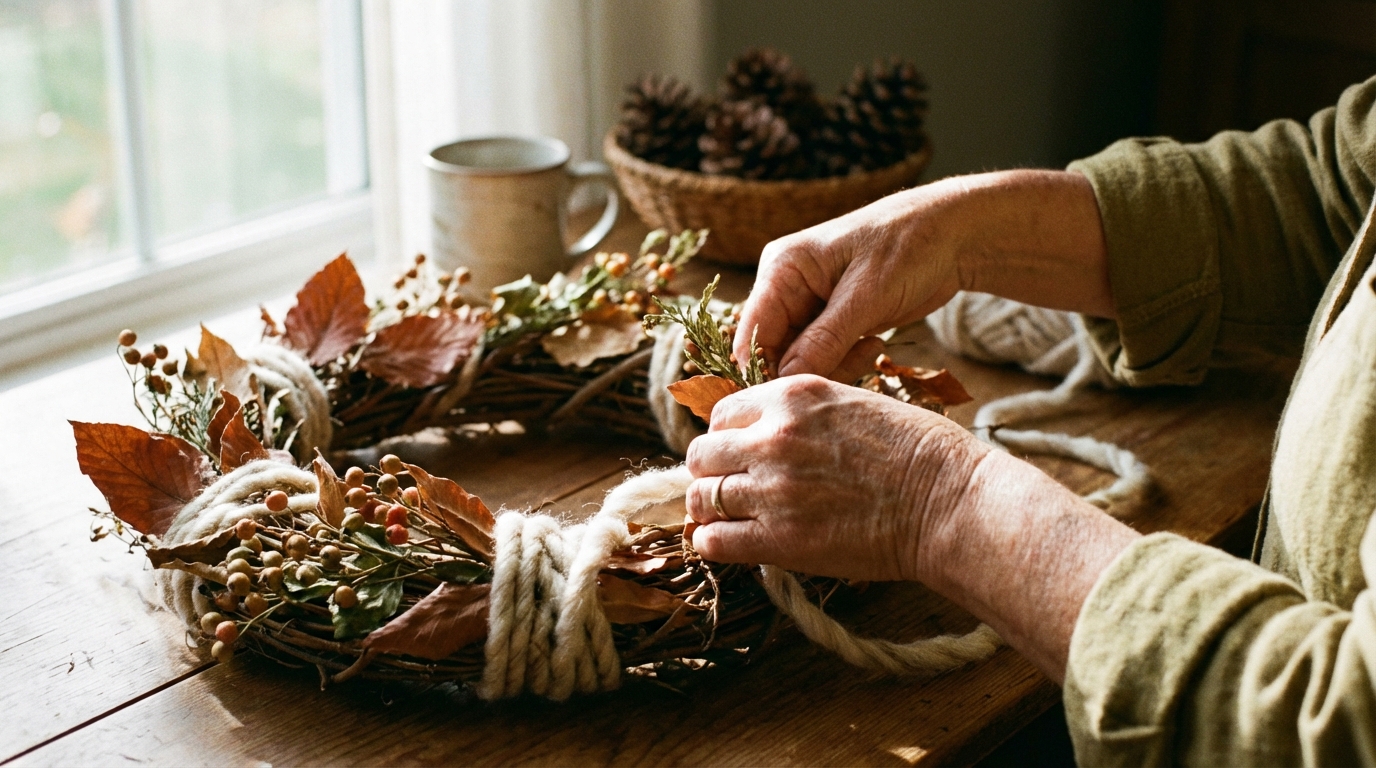
Handcraft has always lived close to the rhythm of home life. It shows up in quiet hours, in small repairs, in useful objects made slowly and kept close. When handwork follows the seasons, it feels less like a task and more like a natural extension of daily living. Materials behave differently in warm air than in cold. Light changes how colors feel. Time itself stretches or tightens depending on the month. Paying attention to these details helps projects settle into the home with ease.
Creating handcraft that fits the season does not require strict rules or special skills. It begins with noticing what the home asks for at different times of year and how the body and mind respond to the changing days. A winter project may call for patience and repetition. A summer one may ask for lightness and flexibility. When craft follows these cues, it becomes steadier, more useful, and more satisfying.
Understanding the Seasonal Rhythm Inside the Home
Each season brings its own pace, even indoors. The way rooms are used changes. Windows open or stay shut. Light shifts from sharp to soft. These changes affect how handcraft feels and how it functions.
In colder months, the home often turns inward. Projects that take time, warmth, and focus feel appropriate. In warmer months, life spreads outward, and handwork tends to become portable, practical, and easy to pause. Neither is better. They simply serve different needs.
Noticing these patterns helps prevent frustration. A detailed project started in early spring may stall when days grow busy and hands are needed elsewhere. A light, quick project started in deep winter may feel unsatisfying when long evenings invite deeper focus. Matching effort to season keeps work moving naturally.
How Light Influences Craft
Light affects both mood and accuracy. In winter, light is lower and softer. Colors appear deeper. Fine detail can strain the eyes if not planned carefully. This is a good time for projects with larger movements, repeated patterns, or darker materials that are easier to see.
In summer, bright daylight reveals every detail. This is helpful for precise work, color matching, and finishing touches. It is also less forgiving. Small mistakes stand out more. Choosing projects that benefit from clarity, such as careful cutting or stitching, works well in these months.
Placing projects where natural light supports them, rather than fights them, reduces fatigue and makes the work more pleasant.
Temperature and the Hands
Hands behave differently depending on temperature. Cold air can stiffen fingers and slow movement. Warm air relaxes muscles but can cause swelling. Materials respond too. Wood tightens and loosens. Fibers stretch or resist. Adhesives cure at different speeds.
Season-aware crafting accounts for this. Cold months favor materials that warm easily and do not require quick handling. Warm months suit flexible materials that tolerate pauses and changes. Understanding these responses prevents wasted effort and damaged materials.
Winter: Projects That Settle In and Stay Close
Winter invites handcraft that brings warmth, weight, and steadiness. With fewer hours of daylight and more time spent indoors, projects that can be returned to night after night feel comforting rather than demanding.
This is a season for work that does not rush. Repetition becomes soothing. Progress may be slow, but it is reliable.
Choosing Materials for Cold Months
Materials that hold warmth or respond well to steady handling suit winter. Natural fibers, dense fabrics, thicker threads, and solid woods behave predictably in cooler air. They do not demand quick drying or precise timing.
Materials that become brittle in cold, such as certain plastics or thin adhesives, often cause frustration. Saving them for warmer months avoids unnecessary repair.
Storing materials indoors for several days before starting a project helps them adjust to the home’s temperature and humidity. This reduces warping, cracking, or uneven tension.
Projects That Match the Pace of Short Days
Winter projects often benefit from being easy to pick up and put down. A project that can be worked on in short sessions fits evenings when energy fades early.
- Layered work that builds gradually
- Patterns that repeat without constant reference
- Pieces that do not require frequent measuring or cutting
These qualities allow the work to continue even when focus is gentle rather than sharp.
Why Winter Is Good for Repair and Mending
Cold months are well suited for repair. Clothing, linens, and household items show wear more clearly when used often indoors. Repair work requires attention but not speed. It rewards patience and familiarity with the object.
Mending during winter keeps useful items in rotation and reduces the need for replacements when warmer months bring busier schedules. It also deepens understanding of how items are constructed, which improves future handcraft decisions.
Spring: Transitional Work That Allows Change
Spring carries movement and uncertainty. Temperatures fluctuate. Light increases. Energy rises but can be uneven. Handcraft during this season benefits from flexibility.
Projects that can adjust, expand, or pause easily suit this time. It is a season for preparation rather than completion.
Working With Shifting Conditions
Materials may behave unpredictably in spring. Humidity changes from day to day. Wood may swell, fibers may relax, and finishes may dry unevenly.
Choosing projects that tolerate adjustment reduces disappointment. Loose-fitting designs, adjustable elements, and forgiving materials respond better than rigid, exacting ones.
Allowing extra time between steps gives materials space to settle before final decisions are made.
Spring Cleaning as Craft Preparation
Spring often brings sorting and clearing. This process naturally supports handcraft by revealing what is available, what needs repair, and what no longer serves a purpose.
Cleaning tools, sharpening blades, and organizing materials are forms of handwork themselves. They prepare the ground for future projects and prevent rushed mistakes later in the year.
This is also a good time to test materials that have been stored away. Small trial pieces show how they have aged and whether they are still suitable.
Projects That Welcome Interruptions
Spring schedules tend to be unpredictable. Projects that suffer when left unfinished can become burdensome. Work that remains stable when paused is more suitable.
Examples include:
- Modular pieces that can be completed in sections
- Simple constructions that do not rely on exact timing
- Items that can be safely stored mid-process
These projects adapt to changing days without adding pressure.
Summer: Light, Useful, and Portable Work
Summer favors handcraft that moves easily through the day. Light is abundant, but time often feels scarce. Heat affects concentration and materials alike. The best summer projects respect these limits.
Work that can travel from room to room, or even outdoors, suits the season. Projects that serve immediate, practical needs feel especially satisfying.
Choosing Materials That Handle Heat
High temperatures can soften adhesives, loosen fibers, and speed drying times. Materials that require slow curing or exact conditions often struggle.
Summer-friendly materials are those that:
- Dry quickly without cracking
- Remain stable in warmth
- Do not require constant handling
Natural fibers that breathe and lightweight woods often perform better than dense or heavily treated materials.
Why Simplicity Matters in Summer
Heat reduces tolerance for complexity. Fine detail work can feel tiring, and mistakes happen more easily. Simple designs with clear steps help maintain steady progress.
This does not mean work must be crude. It means designs benefit from clarity. Fewer steps, larger movements, and straightforward construction keep the process enjoyable.
Projects that produce immediate use, such as storage items or seasonal accessories, reinforce the value of the time spent.
Crafting Around Daily Routines
Summer days often revolve around meals, chores, and brief rests. Handcraft that fits into these gaps works best.
Keeping materials organized and easy to access allows work to begin without preparation. A small basket or tray dedicated to the project prevents scattering and saves time.
Stopping points should be planned. Ending a session at a natural break avoids confusion when returning later.
Autumn: Thoughtful Work With Purpose
Autumn brings clarity. Light softens, temperatures cool, and routines become steadier. This season supports planning and purposeful handcraft.
Projects started in autumn often aim to prepare the home for colder months. They combine focus with practicality.
Evaluating Needs Before Starting
Autumn is a good time to assess what the home will require in the coming months. Drafts, wear, and storage needs become noticeable.
Handcraft that addresses these needs feels grounded. It avoids unnecessary decoration and focuses on function.
Making a short list of priorities helps guide material choices and project scope.
Materials That Benefit From Cooler Air
As temperatures drop, materials behave more predictably. Finishes cure evenly. Fibers hold shape. This stability supports more detailed work.
Autumn is well suited for projects that require accuracy but not speed. The balance between warmth and cool allows comfortable handling.
Allowing materials to rest between stages improves durability and appearance.
Building Habits for the Coming Months
Autumn handcraft often sets patterns that continue into winter. Establishing a regular time and place for work builds momentum.
Keeping tools clean and materials stored properly at the end of each session prevents small problems from accumulating.
These habits support longer projects that span multiple seasons.
Matching Project Scale to Seasonal Energy
Energy levels shift throughout the year. Ignoring this leads to abandoned projects and frustration. Respecting it allows handcraft to remain supportive rather than demanding.
Large projects require sustained focus. Small ones offer quick satisfaction. Both have a place, but timing matters.
When Large Projects Work Best
Projects with many steps benefit from seasons with predictable routines and steady energy. Cooler months often provide this structure.
Breaking large projects into clear stages prevents overwhelm. Completing one stage before moving to the next keeps progress visible.
Storing each stage carefully avoids damage during pauses.
The Value of Small Projects
Small projects serve as bridges between larger efforts. They use leftover materials and fill short periods of time.
They also provide practice. Repeating a simple technique improves skill without pressure.
Seasonal small projects can address immediate needs, making them especially useful during busy times.
Why Seasonal Craft Reduces Waste
Working with the season naturally limits excess. Materials are chosen more carefully. Projects are more likely to be completed and used.
Season-aware crafting avoids forcing materials into unsuitable conditions, which often leads to failure and replacement.
It also encourages using what is already available, adapting plans to fit current resources rather than acquiring new ones unnecessarily.
Using Materials at Their Best Time
Every material has a season when it behaves best. Paying attention to this extends its life.
For example, finishing work done in mild temperatures lasts longer than work rushed in extreme heat or cold. Fibers worked when humidity is balanced hold their shape better.
Using materials when they are most cooperative reduces waste caused by errors and damage.
Repair as a Seasonal Practice
Repairing items in the appropriate season increases success. Adhesives bond better, stitches hold more evenly, and finishes cure properly.
This approach saves time and materials in the long run.
Creating a Seasonal Craft Space
The place where handcraft happens also benefits from seasonal adjustment. A space that works year-round rarely stays the same.
Small changes improve comfort and efficiency without requiring major rearrangement.
Adjusting Light and Seating
In darker months, positioning work near the brightest window or adding steady lighting reduces eye strain. In brighter months, avoiding glare prevents mistakes.
Seating should support the body’s needs. Warm months may require breathable materials. Cool months benefit from cushioning and warmth.
Comfort supports patience, which improves quality.
Seasonal Tool Care
Tools need different care depending on the season. Humidity affects metal. Heat affects handles and adhesives.
Regular cleaning and proper storage prevent damage. A light coating of oil on metal tools during humid months prevents rust. Allowing tools to dry fully before storage avoids corrosion.
These small actions extend tool life and maintain reliability.
Letting the Season Guide, Not Control
Seasonal handcraft is not about strict rules. It is about listening. Some years feel different. Needs change. Flexibility remains important.
When a project resists, it may not be the right time. Setting it aside is not failure. It is an adjustment.
Returning to a project when conditions suit it often reveals that the delay improved the outcome.
Recognizing When to Pause
Signs that a project does not fit the season include repeated mistakes, discomfort, and lack of progress.
Pausing allows materials and motivation to recover. It also prevents damage caused by forcing work under poor conditions.
Keeping notes about where to resume helps maintain continuity.
Trusting Accumulated Experience
Over time, patterns emerge. Certain projects always seem easier at particular times of year. Remembering these patterns builds confidence.
This knowledge grows quietly through practice. It does not require instruction, only attention.
Handcraft that fits the season becomes part of the home’s rhythm, supporting daily life rather than competing with it.