
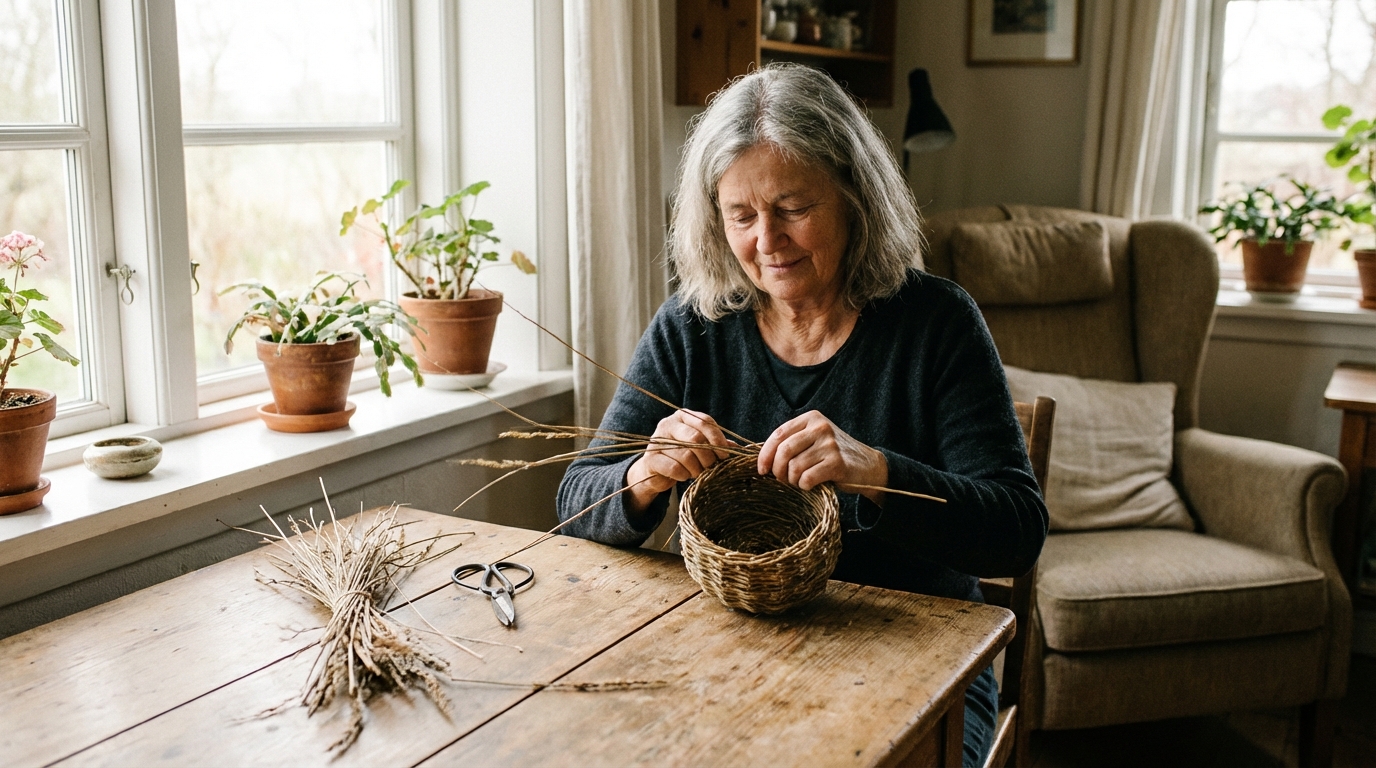
Handcraft has always grown out of ordinary rooms, spare corners, and the tools close at hand. Long before shelves filled with specialty items, people learned to shape, mend, and make using what fit in a small box or drawer. Limiting supplies is not a restriction meant to deny comfort or pleasure. It is a way of creating a steady, workable space where attention can settle and hands can learn. When materials are few, each one becomes familiar, and that familiarity allows creativity to deepen rather than scatter.
The quiet value of fewer tools
Too many supplies can pull attention in several directions at once. Each choice asks for energy: which fabric, which paper, which finish, which thread. Over time, this constant deciding can dull the desire to begin. A smaller set of materials removes that weight. With fewer options, the hands move more quickly into the work itself.
This does not mean using poor-quality items or doing without what is necessary. It means choosing well and choosing intentionally. A sharp pair of scissors that are kept clean and used only for cloth can do more than several dull pairs meant for every task. A single needle size that suits most projects builds consistency. The value comes from knowing how a tool behaves in different situations, not from owning every version of it.
When tools are limited, they tend to be cared for. They are put away properly, cleaned, and checked before use. This care becomes part of the routine, setting a calm tone before the work begins. The craft then feels like a continuation of daily life rather than a special event that requires preparation and expense.
How limits guide the hands and mind
Creativity often grows stronger within boundaries. Limits give the mind a clear shape to work inside. When the number of materials is small, the focus shifts from collecting to problem-solving. Instead of asking what to buy next, the question becomes how to make something work with what is already there.
This kind of thinking encourages patience. It slows the process just enough to allow ideas to form naturally. A piece of wood that is slightly thinner than planned asks for adjustment. A short length of yarn suggests a smaller project or a careful joining. These small decisions build skill over time.
Limits also teach restraint. Not every idea needs to be made right away. Some can wait until the right moment or until a material naturally becomes available. This waiting keeps the craft from becoming cluttered with half-finished pieces and unused supplies.
Choosing a small, useful set of materials
Creating with fewer supplies begins with thoughtful selection. The goal is not minimalism for its own sake but usefulness and reliability. A good starting point is to notice which materials are reached for again and again. These are often the items that suit the home’s pace and the maker’s habits.
When selecting materials, it helps to consider:
- Versatility: items that work across several types of projects.
- Durability: materials that hold up to repeated use.
- Ease of care: supplies that do not require special storage or handling.
For example, a neutral thread color that blends with many fabrics can be more helpful than a full range of shades rarely used. A sturdy paper weight that folds well and accepts ink evenly can replace several specialty papers. Each choice should earn its place by being used often and well.
It is also wise to leave some space. Empty space in a basket or drawer is not wasteful. It allows room for materials that arrive through repair, reuse, or small, thoughtful additions.
Storage as part of the craft routine
Limited supplies work best when they are stored simply and visibly. When materials are hidden in layers of boxes, they are easy to forget and easy to replace unnecessarily. Open baskets, shallow drawers, or clear containers allow a quick glance to show what is available.
Storage should match the rhythm of use. Items used daily belong within arm’s reach. Those used occasionally can be placed slightly farther away but still accessible without effort. This arrangement saves time and keeps the work flowing.
Keeping supplies together by function rather than type can also help. For example, storing needles, thread, and small scissors together supports mending tasks without searching. This small consideration makes it easier to begin, especially during short moments between other responsibilities.
Working within a defined space
Limiting supplies naturally leads to working within a defined physical space. A table corner, a small desk, or even a tray that can be moved becomes the boundary of the craft. This boundary is helpful. It keeps projects from spreading and becoming overwhelming.
When the space fills, it is a sign to pause. This pause encourages finishing or setting aside before starting something new. Over time, this habit reduces unfinished work and builds trust in the ability to complete what is begun.
A defined space also protects the craft from interruption. When everything needed is already there, the work can begin quickly and end neatly. This makes it easier to return to the project later without confusion or frustration.
Repetition builds skill and confidence
Using the same materials repeatedly allows the hands to learn their behavior. The weight of a particular yarn, the way a certain fabric stretches, or how a familiar wood grain responds to pressure becomes known. This knowledge cannot be gained from variety alone.
Repetition also brings efficiency. Movements become smoother, and mistakes become less frequent. When a problem does occur, it is easier to diagnose because the material is familiar. The maker knows what is typical and what is unusual.
This steady learning builds quiet confidence. Projects may become simpler in appearance, but they often improve in quality. Edges are neater. Finishes are more even. These improvements come from attention, not from new supplies.
Planning before beginning
With limited materials, planning becomes an essential step. Taking a few moments to consider size, purpose, and method can prevent waste and disappointment. This planning does not need to be formal. A small sketch or a mental outline is often enough.
Questions worth considering include:
- What is the purpose of this item?
- Which materials on hand are best suited for that purpose?
- How much material is truly needed?
This kind of thinking often reveals that a project can be smaller or simpler than first imagined. A bag does not need extra pockets to be useful. A decorative piece does not need multiple finishes to be pleasing. Simplicity reduces the chance of running out of materials halfway through.
Repair and reuse as creative practice
Limiting supplies naturally leads to repair and reuse. Scraps and worn items become resources rather than waste. A frayed edge can be trimmed and turned. A broken piece can be taken apart for usable sections.
This practice teaches careful observation. Not every worn item is suitable for reuse, and learning to judge what can be saved is a skill. Materials that are too weak or damaged can cause frustration if used again. Knowing when to let go is as important as knowing when to keep.
Repair also brings a sense of continuity. Items that are mended carry their history forward. They become familiar objects with a story, even if that story is quiet and ordinary.
Examples across everyday crafts
Sewing and mending
In sewing, a limited selection of needles, thread, and fabric encourages careful cutting and stitching. Measuring twice becomes a habit because there is no excess to rely on. Seams are pressed thoughtfully because the final appearance matters.
Mending benefits especially from limited supplies. A small kit kept in a consistent place makes it easy to fix a loose button or small tear as soon as it is noticed. Quick repairs prevent larger problems and extend the life of clothing and linens.
Paper crafts
Paper work thrives on restraint. A few weights and colors can produce a wide range of results. Folding, cutting, and layering become the main creative actions rather than decoration.
Limited paper supplies encourage precision. Cuts are planned. Mistakes are fewer because each sheet matters. This care often results in cleaner, more thoughtful designs.
Wood and simple building
With wood, limiting tools and materials encourages respect for the material. A single type of wood teaches its strengths and weaknesses. Simple joints become reliable through repetition.
Working this way reduces waste and makes projects more manageable. Small items such as shelves, boxes, or stools can be completed with confidence, building practical skill over time.
Yarn and fiber work
In knitting or crochet, a small range of yarn weights and needle sizes simplifies planning. Patterns can be adjusted easily because the materials are familiar. Gauge becomes predictable, which reduces the need for starting over.
Using up leftover yarn before buying more keeps projects grounded. Small accessories or repairs become opportunities to use what is already present.
Knowing when limits do not serve the work
Limiting supplies is not meant to be rigid. There are times when a project genuinely requires something new. Safety, durability, and function should never be compromised for the sake of restraint.
For example, using the correct fastener for a load-bearing item is essential. Substituting an unsuitable material can lead to failure and wasted effort. The key is to add thoughtfully, choosing items that will continue to be useful beyond a single project.
When a new supply is introduced, it helps to make room for it by using up or passing along something else. This keeps the overall balance and prevents slow accumulation.
Seasonal rhythms and rotation
Handcraft often follows the seasons, even in subtle ways. Heavier materials may be used during colder months, while lighter work suits warmer days. Limiting supplies makes these transitions clearer.
Rotating materials seasonally keeps the workspace fresh without adding more. Items not in use can be stored together, ready for their time. This rhythm brings variety without excess.
Care routines that support creativity
Simple care routines protect limited supplies and make them pleasant to use. Cleaning tools after each session, winding thread neatly, and folding fabric properly all take only a few minutes.
These actions signal the end of one session and prepare for the next. They reduce the chance of damage and make it easier to begin again without delay. Over time, these routines become automatic, supporting steady, unhurried work.
The emotional calm of enough
Working with enough, rather than too much, brings a quiet satisfaction. The craft becomes less about accumulation and more about use. Each item has a role, and that clarity eases the mind.
This calm can extend beyond the craft space. It influences how other household tasks are approached, encouraging thoughtful use and care. The habit of making do, when done with intention and skill, becomes a source of quiet pride and ongoing creativity.