
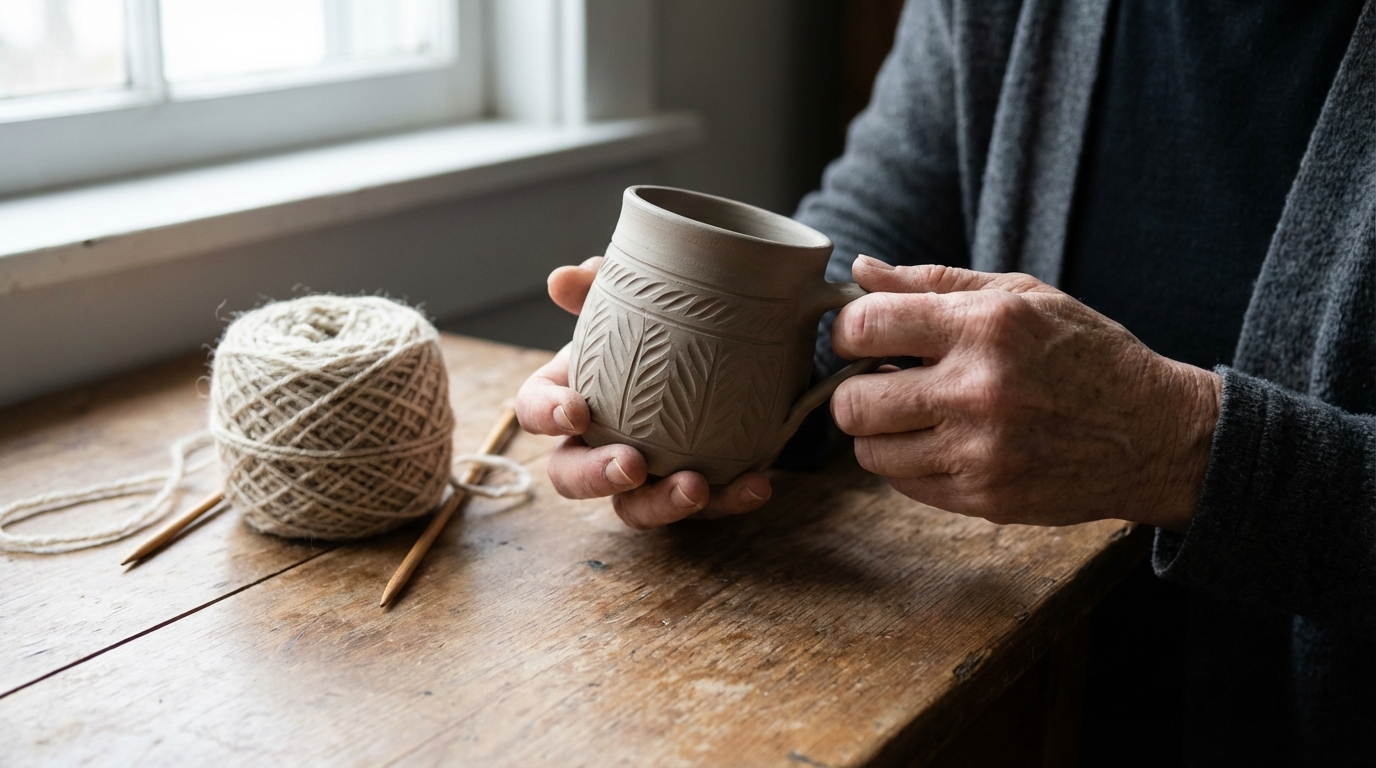
Handmade items have always been part of home life, not as decoration alone but as tools, comforts, and quiet companions in daily routines. When made with purpose, even the simplest object carries a sense of steadiness. It fits into the rhythm of a day, supports a task, and often lasts longer than expected. Purpose does not require skill or special talent. It comes from paying attention to how an object will be used, cared for, and lived with over time.
Creating with purpose begins long before any material is cut or shaped. It starts with noticing what is actually needed in the home and how hands move through familiar tasks. A cloth for drying dishes, a basket for holding mail, a stitched cover for a worn book, or a wooden spoon smoothed just right for stirring soups all come from the same place: an understanding of daily life and a desire to make it a little more settled.
Purpose Begins With Observation
Many handmade items fail to serve well because they begin as ideas rather than responses. Purpose grows out of observation. It asks what is missing, what wears out quickly, or what causes small frustrations during ordinary tasks.
Observation does not require special effort. It happens naturally when routines are allowed to unfold without rushing. Noticing where keys are dropped, how often a towel slips from its hook, or which drawer refuses to stay organized reveals clear opportunities for thoughtful making.
For example, a fabric pouch becomes more meaningful when its size matches the exact tools it will hold. A shelf liner becomes more useful when cut to accommodate the slight curve of a cabinet. These small adjustments are not decorative choices. They are answers to real needs.
Purpose also includes restraint. Not every idea needs to become an object. Sometimes the most intentional choice is to make nothing until a genuine need appears. This patience prevents clutter and ensures that what is made earns its place in the home.
Choosing Materials That Support Daily Use
Materials shape how an object feels, ages, and performs. Purposeful making favors materials that respond well to repeated handling and simple care. This does not mean expensive or rare supplies. It means choosing what works quietly and reliably.
Natural fibers often serve well because they breathe, soften with use, and can be repaired. Cotton absorbs moisture and washes clean. Linen dries quickly and resists odors. Wool cushions and insulates while returning to shape. These qualities explain why such materials appear again and again in household items.
Wood, when left with a smooth but not glossy finish, warms under the hand and resists slipping. Clay, fired and glazed properly, holds heat evenly and cleans easily. Metal, when chosen for strength rather than shine, lasts through decades of use.
Purpose also considers how materials interact with each other. A wooden handle attached to a metal tool reduces fatigue. A fabric lining inside a basket protects delicate items. These combinations are not decorative flourishes but thoughtful responses to use.
Another consideration is repair. Purposeful materials allow mending. A seam that can be resewn, a surface that can be sanded, or a handle that can be replaced extends the life of an object and strengthens the bond between maker and item.
Designing for the Hands, Not the Eyes Alone
Objects made with purpose feel right when used. This quality often matters more than appearance. A handle that fits comfortably, a lid that lifts easily, or a weight that balances well in the hand contributes to an object’s quiet success.
Designing for the hands means slowing down during the planning stage. Holding tools, testing grip, and imagining repeated motions reveal what works and what does not. A bowl meant for mixing should have sides high enough to prevent spills but low enough to reach the bottom easily. A bag meant for carrying groceries should distribute weight without digging into the shoulder.
Small adjustments make a lasting difference. Rounding an edge prevents wear on skin and fabric. Adding a thumb rest reduces strain. Leaving enough space between stitches allows fabric to move naturally.
Purposeful design also respects limitations. Hands grow tired. Movements become less precise under stress. An object that functions well even when used quickly or without careful attention proves its value in everyday life.
Understanding When Simple Is Better
Purpose often leads to simplicity. An object that does one thing well usually serves longer than one designed to do many things at once. Extra features add weight, complexity, and points of failure.
For example, a plain wooden box with smooth joints and a well-fitted lid may outperform a compartmentalized container with fragile hinges. A straight-forward apron with strong ties and a deep pocket may be more useful than one with decorative layers that catch and tangle.
Simplicity also supports care. An object that can be cleaned quickly is more likely to be used often. A surface without deep grooves resists grime. A shape without unnecessary folds dries faster and stores more easily.
This does not mean avoiding beauty. Beauty emerges from proportion, texture, and balance. When an object works well, its appearance often feels right without added decoration.
Building Items Into Routines
An object gains meaning through repetition. Purposeful handmade items are designed with routines in mind. They appear where tasks begin and end, supporting actions that happen daily or weekly.
Consider a cloth placed near the sink. If it hangs within easy reach and dries between uses, it becomes part of the washing routine. If it is too small, too thick, or slow to dry, it becomes a nuisance.
Placing items where they naturally belong encourages consistent use. A basket near the door for incoming mail prevents papers from spreading. A small tray by the bed holds essentials without cluttering the surface.
Purpose also includes timing. Some items serve best at certain moments of the day. A warm wrap kept near a chair invites rest in the evening. A sturdy mat by the door supports the transition from outside to inside.
When objects align with routines, they reduce effort rather than adding steps. This quiet support is one of the strongest signs of purposeful making.
The Role of Care and Maintenance
Purpose does not end when an item is finished. It continues through care. Objects made with intention invite maintenance because they respond well to it.
Understanding how an item will be cleaned, stored, and repaired shapes its design. A washable cover extends the life of a cushion. A removable lining allows thorough cleaning. A finish that tolerates gentle scrubbing keeps surfaces safe for food preparation.
Care routines do not need to be elaborate. Simple habits such as airing out fabrics, oiling wood occasionally, or checking seams before they fail prevent larger problems later.
Purposeful items often teach care through use. A knife that sharpens easily encourages proper maintenance. A well-made brush that cleans thoroughly with minimal effort becomes part of regular upkeep.
This ongoing relationship between object and care deepens its place in the home. Maintenance becomes less of a chore and more of a continuation of making.
Allowing Time for Objects to Settle In
Not every handmade item feels perfect right away. Purpose includes allowing time for adjustment. Materials soften, edges smooth, and habits adapt.
Fabric items often improve after several washes. Stiffness fades, absorbency increases, and the item begins to respond naturally to use. Wooden objects may develop a gentle sheen where they are handled most.
Allowing this settling-in period prevents unnecessary changes. An object that feels slightly awkward at first may find its place after a week of use. Purposeful making respects this process and avoids constant redesign.
However, time also reveals genuine flaws. A handle that causes strain or a seam that pulls under weight needs attention. Purpose includes responding to these signals and making thoughtful adjustments.
Making With Patience Rather Than Urgency
Urgency often leads to shortcuts that weaken an object’s usefulness. Purpose favors patience, even in small projects.
Taking time to measure carefully prevents imbalance. Allowing glue to cure fully ensures strength. Waiting for paint or finish to dry avoids tackiness and uneven surfaces.
Patience also applies to learning. Skills improve through repetition and attention. A first attempt may not be perfect, but each project builds understanding. Purpose grows as techniques become more reliable.
Rushing often shows later in the form of repairs or replacements. Slowing down during creation saves time and effort over the life of the item.
Respecting Limits and Choosing Appropriate Projects
Purposeful making respects both ability and context. Not every project suits every home or schedule. Choosing projects that align with available time, space, and energy ensures they are completed and used.
Small, focused projects often serve better than ambitious ones left unfinished. A set of durable cloths may offer more daily value than an elaborate item that remains stored away.
Purpose also considers safety. Using tools and materials appropriate to the setting prevents accidents. Clear workspace, proper ventilation, and simple protective measures support calm, steady work.
Understanding limits does not restrict creativity. It channels it toward objects that truly belong in the home.
Using Mistakes as Guides Rather Than Failures
Mistakes reveal how materials behave and how designs respond to use. Purposeful making treats mistakes as information.
A seam that puckers may indicate tension issues. A surface that stains easily may require a different finish. A handle that loosens suggests a need for stronger joints.
Responding to these signals improves future projects. Adjustments made after careful observation lead to more reliable results.
Purpose grows through this steady refinement. Each object informs the next, creating a quiet progression of skill and understanding.
Letting Objects Carry Daily Meaning
Purposeful handmade items often become markers of daily life. They accompany routines without drawing attention to themselves.
A cup that fits comfortably in the hand during morning tasks, a cloth that softens with use, or a container that always holds what is needed contributes to a sense of order.
This meaning does not come from decoration or display. It comes from reliability. An object that performs well earns trust, and trust creates comfort.
Over time, these items gather subtle signs of use. Slight fading, gentle wear, and softened edges tell a story of service rather than neglect.
Passing Along Knowledge Through Objects
Handmade items often carry practical knowledge within their design. The way a seam is reinforced, the choice of knot, or the placement of a handle reflects understanding gained through experience.
When these objects are used and maintained, the knowledge continues. The item teaches through example, showing how it should be handled and cared for.
This quiet transfer of understanding strengthens routines and builds confidence in everyday tasks. Purposeful objects support learning without instruction.
Creating Space for Making Within Home Life
Purposeful making does not require a dedicated room or elaborate setup. It fits into available spaces and existing routines.
A cleared table used at certain times, a basket holding tools, or a shelf for drying projects creates enough structure to support regular making.
Returning materials to their place after use maintains order and makes future work easier. This simple habit prevents making from becoming disruptive.
Purpose includes respecting the home as a whole. Projects pause when needed and resume without pressure.
Understanding When an Object Has Served Its Time
Even purposeful items eventually reach the end of their usefulness. Recognizing this moment honors the object rather than diminishing it.
A cloth that has worn thin may become a cleaning rag. A wooden tool that cracks beyond repair may be retired from use. This transition reflects respect for service given.
Purpose includes thoughtful disposal or repurposing. Materials may find new roles, extending their usefulness in different forms.
This understanding prevents clutter and maintains clarity within the home.
Purpose as a Quiet Presence
Purposeful handmade items do not announce themselves. They support daily life quietly, without demanding attention.
They fit into routines, respond to care, and age with use. Their value becomes clear through repeated, reliable service.
Creating with purpose is less about producing objects and more about strengthening the connection between hands, home, and daily tasks. It is a steady practice that rewards patience, observation, and care.
In this way, even the simplest craft becomes meaningful, not because of its appearance, but because it belongs.