
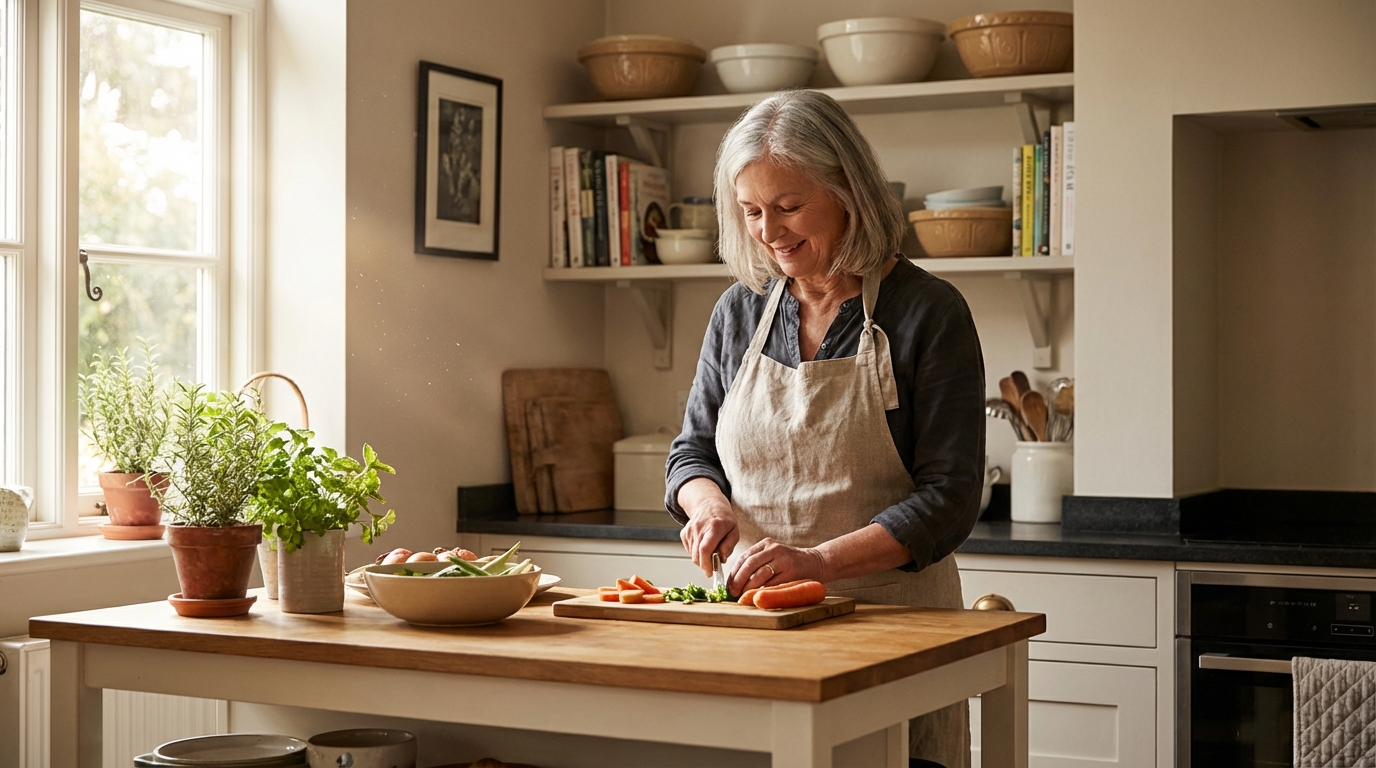
There is a quiet relief that comes from knowing what will happen next in the kitchen. Not in a rigid way, but in a steady, familiar rhythm that removes daily guesswork. Meal routines are not about strict schedules or repeating the same dish endlessly. They are about creating a flow that fits the household, the seasons, and the energy of the day. When cooking follows a gentle pattern, meals become easier to prepare, easier to enjoy, and easier to clean up afterward.
Predictable cooking patterns reduce mental clutter. Instead of starting each day with the question of what to cook, the answer is already partly there. This frees attention for other tasks and allows meals to feel like a natural part of the day rather than a daily challenge. Over time, these routines shape shopping habits, reduce waste, and make better use of what is already on hand.
Why Meal Routines Bring Calm to Daily Life
Cooking decisions require energy. Choosing ingredients, deciding on methods, and timing everything to be ready at the right moment all take effort. When this process is repeated from scratch every day, it can quietly drain attention and patience. A routine reduces the number of decisions without removing care or creativity.
Predictability also supports the body. Regular meal times and familiar foods help digestion and appetite settle into a steady rhythm. The kitchen becomes a place of nourishment rather than stress. Even simple meals feel more satisfying when they arrive at expected times and follow familiar patterns.
There is also comfort in repetition. Familiar dishes carry a sense of reliability. They remind the household that meals are taken care of, even on busy or tiring days. This kind of reassurance cannot be rushed; it is built slowly through consistent practice.
Understanding the Natural Shape of the Day
Every home has its own daily shape. Some hours are quiet and open, while others are crowded with activity. Effective meal routines work with this natural flow instead of against it. The first step is noticing when energy is high and when it drops.
Mornings often benefit from simplicity. Meals that require little thought or preparation fit well here. Midday may allow more flexibility, depending on work and school schedules. Evenings usually call for the most planning, as they come at the end of the day when energy is lower.
By aligning meal effort with energy levels, cooking feels less demanding. A routine might place the most involved cooking earlier in the day or on days when there is more time. Lighter tasks can be saved for moments when attention is limited.
Observing Before Changing
Before creating or adjusting routines, it helps to observe current habits for a week or two. Notice when cooking feels rushed and when it feels smooth. Pay attention to which meals are often skipped, delayed, or improvised. These moments point to where a routine could offer support.
This observation is not about judgment. It is about understanding what already works and what quietly causes strain. Small changes, guided by real patterns, are more sustainable than complete overhauls.
Building Meals Around Reliable Anchors
Anchors are meals or components that appear regularly and require little decision-making. They form the backbone of a meal routine. Breakfast is often the easiest place to start, but anchors can exist at any time of day.
An anchor might be a familiar combination that can be adjusted slightly without changing its core. For example, a basic grain with toppings, a simple soup base, or a recurring style of sandwich. The key is that the structure remains the same even when ingredients vary.
Anchors reduce shopping complexity. When the same types of meals appear regularly, it becomes easier to know what to keep stocked. This also reduces food waste, as ingredients are used consistently rather than forgotten.
Flexible Consistency
Consistency does not mean sameness. A routine should allow for seasonal changes, personal preferences, and occasional interruptions. The structure stays in place, but details can shift.
For example, a weekly pattern might include a pot of something simmered, a tray baked in the oven, and a fresh assembly-style meal. The specific ingredients change, but the method and timing remain familiar. This balance keeps meals interesting without adding complexity.
The Quiet Power of Repeating Cooking Methods
Repeating cooking methods is one of the most overlooked aspects of meal routines. When the same techniques are used regularly, they become second nature. Hands move with confidence, timing improves, and mistakes become less likely.
Methods like roasting, simmering, steaming, and sautéing each have their own rhythm. Choosing a few to rely on makes cooking feel smoother. It also simplifies cleanup, as the same tools and cookware are used again and again.
Repeating methods also helps with planning. It becomes easier to estimate how long a meal will take and how much attention it will require. This predictability is especially helpful on busy days.
Why Familiar Methods Taste Better
When a cooking method is familiar, small adjustments are easier to make. Seasoning becomes more precise, textures improve, and doneness is judged more accurately. Over time, even simple ingredients are handled with care, resulting in better flavor.
This is not about perfection. It is about understanding how heat, time, and ingredients interact. Familiarity allows for gentle corrections rather than rushed fixes.
Weekly Patterns That Reduce Daily Decisions
Weekly patterns provide a wider frame for meal routines. Instead of planning each day separately, the week is viewed as a whole. Certain days naturally lend themselves to certain types of meals.
For example, one day might be set aside for using up leftovers, another for slower cooking, and another for quick assembly. These patterns create a sense of order without requiring a strict menu.
Weekly routines also help with shopping. Knowing roughly what types of meals will appear allows for more focused grocery lists. This reduces impulse purchases and ensures that perishable items are used in time.
When Weekly Patterns Need Adjustment
Life does not always follow the same rhythm. Some weeks are busier or more unpredictable. During these times, the routine should bend rather than break.
Having a few fallback meals that require minimal effort can support the routine during disruptions. These meals fit into the pattern without demanding extra planning. They act as a safety net rather than a failure.
Preparing Ingredients Without Overworking
Ingredient preparation is often where routines succeed or fail. Preparing too much can feel exhausting, while preparing nothing can lead to rushed meals. The balance lies in small, intentional steps.
Simple actions like washing produce when it comes into the home, cooking a basic grain, or portioning proteins can quietly save time later. These tasks are most effective when they are light and repeatable.
Preparation should fit naturally into the day. It might happen while waiting for something else to cook or during a calm moment in the afternoon. When preparation is tied to existing activities, it feels less like extra work.
Knowing What Not to Prep
Not everything benefits from advance preparation. Some foods lose texture or flavor when stored. Others take nearly as long to prepare ahead as they do fresh.
Experience helps determine which ingredients are worth prepping. Over time, the routine becomes more precise, focusing only on tasks that offer real benefit.
Using Leftovers as Planned Ingredients
Leftovers are often treated as an afterthought, but they work best when they are part of the plan. When meals are designed with leftovers in mind, they feel intentional rather than accidental.
This might mean cooking slightly more of a base ingredient or choosing dishes that can transform easily. A roasted item can become part of a salad, a filling, or a soup with little effort.
Planning for leftovers reduces waste and saves time. It also adds variety without extra cooking, as the same ingredient appears in a new form.
Handling Leftovers with Care
Proper storage and timely use are key. Leftovers should be cooled, covered, and labeled clearly. Placing them at eye level in the refrigerator prevents them from being forgotten.
Using leftovers within a few days maintains quality and safety. When they are treated as valuable ingredients, they receive the attention they deserve.
Matching Meal Effort to the Day’s Demands
Not every day can support the same level of cooking. Some days allow for slow preparation, while others require speed and simplicity. A flexible routine accounts for this variation.
Meals can be grouped by effort level. High-effort meals are saved for days with more time and energy. Low-effort meals are reserved for demanding days. This prevents burnout and keeps the routine realistic.
Knowing which category a meal falls into helps with planning. It removes guilt from choosing simplicity when the day requires it.
Listening to Subtle Signals
Fatigue, stress, and time pressure all affect cooking. Paying attention to these signals allows for adjustments before frustration builds.
A routine that respects these signals feels supportive. It acknowledges that care can take many forms, including choosing ease when needed.
The Role of Repetition in Skill Building
Cooking skills grow through repetition, not complexity. Making the same types of meals regularly builds confidence and speed. Over time, tasks that once felt demanding become automatic.
This skill growth makes the routine more efficient. It also allows for small improvements, such as better timing or seasoning. These improvements accumulate quietly.
As skills improve, the routine becomes more forgiving. Mistakes are easier to correct, and adjustments feel natural.
Allowing Skills to Develop Naturally
There is no need to rush skill development. Familiarity comes from steady practice, not pressure. A routine that repeats core tasks provides this practice without strain.
This approach builds a deep, practical understanding of cooking that supports daily life.
Seasonal Shifts and Routine Adaptation
Seasons influence appetite, ingredient availability, and energy levels. A good meal routine adapts to these changes while keeping its core structure.
In cooler months, routines may lean toward warm, slow-cooked meals. In warmer months, they may shift toward lighter preparations. The underlying pattern remains, but the expression changes.
This seasonal awareness keeps meals satisfying and relevant. It also aligns cooking with natural rhythms, making it feel more intuitive.
Adjusting Without Starting Over
Seasonal changes do not require rebuilding routines from scratch. Small adjustments, such as changing cooking methods or ingredient focus, are often enough.
This continuity maintains the sense of flow while honoring the needs of the moment.
Creating Space for Spontaneity
While routines provide structure, they should not eliminate spontaneity. Leaving small openings allows for unexpected opportunities, such as a change in schedule or a sudden craving.
Spontaneity works best when it rests on a stable foundation. When basic needs are already met by the routine, improvisation feels enjoyable rather than stressful.
This balance keeps cooking lively without undermining the benefits of predictability.
Knowing When to Depart from the Routine
Departures feel natural when they are chosen, not forced. Recognizing when the routine has served its purpose for the day allows for flexibility without guilt.
The routine remains intact because it is trusted, not because it is rigid.
The Quiet Satisfaction of a Well-Worn Pattern
Over time, meal routines settle into the background of daily life. They no longer demand attention, yet they support everything else. The kitchen feels organized, meals arrive on time, and care is expressed through consistency.
This quiet satisfaction comes from patience and repetition. It is built through small choices made day after day. The result is a kitchen that flows naturally, guided by common sense and lived experience.
Such routines do not seek attention. They simply work, offering steady nourishment and calm in the midst of everyday life.