
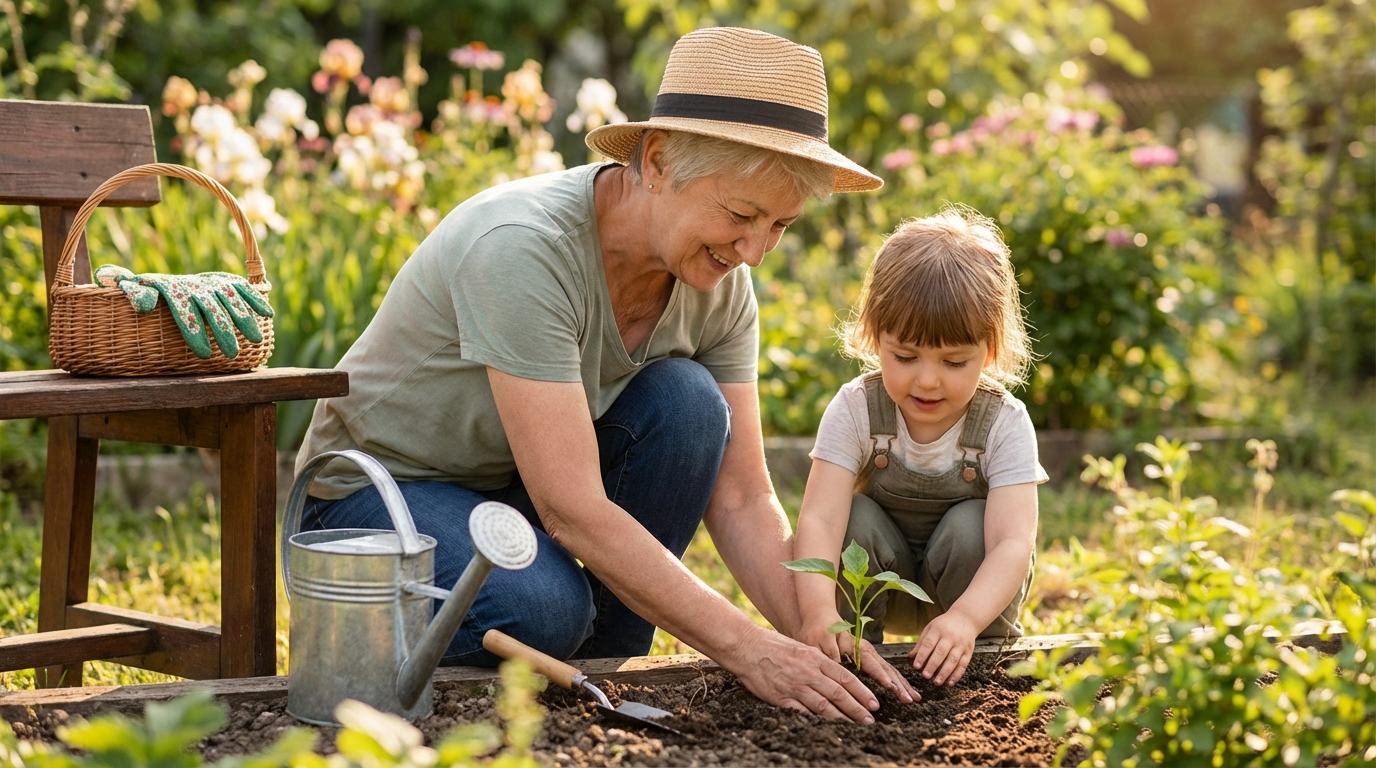
A garden offers more than fresh air and green leaves. It offers rhythm. The steady return of tasks, the quiet patience of waiting, and the simple satisfaction of tending something that responds over time. When children are invited into this space in thoughtful ways, the garden becomes a place of calm learning rather than pressure or performance. The goal is not productivity. It is belonging. Simple tasks, done regularly, allow children to feel useful without feeling watched or rushed.
Creating garden tasks for children works best when the work feels real. Children sense when an activity matters. A task that truly helps the garden, even in a small way, carries more meaning than a pretend job. At the same time, the task must be scaled to fit growing hands and attention. Balance comes from understanding how gardens work and how children experience time, texture, and responsibility.
Why Simple Garden Tasks Matter
Gardens run on small actions repeated over time. Watering, checking soil, removing weeds before they spread, noticing changes in leaves. These actions match a child’s natural way of learning. Instead of long explanations, there is doing. Instead of immediate results, there is waiting.
Simple garden tasks offer three quiet lessons at once. First, they show that care is an ongoing process. Plants do not respond to one big effort. They respond to steady attention. Second, they teach cause and effect without lectures. Missed watering leads to drooping leaves. Gentle watering leads to recovery. Third, they build trust. When a child is given a real task, it signals confidence.
These lessons settle in slowly. They do not need to be named or explained. They work best when allowed to unfold naturally.
Choosing the Right Kind of Tasks
Not every garden job is suitable for children. Some tasks require strength, precision, or judgment that comes only with experience. The key is to choose tasks that are simple in motion, forgiving in outcome, and easy to repeat.
Forgiving tasks are especially important. A plant that can handle a little extra water or a missed day of care reduces stress for everyone. Hardy herbs, leafy greens, and sturdy flowers are good examples. They show clear signs of care without failing easily.
Tasks should also have a clear beginning and end. Open-ended work can feel confusing. A defined task, such as filling a watering can and emptying it onto a specific bed, gives a sense of completion.
Watering with Purpose
Watering is often the first task offered, but it works best when done with a little structure. Without guidance, watering can turn into splashing or over-soaking. With gentle boundaries, it becomes a lesson in observation.
Using a small watering can helps control the flow. Plastic cans are light but can tip too quickly. Metal cans add weight and slow movement, which often leads to more careful pouring. The size of the spout matters as well. A narrow spout encourages aim and reduces runoff.
It helps to assign specific plants to water. This prevents overwatering and gives a sense of ownership. Instead of saying water the garden, it works better to say water the bean row or the pots near the steps.
Watering early in the day is calmer and shows how plants respond throughout the hours that follow. Leaves lift, soil darkens, and the garden looks settled. This visible change reinforces the value of the task.
Planting Seeds One at a Time
Seed planting is naturally appealing because it feels like a beginning. It also teaches patience in a quiet way. The key is to slow the process down.
Large seeds are easier to handle and easier to space. Beans, peas, and squash seeds give clear direction. Tiny seeds often lead to clumps and disappointment later.
Planting one seed per hole encourages focus. It also prevents crowding, which can be explained simply as giving each plant room to breathe. Covering the seed and pressing the soil gently shows care without force.
Marking the spot with a small stick or label helps track progress. When shoots appear, the connection between effort and result becomes visible.
Daily Garden Checks
Some of the most valuable garden tasks involve no tools at all. A daily walk through the garden builds awareness. This can include looking for dry soil, checking leaves for changes, or noticing new growth.
These checks work best when framed as noticing rather than fixing. Not every issue needs action. Learning to observe without rushing builds judgment over time.
Asking simple questions helps guide attention. Does the soil feel crumbly or packed? Are the leaves smooth or curled? Are insects moving slowly or quickly? These details train the eye and hand.
Creating a Routine That Feels Natural
Gardens thrive on routine, and so do children. A task done at the same time each day or week becomes part of the rhythm of home life. It stops feeling like an assignment and starts feeling expected.
Linking garden tasks to existing routines makes them easier to remember. Watering after breakfast, checking plants before dinner, or pulling weeds during a quiet afternoon all fit naturally into the day.
Consistency matters more than duration. Five minutes every day teaches more than an hour once a week. Short tasks respect attention spans and prevent fatigue.
When routines are steady, children begin to anticipate what comes next. This anticipation builds confidence and reduces resistance.
Using the Same Tools Each Time
Familiar tools create comfort. A small trowel, a specific watering can, or a pair of gloves used only for garden work signals a shift in activity.
Tools should be stored in the same place and returned after use. This reinforces care for belongings and makes the next task easier to begin.
Worn handles and dirt-stained surfaces show use. They tell a quiet story of work done over time, which adds to the sense of belonging.
Allowing Tasks to Take the Time They Take
Rushing undermines the calm nature of garden work. When there is pressure to finish quickly, mistakes increase and enjoyment fades.
It helps to allow extra time for tasks, even simple ones. Spilled water, uneven rows, or forgotten tools are part of learning. These moments offer gentle lessons in preparation and patience.
When time is limited, it is better to skip a task than to hurry through it. Gardens recover from missed days more easily than from careless work.
Teaching Care Through Touch and Texture
Gardens speak through texture. Soil can be dry and dusty or cool and moist. Leaves can be soft, rough, or sticky. Learning to recognize these differences builds a sense of care that words alone cannot teach.
Encouraging hands-on contact helps children understand what plants need. Feeling dry soil explains watering better than any instruction. Touching a wilted leaf shows stress in a direct way.
Washing hands afterward becomes part of the routine. It marks the end of garden time and reinforces cleanliness without fuss.
Weeding as a Lesson in Attention
Weeding is often seen as tedious, but it can be one of the most instructive tasks when approached carefully.
Starting with large, easy-to-pull weeds prevents frustration. Weeds with shallow roots come up cleanly and provide quick success.
Teaching how to identify weeds versus plants is best done slowly. Comparing leaf shapes, stem textures, and growth patterns trains observation. Pulling the wrong plant is not a failure. It is a chance to learn.
Weeding small areas at a time prevents overwhelm. A single row or a marked patch gives clear boundaries.
Harvesting with Care
Harvest time brings visible reward, but it also requires restraint. Pulling too early or too roughly can damage plants.
Showing how to twist gently or use small scissors prevents tearing. Explaining that plants continue producing when handled kindly introduces the idea of long-term thinking.
Washing produce together reinforces cleanliness and respect for food. It also provides a natural transition from garden to kitchen.
Understanding When Tasks Do Not Work
Not every task will succeed every time. Weather changes, pests appear, and plants fail despite good care. These moments are part of garden life.
It is important to explain why something did not work in simple terms. Too much rain can wash seeds away. Heat can stress plants. Insects follow scent and opportunity.
Avoid placing blame on the task or the person doing it. Gardens are systems, not tests. When something fails, adjusting the approach teaches resilience.
Choosing tasks that can be paused or adapted helps maintain confidence. If planting fails, watering and observing can continue.
Building Responsibility Without Pressure
Responsibility grows when it is given gradually. Assigning a single task and allowing it to remain the same for a while builds mastery.
Changing tasks too often can feel unsettling. Familiar work allows improvement and pride.
It helps to check in quietly rather than correct immediately. Watching how a task is done reveals understanding. Gentle suggestions work better than instructions.
Praise is most meaningful when tied to effort rather than outcome. Noticing careful pouring or consistent checking reinforces good habits.
Letting the Garden Speak
Plants show the results of care clearly. Strong stems, even growth, and steady color reflect attention over time.
Pointing out these signs helps connect action to result. The garden becomes the feedback, not the adult voice.
This approach reduces tension and allows learning to feel natural.
Seasonal Tasks That Fit the Year
Gardens change with the seasons, and tasks should change too. Matching work to the time of year teaches awareness of cycles.
In early seasons, tasks may focus on soil preparation and planting. Later, attention shifts to watering and checking for stress. Toward the end, harvesting and clearing beds become the focus.
Explaining these shifts in simple terms helps children understand that work changes as needs change.
Preparing Soil Together
Soil preparation is a quiet but important task. Raking, breaking clumps, and removing stones improve growth.
Using hands to crumble soil teaches texture and moisture awareness. Dry soil breaks differently than damp soil.
This task works best in short sessions. Soil work can be tiring, and stopping before fatigue sets in keeps the experience positive.
Saving Seeds
Seed saving introduces the idea of continuity. Collecting seeds from healthy plants shows how one season supports the next.
Drying seeds on paper and storing them in labeled envelopes adds a sense of care and organization.
This task also reinforces patience. Seeds saved now will not be used immediately, which teaches delayed reward.
Creating Space for Quiet Moments
Not every garden moment needs a task. Sitting, watching insects, or feeling the breeze are part of the experience.
Allowing pauses prevents burnout and keeps the garden associated with calm.
These moments often lead to questions and observations that deepen understanding.
Listening to the Garden
Gardens have sounds. Bees hum, leaves rustle, water trickles. Noticing these sounds builds awareness.
Quiet listening can be part of the routine. A short pause after watering or planting creates a natural break.
This practice encourages respect for the space and all that lives in it.
Supporting Independence Over Time
As familiarity grows, tasks can slowly expand. Adding a new responsibility works best when built on an existing one.
For example, watering can lead to checking soil moisture first. Planting seeds can lead to thinning seedlings later.
Each new step should feel like a natural extension rather than a jump.
Independence grows when trust is shown. Allowing tasks to be done without constant supervision signals confidence.
Knowing When to Step Back
Stepping back can be difficult, but it is essential. Watching from a distance allows learning to happen.
Intervening only when safety or plant health is at risk preserves autonomy.
Mistakes corrected too quickly do not teach. Mistakes observed and discussed later leave a lasting impression.
Keeping the Experience Grounded in Home Life
Garden tasks connect naturally to daily living. Herbs picked for cooking, vegetables washed for meals, flowers cut for the table all show how garden work supports home life.
These connections make tasks meaningful. They show that the garden is not separate from the home but part of it.
Simple rituals, like placing harvested produce in a bowl or rinsing tools together, reinforce this connection.
Respecting the Pace of Learning
Learning in the garden does not follow a schedule. Some lessons take root quickly. Others appear much later.
Respecting this pace keeps the experience gentle. Repetition without pressure allows understanding to deepen.
The garden remains a place of steady growth, both seen and unseen.