
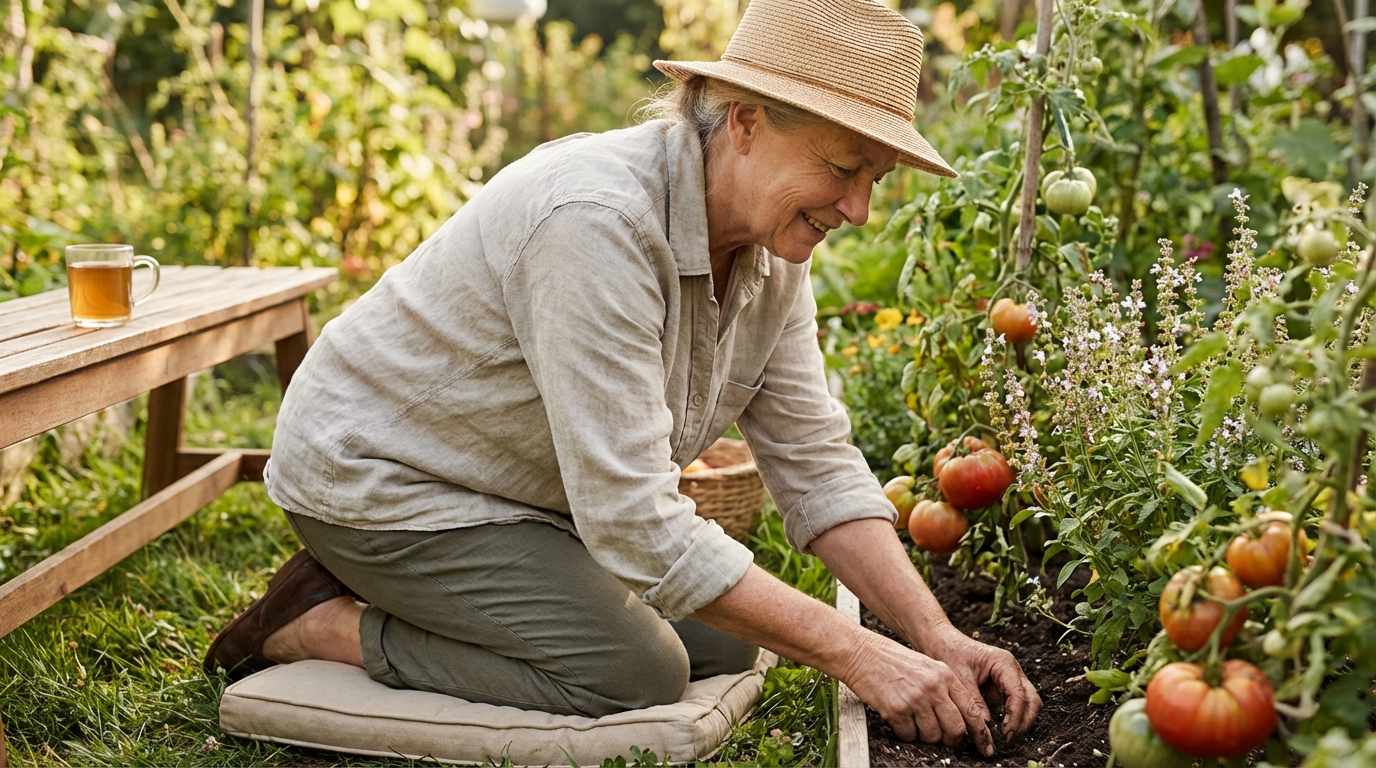
There is a certain ease that comes from working in the garden at a comfortable pace. Not rushed, not forced, and not measured against anyone else’s schedule. This way of tending plants grows out of ordinary home routines, where time is shaped by daylight, weather, and energy rather than a list of tasks to finish. Gardening done slowly does not mean doing less. It means doing what matters, when it makes sense, and in a way that can be returned to day after day without strain.
A steady pace supports consistency. It makes space for noticing small changes, responding to them early, and enjoying the work itself. Over time, this approach often leads to healthier plants and a more dependable routine, because it fits into everyday life instead of competing with it.
Why pace matters more than effort
Gardening often fails not because of lack of care, but because care is given all at once and then abandoned. Long days of digging, planting, and hauling can feel productive, but they often leave the body tired and the garden unattended afterward. A comfortable pace spreads effort evenly, making it easier to return the next day and the day after.
Plants respond better to steady attention than to sudden bursts of work. Soil structure improves slowly. Roots settle gradually. Water soaks in best when applied gently and regularly. Rushing interrupts these processes, while patience supports them.
Working at a measured pace also reduces mistakes. When movements are unhurried, it becomes easier to notice where a plant is placed, how deep a seed is sown, or whether soil is too dry or too wet. Many gardening problems begin with small oversights made during hurried work.
Understanding the body’s role in garden rhythm
The body sets limits that are easy to ignore during a busy day. Gardening at a comfortable pace respects those limits. It allows muscles to warm gradually, joints to move without strain, and breathing to stay even. This reduces soreness and makes it more likely that gardening remains a regular part of home life rather than an occasional project.
Short, repeated sessions often achieve more than long, exhausting ones. Fifteen minutes of weeding every few days keeps beds manageable. A slow walk through the garden with a watering can builds familiarity with each plant. These small efforts add up quietly.
Setting up the garden for slower work
A garden arranged for comfort invites regular care. When tools are easy to reach, paths are clear, and plants are spaced sensibly, work flows without urgency. Thoughtful setup saves time later and supports an unhurried routine.
Tool placement and selection
Keeping tools near the garden reduces the temptation to rush. When a trowel, pruners, or watering can is close at hand, tasks can be done as they arise. This prevents small issues from piling up into larger jobs.
Tools suited to the hand make a noticeable difference. Handles that fit comfortably, blades kept sharp, and tools cleaned after use all reduce effort. Less effort encourages slower, more careful movements.
Paths and access
Clear paths allow steady movement and reduce the need for sudden steps or awkward reaches. Even simple paths made of mulch or stepping stones can guide the body through the garden calmly. This also protects soil structure by keeping feet off planted areas.
Access from more than one side of a bed allows work to be spread out. Instead of leaning or stretching, it becomes possible to approach plants gently, which supports both comfort and plant health.
Working with natural timing instead of against it
Gardening at a comfortable pace aligns work with natural cycles. Soil warms when it is ready. Plants grow according to light and temperature. Trying to hurry these processes often leads to setbacks.
Observing before acting
Taking a few moments to observe before starting work can prevent unnecessary effort. Noticing moisture in the soil may show that watering can wait. Looking closely at leaves might reveal that discoloration is temporary rather than a sign of disease.
Observation builds understanding. Over time, patterns become familiar: which areas dry first, where frost lingers, how sunlight shifts. This knowledge supports calm decision-making.
Choosing the right time of day
Early morning and late afternoon often suit slower gardening. Temperatures are gentler, light is softer, and plants are less stressed. Working during these times reduces the need to hurry and allows tasks to be done thoughtfully.
Midday work can still be useful for light tasks like harvesting or checking growth, but heavier work is better saved for cooler hours. This protects both the gardener and the plants.
Planting with patience
Planting is often rushed, yet it sets the foundation for the entire season. A comfortable pace during planting supports strong roots and steady growth.
Preparing the soil carefully
Soil preparation benefits from unhurried attention. Breaking up clumps gently, removing stones, and mixing in organic matter evenly creates a welcoming environment for roots. Rushed soil work leaves air pockets and uneven texture, which can slow growth later.
Allowing soil to rest briefly after preparation lets moisture settle and structure stabilize. This small pause can improve seed contact and transplant success.
Spacing and depth
Taking time to measure spacing prevents overcrowding. Plants placed too close compete for light and nutrients, leading to weaker growth that requires more correction later. Proper spacing allows air to move freely, reducing disease pressure.
Planting at the correct depth supports stability and access to moisture. Seeds sown too shallow may dry out, while those planted too deep may struggle to emerge. Slow planting allows each placement to be considered.
Watering as a steady practice
Watering reflects the rhythm of the garden. A calm approach ensures water reaches roots without waste.
Slow watering techniques
Water applied slowly soaks into the soil instead of running off. Using a watering can or a hose set to a gentle flow allows moisture to reach deeper roots. This encourages plants to grow downward, making them more resilient.
Pausing between passes gives water time to absorb. This is especially helpful in compacted or dry soil, where fast watering often fails.
Understanding soil moisture
Checking soil moisture by touch provides more information than appearance alone. Soil that looks dry on the surface may be moist below. A comfortable pace includes taking the time to check before watering.
Overwatering often results from hurried routines. Slowing down helps match water to actual need, supporting healthier roots and reducing waste.
Weeding without urgency
Weeding is often seen as a chore to finish quickly, yet it benefits from patience. Addressed steadily, it becomes manageable and less tiring.
Frequent light weeding
Pulling small weeds regularly requires less effort than removing large ones later. A few minutes spent after watering or rain makes removal easier, as roots slide out smoothly.
This approach keeps beds tidy without long sessions. It also reduces soil disturbance, which can bring new weed seeds to the surface.
Learning which weeds matter
Not every weed needs immediate removal. Some shallow-rooted plants pose little threat if kept in check. Taking time to recognize aggressive weeds allows effort to be focused where it matters most.
Leaving less harmful plants temporarily can also protect soil from erosion and sun exposure. A calm pace supports these small decisions.
Pruning and trimming with intention
Pruning shapes growth and encourages health. Rushed cuts can damage plants, while careful trimming supports recovery.
Understanding plant responses
Plants respond to pruning by redirecting energy. Knowing when and where to cut requires observation. A slow approach allows the structure of the plant to be understood before making changes.
Removing small amounts at a time reduces stress. It is easier to cut more later than to undo a cut made in haste.
Using clean, sharp tools
Sharp tools make clean cuts that heal quickly. Taking time to maintain tools supports plant health and reduces effort. A comfortable pace includes caring for tools as part of the routine.
Harvesting as a quiet habit
Harvesting is one of the most rewarding parts of gardening. Done slowly, it becomes a moment of connection rather than a task.
Choosing the right moment
Harvesting at the proper stage improves flavor and texture. Rushing can lead to picking too early or too late. A steady pace allows produce to be checked regularly and gathered when ready.
Gentle handling protects both the harvest and the plant. Careful cuts and support of stems prevent damage that could reduce future yields.
Regular small harvests
Frequent harvesting encourages continued production in many plants. Picking a few items every couple of days keeps plants productive and spreads the work evenly.
This approach fits naturally into daily routines, such as preparing meals or tidying the garden.
Adjusting expectations through the seasons
Gardening changes with the seasons, and a comfortable pace adapts accordingly. Some times of year invite more activity, while others call for rest and observation.
Spring and early growth
Early in the season, enthusiasm can lead to rushing. Slowing down during this period helps prevent mistakes that affect the entire year. Waiting for soil to warm and plants to establish leads to stronger growth.
Mid-season maintenance
As plants mature, steady care becomes more important than heavy work. Watering, light feeding, and gentle support keep growth balanced.
Taking time to notice subtle changes helps address issues early, when they are easier to manage.
Late season and rest
As growth slows, the pace naturally eases. This is a time for cleaning beds, saving seeds, and reflecting on what worked. Unhurried attention prepares the garden for the next cycle.
Learning from repetition
Repetition builds skill. Performing the same tasks at a comfortable pace allows lessons to settle in. Over time, movements become efficient without becoming rushed.
Small adjustments based on experience improve results. Changing planting depth slightly, altering watering frequency, or shifting timing by a few days can make a difference. These refinements come from steady attention rather than urgency.
Creating a garden that invites return
A garden cared for at a comfortable pace becomes a place that invites return. It fits into daily life without demanding more than can be given. This consistency supports both the garden and the routine around it.
Working slowly does not mean lacking purpose. It means allowing care, patience, and common sense to guide each action. Over time, this approach builds a garden that reflects steady hands and thoughtful attention, shaped by everyday moments rather than hurried effort.