
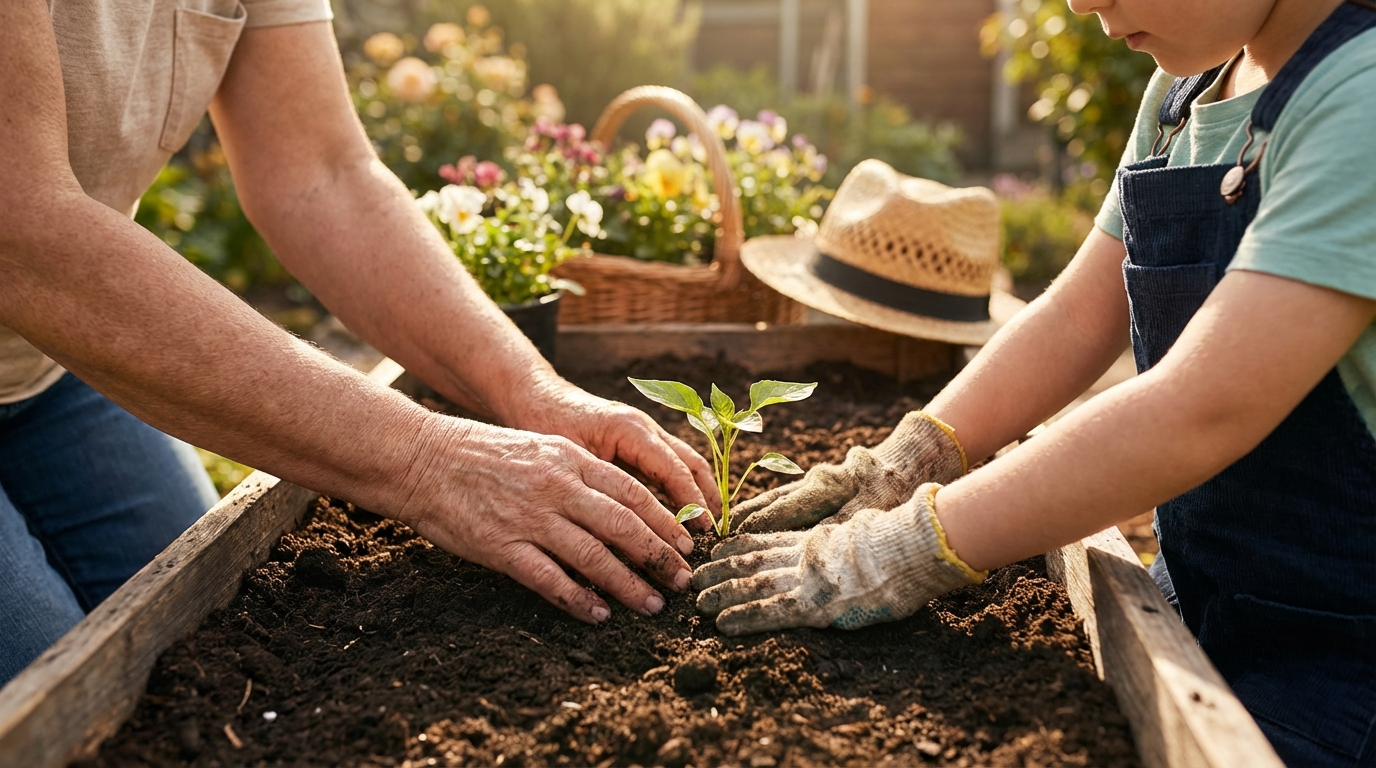
There is something steady and reassuring about working in the garden alongside younger family members. The pace slows. Hands become busy with simple tasks. Questions arise naturally, often about small things that adults usually overlook. Soil, seeds, water, weather, and time all come together in a way that feels grounded and familiar. Shared garden time offers a gentle way to pass along practical knowledge while also creating space for curiosity and calm.
Gardening together is not about teaching lessons in a formal sense. It is about letting everyday routines unfold side by side. The garden becomes a place where attention is shared, patience is practiced, and small successes are noticed. These moments build trust and understanding through quiet repetition rather than instruction.
Starting With a Shared Purpose
A garden works best when everyone understands why they are there. For younger helpers, purpose does not need to be complicated. It can be as simple as growing something to eat, making a corner look pleasant, or taking care of living things together. When the purpose is clear, even small tasks feel meaningful.
Before picking up tools, it helps to talk briefly about what the garden is meant to do this season. Is it for vegetables that will be used in meals? Is it for flowers that brighten the yard? Is it a mix of both? Keeping the purpose simple prevents confusion later and gives context to each task.
Purpose also helps set expectations. Some plants grow quickly, others slowly. Some tasks show results right away, while others take weeks. When everyone understands that the garden follows its own schedule, there is less frustration and more appreciation for small changes.
Choosing the Right Space to Work Together
Not every part of a garden is suited for shared work. Some areas require careful handling or advanced tools. Others are forgiving and flexible. Choosing the right space makes the experience smoother and more enjoyable.
A small, defined area works best. Raised beds, containers, or a clearly marked row help keep attention focused. These spaces offer clear boundaries, which make tasks easier to understand. They also allow everyone to see progress without feeling overwhelmed.
Sunlight matters, but so does comfort. A spot that gets morning light and some shade later in the day is often easier to work in for longer periods. Access to water nearby prevents unnecessary trips and interruptions.
When space is limited, containers can be especially helpful. They dry out faster and need more frequent care, which creates regular opportunities to check in and tend together. Containers also make it easier to see how soil, water, and roots interact.
Preparing the Soil as a Shared Ritual
Soil preparation is often overlooked, yet it is one of the most important steps in gardening. It is also one of the best opportunities for shared work. Turning soil, breaking up clumps, and mixing in compost are hands-on tasks that naturally invite participation.
Explaining soil does not require technical terms. It helps to describe it as a place where roots breathe, drink, and hold on. When soil is loose, roots can spread easily. When it is compacted, roots struggle. Feeling the soil with bare hands makes these ideas clear without words.
Adding compost is a chance to talk about cycles. Kitchen scraps, leaves, and old plants become food for new growth. This simple idea connects daily household habits to the garden in a concrete way. It also shows that waste can be useful when handled thoughtfully.
Soil should be worked when it is slightly damp but not wet. If it sticks together in heavy clumps, it needs time to dry. If it falls apart like dust, it needs water. Learning to recognize this balance is a skill that comes from touch and observation.
Planting With Care and Attention
Planting is often the most exciting part of gardening, but it benefits from a calm approach. Rushing this step can lead to problems later. Taking time to explain spacing, depth, and timing helps set the stage for healthy growth.
Seeds and young plants each offer different lessons. Seeds teach patience and faith in unseen work. Young plants provide immediate structure and faster results. A mix of both keeps interest balanced over time.
When planting seeds, depth matters. Seeds planted too deep may not reach the surface. Seeds planted too shallow may dry out or wash away. A simple rule is to plant seeds about twice as deep as their size. Demonstrating this with a finger or small stick makes it easy to remember.
Spacing can be harder to understand, especially when seeds look small. It helps to explain that plants need room not just above ground, but below as well. Roots compete for water and nutrients. Giving each plant enough space reduces stress and disease later.
Watering after planting settles soil around roots and seeds. This first watering should be gentle. A slow stream or watering can with a fine spout prevents seeds from moving. Watching how water disappears into the soil helps build awareness of moisture levels.
Creating Simple, Reliable Routines
Gardens thrive on regular care. Shared routines make this care feel manageable rather than demanding. Short, consistent visits are better than long, infrequent ones. Even ten minutes a few times a week can make a noticeable difference.
Choosing a regular time helps build the habit. Early morning or late afternoon often works best, as plants are less stressed by heat. These times also tend to be quieter, which supports calm observation.
Each visit can follow the same basic order:
- Look over the plants for changes.
- Check soil moisture with a finger.
- Remove any obvious weeds.
- Water if needed.
This routine creates a sense of rhythm. Over time, it becomes second nature. It also teaches that care is not about doing everything at once, but about steady attention.
When routines are skipped, the garden shows it. Leaves may wilt, weeds may spread, or pests may appear. These changes offer gentle reminders of why regular care matters, without the need for scolding or pressure.
Observing Growth and Change
One of the most valuable aspects of shared gardening is learning to notice small changes. Growth rarely happens all at once. It shows up in subtle ways: a new leaf, a deeper color, a thicker stem.
Taking a moment to look closely encourages curiosity. Why does one plant look stronger than another? Why are some leaves lighter or darker? These questions lead naturally to discussions about light, water, and nutrients.
Keeping a simple record can deepen this awareness. This does not need to be formal. A few notes on a calendar or a simple drawing of what the plants look like can help track progress. Over time, patterns emerge.
Weather plays a major role in growth. Rain, heat, wind, and cool nights all leave their mark. Talking about how weather affects the garden connects outdoor work to daily forecasts and seasonal changes.
Handling Mistakes With Patience
No garden is free from mistakes. Plants may fail to sprout, wilt unexpectedly, or produce less than hoped. These moments are not failures. They are part of the learning process.
When something goes wrong, it helps to pause before reacting. Looking at the soil, the leaves, and the surrounding area often reveals clues. Too much water can cause yellowing. Too little can cause drooping. Pests leave visible signs.
Explaining that even experienced gardeners face setbacks helps keep disappointment in perspective. The goal is not perfection, but understanding. Each mistake adds to that understanding.
Sometimes the best response is to start over. Pulling out a struggling plant and replanting can feel discouraging, but it also reinforces the idea that effort can be renewed. The garden is forgiving in that way.
Weeding as a Lesson in Attention
Weeding is often seen as tedious, yet it offers valuable lessons in attention and timing. Weeds are easiest to remove when they are small. Waiting too long allows them to establish deep roots and spread seeds.
Learning to identify weeds early takes practice. Pointing out differences in leaf shape, color, and growth pattern helps build this skill. It also encourages careful observation rather than quick pulling.
Weeding after rain or watering is easier, as moist soil releases roots more readily. This practical detail makes the task less frustrating and more effective.
Explaining why weeds compete with garden plants for water and nutrients gives context to the task. It is not about keeping things neat, but about giving chosen plants the best chance to grow.
Watering With Understanding
Watering seems simple, but it is often misunderstood. More water is not always better. Roots need both moisture and air. Constantly wet soil can lead to rot and disease.
Checking soil moisture before watering prevents overdoing it. Pushing a finger a few inches into the soil gives a clearer picture than looking at the surface alone. Dry soil below the surface signals the need for water.
Watering deeply and less frequently encourages roots to grow downward. Shallow, frequent watering keeps roots near the surface, making plants more vulnerable to heat and drought.
Early morning watering reduces evaporation and allows leaves to dry during the day, which helps prevent disease. Explaining this timing connects daily routines to plant health.
Sharing Responsibility Without Pressure
Gardening together works best when responsibility is shared thoughtfully. Assigning small, manageable tasks builds confidence. These tasks should be clear and achievable.
Examples include checking soil moisture, watering specific containers, or harvesting ripe produce. Rotating tasks keeps interest fresh and prevents boredom.
It is important to allow tasks to be done imperfectly. Spilled water, uneven rows, or missed weeds are part of the process. Correcting gently, or sometimes not at all, keeps the experience positive.
Responsibility also includes knowing when to step in. Some tasks, such as handling sharp tools or heavy lifting, are better managed by adults. Clear boundaries keep everyone safe and comfortable.
Harvesting and Using What Grows
Harvest time brings a sense of completion to the work. Picking vegetables or flowers together reinforces the connection between effort and reward.
Knowing when to harvest matters. Vegetables picked too early may lack flavor. Those left too long may become tough or bitter. Learning to recognize signs of readiness takes observation and practice.
Using harvested produce soon after picking preserves freshness and flavor. Washing, preparing, and cooking together extends the garden experience into the kitchen. It also shows respect for the work that went into growing the food.
Even small harvests are worth acknowledging. A single tomato or handful of herbs can be a source of pride. These moments reinforce the value of patience and care.
Seasonal Transitions and Closing Tasks
As seasons change, the garden requires different kinds of attention. Clearing spent plants, adding compost, and covering soil prepare the space for rest or future planting.
Explaining that gardens have active and quiet periods helps set realistic expectations. Rest is part of the cycle, not a failure.
Saving seeds from healthy plants can be a meaningful activity. It teaches foresight and continuity. Proper drying and storage ensure seeds remain viable for the next season.
Putting tools away clean and dry extends their life. This simple habit reinforces respect for shared resources and prepares the garden for the next use.
Building Calm Through Repetition
Perhaps the most lasting benefit of gardening together is the calm that comes from repetition. The same tasks, done regularly, create a sense of stability. This steadiness carries over into other parts of daily life.
The garden does not rush. It responds to care in its own time. Working within this rhythm encourages patience and attentiveness.
Over weeks and months, shared garden time becomes a familiar routine. It offers a place to slow down, notice details, and work side by side without the need for constant conversation.
This quiet togetherness is often what makes the experience meaningful. The garden provides a setting where learning happens naturally, through doing, observing, and caring.
Adapting the Garden as Needs Change
As circumstances shift, the garden can adapt. Beds can be resized, crops can change, and routines can be adjusted. Flexibility keeps the experience enjoyable rather than burdensome.
Listening to feedback matters. If interest wanes, introducing a new plant or task can renew curiosity. Fast-growing crops, fragrant herbs, or colorful flowers often spark renewed attention.
At times, stepping back is necessary. Allowing space for independent exploration supports confidence. Being nearby without directing every action maintains support without pressure.
The garden remains a shared space, shaped by everyone involved. Its value lies not only in what it produces, but in how it brings people together through simple, thoughtful care.