
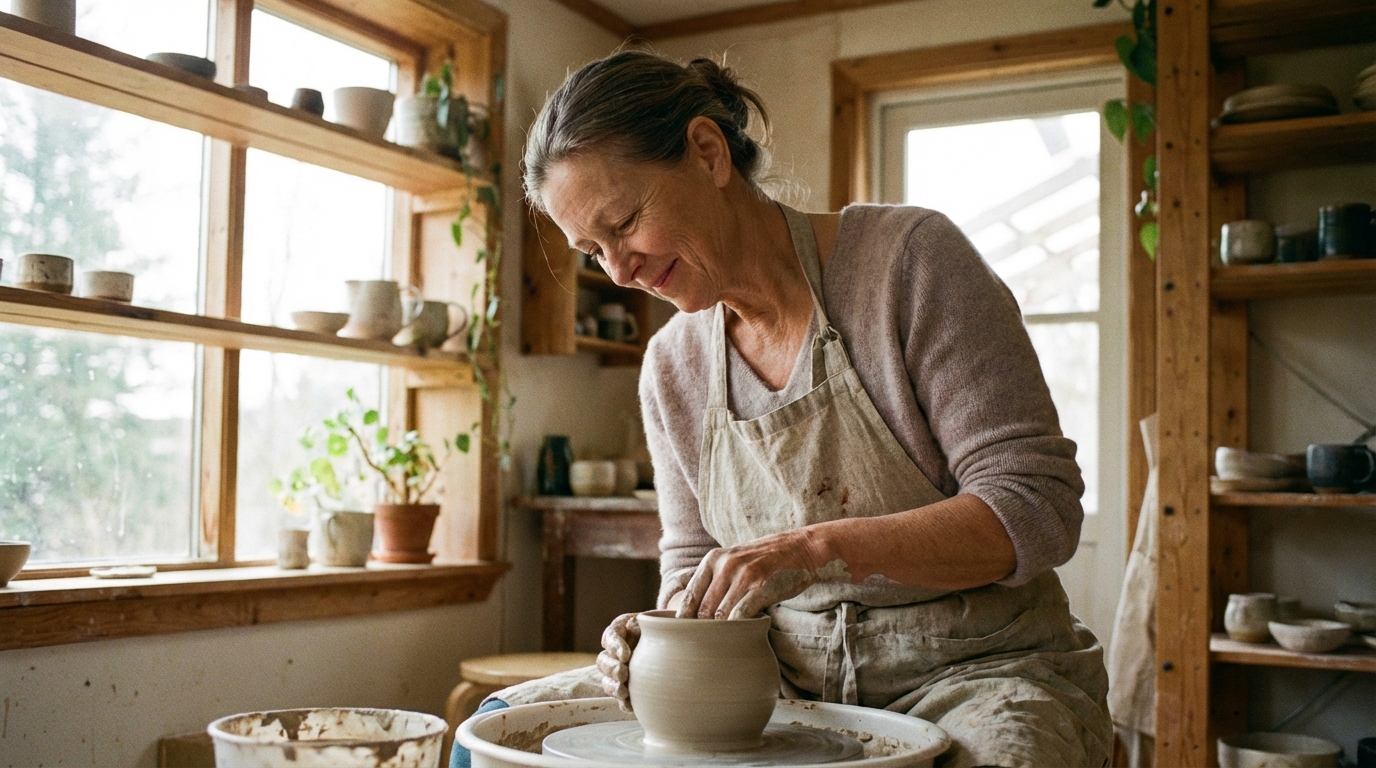
There is a particular kind of contentment that settles in when hands are busy with a simple task. It does not rush or announce itself. It grows slowly, almost unnoticed, as stitches line up, wood smooths under steady pressure, or dough becomes supple through patient kneading. This satisfaction feels different from entertainment or distraction. It comes from making something real, at home, with care and attention. Crafting, in its many forms, has long been part of everyday life because it answers a quiet human need: to shape something useful with one’s own hands and see it through.
The steady rhythm of making
Crafting often follows a rhythm that mirrors daily life. There is a beginning, a middle, and an end, each with its own pace. Preparing materials, setting up a space, and deciding on the next step takes a moment of focus. The middle phase settles into repetition, where hands learn the movement and the mind can soften. The finishing steps ask for care again, slowing things down so nothing is rushed.
This rhythm matters because it gives structure without pressure. Unlike tasks that demand quick results, most handwork allows time to think and adjust. If a stitch is uneven or a measurement slightly off, it can often be corrected. This teaches patience in a practical way. Instead of forcing progress, the work moves forward when attention is steady.
Over time, the body remembers these rhythms. Hands know how tightly to hold a tool or how much pressure a surface can take. This quiet knowledge builds confidence without noise. It is not about mastery in a showy sense, but about becoming comfortable with the process itself.
Why the hands matter
Using the hands engages the body differently than thinking alone. When fingers sort fabric, roll clay, or guide a needle, the senses come into play. Texture, weight, and resistance all provide feedback. This feedback helps anchor attention in the present moment.
There is a practical reason this feels satisfying. The brain responds well to clear cause and effect. A small action leads to a visible change. Pulling a thread tight closes a seam. Sanding a rough edge makes it smooth. These immediate results offer reassurance that effort matters.
Handwork also slows decision-making in a helpful way. Unlike clicking or tapping, crafting requires a pause between actions. This pause allows small adjustments and reduces the feeling of being rushed. It becomes easier to notice when something is not working and to correct it early, rather than pushing ahead and fixing problems later.
Familiar materials and simple tools
Many traditional crafts rely on materials that are easy to understand. Wood, fabric, paper, metal, and food each behave in predictable ways. Learning how they respond to heat, moisture, pressure, or time builds a practical kind of knowledge.
Simple tools also play a role in satisfaction. A well-balanced hammer, sharp scissors, or a smooth wooden spoon feels good to use because it does its job without fuss. There is less to manage, fewer settings to adjust, and fewer distractions. This simplicity helps keep attention on the work rather than the equipment.
Over time, tools become familiar. Small marks and wear tell a story of use. Knowing where a tool fits best in the hand or how it sounds when it meets resistance builds trust. This trust reduces uncertainty and makes the work more pleasant.
Small progress that can be seen
Crafting often produces visible progress in small steps. A row of stitches appears where there was once empty fabric. A pile of cut pieces grows into a recognizable shape. These changes are modest but clear.
This visibility is important. Many daily efforts, such as cleaning or organizing, are necessary but quickly undone. Crafting tends to move in one direction. Each step builds on the last, and even slow progress accumulates.
Seeing this progress reinforces the habit of returning to the work. It becomes easier to pick up a project again when the next step is clear. The work waits patiently, without reminders or alarms, ready to continue when time allows.
The role of repetition
Repetition is often misunderstood as dull, but in handcraft it serves a purpose. Repeating the same movement allows the body to refine it. Tension evens out, speed increases slightly, and mistakes become less frequent.
This kind of repetition also calms the mind. When the hands know what to do, thoughts do not need to jump from one thing to another. There is space to think quietly or to let thoughts pass without holding onto them.
Repetition works best when the task is well-matched to the moment. Simple tasks suit tired evenings. More detailed work fits better when energy is higher. Paying attention to this balance prevents frustration and keeps the experience positive.
Crafting as part of daily routines
Crafting does not need long, uninterrupted hours to be meaningful. It often fits best into the small spaces of the day. A few minutes in the morning to tend a project, or a short session in the evening, can be enough.
Keeping a project accessible helps. When materials are stored neatly and tools are easy to reach, starting feels less demanding. There is no need to clear a large space or prepare extensively. This reduces the mental barrier to beginning.
Routine also brings continuity. Working a little at a time allows the project to grow alongside daily life. This steady presence can be comforting, offering something familiar to return to regardless of how the day unfolds.
Patience learned through mistakes
Mistakes are unavoidable in handcraft, and they play an important role. A crooked seam or uneven edge shows where attention slipped or where a technique needs adjustment. These moments provide clear feedback without harsh consequences.
Learning to undo work carefully teaches restraint. Ripping out stitches or sanding back a surface takes time, but it preserves the integrity of the final piece. This reinforces the idea that fixing things properly, even when it takes longer, is worthwhile.
Over time, mistakes become less discouraging. They are expected and planned for. Extra material is kept on hand. Allowances are made in measurements. This practical preparedness reduces stress and makes the process more forgiving.
The quiet pride of usefulness
There is a particular satisfaction in making something that serves a purpose. A well-fitted shelf, a warm scarf, or a sturdy bag becomes part of daily life. Each use recalls the care taken during its making.
This usefulness adds weight to the effort. The object is not just decorative; it contributes. Knowing how it was made also makes it easier to maintain and repair. A loose seam can be reinforced. A scratched surface can be refinished.
Use also reveals strengths and weaknesses. Over time, the maker learns what holds up well and what needs improvement. This feedback informs future projects, making each one a little better suited to its task.
Why slower often feels better
Speed has its place, but crafting often benefits from moving slowly. Slower work allows materials to behave as expected. Glue sets properly. Finishes dry evenly. Dough rises at its own pace.
Moving slowly also reduces waste. Measuring twice and cutting once saves material and effort. Taking time to plan the order of steps prevents having to undo work later.
This slower pace encourages attention to detail. Small adjustments made early prevent larger problems. The result is work that feels solid and considered, even if it is simple.
Attention as a form of care
Attention is the foundation of good handcraft. Watching how materials respond guides the next step. Listening to the sound of a tool against a surface can indicate when pressure is right or when it needs to change.
This attention is not strained. It is gentle and observant. It allows the work to guide the pace rather than forcing it to fit a schedule.
Practicing this kind of attention can influence other areas of home life. Cooking, cleaning, and organizing all benefit from noticing small details. Crafting reinforces this habit in a tangible way.
Choosing the right project
Not every project suits every moment. Choosing work that matches available time, energy, and space makes the experience more satisfying. A complex project may feel overwhelming during a busy season, while a simple repair or small item fits easily.
It helps to keep a range of projects available:
- Short tasks that can be finished in one sitting
- Longer projects that progress over weeks or months
- Maintenance work, such as mending or sharpening tools
This variety allows for flexibility. When energy is low, a small, familiar task keeps hands busy without strain. When there is more focus, a detailed project can move forward.
Creating a comfortable workspace
A comfortable workspace supports satisfaction. Good light reduces eye strain and makes details easier to see. A stable surface prevents unnecessary mistakes. Seating that supports the body allows for longer, more relaxed sessions.
Organization matters, but it does not need to be elaborate. Keeping tools in consistent places saves time and mental effort. Materials stored neatly are less likely to be damaged or forgotten.
Comfort also includes temperature and sound. Working in a space that feels welcoming encourages return. Small adjustments, like a cushion or a lamp, can make a noticeable difference.
Learning through doing
Crafting teaches through experience. Instructions and patterns provide guidance, but real understanding comes from handling materials and adjusting as needed. This hands-on learning builds confidence gradually.
Trying new techniques in a low-pressure way helps. Practicing on scrap material or making a small test piece allows mistakes without consequence. This approach reduces fear of failure and encourages experimentation.
Over time, this learning becomes intuitive. Decisions are made based on feel and observation rather than strict rules. This adaptability is one reason crafting remains engaging over many years.
The comfort of familiar tasks
Returning to a familiar craft offers comfort. The steps are known, and the outcome is predictable. This familiarity reduces uncertainty and provides a sense of stability.
Familiar tasks also leave room for quiet thought. The mind can wander gently while the hands work. This balance between focus and ease contributes to the feeling of quiet satisfaction.
Even when life feels unsettled, a familiar project can provide a small anchor. It reminds the maker that some things remain steady and manageable.
Care over perfection
Handcrafted items often show small variations. These differences reflect the process rather than a lack of skill. Valuing care over perfection allows the work to feel human and approachable.
Care shows in even tension, secure joins, and thoughtful finishing. These qualities matter more than flawless symmetry. They ensure the item functions well and lasts.
Accepting small imperfections also makes the process more enjoyable. It reduces pressure and allows attention to stay on the work rather than on meeting an ideal.
How crafting supports patience
Patience grows through repeated experience of waiting and observing. Many crafting steps require time that cannot be rushed. Paint needs to dry. Glue needs to set. Fibers need to relax.
Waiting during these steps teaches respect for process. Skipping or shortening them often leads to weaker results. Seeing this connection reinforces patience in a practical way.
Over time, this patience extends beyond the craft. It becomes easier to wait for other things to unfold, knowing that good results often require time.
Objects that carry memory
Handmade objects tend to carry memory because the process of making them is remembered. Each stage recalls where the work was done and what attention it required.
Using these objects later brings those memories back quietly. This adds depth to everyday routines. An ordinary task becomes a reminder of time spent making something useful.
This connection encourages care in use and storage. Items are maintained rather than discarded, extending their life and value.
When crafting feels difficult
There are times when crafting feels more effortful. Fatigue, distraction, or lack of progress can make it less satisfying. Recognizing these moments helps prevent frustration.
Taking a break is often the best response. Stepping away allows perspective to return. Problems that felt stuck may appear simpler after rest.
Adjusting expectations also helps. Some days are better suited for preparation or cleanup rather than active making. These tasks still support the craft and keep momentum without strain.
The lasting appeal of handwork
Crafting endures because it meets basic needs: to make, to understand, and to care. It fits naturally into home life, adapting to available time and resources.
Its satisfaction is quiet because it does not depend on external approval. The reward is felt in the hands, the eyes, and the steady presence of something made with attention.
This quiet satisfaction builds over time, layer by layer, much like the work itself. Each small effort adds to a deeper sense of capability and calm, rooted in the simple act of making something well.