
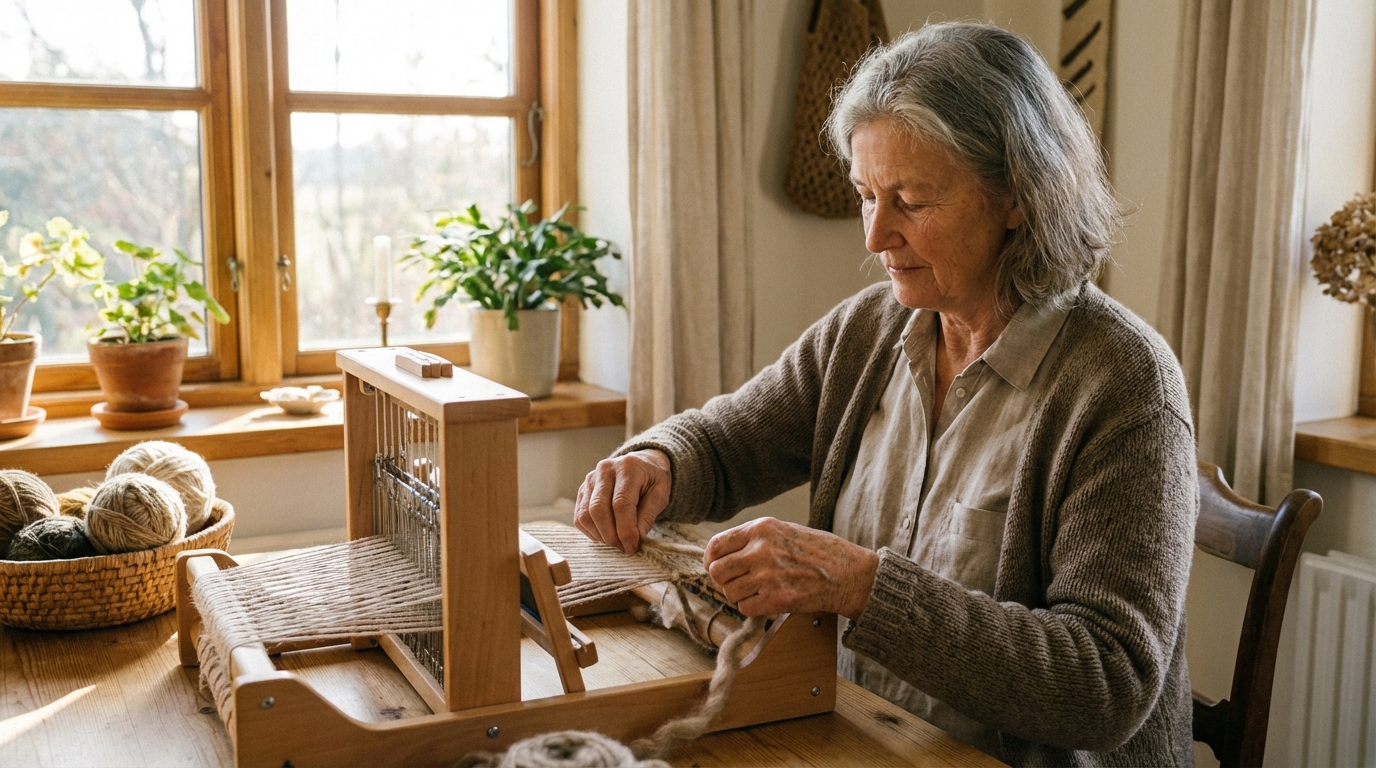
In many homes, handwork has always had a quiet place. It sits beside daily routines rather than above them. A basket by a chair, a small box on a shelf, a jar of tools kept within reach. These objects are not meant to impress. They are meant to be used, returned to, and trusted. Crafting, when approached this way, becomes less about finishing something and more about how attention settles while hands are busy.
Focused handwork has a particular way of drawing the mind into the present moment. It does so gently, without force or instruction. There is no need to clear the mind or aim for calm. The act itself, when repeated at a human pace, asks for just enough attention to keep going. Over time, this steady requirement reshapes how attention is held, not only during the craft, but in everyday life.
Attention Finds a Natural Anchor
Attention often wanders because it has nothing firm to rest on. Many daily tasks happen automatically, allowing thoughts to drift far ahead or linger behind. Crafting changes this by offering a physical anchor. The hands are occupied, the materials respond, and the next step depends on the last.
This kind of attention is different from intense concentration. It does not demand strain. It invites steady presence. When stitching, shaping, sanding, or weaving, the hands give constant feedback. A thread tightens. A surface smooths. A pattern emerges slowly. These small signals bring the mind back again and again without effort.
This works because the task sits at a middle level of challenge. It is not so simple that the mind disengages, and not so difficult that it overwhelms. Over time, this balance teaches attention to stay close to what is happening now.
Why Simple Crafts Often Work Best
Handwork that relies on basic repetition tends to support attention more effectively than complex projects. Simple actions repeated many times allow rhythm to develop. Rhythm gives the mind something steady to follow.
- Repeated motions create predictability, which calms the nervous system.
- Small variations keep the task from becoming dull.
- Progress is visible but not rushed.
For example, knitting a plain cloth or sanding a wooden surface offers enough variation to stay engaged without demanding constant decision-making. Attention stays with the hands rather than jumping ahead to the finished piece.
The Role of the Hands in Settling the Mind
The hands are closely linked to perception. They feel weight, texture, temperature, and resistance. When hands are active, the body participates in attention, not just the mind.
This is why handwork can feel grounding after a day of abstract thinking or emotional strain. The hands respond to what is real and immediate. A needle does not move unless guided. Clay does not shape itself. These truths are simple and reliable.
Over time, this physical engagement trains attention to notice small changes. A slight shift in tension, a change in sound, a difference in pressure. These details matter in handwork, and noticing them strengthens the habit of careful observation.
When the Hands Know Before the Mind
With regular practice, the hands begin to anticipate what comes next. They adjust before conscious thought catches up. This does not mean attention has left. It means attention has become embodied.
This kind of knowing is quiet and practical. It frees the mind from constant planning and allows it to stay with the flow of the work. Many find that worries soften during these moments, not because they are pushed away, but because they are no longer in charge.
Crafting as a Pause Within Daily Life
Crafting fits naturally into the small pauses of a day. It does not require special preparation or a separate space, though a familiar corner helps. A few minutes between tasks can be enough to settle attention.
Unlike activities designed for escape, handwork keeps one foot in daily life. A pot simmers nearby. Light changes through the window. Sounds from the home continue. Crafting does not block these out. It holds them gently in the background.
This makes the practice sustainable. Attention is not something to be achieved once and lost. It is something returned to, again and again, through ordinary moments.
Short Sessions Matter More Than Long Ones
Long, uninterrupted crafting sessions can be satisfying, but they are not necessary for cultivating attention. Short, regular sessions often work better.
- They fit more easily into daily routines.
- They prevent fatigue and frustration.
- They keep the craft connected to everyday life.
Ten minutes of steady handwork can reset attention more effectively than an hour spent rushing to finish. The key is not duration, but consistency.
The Importance of Familiar Materials
Using familiar materials supports mindful attention. When tools and supplies are known, less mental energy is spent figuring them out. Attention can rest on the process instead.
Familiarity does not mean boredom. It means understanding how something behaves. Wood grain that is known, yarn that moves predictably, fabric that responds to touch. These qualities build trust between the hands and the material.
This trust reduces hesitation. When the hands feel safe to proceed, attention stays present rather than pulling back in doubt.
Why New Materials Can Distract
New materials bring excitement, but they also demand more attention. This can be useful at times, but it can also pull focus toward evaluation and comparison.
When the goal is steady attention, it often helps to return to materials already understood. Once attention has settled, new materials can be introduced gradually, one at a time, without overwhelming the process.
Making Peace With Imperfection
Handcrafted work carries marks of the process. Slight unevenness, small corrections, and visible joins are part of its nature. Accepting these features supports mindful attention.
When perfection is demanded, attention shifts away from the present moment and toward judgment. The mind jumps ahead, measuring each step against an imagined ideal. This breaks the steady flow of attention.
When small mistakes are treated as information rather than failure, attention remains engaged. The hands adjust. The process continues.
Learning From Small Errors
Small errors offer immediate feedback. A stitch too loose shows where tension needs adjusting. A rough edge reveals where more care is needed. These lessons are concrete and kind.
Attention grows sharper when it is allowed to learn this way. There is no need for self-criticism. The material teaches what works and what does not.
Rhythm, Repetition, and Calm
Repetition is often misunderstood as dull. In handcraft, repetition creates rhythm, and rhythm supports calm attention.
When an action repeats, the body settles into a pattern. Breathing often slows. Movements become smoother. Attention follows the rhythm rather than jumping between thoughts.
This effect is strongest when repetition is paired with slight variation. Each stitch, cut, or stroke is similar, but not identical. The mind stays alert without becoming tense.
Choosing Crafts With Natural Rhythm
Some crafts lend themselves more naturally to rhythm.
- Knitting, crocheting, or weaving with simple patterns.
- Hand sanding or polishing.
- Rolling dough or shaping clay in repeated forms.
These activities allow attention to settle into a gentle pace. Crafts that require constant measuring or planning can still be valuable, but they engage attention differently.
Crafting as a Way to Slow Time
Time feels different during handwork. Minutes stretch and soften. This is not because time changes, but because attention is no longer pulled in many directions.
When attention stays with the hands, the sense of rushing eases. There is only the next small step. This can be especially comforting during periods when life feels hurried or uncertain.
Over time, this experience can influence how time is felt outside of crafting. Attention learns that it does not need to chase every thought.
Noticing the Signs of Settled Attention
Settled attention often shows itself quietly.
- The hands move steadily without strain.
- Breathing becomes even.
- Awareness of the surroundings remains, but feels softer.
These signs indicate that attention is present without effort. There is no need to hold onto them. Noticing is enough.
Creating a Supportive Crafting Space
The space used for handwork influences how attention behaves. A supportive space does not need to be elaborate. It needs to be predictable and comfortable.
Good light matters more than decoration. A stable chair supports the body. Tools stored in familiar places reduce unnecessary searching. These small details protect attention from being scattered.
When the space is prepared with care, the mind follows.
Keeping Tools Within Reach
Interruptions break attention. Reaching for a missing tool pulls the mind away from the process. Keeping frequently used tools within reach supports continuity.
This does not mean clutter. It means thoughtful placement. A small tray, a jar, or a drawer reserved for the craft is often enough.
Crafting and Emotional Balance
Focused handwork can support emotional balance without trying to change feelings directly. When hands are busy, emotions often soften on their own.
This happens because attention is shared. Feelings are still present, but they are not the sole focus. The material offers another place for attention to rest.
Over time, this can make strong emotions easier to carry. They are experienced alongside steady action rather than in isolation.
When Crafting Feels Difficult
There are times when crafting does not settle attention. Restlessness, fatigue, or distraction may persist. This does not mean the practice has failed.
On such days, adjusting expectations helps. Choosing a simpler task, shortening the session, or simply handling materials without a goal can keep the connection gentle.
Attention cannot be forced. It responds to patience.
The Value of Finishing, and of Not Finishing
Completing a piece of handwork brings a quiet sense of order. The beginning, middle, and end are visible. This can be deeply satisfying.
However, unfinished work also has value. Returning to a familiar project allows attention to pick up where it left off. The process resumes without starting over.
Both finishing and returning support attention in different ways. One offers closure. The other offers continuity.
Leaving Work in a Way That Invites Return
How a project is left matters. Leaving tools tangled or materials scattered can create resistance. Leaving work tidy but visible invites return.
A project folded neatly, tools set aside, and the next step clear help attention re-engage easily. This small habit reduces friction.
Passing Attention Through Example
Handwork often happens in shared spaces. Others may observe quietly, noticing the rhythm and care involved. Without instruction, attention is modeled.
This shared presence reinforces the value of steady focus. It shows that attention does not need to be loud or demanding to be meaningful.
Over time, this atmosphere can influence how a home feels. Activities slow slightly. Care becomes visible.
Crafting Alongside Daily Sounds
Crafting does not require silence. Familiar sounds can support attention rather than interrupt it.
- Soft household noises provide a steady backdrop.
- Natural light changing through the day marks time gently.
- Regular rhythms in the environment reinforce the craft’s pace.
Attention learns to remain present even with movement around it.
Why Crafting Encourages Patience
Handwork unfolds at a human pace. Materials resist being rushed. This teaches patience through experience rather than instruction.
When a task cannot be hurried without consequence, attention adapts. It learns to stay with each step. Over time, this patience carries into other tasks.
Small daily actions begin to feel less burdensome. There is more willingness to take things as they come.
Letting the Process Set the Pace
Each craft has its own rhythm. Respecting that rhythm supports attention.
Forcing speed often leads to mistakes that require correction. Allowing the process to guide the pace reduces tension. Attention stays aligned with the work rather than fighting it.
Crafting as Ongoing Practice
Mindful attention through crafting is not a skill mastered once. It is an ongoing practice woven into daily life.
Some days feel steady. Others feel scattered. Returning to handwork offers a familiar path back to the present moment.
This return does not require special effort. It begins with picking up a tool, touching a material, and letting the hands lead. Attention follows naturally, step by step, grounded in the simple truth of work done with care.