
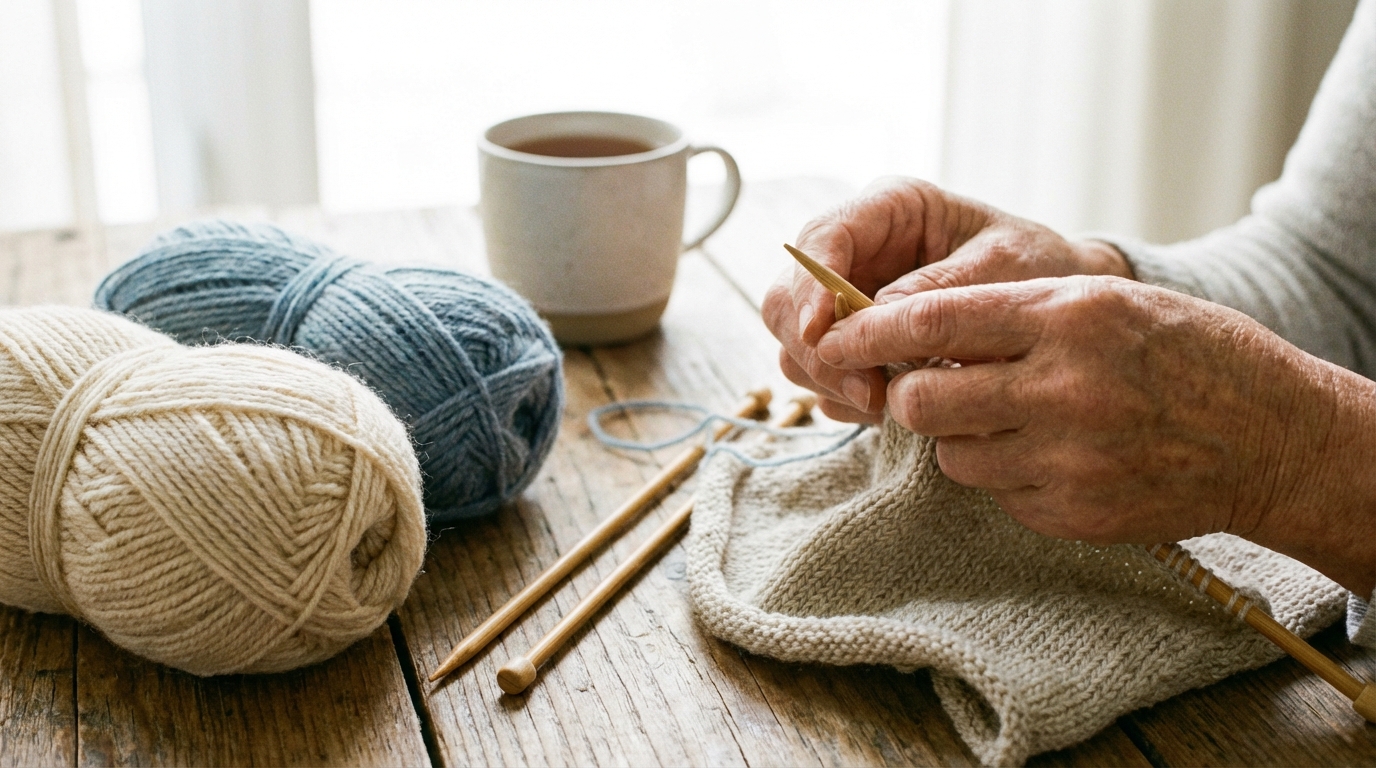
In many homes, there is a quiet corner where hands stay busy while the rest of life slows down. The table might be cleared except for thread and cloth, or a basket might hold yarn waiting for steady fingers. These moments of handwork are often treated as hobbies, yet they carry a deeper purpose. When hands move with care and attention, the mind finds a place to rest without needing to shut down. This kind of rest is gentle and restoring, rooted in rhythm rather than escape.
Crafting offers mental rest not by stopping thought, but by guiding it. The mind follows the hands, and worries soften into the background. This effect does not come from complexity or speed. It comes from simple actions done well, repeated with patience. Understanding why this works helps bring intention to everyday routines and makes space for calm in a busy home.
The Nature of Mental Rest
Mental rest is often misunderstood as doing nothing at all. In daily life, that kind of rest is hard to find and sometimes unsettling. A quiet mind does not always mean an empty one. Instead, mental rest comes when thoughts slow down, settle into order, and stop pulling in many directions at once.
Handcrafts provide this kind of rest because they give the mind something steady to hold. The task is clear. The steps are known. The pace is set by the hands, not by outside demands. This allows attention to narrow gently, reducing the mental noise that builds up during the day.
Unlike passive distractions, such as screens or background noise, crafting keeps the mind lightly engaged. This balance is important. Too little engagement can lead to restless thinking, while too much creates strain. Handwork sits in the middle, offering just enough focus to quiet the mind without tiring it.
Why the Mind Responds to the Hands
The connection between hands and mind is practical and direct. When hands work with intention, the brain organizes itself around the task. This happens because the brain prefers clear, physical feedback. Each stitch, cut, or fold gives immediate information that can be seen and felt.
This feedback loop creates a sense of progress. Even small movements lead to visible change. The mind relaxes when effort results in something tangible. It reassures the brain that time is being used well, which reduces the background stress that often comes from feeling unproductive.
Hand movements also tend to be rhythmic. Repetition helps settle the nervous system. Just as steady breathing can calm the body, steady hand motions encourage the mind to slow its pace.
Focus Without Pressure
One reason crafting supports mental rest is that it offers focus without urgency. There is usually no strict deadline, no need to respond immediately, and no external judgment. This removes pressure that often accompanies other forms of concentration.
In home life, pressure often comes from multitasking. Cooking, cleaning, and planning can overlap, pulling attention in many directions. Crafting, by contrast, asks for one thing at a time. This single focus gives the mind a break from constant decision-making.
When choosing a craft, it helps to select something familiar or easy to learn. Complex projects can be satisfying, but they may demand too much mental effort when rest is the goal. Simple handwork allows the mind to settle more easily.
Examples of Low-Pressure Handwork
- Simple sewing repairs, such as mending a seam or replacing a button.
- Knitting or crocheting with a basic pattern that repeats.
- Sorting and winding yarn or thread.
- Cutting fabric pieces for a future project.
- Hand sanding wood with smooth, even strokes.
These activities share a common trait: they can be paused and resumed without stress. This flexibility makes them well-suited to the natural rhythm of home life.
Creating a Sense of Order
Mental strain often comes from feeling overwhelmed or scattered. Crafting helps counter this by creating order on a small, manageable scale. Materials are arranged, steps are followed, and progress unfolds in a clear sequence.
This sense of order does not require perfection. In fact, small mistakes are part of the process and offer quiet lessons in patience. Correcting an error teaches the mind that problems can be handled calmly, one step at a time.
Over time, this experience shapes how challenges are approached beyond the craft itself. The mind learns that careful attention and steady effort can bring things back into balance.
Why Small Projects Matter
Large projects can feel daunting and may add pressure rather than relieve it. Small projects, on the other hand, offer closure. Finishing a task, even a modest one, brings a sense of completeness.
This feeling of completion supports mental rest because it closes open loops in the mind. Unfinished tasks tend to linger in thought. A completed piece, however simple, allows the mind to move on.
In a home setting, small crafted items often have practical use. A repaired towel, a folded cloth, or a neatly wound bundle of yarn all serve a purpose. This usefulness reinforces the value of the time spent.
Rhythm and Repetition
Repetition is often overlooked in daily life, yet it plays a central role in calming the mind. Handcrafts rely on repeated movements that become familiar over time. This familiarity reduces mental effort and allows the mind to rest within the rhythm.
When a movement is repeated, the brain uses less energy to guide it. This frees mental space and reduces strain. The hands know what to do, and the mind can soften its grip.
Repetition also creates predictability. In a world that often feels uncertain, predictable actions provide comfort. Each stitch or stroke follows the last, creating a steady pattern that the mind can trust.
Finding the Right Pace
Pace matters. Moving too quickly can create tension, while moving too slowly may lead to distraction. The right pace is one that feels natural and unforced.
This pace often changes with mood and energy level. On a tired day, slower handwork may be best. On a restless day, a slightly quicker rhythm can help settle excess energy.
Listening to these cues is part of the practice. Crafting supports mental rest most effectively when it adapts to the person, not the other way around.
The Comfort of Familiar Tools
Tools used for handcrafts often become familiar companions. Scissors that fit the hand well, needles worn smooth through use, or a wooden handle shaped by time all contribute to a sense of ease.
Familiar tools reduce the need for adjustment. The hand knows how they respond. This reduces small frustrations that can interrupt mental rest.
Keeping tools in good condition also matters. A dull blade or tangled thread can create unnecessary strain. Simple care, such as cleaning tools and storing them neatly, supports a smoother experience.
Setting Up a Calm Work Space
The environment where crafting takes place influences its effect on the mind. A calm space does not need to be large or separate. It only needs to be orderly enough to support focus.
Good lighting reduces eye strain and allows details to be seen clearly. A comfortable chair supports the body so the mind can relax. Keeping only necessary materials nearby prevents distraction.
This space becomes associated with calm over time. Returning to it signals the mind that it is time to slow down.
Hands as a Bridge Between Thought and Feeling
Thoughts and feelings often become tangled when left unattended. Handwork provides a bridge between them. As the hands move, feelings can settle without needing to be analyzed or explained.
This is especially helpful when emotions are present but unclear. Crafting allows space for these feelings to exist without demanding immediate resolution. The mind is occupied, yet open.
Over time, this can lead to quiet insights. Solutions or understandings may surface naturally, without being forced.
When Crafting Is Most Helpful
Certain moments in daily life are especially suited to handwork. These include times of transition, such as early evening or quiet mornings, when the mind shifts from one set of demands to another.
Crafting can also help after mentally demanding tasks. It offers a way to unwind without completely disengaging.
However, when the mind is extremely tired, even simple handwork may feel like too much. In these moments, rest may need to come first. Crafting supports mental rest best when energy is low but not exhausted.
Patience Learned Through Practice
Handcrafts teach patience in a practical way. Progress is often slow and depends on steady effort. There is no shortcut that does not compromise the result.
This teaches the mind to accept gradual progress. In daily life, this patience can carry over, making it easier to handle tasks that take time.
Patience learned through crafting is not forced. It grows naturally as hands learn to work within their limits.
Accepting Imperfection
No handcraft is completely free of flaws. Slight variations are part of the process. Learning to accept these imperfections reduces mental strain.
Perfectionism creates tension and keeps the mind alert. Acceptance allows relaxation. When a mistake is seen as part of learning rather than failure, the mind stays calm.
This attitude supports mental rest by removing the fear of doing something wrong.
Connection to Daily Life
Crafting supports mental rest most effectively when it is woven into daily routines. It does not need to be set apart as a special activity. A few minutes of handwork can fit naturally into quiet moments.
For example, mending clothing while waiting for water to heat or folding fabric during a calm evening hour keeps the hands busy without adding stress.
This integration reinforces the idea that rest and productivity are not opposites. Careful handwork can be both useful and calming.
Consistency Over Quantity
Short, regular sessions of crafting often provide more mental benefit than occasional long ones. Consistency builds familiarity and rhythm.
Even ten minutes of focused handwork can shift the mind into a calmer state. Over time, this becomes a reliable way to find balance.
The key is to approach crafting as a steady habit rather than a task to be completed.
Why Screens Do Not Offer the Same Rest
Many forms of modern distraction keep the mind busy but do not allow it to rest. Screens often demand rapid attention shifts and provide constant stimulation.
Handcrafts differ because they engage the senses in a slower, more grounded way. The hands feel texture and resistance. The eyes follow real movement rather than changing images.
This sensory experience anchors the mind in the present moment. It reduces the mental drift that often follows screen use.
Choosing Crafting Over Passive Distraction
Passive activities can feel restful at first but may leave the mind unsettled afterward. Crafting, though active, often leaves the mind clearer.
This difference comes from involvement. When hands are involved, the mind participates rather than absorbs. This participation supports deeper rest.
Choosing handwork during quiet times can gradually change how the mind responds to rest.
The Quiet Satisfaction of Making
There is a particular satisfaction that comes from making something by hand. It is not loud or dramatic. It is quiet and steady.
This satisfaction supports mental rest by reinforcing a sense of capability. The mind relaxes when it feels competent and useful.
Even simple items carry this satisfaction. A neatly sewn hem or a smooth piece of wood speaks to care and attention.
Using What Is Made
Using crafted items in daily life strengthens their calming effect. Each use becomes a reminder of the time spent in focused calm.
This creates continuity between the moment of making and the rest of life. The craft does not remain separate; it becomes part of the home.
This integration deepens the sense of rest that crafting provides.
Crafting as a Gentle Anchor
In times when the mind feels unsettled, having a familiar craft can act as an anchor. The hands know what to do, even when thoughts are unclear.
This anchor does not solve problems directly. Instead, it provides stability. From this stable place, the mind can approach challenges with more clarity.
Over time, the presence of this anchor can reduce overall mental strain.
Building the Habit Slowly
Starting a handcraft routine does not require commitment or planning. It begins with choosing one simple activity and allowing it to fit naturally into the day.
As familiarity grows, the habit strengthens. The mind begins to associate the activity with calm.
This association is built through repetition, not effort.
The Lasting Value of Handwork
Crafting supports mental rest because it aligns with how the mind and body work together. It respects natural rhythms, values patience, and rewards steady care.
In a home, these qualities matter. They shape daily life in subtle ways.
By keeping hands busy with thoughtful work, the mind finds a place to settle. This rest is not dramatic, but it is lasting, and it grows quietly with each careful movement.