
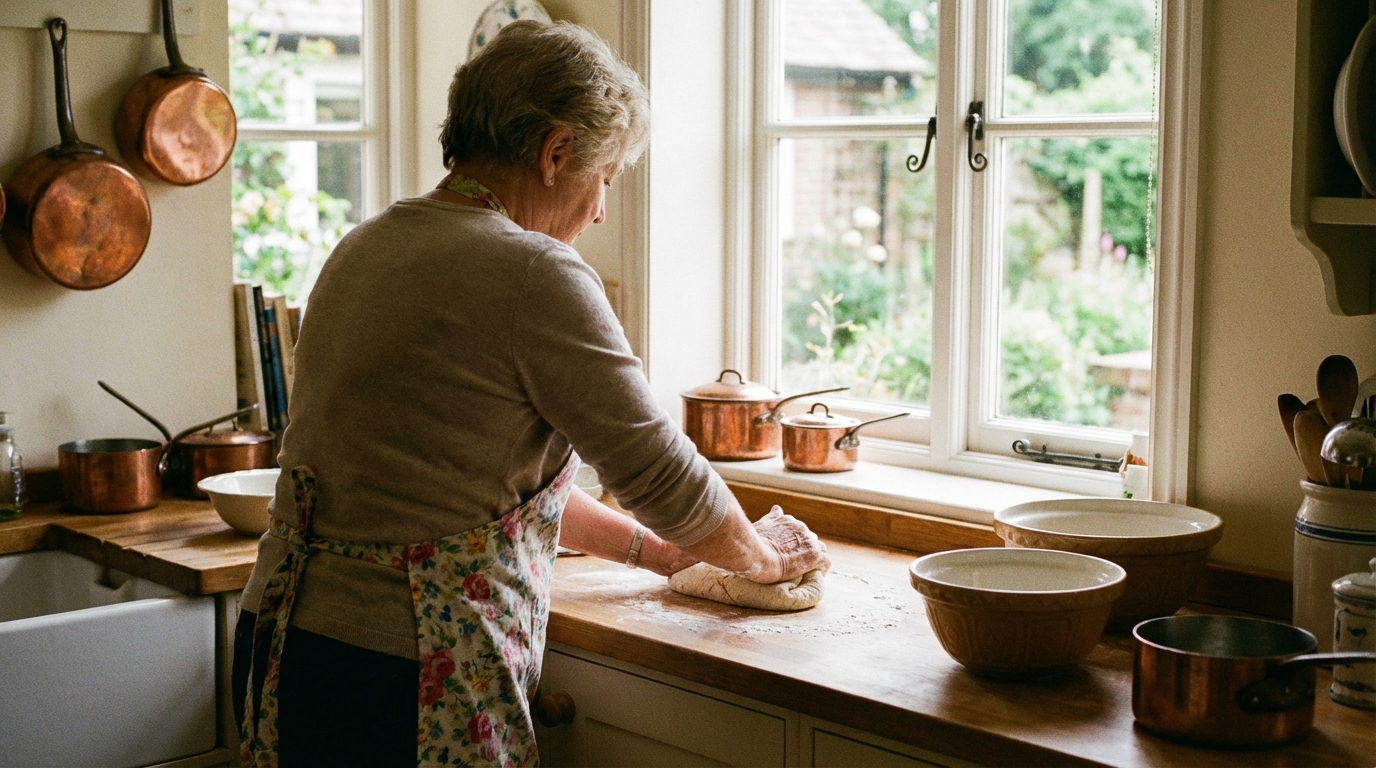
Some memories stay bright not because they were exciting, but because they were steady. They formed in kitchens and hallways, at sinks and doorways, in moments that happened the same way day after day. Familiar care has a quiet way of shaping how home is remembered. It settles into the background and becomes the feeling of being held by routine, even when no one is speaking.
This kind of care does not announce itself. It shows up through repeated actions that make life predictable and safe. It is the way lights are turned on at dusk, how shoes are placed by the door, how voices soften when the house is tired. These small acts collect over time. They give shape to memory not through excitement, but through reassurance.
The Power of Repetition in Daily Life
Repetition is often mistaken for dullness. In a home, repetition is what allows attention to relax. When children know what comes next, they stop scanning for surprise and start settling into the moment. This is why the same order of tasks each morning or evening matters more than variety.
For example, washing hands before meals, setting the table in a familiar way, and clearing dishes afterward creates a rhythm. The tasks themselves are simple. What matters is that they happen in the same sequence. Over time, this sequence becomes a mental map. It teaches that life has an order that can be trusted.
Repetition works because it reduces decision-making. When the body knows what to do next, the mind can rest. This sense of rest becomes associated with home. Later, the memory of that ease can be recalled even outside the house, offering a quiet sense of stability.
When Repetition Becomes Support
Repetition supports memory when it is steady but flexible. Rigid routines can feel tight and uncomfortable. Supportive routines allow for adjustment without losing their shape. If a meal is late or a task is skipped, the routine returns the next day without comment.
This teaches an important lesson: care is dependable, not fragile. The routine does not fall apart because of a small change. It simply resumes. That resilience becomes part of what is remembered.
Sensory Details That Anchor Memory
Memories often attach themselves to the senses. The smell of clean laundry, the sound of water running in the sink, the feel of a well-used blanket. These details are not chosen for effect. They arise from ordinary care.
When care is familiar, sensory details repeat. Soap smells the same. The door sounds the same when it closes. The floor feels the same under bare feet. These repeated sensations create anchors. They tell the body, without words, that it is in a known place.
This is why changing everything at once can feel unsettling. Even pleasant changes can disrupt these anchors. Familiar care respects the value of sameness. It introduces change slowly, allowing new details to become familiar before old ones disappear.
Using the Senses Thoughtfully
Thoughtful use of the senses does not mean adding more. It means noticing what is already there and keeping it consistent. A particular tea towel used every morning, a certain lamp turned on at the same time each evening, or a window opened in the same room each day.
These choices work because they are predictable. Predictability allows sensory memory to form. Over time, these details become shorthand for comfort.
Care Shown Through Ordinary Tasks
Care is often associated with special moments, but it is most powerful in ordinary tasks. Brushing hair, tying shoes, packing a bag, or wiping a counter. These actions communicate attention without ceremony.
When these tasks are done with patience, they teach that care does not require urgency. A calm pace signals that there is time. Time is one of the most reassuring resources a home can offer.
Ordinary tasks also create opportunities for quiet connection. A hand steadies a shoulder. A cloth smooths a wrinkle. Words may be few, but presence is clear.
Why the Ordinary Lasts
Extraordinary events stand out, but they do not always settle in. Ordinary care repeats often enough to be remembered in the body. It becomes the expected background. When that background is gentle, memory takes on the same tone.
This is why rushing through tasks can leave a sharper mark than intended. Speed changes the feeling of care. Slowing down, even slightly, can change how the moment is remembered.
The Role of Predictable Responses
Familiar care includes predictable responses to common situations. When a spill happens, when voices rise, when something breaks. How these moments are handled matters as much as how calm moments are treated.
Predictable responses do not mean ignoring emotion. They mean responding in a way that is steady. A spill is cleaned. A raised voice is met with calm. A broken item is addressed without drama.
This teaches that mistakes are part of life, not emergencies. Memory absorbs this lesson deeply. It shapes how challenges are approached later on.
Consistency Over Perfection
Consistency matters more than getting it right every time. A response that is usually calm and fair creates trust, even if there are occasional missteps. Trust grows when care returns to its familiar pattern.
Repair is part of consistency. A brief acknowledgment after a difficult moment restores the pattern. This shows that care includes the ability to mend.
Shared Work as Quiet Bonding
Work done together is a powerful form of care. Folding laundry, preparing food, sweeping a floor. These tasks place people side by side, focused on something tangible.
Shared work removes the pressure of conversation. It allows connection to happen naturally. Silence is comfortable because the task provides structure.
Memory holds onto these moments because they combine usefulness with togetherness. The work mattered, and so did the company.
Choosing the Right Tasks
Not all tasks create the same feeling. Tasks that are too complex can create tension. Tasks that are too trivial can feel dismissive. The best shared work has a clear purpose and a manageable pace.
Simple kitchen tasks, light cleaning, or organizing a small space work well. They allow hands to be busy while minds remain at ease.
Food as a Marker of Care
Food routines are among the strongest memory builders in a home. Not because of elaborate meals, but because of regular nourishment. The same foods appearing at familiar times create a sense of continuity.
Care is shown in how food is prepared and offered. Warmth, readiness, and attention to timing matter more than presentation. A meal that appears when expected communicates reliability.
Even simple foods can carry deep memory when they are consistent. The body remembers being fed on time, without rush or distraction.
When Food Becomes Comfort
Food becomes comfort when it is not used as leverage or reward. When meals are steady and not tied to behavior, they feel safe. This safety allows memory to associate food with care rather than tension.
Small rituals around food, such as washing hands beforehand or sitting together, add structure. Structure helps memory settle.
Quiet Presence and Attentive Listening
Familiar care includes the ability to be present without filling every space with words. Quiet presence allows thoughts to surface naturally.
Attentive listening does not require solutions. It requires stillness. When concerns are met with calm attention, they feel manageable.
This kind of presence teaches that being heard does not depend on urgency. Memory records the feeling of being taken seriously.
The Value of Pauses
Pauses create room for reflection. When a response is not immediate, it shows consideration. This slows the pace of interaction and reduces pressure.
Over time, these pauses become familiar. They teach patience by example.
Physical Spaces and Their Care
The way a home is cared for shapes memory as much as interactions do. Cleanliness, order, and repair communicate respect for the space and for those who live in it.
This does not mean perfection. A lived-in home with signs of use can feel more comforting than a flawless one. What matters is regular care.
When things are fixed promptly and messes are addressed calmly, the space feels dependable. Dependable spaces support calm memory.
Keeping Things in Their Place
Items returning to their places after use creates a sense of order. This order reduces frustration and saves time. It also teaches that care includes maintenance.
When the same drawer holds the same items, day after day, the body learns where to reach without thinking. This ease becomes part of the home’s character.
Boundaries That Feel Protective
Boundaries are a form of care. They define what is acceptable and what is not. When boundaries are clear and consistent, they feel protective rather than restrictive.
Clear expectations around behavior, noise, and shared spaces create a sense of fairness. Everyone knows what to expect.
Memory holds onto the feeling of fairness. It shapes how rules are understood later on.
Explaining the Why
Boundaries work best when their purpose is explained simply. Knowing why a rule exists makes it feel reasonable. This builds understanding rather than resistance.
When explanations remain consistent, boundaries become part of the home’s logic. They feel less like commands and more like shared agreements.
Care During Transitions
Transitions can be challenging moments in a day. Moving from one activity to another requires adjustment. Familiar care smooths these moments.
Simple signals help. A certain phrase, a light turned on, or a task completed before moving on. These signals prepare the mind for change.
When transitions are handled calmly and consistently, they become easier to remember as gentle shifts rather than abrupt stops.
Allowing Time to Adjust
Rushing transitions can create tension. Allowing a few moments to finish a thought or task shows respect for the process of change.
This respect becomes part of memory. It teaches that change does not have to be sudden.
The Quiet Strength of Repair
No home is free from mistakes. What shapes memory is how those mistakes are handled. Repair is a form of care that restores balance.
A simple acknowledgment, a calm correction, or a return to routine can mend a moment. Repair does not require lengthy discussion. It requires sincerity.
When repair happens reliably, it teaches that missteps do not end connection. Memory holds onto this reassurance.
Returning to the Familiar
After a difficult moment, returning to a familiar routine helps reset the atmosphere. The routine acts as a bridge back to normalcy.
This works because routines are neutral. They do not carry emotion. They simply exist, ready to be resumed.
Patience as a Daily Practice
Patience is often thought of as a trait, but it is practiced through daily actions. Waiting, repeating instructions calmly, allowing time for completion.
When patience is modeled regularly, it becomes part of the home’s rhythm. It slows interactions and reduces pressure.
Memory absorbs patience through observation. It becomes a learned response.
Why Patience Feels Safe
Patience signals that there is no rush to be perfect. It allows space for learning and adjustment.
This sense of safety encourages curiosity and confidence. It shapes memory in subtle but lasting ways.
The Lasting Impression of Familiar Care
Familiar care shapes memory not through intensity, but through steadiness. It is built from repeated actions, consistent responses, and thoughtful routines.
These elements work together to create a home that feels reliable. Reliability is what allows memory to rest.
When care is familiar, it becomes the quiet foundation on which all other experiences stand.