
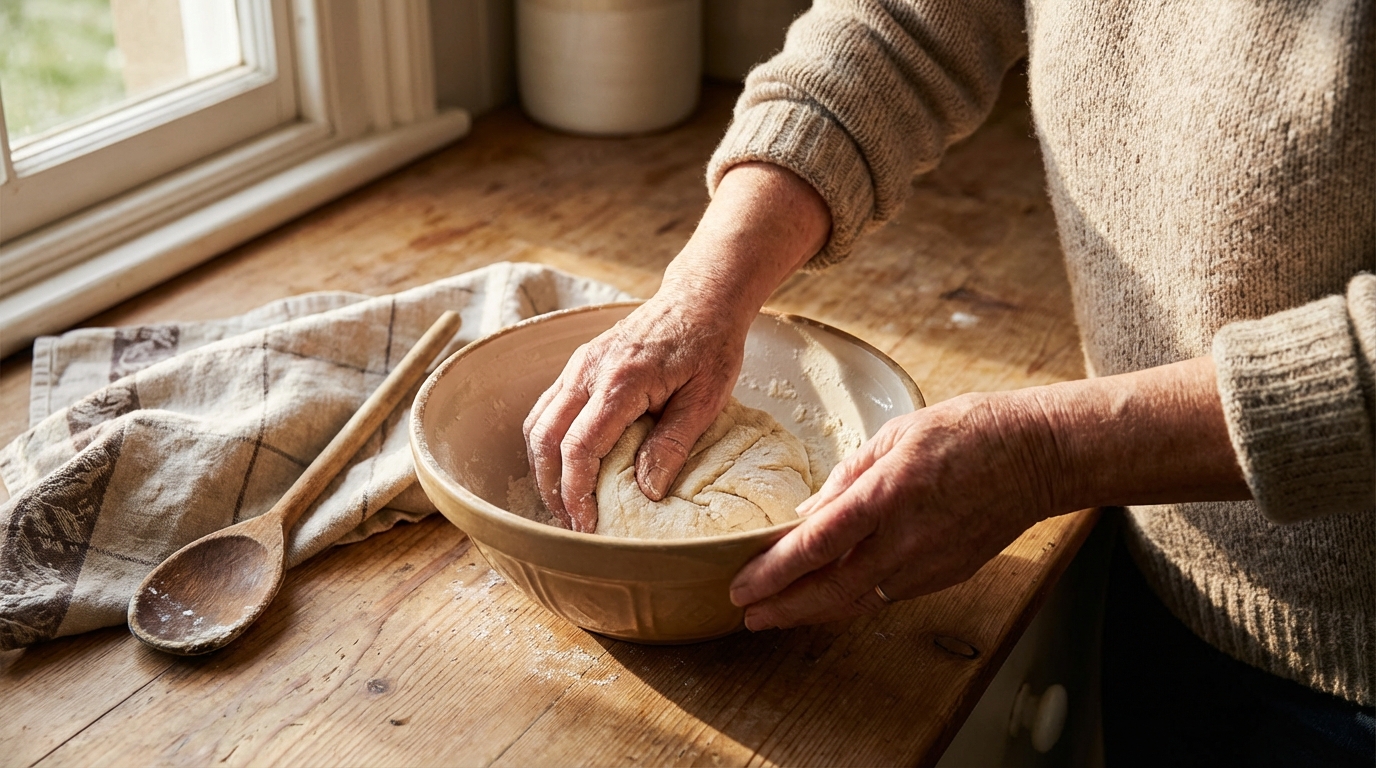
There are moments in daily life when the mind settles without effort. The hands are busy, the body knows what to do, and thoughts slow to a steady pace. These moments often come during familiar motions: folding linens, kneading dough, winding yarn, polishing wood, shelling beans, or mending a loose button. The comfort does not come from the task being finished, but from the doing itself.
Repeated hand movements have long been part of home routines because they serve more than a practical purpose. They support calm, steady attention and help the mind return to balance. This happens quietly, without special tools or complicated steps. Understanding why these motions work can make everyday tasks feel more meaningful and easier to approach with patience.
Why the Hands Influence the Mind
The hands contain a high concentration of nerve endings. When they move with intention, they send steady signals to the brain. These signals are predictable and rhythmic, which gives the nervous system a sense of order. Unlike sudden or rushed actions, familiar motions do not demand quick decisions.
When the brain does not need to watch for surprises, it relaxes. Attention shifts from worry to the present moment. This does not mean thoughts disappear, but they soften. The mind follows the pace of the hands.
Familiar movements also reduce mental strain because they rely on memory rather than problem-solving. Once a motion is learned, the body remembers it. This frees mental energy that might otherwise be spent on planning or correcting mistakes.
Muscle Memory and Comfort
Muscle memory develops through repetition. When an action is performed many times, the body stores the pattern. This is why hands can tie a knot or stitch a seam without conscious thought.
Because these motions are stored physically, they create a sense of safety. The body recognizes the movement and knows the outcome. This predictability calms the stress response. Tasks that rely on muscle memory often feel grounding because they anchor attention in something known and trusted.
The Power of Rhythm
Rhythm plays a central role in calming handwork. Repeated motions create a gentle tempo that the body naturally follows. This tempo can slow breathing and steady the heart rate.
Unlike music or guided exercises, hand rhythms are self-directed. The pace can be adjusted without thought. When tired, the hands slow. When focused, they move steadily. This natural adjustment helps maintain balance.
Examples of Rhythmic Hand Movements
- Stirring soup in a slow, even circle
- Rolling dough with consistent pressure
- Folding clothes one piece at a time
- Winding thread or yarn into a neat bundle
- Wiping a table in smooth strokes
These motions share a common trait: they repeat without interruption. There is no rush to change direction or speed. The repetition allows the mind to rest inside the motion.
Familiarity Reduces Mental Noise
New tasks require attention and judgment. The mind must track steps, anticipate problems, and correct errors. While learning can be rewarding, it also creates mental noise.
Familiar motions do the opposite. They reduce decision-making. There is no need to ask what comes next. The hands already know.
This reduction in choices is calming. It allows the mind to drift gently or focus softly. Thoughts may wander, but they do not spiral. The steady task keeps them from running too far.
Why Repetition Feels Safe
Repetition signals stability. When actions repeat without change, the environment feels predictable. Predictability tells the body it is safe to relax.
This is why familiar chores often feel less draining than unfamiliar ones, even if they take the same amount of time. The comfort comes from knowing exactly how the task will unfold.
Handcraft as Quiet Structure
Handcraft provides structure without pressure. The steps are clear, but there is room for variation. This balance supports calm focus.
Unlike activities that demand constant evaluation, handcraft allows for small imperfections. A stitch can be adjusted. A fold can be redone. This flexibility removes fear of mistakes.
The process matters more than the result. This shifts attention away from outcomes and toward the present action.
Why Simple Tools Matter
Simple tools contribute to calm because they behave predictably. A wooden spoon, a needle, or a cloth responds directly to the hand. There are no settings to adjust or screens to check.
This direct feedback strengthens the connection between hand and mind. Each movement produces a clear result. This clarity is reassuring.
Daily Routines and Emotional Balance
When familiar hand movements are part of daily routines, they create emotional balance. These routines act as anchors throughout the day.
Morning tasks can set a steady tone. Evening tasks can help release the day. The timing matters less than the regularity.
Morning Motions That Ground
Simple morning tasks can gently wake the body and mind. Making the bed, preparing breakfast, or watering plants involve slow, purposeful movements.
These motions signal the start of the day without urgency. They help shift the mind from rest to activity gradually.
Evening Motions That Settle
In the evening, familiar handwork can help the mind let go. Folding laundry, washing dishes, or light mending encourages a slower pace.
These tasks provide closure. The hands finish one small thing at a time, which helps the mind do the same.
Why the Environment Matters
The calming effect of familiar motions is strengthened by a supportive environment. Quiet surroundings, steady lighting, and comfortable posture all play a role.
When the environment is chaotic, even familiar tasks can feel strained. Small adjustments can make a difference.
Supporting Calm Through Space
- Work at a table that feels stable and uncluttered
- Use lighting that is soft but clear
- Sit or stand in a position that does not strain the body
- Keep needed tools within easy reach
These details reduce physical discomfort, allowing attention to remain on the motion rather than the body.
The Role of Touch
Touch is a powerful sense. Textures, temperatures, and weights all influence mood.
Familiar hand movements often involve materials that feel comforting. Warm fabric, smooth wood, or cool water provide gentle sensory input.
This sensory input grounds attention. It draws awareness into the hands and away from racing thoughts.
Choosing Materials That Support Calm
Not all materials feel the same. Some create tension, while others encourage ease.
- Natural fibers tend to feel more breathable and forgiving
- Tools with rounded edges are easier to hold for long periods
- Materials that respond slowly allow time to adjust movements
Choosing materials that feel pleasant can make familiar motions even more calming.
When Familiar Motions Help Most
Repeated hand movements are especially helpful during moments of restlessness or worry. When the mind feels scattered, the hands can lead it back.
These motions are also useful during transitions. After a busy day, before sleep, or during quiet afternoons, familiar tasks provide gentle structure.
Situations Where They May Not Help
There are times when familiar motions may not bring calm. Extreme fatigue or physical discomfort can make even simple tasks feel heavy.
In these moments, rest may be needed first. The hands work best when the body has enough energy to move without strain.
Patience Grows Through Repetition
Repeated hand movements teach patience in a quiet way. There is no shortcut to folding each piece of laundry or stitching each seam.
The hands learn to move steadily, without rushing. Over time, this steadiness carries into other areas of life.
Patience grows because the task itself rewards consistency rather than speed.
Learning to Trust the Process
Familiar motions show that progress happens through small, repeated actions. This builds trust in gradual effort.
The mind learns that not everything needs immediate results. Some things simply take time.
Handwork and Attention
Attention during familiar motions is different from intense focus. It is soft and flexible.
The mind can think gently while the hands work. This can lead to quiet problem-solving or simple reflection.
Because the task does not demand full attention, the mind can settle without becoming idle.
Balancing Thought and Action
If thoughts become heavy, the rhythm of the hands can bring attention back. If the mind drifts too far, the physical task provides an anchor.
This balance supports mental clarity without force.
Teaching the Body Calm Through Routine
Over time, the body associates familiar motions with calm. The action itself becomes a signal to relax.
This association grows stronger when the task is done regularly and without pressure.
The body learns that certain movements mean it is safe to slow down.
Consistency Over Perfection
The calming effect comes from consistency, not from doing the task perfectly.
Even small, imperfect motions can support calm if they are familiar and steady.
Small Details That Deepen the Effect
Small details can deepen the calming effect of familiar motions.
- Working at the same time each day
- Using the same tools
- Keeping movements unhurried
- Allowing pauses when needed
These details create continuity. The body recognizes the pattern and responds with ease.
Everyday Examples of Calming Handcraft
Handcraft does not need to be complex to be effective. Simple, everyday tasks often work best.
Mending and Repair
Mending involves careful, repeated stitches. The pace is slow and deliberate.
This type of work encourages attention to small details without pressure. Each stitch builds on the last.
Food Preparation
Chopping, mixing, and shaping food involve familiar sequences.
The hands move with purpose, guided by experience. The sensory feedback of texture and smell adds comfort.
Cleaning Motions
Wiping, sweeping, and polishing involve broad, repetitive movements.
These actions can feel especially grounding because they produce visible results with each pass.
Letting Familiar Motions Be Enough
Familiar hand movements do not need to lead to productivity beyond the task itself.
They are valuable simply because they support calm and steady attention.
Allowing these motions to be enough removes pressure and invites ease.
Care as a Form of Attention
Care is expressed through repeated, thoughtful actions. Familiar motions are one way care shows itself in daily life.
When the hands move with care, the mind follows.
This connection between hand and mind supports well-being in quiet, lasting ways.