
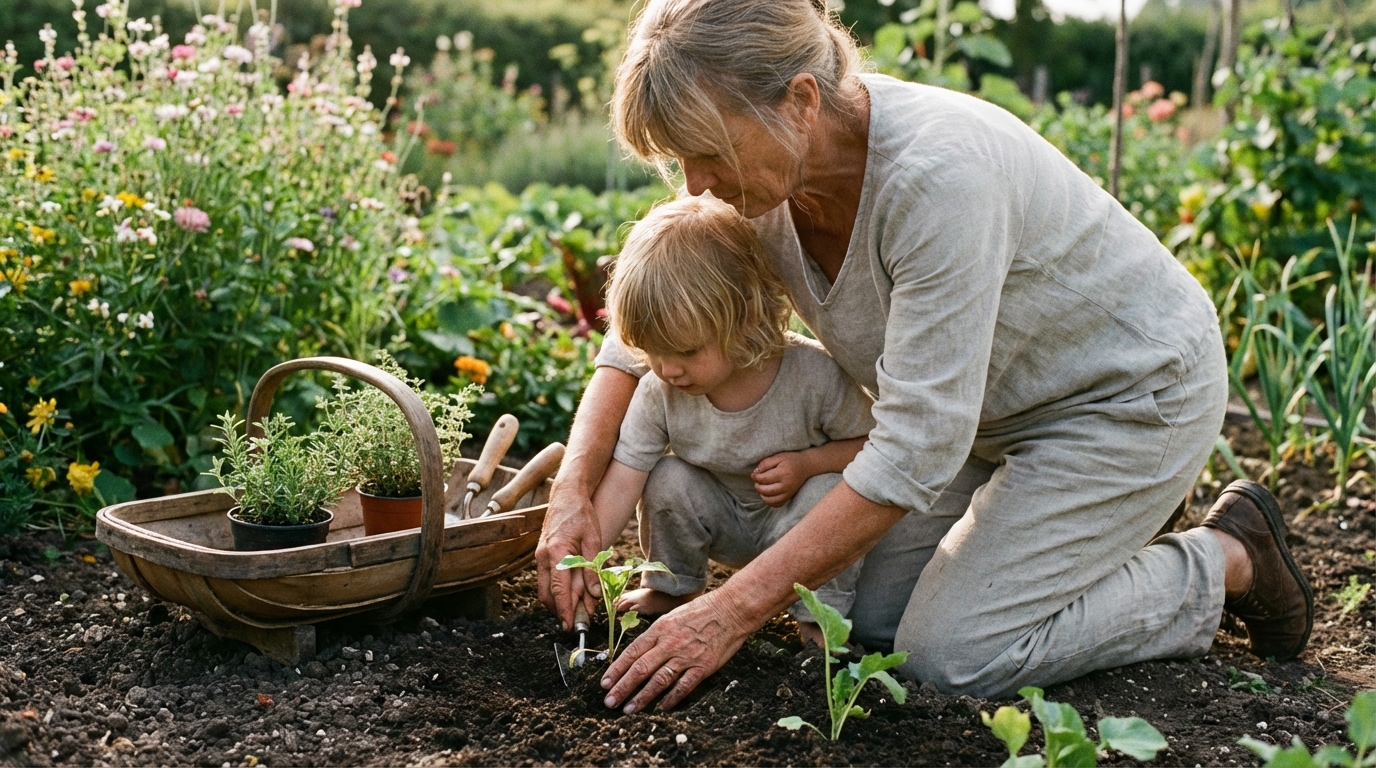
Gardening has a quiet way of shaping how people think about time. Seeds do not hurry, soil does not respond to pressure, and growth happens on its own schedule. In a home setting, these small truths show themselves day after day, often without being pointed out. A planted bed becomes a place where patience is not explained but practiced. Watching life emerge slowly from the ground invites a calmer rhythm, one that gently teaches how waiting, care, and consistency work together.
In many households, gardening is woven into everyday routines rather than treated as a special project. Watering in the morning, checking leaves before dinner, or noticing how the light shifts across a windowsill are simple actions. Over time, these repeated moments form a quiet lesson. The garden does not reward rushing or constant interference. It responds to steady attention and a willingness to let time do its work.
Patience Grows from Repetition, Not Explanation
One of the most effective lessons gardening offers is that patience develops through doing the same small task again and again. Seeds are planted once, but the care continues daily. This repetition builds understanding in a way that explanations cannot. Each watering feels ordinary, yet together they lead to visible change.
When someone new to gardening expects quick results, the wait can feel long. Leaves take days to appear. Roots work unseen for weeks. This gap between effort and result creates space for learning how waiting feels. Over time, the waiting becomes familiar rather than frustrating. The garden becomes a place where effort is trusted, even when progress is invisible.
This lesson works because it is experienced physically. Hands touch soil. Water soaks in. The senses stay involved while time passes. That combination makes patience feel practical instead of abstract.
Understanding Plant Timing Builds Respect for Natural Limits
Every plant follows its own schedule. Some sprout quickly and stretch upward within days. Others sit quietly beneath the soil, preparing slowly. Gardening reveals that pushing does not help. Extra water can drown roots. Too much fertilizer can burn tender growth. Interfering too often can do more harm than good.
Learning when to step back is part of the process. The garden teaches that care includes restraint. Watching a plant struggle slightly before strengthening helps build respect for natural limits. Growth is not something to force but something to support.
This understanding carries into daily life. Tasks around the home often benefit from the same approach. Allowing paint to dry fully, letting dough rest, or giving repairs time to settle all reflect the same principle. Gardening makes this lesson visible and repeatable.
Daily Observation Encourages Calm Attention
Gardens reward those who notice small changes. A leaf curling slightly may signal thirst. Pale color can suggest poor soil. Insects gathering in one spot often point to an imbalance. None of these signs appear all at once. They develop gradually and require calm attention to spot.
Making a habit of quiet observation builds patience naturally. Standing still for a moment, looking closely, and resisting the urge to act immediately allows understanding to grow. The garden becomes a place to practice slowing down.
This habit transfers easily to the home. Noticing when a room feels drafty, when food begins to spoil, or when clutter starts to gather uses the same skill. Gardening trains the eye to see early signs and respond thoughtfully rather than reactively.
Waiting for Harvest Teaches Trust in Process
Harvest time is one of the clearest lessons in patience. The desire to pick too early is strong, especially when the plant looks ready. Yet flavor and strength develop only with time. A tomato left on the vine just a few more days deepens in color and taste. Pulling it early leads to disappointment.
This waiting period teaches trust. The work has already been done. Now the task is to allow the process to finish. Standing by while nothing visible happens can feel uncomfortable, but the eventual reward reinforces the value of waiting.
In daily routines, many tasks benefit from the same trust. Allowing laundry to air dry fully, letting soup simmer instead of rushing the heat, or giving a repaired item time to settle all follow the same rhythm. Gardening connects these experiences through a shared understanding of timing.
Setbacks Become Lessons Instead of Failures
Not every seed sprouts. Not every plant thrives. Gardens experience loss through pests, weather, or simple misjudgment. These setbacks are unavoidable, yet they offer some of the most valuable lessons in patience.
When a plant fails, the garden invites reflection rather than blame. Was the soil too dense? Did water pool in one spot? Was the plant placed in too much sun? These questions encourage thoughtful adjustment instead of frustration.
Over time, this approach builds resilience. Setbacks become part of learning rather than a reason to quit. In the home, this mindset supports patience during repairs that do not work the first time or recipes that need adjustment. Gardening shows that improvement often comes through gentle correction.
Seasonal Cycles Teach Long-Term Thinking
Gardens follow seasons, not calendars. Beds rest during cold months and come alive again with warmth. This cycle teaches that productivity has natural pauses. There are times for growth and times for rest.
Recognizing these cycles helps build patience with long-term goals. Some efforts will not show results for months. Planning a garden bed in late summer for spring planting requires faith in future conditions. This kind of thinking encourages looking beyond immediate results.
Household routines reflect similar cycles. Deep cleaning often happens seasonally. Preserving food follows harvest times. Gardening helps connect daily tasks to a broader rhythm, reinforcing patience through long-term care.
Simple Tools Reinforce Steady Work
Gardening tools are designed for steady use rather than speed. A hand trowel, watering can, or simple hoe encourages measured movement. These tools slow the body down and support careful work.
Using simple tools teaches that progress comes from consistent effort, not force. Digging a bed takes time. Watering evenly requires attention. Rushing leads to uneven results.
This lesson mirrors many home tasks. Sweeping slowly gathers more dust. Washing dishes carefully prevents breakage. Gardening reinforces the value of taking time with basic tools.
Soil Care Shows the Value of Preparation
Healthy soil is built long before seeds are planted. Adding compost, loosening compacted areas, and allowing organic matter to settle all take time. Skipping these steps leads to weaker plants later.
This preparation teaches patience through delayed reward. The effort invested early may not show results until weeks or months later. Yet the difference becomes clear as plants grow stronger and resist stress better.
In the home, preparation plays a similar role. Sharpening tools before use, organizing supplies, or allowing ingredients to reach room temperature before cooking all improve outcomes. Gardening makes the link between preparation and patience tangible.
Weather Teaches Acceptance of What Cannot Be Controlled
No gardener controls the weather. Rain, heat, wind, and cold all shape outcomes. Learning to work with these conditions rather than against them builds patience rooted in acceptance.
When rain delays planting or heat stresses plants, the response is often adjustment rather than complaint. Shade cloths, mulch, or simply waiting for better conditions become part of the routine.
This acceptance supports patience in daily life. Household plans sometimes change due to circumstances beyond control. Gardening teaches flexibility and calm response rather than resistance.
Sharing Tasks Builds Quiet Cooperation
Gardening often involves shared work. One person waters while another weeds. Tasks are divided naturally based on time and ability. This cooperation happens without urgency.
Working together in the garden teaches patience with others. Waiting for a turn, matching pace, and respecting shared space all become part of the experience.
These skills translate easily into home life. Cooking together, cleaning shared spaces, or completing repairs benefit from the same quiet cooperation. Gardening provides a gentle setting to practice these habits.
Routine Maintenance Prevents Bigger Problems
Small, regular tasks keep a garden healthy. Removing weeds early prevents them from spreading. Checking moisture levels avoids stress. These actions take little time but require consistency.
This routine maintenance teaches patience by showing how small efforts add up. Skipping care for even a short period can lead to more work later. The garden rewards steady attention.
In the home, the same principle applies. Wiping spills quickly, addressing minor repairs, and keeping surfaces clear all prevent larger problems. Gardening reinforces the value of regular care.
Growth Is Seen Best in Looking Back
One of the most meaningful lessons in patience comes from looking back rather than forward. Noticing how much a plant has grown over weeks provides perspective. Growth often feels slow day to day but becomes clear over time.
This reflection encourages patience with ongoing efforts. Progress may not be obvious in the moment, but steady work leaves a mark.
Keeping a simple garden journal or taking occasional photos can highlight this change. The same approach can be used in the home to track projects or routines, reinforcing patience through visible progress.
Quiet Spaces Support Thoughtful Learning
Gardens offer a quiet environment free from constant noise. This calm supports thoughtful learning. Time spent among plants often feels unhurried, allowing thoughts to settle.
This atmosphere makes patience feel natural rather than forced. The absence of pressure allows understanding to grow on its own.
Creating similar quiet moments indoors, such as during early morning routines or evening chores, can extend this calm into daily life. Gardening shows how environment shapes patience.
Care Continues Even When Results Are Uncertain
Sometimes a plant struggles despite best efforts. Leaves may yellow, growth may slow, and the outcome remains uncertain. Continuing care during these times teaches patience grounded in commitment rather than guaranteed reward.
This persistence builds character through action. The choice to keep watering, adjusting soil, or providing support reflects trust in effort itself.
In the home, this lesson applies to many tasks where results are not immediate. Continuing routines, maintaining order, and offering care all benefit from the same steady patience.
Gardening Connects Patience to Everyday Purpose
At its core, gardening ties patience to purpose. The work supports nourishment, beauty, and balance within the home. Each task, no matter how small, contributes to a larger whole.
This connection makes patience feel meaningful. Waiting is not empty time but part of a living process.
Through daily care, observation, and acceptance, gardening quietly teaches patience that extends beyond the garden bed and into the rhythms of home life.