
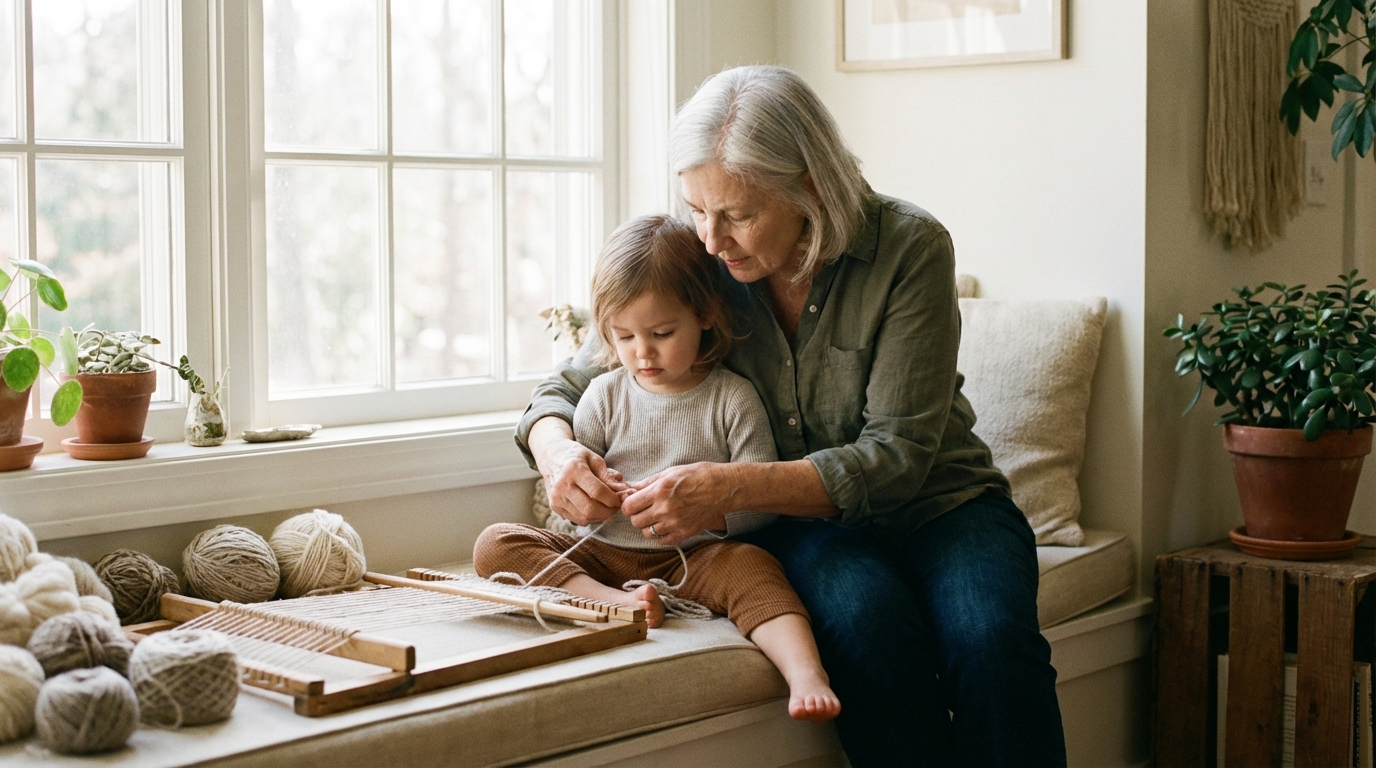
There is something quietly steady about making things by hand. The pace is slower. The work asks for attention, not speed. In a home where handcraft has a regular place, patience is not taught through lectures or rules. It grows naturally through doing. Children learn it without being told they are learning anything at all.
Handcraft includes simple activities such as sewing a button, folding paper, shaping dough, weaving yarn, sanding wood, or mending a small tear. These are not hobbies meant to impress. They are everyday skills that take time, gentle effort, and care. When children take part in this kind of making, they begin to understand that good things often happen slowly.
Patience, in this setting, is not about waiting quietly. It is about staying with a task even when it feels awkward or unfinished. It is about learning that hands need practice, and that mistakes are part of the process. These lessons sink in deeply because they are felt, not explained.
The Nature of Slow Making
Handcraft moves at the speed of the hands, not the clock. Materials respond gradually. Thread resists before it slides through fabric. Clay cracks if rushed. Wood splinters when forced. These natural responses set clear boundaries that cannot be argued with.
This slowness is not a flaw. It is what makes handcraft such a steady teacher. Children quickly learn that pushing harder does not always make things better. Sometimes it makes things worse. The work itself gives feedback, and it does so honestly.
Unlike many modern activities that deliver quick results, handcraft unfolds in stages. Each step depends on the one before it. Skipping ahead usually leads to problems that must be undone. This structure encourages patience because it makes rushing feel uncomfortable and unproductive.
Over time, children begin to adjust their pace to match the work. They pause naturally. They look more closely. Their hands slow down because they sense that the task requires it.
Why Children Respond So Well to Hands-On Work
Children are naturally curious about how things are made. When given real materials instead of toy versions, that curiosity deepens. Fabric that frays, paper that tears, and dough that dries out all behave in ways that invite careful handling.
Handcraft also offers clear cause and effect. A loose stitch leads to a weak seam. Uneven pressure creates an uneven surface. These outcomes are easy to see and understand. There is no mystery about why something worked or didn’t.
This clarity helps children accept responsibility for their actions without feeling blamed. The material is the teacher. It shows what happened and why. That kind of learning builds patience because it feels fair and predictable.
Another reason handcraft works so well is that it engages the whole body. Hands, eyes, and attention all work together. This full engagement makes it easier to stay focused for longer periods, especially when the environment is calm and free from hurry.
Patience Grows Through Repetition
Patience does not appear after one afternoon of making. It grows through repetition. When children return to the same type of work again and again, they begin to understand its rhythm.
For example, learning to sew by hand involves repeating the same motion many times. At first, the stitches are uneven and slow. Fingers fumble. Thread knots unexpectedly. With practice, movements become smoother. The hands remember what to do.
This repetition teaches patience in a quiet way. Children see their own progress. They notice that time spent practicing leads to improvement. This connection is powerful because it is experienced directly.
Repetition also removes pressure. When a task is familiar, mistakes feel less serious. There is always another chance to try again. This sense of continuity makes it easier to stay patient when things don’t go perfectly.
The Role of Small, Manageable Projects
Patience is easier to develop when tasks are sized appropriately. Large, complicated projects can overwhelm and frustrate. Small projects offer a sense of completion without rushing.
A simple cloth square, a small paper booklet, or a short piece of braided yarn can be finished in a reasonable amount of time. These projects still require care and focus, but they do not demand endless effort.
Completion matters because it reinforces the value of staying with a task. Children see that patience leads to something tangible. They can hold the result in their hands.
Small projects also allow room for mistakes. If something goes wrong, starting over does not feel like a great loss. This reduces anxiety and supports steady attention.
How Mistakes Teach Calm Persistence
Mistakes are an important part of handcraft. They are unavoidable, and they often appear without warning. A thread tangles. A fold goes crooked. A measurement is slightly off.
In a calm home setting, these mistakes are treated as part of the work, not as failures. The focus stays on fixing the problem rather than judging it. This approach teaches children to respond with patience instead of frustration.
Learning how to undo a mistake is just as valuable as learning how to do something correctly. Unpicking stitches, smoothing out clay, or re-folding paper all take time and care.
These moments slow the process, but they also deepen understanding. Children learn that patience is not about avoiding mistakes. It is about knowing how to move forward when they happen.
The Importance of a Calm Environment
The setting in which handcraft takes place matters. A quiet, orderly space supports patience in a way that a noisy, rushed environment cannot.
This does not mean the space must be perfect. It means that materials are within reach, distractions are limited, and time is not tightly scheduled. When children sense that there is no hurry, they relax into the work.
Soft light, a clear table, and a comfortable chair all contribute to a feeling of steadiness. These small details send a message that the activity is worth taking time for.
A calm environment also makes it easier to notice subtle changes in the work. Children become more aware of texture, tension, and alignment. This awareness naturally encourages slower, more patient movements.
Routine Builds Trust in the Process
When handcraft becomes part of a regular routine, patience grows more easily. Predictability creates a sense of safety. Children know what to expect and how long the activity will last.
For example, setting aside a specific time each week for quiet making establishes a rhythm. The body and mind begin to prepare for that time. There is less resistance and less impatience.
Routine also removes the pressure to finish quickly. If children know they can return to the project another day, they are more willing to work carefully.
This ongoing relationship with a task teaches an important lesson: some things are meant to be done over time. Patience becomes a natural response rather than a forced one.
Why Real Materials Matter
Real materials behave honestly. They do not bend to impatience. Fabric will not lie flat if pulled unevenly. Wood will not fit if measured carelessly.
These qualities make real materials excellent teachers. They reward careful work and reveal rushed mistakes. Children quickly learn that slowing down leads to better results.
Artificial or overly simplified materials often remove this feedback. They may snap together easily or hide errors. While convenient, they do not teach the same level of patience.
Working with real materials builds respect for the process. Children sense that the materials deserve care. This respect naturally extends to the work itself.
The Quiet Satisfaction of Progress
Handcraft offers a unique kind of satisfaction. Progress is visible, but it comes gradually. Each small step adds up to something meaningful.
This gradual progress teaches children to appreciate effort over speed. They learn to notice small improvements, such as straighter stitches or smoother edges.
These details might seem minor, but they are deeply rewarding. They show that patience pays off in subtle but real ways.
Over time, children begin to seek this kind of satisfaction. They become more willing to invest time and attention, even when the rewards are not immediate.
How Adult Behavior Shapes the Experience
Children learn patience not only from the work itself, but also from how it is introduced and supported. Calm guidance sets the tone.
When adults move slowly, explain gently, and allow time for practice, children feel less pressure to perform. They are more open to learning.
Stepping in too quickly to fix mistakes can interrupt the learning process. Allowing children to struggle a little helps them develop persistence.
Offering quiet encouragement rather than constant correction supports patience. It keeps the focus on the process rather than the outcome.
When Handcraft Feels Difficult
There are times when handcraft feels frustrating. Hands get tired. Attention wanders. Progress seems slow.
These moments are important. They are where patience is tested and strengthened. Recognizing when to pause is part of the learning.
Taking a short break, stretching hands, or simply stepping away for a moment can restore focus. Returning to the work with fresh attention often leads to better results.
Understanding that difficulty is part of the process helps children stay calm. They learn that patience includes knowing when to rest.
Patience Beyond the Craft Table
The patience learned through handcraft does not stay at the table. It carries into other parts of home life.
Children who are used to slow making often show greater persistence with everyday tasks. They are more willing to take their time when cleaning, organizing, or helping with simple repairs.
This transfer happens because the underlying skill is the same. Staying with a task, working carefully, and accepting gradual progress are useful everywhere.
Handcraft provides a foundation for these habits in a natural, supportive way.
Choosing the Right Moment
Timing matters when introducing handcraft. Children are more receptive when they are rested and not rushed.
Late afternoons or quiet mornings often work well. These times allow for unhurried attention.
Trying to fit handcraft into an already busy schedule can undermine its benefits. When time feels tight, patience is harder to maintain.
Choosing moments that allow for calm engagement helps the experience remain positive.
The Value of Unfinished Work
Not every project needs to be finished in one sitting. Leaving work unfinished teaches an important lesson.
Children learn that it is acceptable to pause and return later. This reduces the urge to rush.
Unfinished work also builds anticipation. Returning to a project with fresh eyes often leads to better decisions.
This approach reinforces the idea that patience includes allowing time for thought and rest.
How Simple Tools Support Learning
Simple tools encourage careful handling. A basic needle, a pair of scissors, or a wooden ruler all require attention.
These tools do not do the work on their own. They respond directly to how they are used.
Children learn to control their movements and apply steady pressure. This physical control supports mental patience.
Using simple tools also builds confidence. Mastery comes through practice, not shortcuts.
Consistency Over Intensity
Short, regular periods of handcraft are more effective than long, occasional sessions.
Consistency allows patience to grow gradually. Each session builds on the last.
Intense sessions can lead to fatigue and frustration. Keeping the experience manageable supports long-term engagement.
Over time, this steady approach creates a strong foundation for patience.
Respecting Individual Pace
Each child works at a different pace. Some move quickly and need reminders to slow down. Others take their time naturally.
Respecting these differences is important. Patience cannot be forced.
Allowing children to find their own rhythm within the structure of the task supports genuine learning.
This respect builds trust and encourages self-awareness.
The Quiet Lesson of Care
Handcraft teaches care in many forms. Care for materials. Care for tools. Care for the work itself.
This care requires patience. Rushing leads to damage or waste.
Children learn that careful work preserves resources and leads to better outcomes.
This lesson extends naturally into other areas of home life.
Why Slowness Feels Right
There is a natural comfort in working slowly with the hands. The body settles. Breathing steadies.
This physical calm supports mental patience. The two are closely connected.
Handcraft offers a rare opportunity to experience this connection in a simple, everyday way.
Over time, children begin to associate slowness with competence rather than delay.
The Lasting Impact of Everyday Making
Patience learned through handcraft is not loud or dramatic. It is quiet and steady.
It shows up in small ways: a willingness to try again, a calm response to mistakes, a steady hand.
These qualities are built through daily habits and gentle routines.
Handcraft provides a natural setting for this growth, rooted in care, time, and attention.