
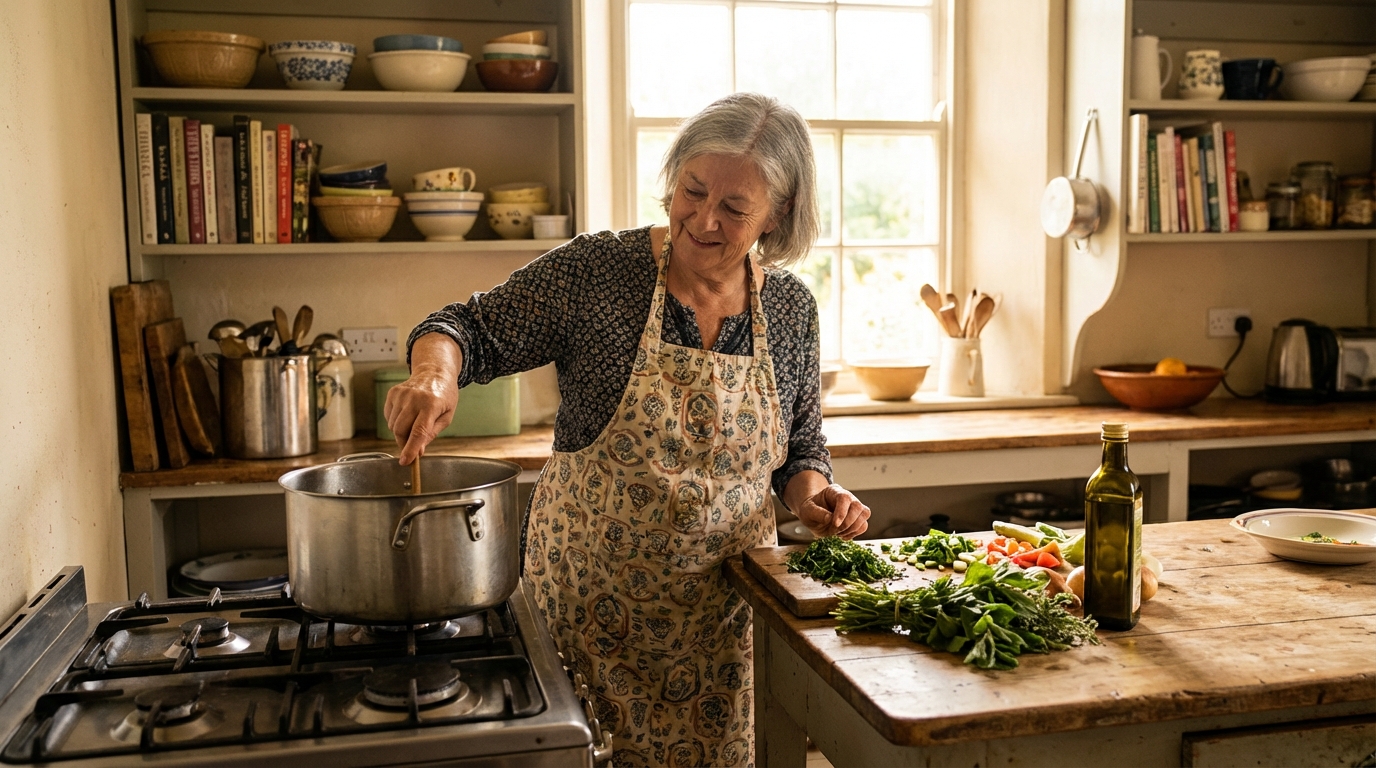
In many kitchens, confidence does not arrive with bold recipes or rare ingredients. It grows quietly, shaped by repetition, memory, and a steady understanding of how familiar foods behave. When a cook reaches for ingredients already known by touch, smell, and sight, the work feels calmer. Decisions come more easily. Small mistakes feel manageable. Meals unfold with less tension.
Cooking with familiar foods is not about limiting variety. It is about building a foundation that supports ease and focus. When the hands know what to expect, the mind has more room to notice timing, balance, and care. This sense of ease often shows up long before the meal reaches the table. It begins at the pantry shelf and continues through the final cleanup.
Why Familiar Ingredients Set the Tone in the Kitchen
Familiar ingredients reduce uncertainty. Each food has patterns: how it smells when fresh, how it softens with heat, how it responds to salt or acid. When these patterns are known, fewer decisions feel risky. This steadiness lowers mental strain, which is often mistaken for lack of skill.
Confidence in cooking is less about talent and more about predictability. A cook who understands how onions soften at medium heat does not need to second-guess the pan. Someone who knows how a certain cut of chicken browns can adjust without panic. These small moments of certainty create a steady rhythm.
Familiar foods also shorten the distance between intention and action. There is less need to reread instructions or pause to look things up. The hands move while the mind stays present. This allows attention to rest on timing, taste, and comfort rather than worry.
The Quiet Strength of Routine Ingredients
Routine ingredients are often overlooked because they feel ordinary. Yet their strength lies in reliability. A pot of dry beans, a bag of rice, a head of cabbage, or a carton of eggs can become countless meals when their behavior is understood.
These ingredients respond consistently to heat, moisture, and seasoning. This consistency teaches cause and effect. When salt is added early or late, the difference becomes clear. When heat is rushed, the results show. Over time, this feedback builds trust in judgment.
Routine ingredients also support planning. Knowing how long a pot of lentils takes to soften allows the cook to shape the rest of the day. Familiar foods fit easily into daily life because their demands are known. This reduces last-minute stress and encourages regular meals at home.
How Repetition Builds Skill Without Pressure
Repeating the same ingredients teaches more than reading instructions ever could. Each time a familiar food is prepared, small details stand out. The sound of simmering changes. The color deepens at a certain moment. These signals guide the cook quietly.
Repetition also removes the fear of waste. When a food is affordable and familiar, mistakes feel less costly. This encourages gentle experimentation. A pinch more spice can be tried. A cooking time can be adjusted. Confidence grows not from perfection but from recovery.
Over time, repetition creates a sense of ownership. The cook no longer follows steps blindly. Adjustments are made based on experience. This shift marks a deeper form of confidence rooted in understanding rather than instruction.
Familiar Foods and the Body’s Memory
The body remembers more than the mind often realizes. Hands learn how dough should feel when ready. Eyes recognize the shine of properly cooked vegetables. These memories develop through repeated contact with the same ingredients.
This physical memory reduces mental load. When the body knows what to do, the mind can relax. Movements become smoother. Tasks flow together. Cooking feels less like a test and more like a familiar task.
Familiar foods strengthen this body memory because they behave in expected ways. The same cut of meat responds similarly each time. The same grain absorbs water at a steady rate. These patterns allow the cook to rely on senses rather than strict measurements.
Why This Matters on Busy Days
On days filled with obligations, energy is limited. Familiar ingredients help conserve it. There is no need to learn new techniques or solve unexpected problems. The cook can rely on habits that already work.
This reliability supports consistency in home meals. When cooking feels manageable, it happens more often. Familiar foods make it easier to prepare something nourishing even when time is short.
In these moments, confidence shows as calm. The kitchen becomes a place of steadiness rather than pressure.
Shopping With Confidence Through Familiarity
Confidence in the kitchen often begins at the store. Familiar ingredients simplify choices. The cook knows what to look for, how much to buy, and how long it will last.
This knowledge prevents overbuying. When ingredients are known, their uses are clear. A bunch of carrots can be imagined in soups, sides, or simple roasts. Nothing feels uncertain or wasted.
Familiarity also sharpens quality judgment. A known ingredient makes it easier to spot freshness. Changes in color, firmness, or smell are noticed quickly. This leads to better meals and fewer disappointments.
Understanding Seasonality Without Stress
Familiar foods change with the seasons, and this variation teaches patience. A tomato at its peak behaves differently than one out of season. Knowing this prevents frustration.
When an ingredient is familiar, the cook adjusts expectations. Less ripe produce may need slower cooking. Peak produce may need very little handling. This understanding allows meals to adapt naturally rather than force a result.
Seasonal familiarity also encourages flexibility. The cook learns when to roast, when to stew, and when to eat fresh. Confidence grows from working with what is available rather than against it.
Cooking Without Recipes: Why Familiar Foods Make It Possible
Cooking without a recipe does not require boldness. It requires familiarity. When ingredients are known, their needs are understood. This allows meals to come together from simple decisions.
A familiar combination of grains, vegetables, and protein can be assembled based on time and appetite. The cook knows which items need longer cooking and which can be added at the end. Seasoning becomes a matter of taste rather than instruction.
This approach removes pressure. There is no fear of missing a step. The meal evolves naturally, guided by experience.
Learning to Trust Simple Adjustments
Familiar ingredients teach how small changes affect the whole dish. Adding a splash of water softens a sauce. A pinch of salt brightens flavors. Lowering heat prevents sticking.
These adjustments feel safer with known foods. The cook has seen similar changes before. Confidence grows through observation and correction.
Over time, this trust extends beyond the kitchen. It encourages patience and attentiveness, qualities that support daily life.
How Familiar Ingredients Reduce Mistakes
Mistakes in cooking often come from surprise. An unfamiliar ingredient may cook faster than expected or react strongly to seasoning. Familiar foods rarely surprise.
When a mistake does occur, familiar ingredients make recovery easier. A soup that is too salty can be diluted because its base is understood. Vegetables that are overcooked can be repurposed into another dish.
This ability to recover builds confidence. The cook learns that few errors are final. Familiar foods provide options.
Understanding Limits and Boundaries
Every ingredient has limits. Familiarity teaches where those limits are. A certain oil burns at high heat. A delicate herb loses flavor if cooked too long.
Knowing these boundaries prevents common errors. It also helps the cook choose the right tool or method without hesitation.
This knowledge is quiet but powerful. It keeps meals steady and reduces frustration.
The Role of Familiar Foods in Timing and Flow
Timing is one of the hardest parts of cooking. Familiar ingredients make it easier. The cook knows which items take longer and which can wait.
This understanding allows tasks to overlap smoothly. While grains cook, vegetables can be prepared. While something rests, another item can finish.
Familiar timing creates flow. The kitchen feels organized rather than rushed.
How This Affects Clean-Up and Order
When cooking flows well, cleanup becomes easier. Fewer rushed moments mean fewer spills. Tools are used thoughtfully and returned to place.
Familiar foods support this order. The cook knows which pots will be needed and which can stay put. This reduces clutter and saves time.
Order in the kitchen reinforces confidence. A calm space supports calm work.
Familiar Ingredients and Household Budgeting
Confidence in cooking also affects spending. Familiar foods are easier to budget for because their cost and yield are known.
The cook knows how many meals a bag of rice can provide or how far a whole chicken can stretch. This knowledge prevents impulse buying and reduces waste.
Familiar ingredients also support creative use of leftovers. Scraps become soups, stews, or fillings because their potential is understood.
Stretching Ingredients Without Sacrifice
Stretching food does not mean lowering quality. Familiar ingredients allow thoughtful extension. Adding grains to soups or vegetables to stews balances meals.
The cook knows which additions will blend well and which will overpower. This keeps meals satisfying and balanced.
Confidence grows when resources are used wisely. The kitchen becomes a place of care rather than scarcity.
Emotional Ease and Familiar Foods
Beyond technique, familiar ingredients offer emotional ease. Their smells and textures signal comfort. This response is learned through repeated, calm experiences.
Cooking becomes less about performance and more about nourishment. The cook feels supported by the process rather than judged by it.
This emotional steadiness encourages regular cooking. It turns meals into a grounding part of the day.
Why This Matters During Change
During busy or uncertain times, familiar foods provide stability. They require less decision-making and offer predictable results.
This steadiness supports routine. Even when other parts of life feel unsettled, the kitchen remains a place of order.
Confidence grows when at least one daily task feels manageable and known.
Teaching Others Through Familiar Ingredients
Familiar foods are easier to share and explain. When teaching someone to cook, known ingredients reduce confusion.
The teacher can focus on technique rather than unfamiliar behavior. The learner can recognize changes more easily.
This shared understanding builds trust. Cooking becomes a cooperative act rather than a test.
Passing Along Practical Knowledge
Practical knowledge often lives in small details. How thick to slice. How long to wait. Familiar ingredients carry these lessons clearly.
When these foods are used often, knowledge passes naturally. It is shown rather than told.
This quiet transfer strengthens confidence across the household.
Expanding the Kitchen Slowly and Thoughtfully
Familiar ingredients do not limit growth. They support it. New foods can be added slowly, anchored by what is already known.
Introducing one new ingredient at a time allows focused learning. The cook can observe how it behaves alongside familiar elements.
This method prevents overwhelm. Confidence remains intact as the kitchen grows.
Knowing When to Keep Things Simple
Not every meal needs novelty. Familiar foods remind the cook that simplicity has value.
Keeping things simple on ordinary days preserves energy for moments that require more attention.
This balance supports long-term confidence and enjoyment in cooking.
The Lasting Impact of Familiar Ingredients
Over time, familiar ingredients shape habits. They create routines that feel natural and supportive.
Confidence becomes quiet and steady. It does not demand attention. It simply allows the cook to move through the kitchen with ease.
This kind of confidence lasts because it is built on understanding, patience, and care.