
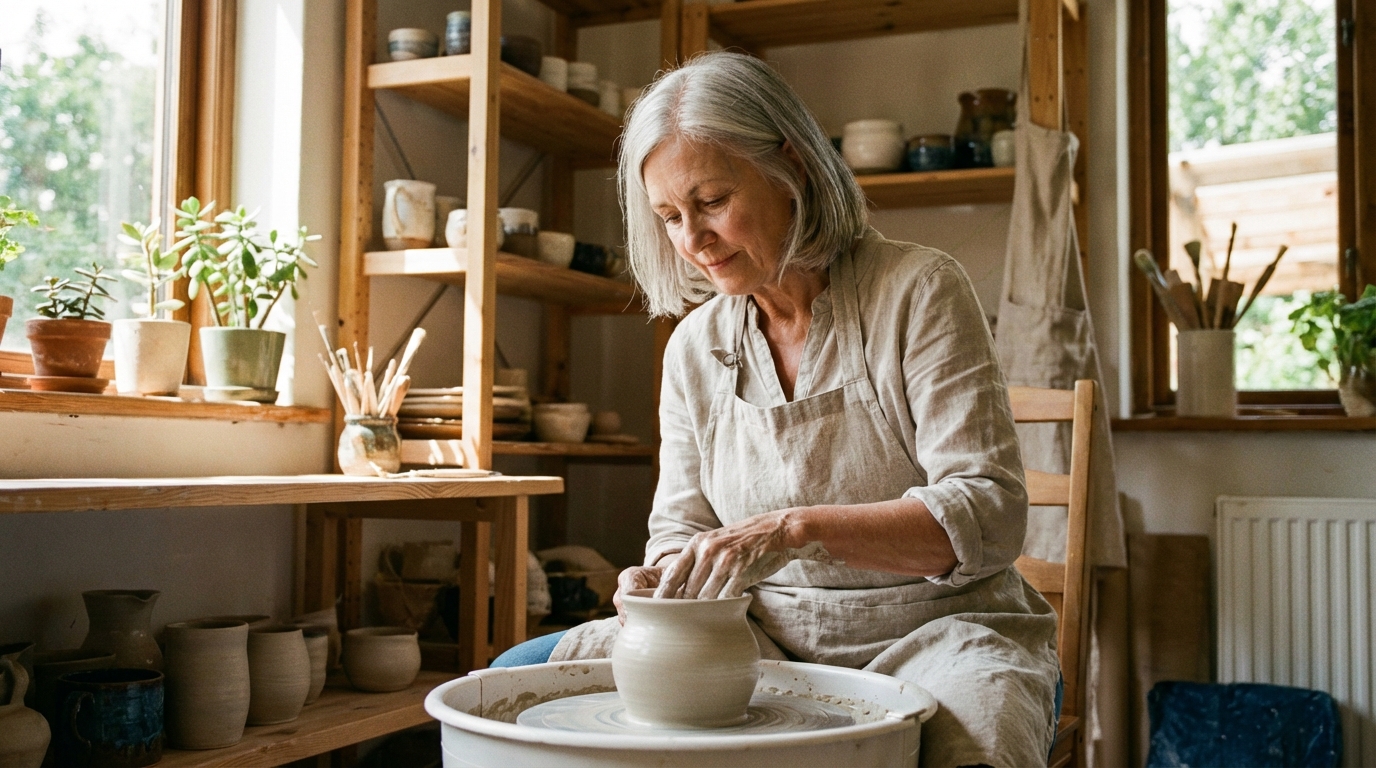
There is a certain steadiness that grows when useful things are made by hand. It does not arrive all at once. It settles in slowly, through small actions repeated over time. The hands learn first. The mind follows. Confidence appears quietly, not as a bold claim, but as a calm sense that problems can be met and worked through.
Making by hand has always been part of home life. It lives in mending, shaping, measuring, cutting, stirring, tying, and fixing. These are not hobbies set apart from daily routines. They are woven into ordinary days. When done with care, they build trust in one’s own judgment and abilities.
This kind of confidence does not come from praise or speed. It grows from attention, patience, and direct experience. It is rooted in the understanding that mistakes are not signs of failure, but part of learning how materials behave and how hands respond.
The Relationship Between Hands and Understanding
Hands are natural teachers. When working with wood, fabric, dough, or metal, the hands gather information that words alone cannot provide. Texture, resistance, weight, temperature, and balance all communicate important details.
For example, kneading dough teaches timing and pressure. Too much force tightens it. Too little leaves it uneven. The hands learn this balance before the mind can explain it. Over time, this builds trust in physical judgment.
This learning is dependable because it comes from direct contact. Instructions may guide the beginning, but understanding deepens only through doing. Each repetition strengthens the connection between observation and response.
This is why making by hand often feels calming. Attention settles into the task. Distractions fade. The work asks for presence, not urgency.
Why Small, Useful Projects Matter More Than Big Ones
Confidence grows best when projects are sized to fit daily life. Small, practical tasks offer clear results and frequent completion. Each finished piece reinforces the sense that effort leads somewhere meaningful.
A repaired button, a sharpened tool, or a neatly folded cloth provides immediate evidence of capability. These results may seem modest, but they accumulate.
Large, ambitious projects can be rewarding, but they also carry long gaps between effort and outcome. For building quiet confidence, steady progress matters more than grand scale.
Smaller tasks also allow for mistakes without heavy cost. A miscut piece of scrap wood teaches just as much as an expensive board, without discouragement.
Choosing Projects That Support Confidence
Not all handwork strengthens confidence equally. The most helpful tasks share certain qualities:
- They solve a real, everyday need.
- They can be completed in reasonable time.
- They allow room for adjustment.
- They offer visible improvement over time.
Examples include mending clothes, maintaining tools, cooking simple meals from basic ingredients, or organizing storage by hand-built dividers.
These tasks reinforce the connection between effort and usefulness. The result is not decorative alone. It serves daily life.
Learning Through Mistakes Without Losing Heart
Handcraft teaches that mistakes are information. A cracked seam, uneven edge, or loose joint shows exactly where attention needs to change.
This differs from abstract errors, where the cause may be unclear. In handwork, the material responds honestly. It shows what happened and why.
Confidence grows when mistakes are approached with curiosity rather than frustration. Asking what changed, where tension built, or when timing shifted leads to improvement.
It helps to pause after an error and examine it closely. Rushing to fix it can hide the lesson. Taking time to understand the cause prevents repetition.
When to Start Over and When to Adjust
Not every mistake requires starting again. Learning to judge when to repair and when to redo is part of growing skill.
Small flaws that do not affect function often add character and teach tolerance. Structural problems, however, usually demand correction.
Knowing the difference builds judgment. Over time, this discernment becomes automatic. Confidence comes from knowing what matters and what does not.
The Role of Routine in Building Trust
Handcraft fits naturally into routines. Repeated tasks done at regular times deepen familiarity and ease.
Consider setting aside a small, consistent window for making or maintaining. This could be early morning, late afternoon, or a quiet evening hour. The specific time matters less than the regularity.
Routine reduces decision fatigue. When the time is known, energy can be spent on the work itself.
This steady rhythm reinforces patience. Progress may be slow, but it is reliable. Over weeks and months, small efforts accumulate into noticeable skill.
Preparing the Space for Calm Work
A simple, orderly space supports focus. Tools kept in consistent places save time and reduce frustration.
The goal is not perfection, but familiarity. When hands can reach for what they need without searching, confidence stays intact.
Good lighting, a stable surface, and comfortable posture prevent unnecessary strain. Discomfort distracts from learning.
Keeping the space clean after each session prepares it for the next. This small habit maintains momentum.
Understanding Materials Builds Respect and Skill
Each material has its own character. Wood expands and contracts. Fabric stretches and frays. Metal resists and remembers force. Understanding these traits prevents frustration.
Confidence grows when expectations match reality. For example, working with dry wood reduces warping. Choosing the right thread prevents broken seams.
Learning material behavior takes observation. Paying attention to sound, feel, and resistance reveals important clues.
This understanding deepens with repeated use. Over time, hands anticipate how materials will respond, reducing errors.
Why Slowing Down Often Speeds Progress
Rushing increases mistakes and weakens results. Slowing down allows adjustments before problems grow.
Measuring twice, aligning carefully, and testing fit before final assembly prevent rework.
Confidence strengthens when results match intention. Careful pacing supports this alignment.
The Quiet Strength of Repair
Repair work holds special power in building confidence. Fixing what already exists requires observation, problem-solving, and adaptability.
Unlike new projects, repairs begin with unknowns. The cause of damage may not be obvious. The solution must fit within existing limits.
Successfully restoring function builds trust in one’s ability to assess and respond to real conditions.
Even partial repairs have value. Improving function, extending use, or preventing further damage all count as success.
Common Repairs That Build Skill
- Reinforcing loose joints.
- Patching worn fabric.
- Sharpening dull tools.
- Sealing small leaks.
These tasks strengthen problem-solving skills. Each repair teaches something new about structure and wear.
Patience as a Learned Skill
Patience is often thought of as a trait, but it is better understood as a skill developed through practice.
Handcraft requires waiting for glue to set, finishes to dry, or dough to rest. These pauses cannot be rushed.
Learning to respect these intervals reduces frustration. It also trains the mind to tolerate uncertainty and delay.
This patience transfers to other areas of life. Confidence grows from knowing that waiting can be productive.
Measuring Progress Without Comparison
Progress in handcraft is personal. Comparing results to others often undermines confidence.
Better measures include smoother results than before, fewer corrections needed, or increased ease.
Keeping early attempts visible can help. Seeing improvement over time reinforces belief in learning.
This internal measure supports steady confidence without pressure.
Teaching Through Demonstration and Shared Work
Sharing handwork with others deepens understanding. Demonstrating a task clarifies one’s own knowledge.
Working side by side allows learning to happen naturally. Questions arise from real situations, not abstract theory.
This shared effort builds mutual respect and reinforces confidence without formal instruction.
When Making by Hand Feels Difficult
There are times when handwork feels frustrating or unproductive. Fatigue, distraction, or unrealistic expectations can interfere.
Recognizing these moments prevents discouragement. Stepping away briefly often restores clarity.
Not every session needs to produce visible results. Sometimes the value lies in maintaining familiarity.
Allowing imperfect days preserves long-term confidence.
Integrating Handcraft Into Everyday Life
Handcraft does not need special occasions. Folding clothes carefully, maintaining tools, or preparing simple food by hand all count.
These actions reinforce attentiveness and care. They build confidence through repetition.
When handwork becomes part of daily life, confidence becomes steady and quiet. It does not demand recognition. It simply supports the next task, and the one after that.