
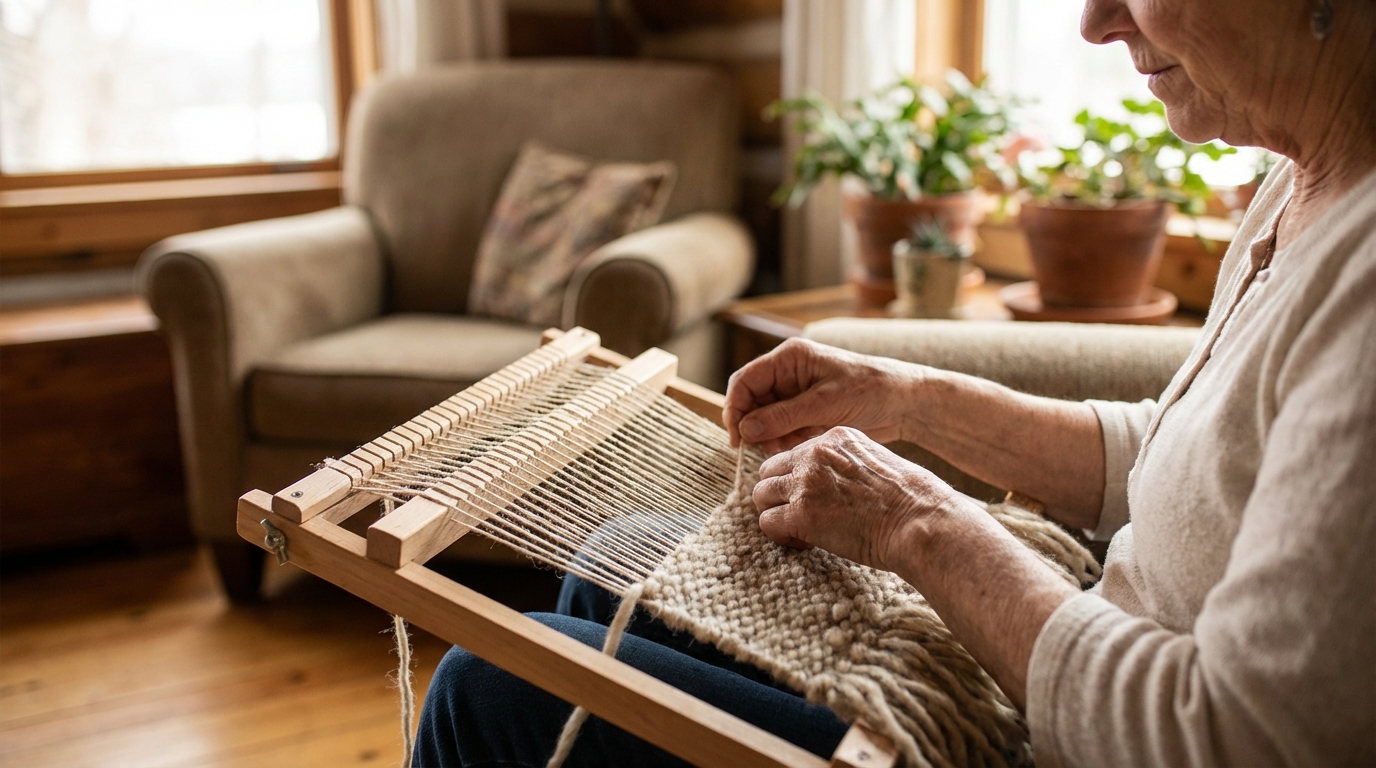
There is a quiet kind of calm that settles in when the hands know what to do without being told. It shows up during small, repeated actions that do not ask for decisions, speed, or explanation. Simple craft routines create this calm not by forcing stillness, but by giving the mind a place to rest while the hands stay gently occupied. Over time, these routines soften mental noise in a way that feels natural and steady.
Craft has always lived close to everyday life. It fits between chores, fills waiting moments, and brings order to idle time. Unlike activities that demand constant focus or creative pressure, familiar handwork allows attention to drift without becoming scattered. The value comes from repetition, predictability, and the quiet rhythm of making something small and useful.
Understanding Mental Noise in Everyday Life
Mental noise often comes from too many unfinished thoughts competing for attention. It can feel like a low hum that never fully quiets, even during rest. This noise is not always caused by stress or worry. Sometimes it comes from constant switching between tasks, decisions that stack up, or long periods without a physical outlet.
The mind is built to move between focus and rest. When that balance is off, thoughts begin to pile up. Craft routines help by giving the mind a clear lane. The task is simple, the steps are known, and the outcome does not need to be impressive. This removes the need to evaluate, judge, or plan ahead.
Unlike passive activities, handcraft engages the body in a mild, steady way. The hands move, the eyes follow, and the breath often slows without effort. This gentle engagement keeps the mind from wandering too far while still allowing it to loosen its grip on constant thinking.
Why Repetition Brings Calm
Repetition is often misunderstood as boring or limiting. In practice, it is one of the most effective ways to settle the nervous system. When an action is repeated, the body learns it. Once learned, the action no longer demands full attention.
In simple craft routines, repetition creates a predictable pattern. The hands know the sequence. The materials behave as expected. This predictability signals safety and stability. There are no surprises that require quick thinking or problem-solving.
Because the task is familiar, the mind is free to slow down. Thoughts may come and go, but they do not need to be followed. Over time, this teaches the mind that not every thought needs a response.
The Difference Between Busy and Occupied
Being busy often increases mental noise. It involves urgency, deadlines, and constant shifts. Being occupied, in contrast, means the hands are engaged in something steady and contained.
A craft routine occupies without overwhelming. There is a beginning, a middle, and a clear stopping point. This structure helps the mind feel held rather than scattered.
Choosing the Right Kind of Craft
Not all crafts quiet the mind in the same way. The most effective ones share a few common traits. They are simple, repetitive, and forgiving. They do not require frequent decisions or complex planning.
Examples include mending fabric, folding paper, shaping dough, weaving simple patterns, carving soft wood, or sorting and winding yarn. These tasks rely on muscle memory and do not demand constant attention.
Complex projects with many steps can be satisfying, but they do not always reduce mental noise. When too many choices are involved, the mind stays alert and active. For calming routines, simpler is better.
Materials Matter More Than Tools
The feel of materials plays a quiet but important role. Natural textures tend to ground attention. Cloth, wood, paper, clay, and fiber offer resistance that is neither too hard nor too soft.
Materials that behave predictably are especially helpful. A thread that frays easily or a tool that slips can pull the mind back into frustration. Choosing materials that cooperate allows the routine to remain smooth and calming.
Over time, familiarity with specific materials deepens the sense of ease. The hands learn how much pressure to use, how the material responds, and what to expect next.
Setting Up a Craft Routine at Home
A calming craft routine does not need a special room or elaborate setup. It works best when it fits naturally into daily life. A small table, a basket, or a drawer can be enough.
Keeping materials ready is key. When supplies are stored neatly and within reach, starting the routine requires less effort. This lowers resistance and makes it easier to return to the practice regularly.
The space should feel welcoming but not precious. Craft routines meant to reduce mental noise should be easy to begin and easy to pause. If setting up feels like a chore, the calming effect is lost.
The Importance of a Clear Start and Stop
Knowing when a routine begins and ends helps the mind relax. This can be as simple as sitting down with the materials and stopping when a small section is complete.
Clear boundaries prevent the activity from becoming another task that spills into the rest of the day. The goal is not productivity, but presence.
Stopping before fatigue sets in helps preserve the calm association. Ending on a comfortable note makes it easier to return next time.
How Craft Routines Quiet Thought Loops
Thought loops are patterns of repeated thinking that circle without resolution. They often appear during idle moments or when the body is still.
Craft routines interrupt these loops by providing a gentle anchor. The mind has something steady to return to. The hands move in a known pattern, offering a rhythm that thoughts can follow without leading.
Over time, the mind learns to rest in the movement. This does not mean thoughts disappear, but they lose urgency. They become background rather than the main focus.
Why Small Movements Work Better Than Large Ones
Large movements can increase alertness. Small, controlled motions tend to soothe. Craft routines rely on fine motor skills, which require just enough attention to stay present without becoming tense.
These movements encourage slower breathing and a relaxed posture. The body settles, and the mind follows.
Timing Craft Routines for Maximum Calm
When a craft routine is practiced matters as much as how it is done. Certain times of day are naturally more suited to quiet handwork.
Early morning routines can set a steady tone for the day. Evening routines help the mind transition away from the demands of the day. Short sessions during breaks can reset attention without overstimulation.
The best timing is consistent. Regularity builds familiarity, which deepens the calming effect.
Short Sessions Are Often Enough
Long sessions are not necessary. Even ten to twenty minutes can reduce mental noise when the routine is familiar.
Stopping while still feeling settled helps the routine remain a source of calm rather than fatigue.
The Role of Order and Care
Craft routines naturally encourage care and order. Materials are handled gently. Tools are returned to their place. These small acts of care reinforce a sense of stability.
Order does not need to be perfect. It simply needs to be consistent. Knowing where things belong reduces small, hidden stresses that add to mental noise.
Over time, this care extends beyond the craft itself. The calm created during the routine often carries into other household tasks.
Why Tidying After Craft Matters
Putting materials away at the end of a session completes the routine. It signals closure to the mind.
This final step prevents the activity from lingering as a half-finished task. The next session begins with clarity rather than clutter.
When Craft Routines Do Not Help
There are times when craft routines may not reduce mental noise. If the mind is highly agitated or the body is exhausted, even simple tasks can feel burdensome.
On such days, rest may be more helpful. Craft routines are most effective when there is a baseline level of energy and willingness.
Forcing the routine can turn it into another obligation, which increases noise rather than quieting it.
Adjusting Expectations
It is important to release expectations about outcome. The value lies in the process, not the finished object.
If frustration arises, it may help to simplify the task further or shorten the session.
How Familiar Patterns Build Long-Term Calm
Over time, repeated craft routines create a sense of continuity. They become part of the rhythm of home life.
This continuity offers reassurance. No matter how the day unfolds, there is a familiar activity waiting.
The mind begins to associate the routine with safety and ease. This association strengthens with regular practice.
The Quiet Confidence of Skill
As skills deepen through repetition, confidence grows quietly. There is comfort in knowing how to do something well without needing praise or recognition.
This confidence is steady and internal. It does not depend on comparison or external approval.
Craft as a Form of Gentle Attention
Craft routines teach a kind of attention that is soft rather than sharp. It is attentive without being tense.
This quality of attention can influence other areas of life. Listening becomes easier. Waiting feels less restless. Small tasks feel more manageable.
The hands lead, and the mind follows at a calmer pace.
Integrating Craft Into Daily Life
The most effective craft routines are those that blend seamlessly into daily life. They do not require special occasions or large blocks of time.
A small basket near a favorite chair, a project kept in a drawer, or materials stored near a window can invite regular use.
When craft becomes part of the environment, returning to it feels natural rather than planned.
Letting the Routine Evolve Slowly
Over time, routines may change. Materials wear out. Interests shift. This is natural.
Allowing the routine to evolve without forcing novelty helps maintain its calming role.
The core remains the same: simple actions, repeated with care.
The Quiet Strength of Making
Making something with the hands, no matter how small, affirms a sense of capability. It reminds the mind that it can shape, repair, and tend.
This quiet strength counters feelings of helplessness that often fuel mental noise.
The object itself may be modest, but the act of making leaves a lasting impression of steadiness.
Patience as a Byproduct
Craft routines do not teach patience directly. Instead, patience grows naturally through repetition.
Waiting for stitches to line up, for glue to set, or for a pattern to emerge builds tolerance for gradual progress.
This patience often carries into other areas of life, softening reactions and reducing urgency.
Closing the Loop Without Finality
Each craft session stands on its own. There is no need to complete everything at once.
Leaving a project at a natural pause allows the mind to let go without tension.
The routine remains available, ready to be picked up again when calm is needed.