
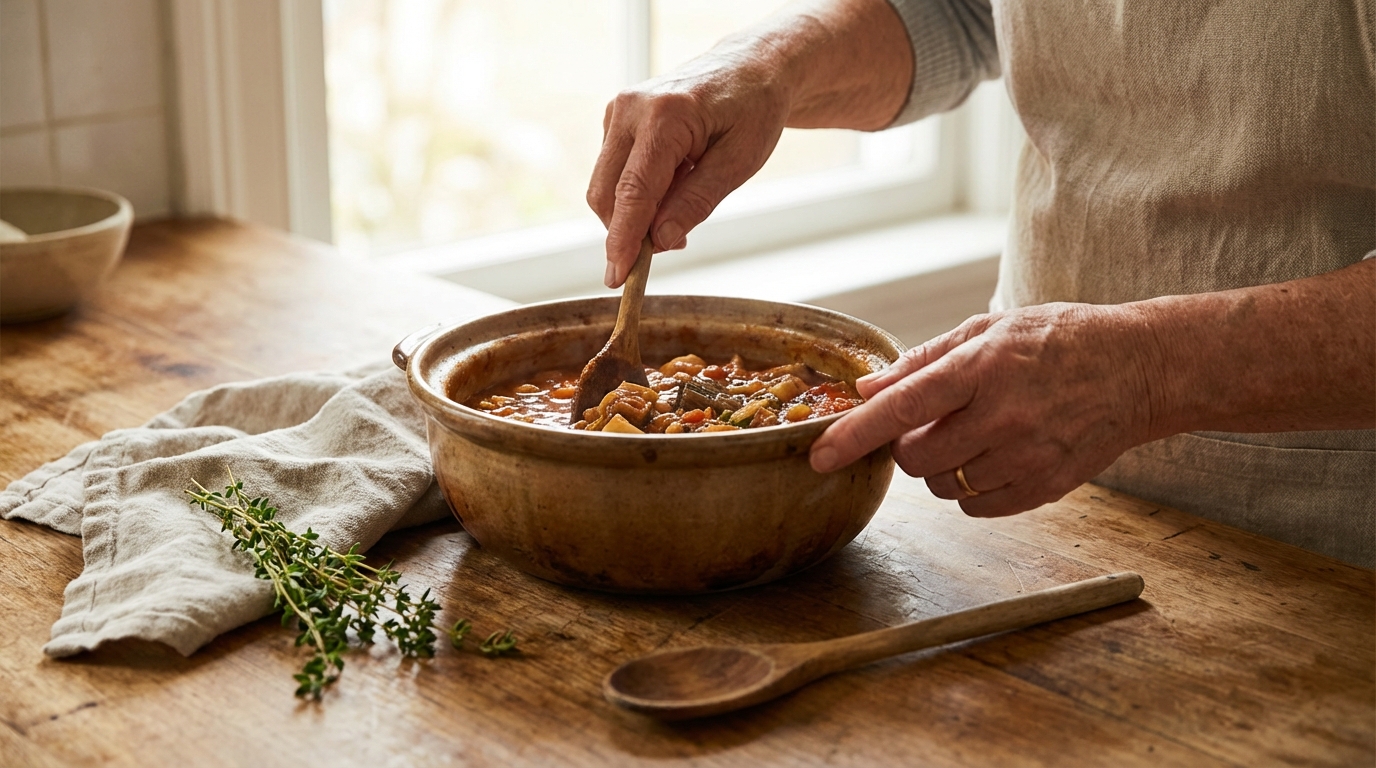
There is a quiet kind of attention that grows in the kitchen when food is allowed to take its time. The pot that simmers instead of rushing to a boil, the vegetables cut with steady hands, and the gentle waiting between steps all create a pace that supports clear thinking. Slow cooking is not only about flavor. It shapes the way the mind moves through a task, and over time it can improve focus in everyday life.
In many homes, cooking once followed the rhythm of the day rather than the clock. Meals were planned around heat that built gradually and ingredients that changed slowly. That pace asked for presence, but not urgency. Understanding why this matters can help bring calm and clarity back into the kitchen, even in modern routines.
The Connection Between Pace and Attention
Focus is not only a mental skill. It is shaped by the environment, the body, and the rhythm of the work at hand. When tasks move too quickly, attention is pulled in many directions at once. When tasks move too slowly without structure, the mind drifts. Slow cooking sits in a balanced space between these extremes.
The kitchen offers a rare chance to work with time instead of against it. Slow cooking creates natural pauses, steady sequences, and clear cause-and-effect moments. Each of these supports focus in a practical way.
Why Fast Cooking Often Fragments Attention
High-speed cooking methods demand constant reaction. Oil heats quickly. Food browns in seconds. Timing becomes tight, and small mistakes carry immediate consequences. This creates a sense of pressure that can scatter attention.
When attention is under pressure, it tends to narrow too much. The mind jumps from one worry to the next: Is it burning? Did the pan get too hot? Should something be flipped now? This kind of focus is sharp but fragile. It fades quickly and often leaves behind mental fatigue.
Over time, repeated exposure to rushed tasks trains the mind to expect urgency. This makes it harder to settle into deeper, sustained attention in other areas of life.
How Slower Paces Support Mental Stability
Slow cooking reduces the need for constant reaction. Heat changes gradually. Ingredients soften over time. The cook can step back, observe, and make adjustments without panic.
This steadier pace allows attention to widen instead of tighten. The mind can track the process as a whole rather than jumping between emergencies. This broader attention is more sustainable and less tiring.
With practice, this way of working teaches the mind to stay present without strain. The kitchen becomes a place where focus feels natural rather than forced.
Step-by-Step Work Builds Lasting Focus
Slow cooking relies on clear sequences. One step prepares the way for the next. This structure supports attention by giving the mind a simple path to follow.
Unlike multitasking, which splits attention, step-by-step work invites full engagement with one action at a time. The result is a calm sense of progress.
Preparation as a Grounding Practice
Before slow cooking begins, there is usually a period of preparation. Vegetables are washed, trimmed, and cut. Ingredients are measured or set aside. This stage matters more than it appears.
Preparation creates a mental map of the task ahead. By touching and seeing each ingredient, the mind becomes familiar with the process before heat is applied. This reduces uncertainty and allows attention to settle.
Cutting vegetables evenly, for example, is not only about appearance or cooking time. The repetitive motion and visual consistency help steady the mind. Uneven cuts demand later adjustments, which pull attention away from the larger process.
Why Order Matters More Than Speed
In slow cooking, the order of steps is more important than how fast they are completed. Onions soften before spices are added. Liquid comes after browning, not before. Each choice builds on the last.
This order gives attention a clear anchor. Instead of wondering what to do next, the cook follows a logical sequence. This reduces mental noise and supports sustained focus.
When steps are skipped or rushed, the process becomes harder to track. Attention must work harder to compensate, which often leads to mistakes or distraction.
The Role of Gentle Heat in Mental Clarity
Heat is not just a cooking tool. It sets the tone for the entire experience. Gentle heat changes food slowly and predictably, which has a calming effect on the mind.
High heat demands constant vigilance. Gentle heat allows observation and patience.
Predictable Change Reduces Mental Strain
When food cooks slowly, changes happen in a visible and understandable way. Vegetables soften gradually. Sauces thicken little by little. Aromas develop in stages.
This predictability allows the mind to relax. There is no need to anticipate sudden shifts. Attention can remain steady, following the natural progression of the food.
In contrast, sudden changes require rapid adjustment. This keeps the nervous system on alert and makes sustained focus difficult.
Low Heat Encourages Sensory Awareness
Slow cooking invites the senses to work together. The sound of a gentle simmer, the smell of ingredients as they warm, and the sight of steam rising all provide useful information.
Paying attention to these cues strengthens focus because they offer constant, low-level feedback. The mind stays engaged without becoming overwhelmed.
Over time, this sensory awareness becomes intuitive. The cook learns to notice small changes without effort, which supports confidence and calm attention.
Waiting as an Active Part of the Process
One of the most overlooked aspects of slow cooking is waiting. Waiting is often seen as empty time, but in the kitchen it serves a purpose.
Waiting creates space for observation, adjustment, and rest. It teaches the mind that not every moment requires action.
How Waiting Trains Patience and Focus
During a long simmer or bake, there is little to do but check occasionally. This teaches attention to remain available without being restless.
The mind learns to stay near the task instead of abandoning it or hovering anxiously. This balanced attention is useful far beyond the kitchen.
Checking too often breaks this balance. It interrupts focus and can even disrupt the cooking process. Learning when not to act is part of building attention.
Using Waiting Time Wisely
Waiting does not mean leaving the kitchen entirely. It can be a time for gentle, related tasks that do not demand full attention.
- Washing used utensils.
- Setting the table.
- Preparing a simple side dish.
These tasks keep the body engaged while allowing the mind to remain loosely connected to the main dish. This supports a steady, unbroken sense of focus.
Repetition Builds Confidence and Mental Ease
Slow cooking often involves making the same dishes again and again. This repetition is not boring; it is stabilizing.
Familiar routines reduce decision-making, which frees attention for observation and care.
Why Familiar Dishes Improve Focus
When a recipe is known, the mind does not have to work as hard to remember steps. Attention can shift from remembering to noticing.
Noticing leads to improvement. The cook sees how small changes in heat or timing affect the result. This deepens understanding and keeps the mind engaged.
New recipes can be enjoyable, but too many at once create cognitive clutter. Familiar dishes provide a mental resting place.
Small Adjustments Keep the Mind Engaged
Repetition does not mean rigidity. Slow cooking allows for small, thoughtful adjustments.
- Cutting vegetables slightly larger or smaller.
- Changing when salt is added.
- Letting a dish cook a little longer one day.
These small experiments keep attention active without overwhelming it. The mind stays curious but calm.
The Physical Actions That Support Mental Focus
Slow cooking involves physical actions that naturally support concentration. These actions are steady, rhythmic, and purposeful.
The body and mind work together, which strengthens attention.
Steady Movements Calm the Nervous System
Stirring slowly, chopping with care, and lifting heavy pots all require controlled movement. These actions send signals of safety and stability to the nervous system.
When the body feels steady, the mind follows. Focus becomes easier because there is no underlying sense of rush or danger.
Jerky or rushed movements have the opposite effect. They increase tension and make attention brittle.
Tactile Feedback Keeps Attention Anchored
Handling food provides constant tactile feedback. The firmness of a carrot, the softness of dough, and the weight of a pot all keep attention grounded in the present moment.
This kind of feedback is especially helpful for maintaining focus because it is immediate and honest. There is no abstraction. The mind responds directly to what the hands feel.
Using tools that feel comfortable and familiar enhances this effect. Awkward or poorly balanced tools distract attention.
Planning Ahead Reduces Mental Noise
Slow cooking often begins long before the stove is turned on. Planning is an essential part of the process.
Good planning reduces uncertainty, which is one of the biggest drains on focus.
Simple Planning Supports Calm Attention
Planning does not require detailed schedules or complex lists. It can be as simple as deciding in the morning what will be cooked in the evening.
This small decision frees attention throughout the day. The mind does not have to revisit the question of dinner repeatedly.
Knowing that a dish will take time also encourages realistic pacing. There is less temptation to rush when expectations are clear.
Preparing Ingredients in Advance
Some slow-cooked dishes benefit from early preparation. Soaking beans, chopping vegetables, or measuring spices ahead of time spreads the work out.
This reduces pressure later and allows attention to remain steady during cooking. When everything is ready, the process flows more smoothly.
However, over-preparation can remove useful engagement. Chopping everything days ahead may save time but can reduce freshness and sensory involvement. Balance matters.
Understanding When Slow Cooking Does Not Help Focus
Slow cooking is not a cure for all distraction. There are times when it may not support focus.
Recognizing these limits is part of practical wisdom.
When the Mind Is Already Overloaded
If attention is already strained by stress or fatigue, even slow tasks can feel heavy. In these moments, cooking may require more effort than it gives back.
Choosing simpler dishes or delaying complex cooking can protect focus rather than draining it.
Listening to these signals prevents frustration and supports long-term attention.
When the Environment Is Too Distracting
Slow cooking relies on a certain level of quiet awareness. Loud noise, constant interruptions, or crowded spaces can break this rhythm.
In such environments, attention may fragment despite the slower pace. Adjusting the environment, even slightly, can help.
Turning off unnecessary noise or creating a small, clear workspace supports the benefits of slow cooking.
The Kitchen as a Place of Mental Training
Over time, slow cooking turns the kitchen into a place where focus is practiced naturally.
This practice is gentle and forgiving. Mistakes happen slowly and can often be corrected.
Learning Through Observation Instead of Force
Slow cooking teaches through observation. The cook watches how food responds to time and heat.
This kind of learning strengthens attention because it relies on curiosity rather than pressure. The mind stays open and engaged.
Forcing attention through strict rules or rigid timing often leads to resistance. Observation invites cooperation.
Carrying Kitchen Focus Into Daily Life
The attention practiced in the kitchen often carries into other routines.
- Household tasks are approached more steadily.
- Decisions are made with more patience.
- Waiting feels less uncomfortable.
This transfer happens naturally because the mind learns a new rhythm. Slow cooking provides repeated, practical training in sustained attention.
Why Pace Matters More Than Perfection
Slow cooking does not demand perfect results. It values care over precision.
This attitude supports focus by reducing fear of mistakes.
Allowing Room for Imperfection
When perfection is the goal, attention becomes tense. The mind watches for errors instead of engaging with the process.
Slow cooking allows for adjustment. A dish can cook longer. Seasoning can be corrected. This flexibility keeps attention relaxed.
Relaxed attention lasts longer and is more useful than strained concentration.
Focusing on Process Instead of Outcome
In slow cooking, the process itself is the main task. The outcome unfolds over time.
By focusing on each step as it happens, attention remains anchored. Worry about the final result fades into the background.
This shift from outcome to process is one of the key ways slow cooking improves focus.
Building a Slow Cooking Routine
Developing a routine around slow cooking strengthens its effects on focus.
Routines reduce uncertainty and create familiar mental pathways.
Choosing the Right Time of Day
Slow cooking works best when there is enough time for it to unfold without pressure.
Starting too late creates urgency, which undermines focus. Planning earlier allows the mind to relax into the process.
Some dishes benefit from beginning in the morning or early afternoon, even if they are finished later.
Keeping Tools and Ingredients Consistent
Using the same pots, utensils, and basic ingredients builds familiarity.
This consistency reduces the need for constant adjustment. Attention can settle into known patterns.
Introducing new tools occasionally can be refreshing, but too much change at once disrupts focus.
The Quiet Satisfaction of Slow Work
Slow cooking offers a form of satisfaction that comes from steady effort.
This satisfaction reinforces focus by making attention feel worthwhile.
Noticing Progress Over Time
In slow cooking, progress is gradual but visible.
The sauce thickens. The aroma deepens. The texture changes.
Noticing these shifts keeps attention engaged and provides a sense of accomplishment long before the meal is finished.
Ending the Process Calmly
When a slow-cooked dish is ready, it often requires little urgency. The heat can be turned off, and the food can rest.
This gentle ending contrasts with rushed cooking, where the finish line is abrupt.
Ending calmly reinforces the overall rhythm of focus and care that slow cooking encourages.