
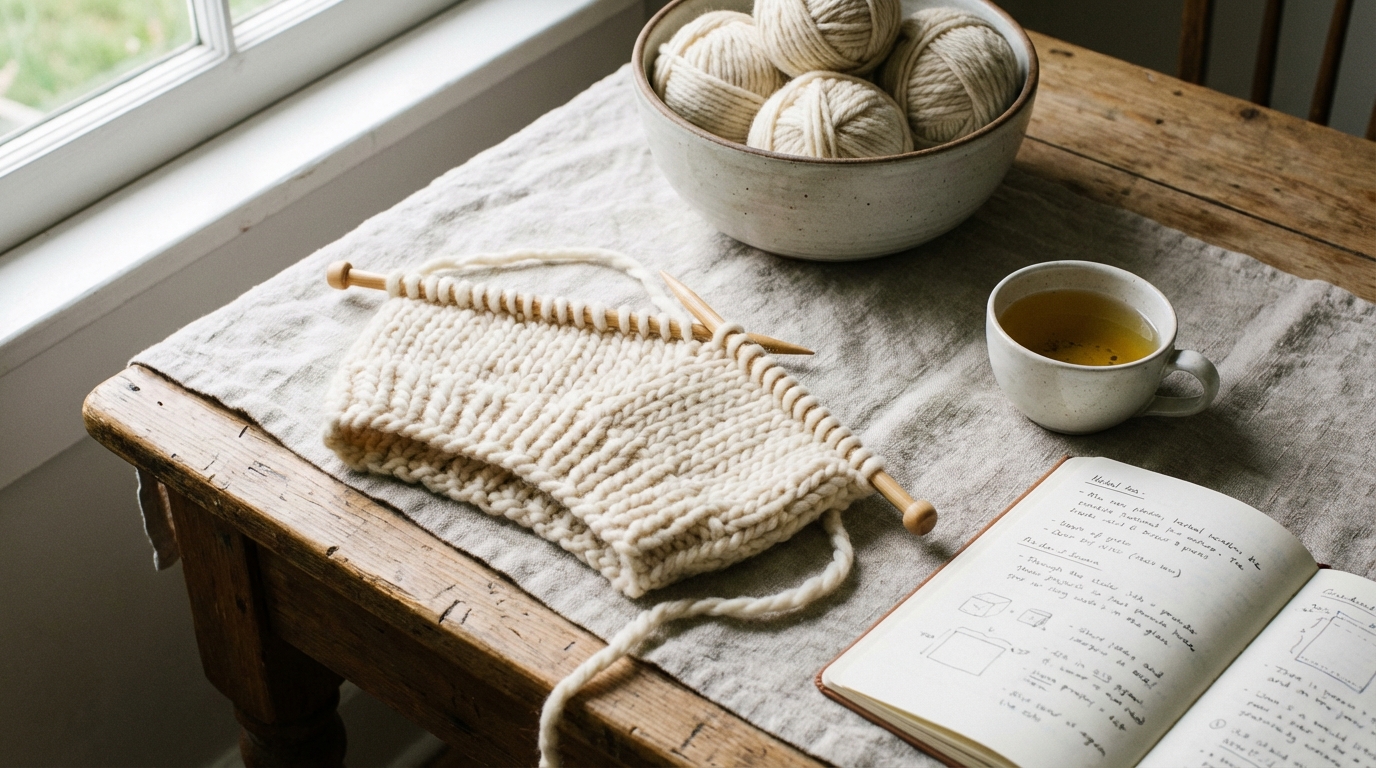
Some craft projects unfold best when given time. Not because time itself is precious, but because careful, steady progress allows each step to settle into place. In homes where handwork is part of daily life, projects often live on tables, shelves, or in baskets for weeks or months. They grow alongside regular routines. This slower pace is not a delay. It is a way of working that supports care, accuracy, and lasting satisfaction.
Letting a project develop gradually helps the hands stay familiar with the work. It allows the maker to notice small changes in materials, technique, and intention. A piece that grows slowly often carries fewer mistakes and more thought. Even when mistakes appear, there is space to correct them before they spread.
This approach suits many forms of handcraft. Knitting, sewing, woodworking, pottery, embroidery, and mending all benefit from patience. Each has steps that build on the last. Rushing through any part can weaken the whole. Moving steadily, with pauses built in, strengthens both the work and the habit of making.
Why Slow Progress Creates Stronger Work
Handcrafted items depend on accumulated decisions. Each stitch, cut, or joint affects the next. When work moves too quickly, these choices are often made without full attention. Slowing down gives space to consider alignment, tension, grain, or fit.
Materials respond to time in different ways. Wood relaxes after cutting. Fabric reveals its behavior once handled and pressed. Yarn shows its drape after a few rows. Clay stiffens slightly as it rests. These changes are easier to read when the work is spread out. A pause between steps allows materials to settle into their natural state.
Gradual progress also supports consistency. Repeating the same motion day after day builds steady muscle memory. Long, hurried sessions can lead to uneven results as hands tire. Short, regular periods of work help maintain even tension, straight seams, and balanced shaping.
There is also the matter of correction. Small errors are easier to fix when noticed early. A crooked line caught right away can be adjusted. A mismeasured cut discovered after one step can be corrected without wasting the whole piece. Slow progress creates natural checkpoints where the work can be examined.
Making Space for Ongoing Projects at Home
Projects that grow slowly need a place to live between sessions. This does not require a separate room or large workspace. What matters is that the project can be left undisturbed and easily returned to.
A basket near a chair can hold knitting or embroidery. A shallow box can keep sewing pieces together in order. A shelf in the garage can support a wood project while glue cures. When materials stay organized, it is easier to pick up where work left off without confusion.
Keeping tools nearby but tidy also matters. When scissors, needles, or measuring tools are always in the same place, starting again feels natural rather than burdensome. Searching for supplies can discourage short sessions, leading to long gaps that break rhythm.
Lighting plays a role as well. Gentle, steady light supports careful work. Harsh or dim light can cause eye strain, leading to rushed decisions. Adjusting a lamp or choosing a time of day with good natural light can make slow progress more comfortable.
Working in Small, Intentional Sessions
Short periods of focused work fit easily into daily routines. Fifteen or twenty minutes can be enough to make meaningful progress. These small sessions reduce pressure. There is no need to finish a section or reach a milestone each time.
Beginning a session with a simple task helps settle into the work. This might include threading a needle, sharpening a tool, or reviewing the last completed step. These actions prepare both hands and attention.
Ending a session thoughtfully is just as important. Stopping at a clear point makes the next session easier to begin. Leaving a note, pinning a reminder, or placing a tool on the next step can help guide the return.
Over time, these small sessions add up. A row added each day becomes a finished piece. A single joint completed at a time turns into a sturdy structure. Progress feels steady without being rushed.
Understanding When to Pause
Pausing is part of slow progress, not a failure to continue. Some pauses are planned. Others arise naturally when attention fades or materials need time.
Fatigue is a common reason to stop. Tired hands can pull stitches too tight or cause uneven cuts. Tired eyes may miss details. Recognizing these signs early prevents mistakes that require more work later.
Materials sometimes signal the need for rest. Glue must cure fully before stress is applied. Finish needs time to dry between coats. Fabric benefits from pressing before the next seam. Respecting these intervals strengthens the final result.
Pauses also allow for reflection. Stepping away can reveal issues not noticed while working. Returning with fresh eyes often brings clarity. What seemed acceptable before may need adjustment, and what seemed difficult may now feel simple.
Learning from Repetition and Routine
Repeating similar tasks across many sessions builds quiet confidence. Each repetition refines movement and judgment. Over time, hands learn how much pressure to apply, how far to cut, or how tightly to pull.
Routine supports this learning. Working at the same time of day, in the same place, with the same setup helps create consistency. The body recognizes the rhythm and settles into it more easily.
Routine also reduces decision fatigue. When the environment and tools are familiar, attention can focus fully on the craft itself. This leads to fewer errors and a calmer working experience.
Gradual progress allows lessons to settle. A mistake made one day can be corrected the next. The solution becomes part of the maker’s understanding, carried into future work.
Accepting Imperfection Without Rushing to Fix It
Not every flaw needs immediate correction. Some irregularities do not affect function or strength. Learning to tell the difference is part of experienced handwork.
Stopping to examine a flaw carefully can reveal its true impact. A slightly uneven stitch may disappear once the piece is finished. A small variation in wood grain may add character rather than weaken structure.
Rushing to fix minor issues can sometimes create larger problems. Unpicking many rows to correct a small detail may distort tension elsewhere. Over-sanding a surface can change dimensions. Slow progress allows thoughtful decisions about what truly needs correction.
When corrections are necessary, addressing them calmly prevents further mistakes. Taking time to understand why an error occurred helps prevent repetition. This reflection strengthens future work more than speed ever could.
Allowing Projects to Evolve
Some projects change as they grow. A pattern may suggest a different border once underway. A piece of furniture may call for a sturdier joint than first planned. Slow progress leaves room for these adjustments.
Materials often guide these decisions. Fabric drape might suggest altering length. Wood movement might require reinforcing a joint. Yarn texture might inspire a different stitch pattern. These insights come from handling the material over time.
Being open to change does not mean abandoning plans. It means responding thoughtfully to what the project reveals. Adjustments made early are easier to integrate. Slow work makes these moments visible.
This flexibility adds depth to the finished piece. The work reflects both intention and response, making it more suited to its purpose.
Balancing Multiple Projects Without Hurry
Many homes hold more than one ongoing project. Balancing them requires attention but not haste. Slow progress makes this balance possible.
Keeping projects at different stages helps. While one waits for drying or curing, another can receive attention. This rotation maintains momentum without pressure.
Clear organization prevents confusion. Each project should have its own container or space. Tools and materials should return to their place after each session. This care reduces the time needed to reorient when switching tasks.
Accepting that some projects will rest longer than others prevents frustration. A project left untouched for a time is not abandoned. It remains part of the household rhythm, ready when attention returns.
Teaching Hands to Trust the Pace
Hands often want to move faster than judgment allows. Training them to trust a slower pace takes time. Gentle reminders help.
Working deliberately on the first few steps sets the tone. Care taken at the beginning carries through the rest of the project. Rushing early often leads to repeated corrections later.
Simple habits support this trust. Measuring twice before cutting, checking alignment before fastening, and testing fit before finishing all slow the process slightly while improving outcomes.
Over time, these habits become automatic. The hands learn that careful progress leads to smoother work and fewer setbacks.
The Quiet Satisfaction of Returning to Familiar Work
There is comfort in returning to a project that has been growing slowly. The materials feel familiar. The next steps are clear. There is no rush to remember everything at once.
This familiarity builds a sense of continuity in daily life. The project becomes part of the household landscape, woven into regular routines. Each session feels like a continuation rather than a restart.
Slow progress supports this feeling. Long gaps caused by rushed schedules can break connection. Short, regular sessions maintain it.
The satisfaction comes not only from the finished piece but from the steady presence of the work along the way.
Understanding When Slow Does Not Mean Stalled
Slow progress can sometimes feel like no progress at all. Recognizing subtle advancement helps maintain patience.
Small improvements in technique count as progress. A neater seam, a smoother joint, or a more even glaze shows growth even if the project looks unchanged.
Preparation steps matter. Organizing materials, sharpening tools, or planning the next phase are part of the work. They make future steps easier and more accurate.
Rest is also productive. Time away allows learning to settle and prevents burnout. Returning with renewed attention often leads to better results.
Passing Along the Value of Careful Making
Slow craft carries lessons beyond the object itself. It demonstrates care, patience, and respect for materials. These qualities are visible in the work and felt in its use.
Items made with steady attention tend to last longer. Seams hold, joints stay firm, finishes wear evenly. This durability comes from thoughtful choices made along the way.
The value of such work is quiet. It does not announce itself. It shows through daily use and reliable function.
Letting projects grow slowly supports this kind of making. It allows each step to receive the attention it deserves.
Living With Unfinished Work Without Pressure
Unfinished projects are part of a home where making happens. They do not need to create stress or guilt.
Viewing them as ongoing rather than incomplete shifts perspective. Each project is at its own stage, waiting for the right moment.
Keeping projects visible but orderly helps. A folded piece of fabric on a shelf or a tool set aside neatly signals intention rather than neglect.
Slow progress supports this calm relationship with unfinished work. There is no deadline to rush toward, only a steady path forward.
Letting the Finished Piece Arrive in Its Own Time
When a project finally reaches completion, it often feels right. The timing aligns with readiness rather than a schedule.
The finished piece carries the memory of steady work. Each part has been handled with care. There is confidence in its construction.
This confidence comes from knowing that nothing was forced. Decisions were made with attention. Corrections were handled thoughtfully.
Letting craft projects grow slowly allows the finished work to feel settled and complete, fitting naturally into daily life without urgency.