
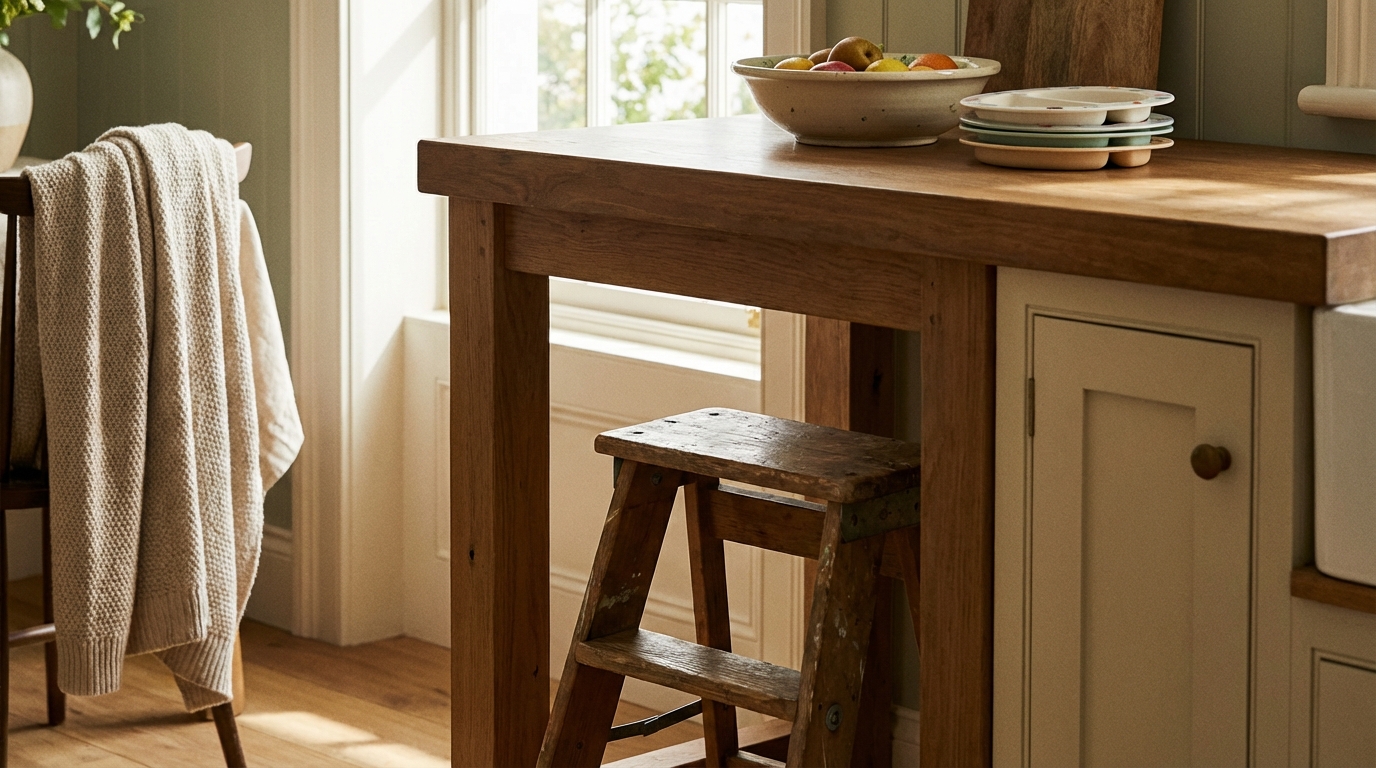
A kitchen that feels safe to children is not built on warnings or rules posted on the wall. It is built on predictability. When a room behaves the same way each day, when tools are kept where they belong, and when routines unfold in a steady order, children learn what to expect. That sense of knowing what comes next allows curiosity without fear. It also allows adults to move through kitchen work with calm rather than constant correction.
Why Predictability Matters More Than Perfection
Many kitchens look safe on paper but feel confusing in daily life. Drawers get rearranged, tools move from counter to counter, and rules change depending on the day. This creates uncertainty. Children respond to uncertainty by either hesitating too much or testing limits too often. Neither response supports confidence.
Predictability works because it reduces mental effort. When a child knows that sharp tools are always in one place, and that hot surfaces always follow the same signals, the brain does not have to guess. Guessing leads to mistakes. Familiar patterns allow attention to rest where it belongs.
This does not require a flawless kitchen. It requires a kitchen that behaves the same way on busy days as it does on quiet ones. The same drawer opens to the same tools. The same counter is used for the same tasks. The same rules apply whether someone is rushed or relaxed.
Starting With the Layout, Not the Rules
Rules are often added to kitchens before the space itself is considered. A safer approach is to let the layout do most of the teaching. A well-planned layout quietly guides behavior without constant reminders.
Clear Zones With Clear Purposes
Every kitchen benefits from zones, but they are especially important when children are present. Zones help children understand where certain actions belong.
- A food preparation zone where cutting and mixing happen.
- A cooking zone where heat is used.
- A cleaning zone where water and soap are expected.
- A reaching zone where safe items are stored.
These zones should not overlap in ways that cause confusion. If cutting happens on the same counter where hot pans are set down, the boundary becomes unclear. Children learn through repetition. When repetition is inconsistent, learning slows.
Stable Placement of Everyday Tools
Frequently used items should live in predictable places. A mixing bowl that sometimes comes from a low cabinet and sometimes from a high shelf creates hesitation. Hesitation often leads to grabbing or reaching too quickly.
Once a place is chosen, it should remain the same. This includes:
- Utensils used for simple food tasks.
- Plates and cups meant for daily use.
- Cleaning cloths and sponges.
Consistency matters more than convenience. Even if a different spot seems slightly better, change should be slow and explained, not sudden.
Storage That Teaches Through Use
Storage is often discussed as a safety issue, but it is also a teaching tool. Where items are kept sends a message about how they are used.
Low Storage for Safe Independence
Items stored at lower levels are assumed to be safe to handle. This should be true. When a child opens a low drawer, there should be no surprises. If a low drawer sometimes contains safe items and sometimes contains sharp or heavy tools, trust is broken.
Safe items at low levels might include:
- Unbreakable bowls.
- Measuring cups without sharp edges.
- Dry goods in sealed containers.
This arrangement allows children to help without asking permission for every step. Independence builds confidence, and confidence reduces reckless behavior.
High Storage With a Clear Meaning
High storage should signal a pause. Items kept out of reach should always require assistance. When a child learns that reaching higher always involves asking, the rule becomes internal rather than enforced.
This works only if the rule is consistent. If sometimes a child is allowed to climb or reach and other times not, the message becomes unclear. Predictability turns a physical boundary into a mental one.
Heat, Sound, and Visual Cues
Heat is one of the most serious risks in the kitchen, but it is also one of the easiest to manage with clear cues.
Using Sound as a Signal
Many kitchens already have natural sound cues. The click of a burner, the hum of an oven, the sizzle of a pan. These sounds can be used intentionally.
When heat is in use, the same sounds should always mean the same thing. A quiet kitchen might allow more movement. A kitchen filled with certain sounds signals caution.
Over time, children learn to associate these sounds with slower movement and closer attention. This learning happens without lectures.
Visual Consistency Around Hot Surfaces
Visual cues work best when they are simple. A certain burner always used first. A pot handle always turned the same direction. Oven mitts always hanging in the same spot.
These details may seem small, but they create a visual language. Children read this language before they understand spoken instructions. When the language stays consistent, understanding grows.
Routine as the Foundation of Safety
Routines are often thought of as schedules, but in the kitchen they are sequences. A sequence is a series of steps that happen in the same order every time.
Opening and Closing the Kitchen Day
How the kitchen begins and ends its daily use matters. A predictable opening and closing routine frames everything in between.
An opening routine might include:
- Clearing counters.
- Checking that tools are in place.
- Wiping surfaces.
A closing routine might include:
- Turning off appliances.
- Returning tools to their homes.
- Drying and storing cloths.
When children see these routines repeated, they understand that the kitchen has a rhythm. This rhythm signals when it is active and when it is resting.
Meal Preparation as a Repeated Pattern
Meals often feel rushed, but they offer one of the best opportunities for teaching predictability. Preparing food in the same order each time builds familiarity.
For example, washing hands before touching ingredients, laying out tools before starting, and cleaning as tasks finish. When these steps never change, children know what is expected without being told.
Cleanliness That Supports Awareness
Cleanliness is not only about appearance. In a kitchen with children, it is about visibility and awareness.
Clear Counters Reduce Accidents
Clutter hides hazards. A small spill under a pile of items goes unnoticed. A sharp edge beneath a towel becomes invisible.
Keeping counters mostly clear allows everyone to see what is happening. This visibility supports quick adjustments and calmer movement.
Cleaning as a Shared Habit
When cleaning is treated as part of the activity rather than an afterthought, it becomes less of a burden. Wiping a surface right after use prevents buildup that later requires stronger effort.
Children learn that cleaning is not a punishment but a natural step. This understanding reduces resistance and increases care.
Tools That Match the Task
Using the right tool for a task is a quiet form of safety. Improvised tools often slip or break.
Simple, Purpose-Built Tools
Tools with clear purposes are easier to handle. A sturdy spoon for stirring, a stable bowl for mixing. When tools are too large or too small, control is lost.
Children benefit from tools that fit their hands and the task at hand. This does not mean special designs, only appropriate size and weight.
Teaching Through Repetition, Not Correction
Showing how a tool is used, then allowing repeated practice, builds muscle memory. Constant correction interrupts this process.
If a tool is used incorrectly, it often means the tool is wrong for the task or the sequence was unclear. Adjusting these factors is more effective than repeating instructions.
Movement Patterns in the Kitchen
How people move through the kitchen affects safety more than many realize.
Predictable Paths
Walking paths should remain clear and consistent. If a child knows that a certain path is always used to carry hot items, they learn to avoid it at those times.
Rearranging furniture or leaving obstacles in these paths creates confusion. Confusion leads to sudden stops or turns, which increase risk.
Slow Zones and Fast Zones
Not all parts of the kitchen move at the same pace. Some areas require slower movement, such as near the stove or sink.
When these zones are always treated with the same caution, children learn to adjust their speed naturally. This learning is more effective than verbal reminders.
Emotional Safety and Physical Safety
A kitchen that feels emotionally calm supports physical safety. Tension leads to rushed actions and mistakes.
Responding to Mistakes Without Alarm
Mistakes will happen. Spills, dropped items, and forgotten steps are part of learning.
Responding calmly keeps the kitchen from becoming a place of fear. When fear is present, children hide mistakes or rush to fix them, increasing risk.
Repair as a Normal Part of Use
Showing how to clean a spill or put something back in place teaches responsibility without blame. Repair becomes a skill rather than a punishment.
When Predictability Needs Adjustment
Life changes, and kitchens must adapt. However, changes should be introduced thoughtfully.
Explaining Changes Before They Happen
If a tool must move or a routine must change, explaining this ahead of time preserves trust. Sudden changes break the pattern children rely on.
Testing New Arrangements Slowly
Trying a new setup for a short period allows everyone to adjust. If confusion increases, returning to the previous arrangement is better than pushing through discomfort.
The Quiet Confidence of a Well-Known Space
A kitchen that feels safe is not silent or rigid. It is familiar. It allows children to participate, observe, and learn without constant interruption.
Predictable setups support confidence because they remove unnecessary surprises. When the environment behaves as expected, attention can focus on the task, the food, and the shared moment.
This kind of kitchen does not rely on signs or warnings. It relies on care, patience, and the steady repetition of small, thoughtful actions carried out day after day.