
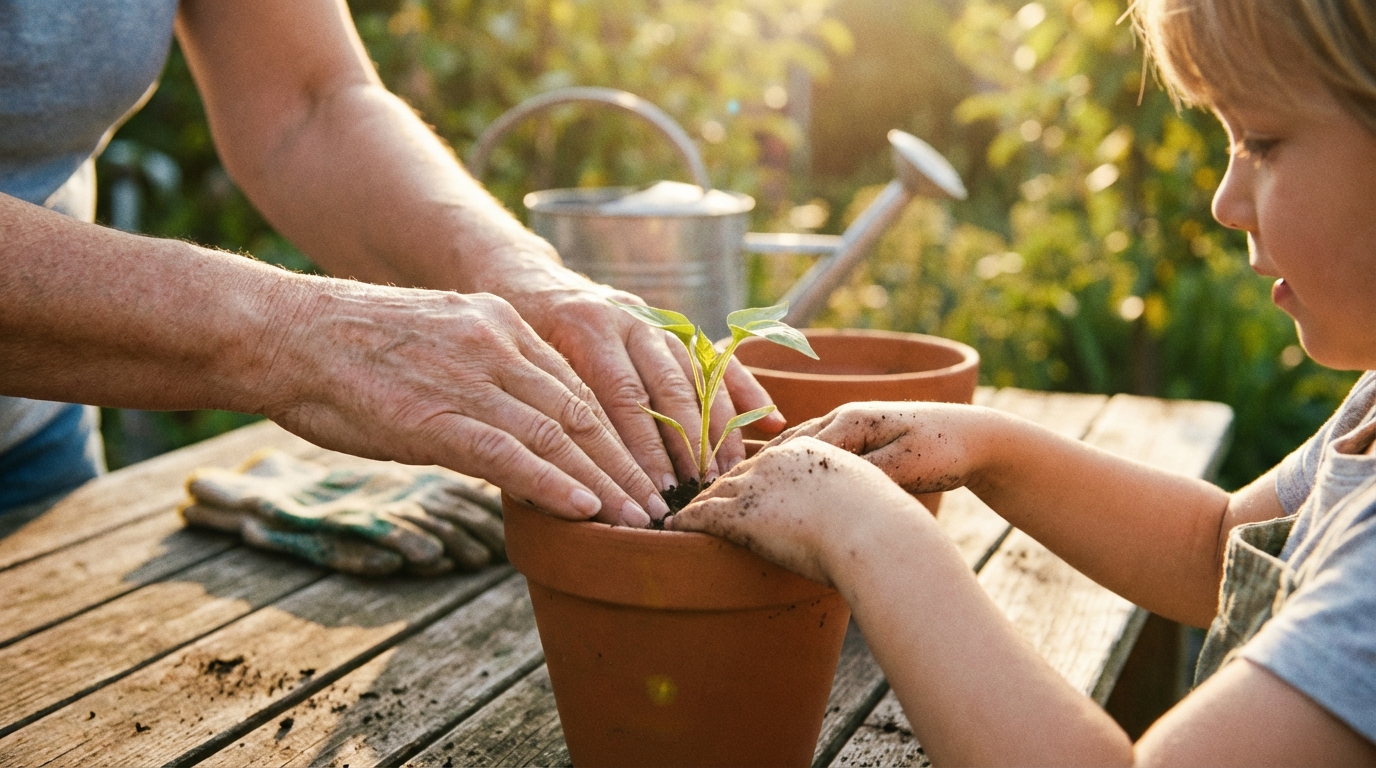
Time with younger family members often feels fuller when it moves at a gentler pace. There is a quiet difference between hours that are scheduled and hours that are lived. In a home, this difference shows itself in small ways: how long breakfast lingers on the table, whether shoes are rushed on or tied carefully, whether a story is read with attention or skimmed before the next task begins. Making time feel unrushed is not about clearing a calendar. It is about shaping the rhythm of ordinary days so that connection has room to appear on its own.
Slowing down does not require special outings or carefully planned activities. It grows from everyday routines that already exist. The kitchen, the living room, the backyard, and the front steps can all become places where connection settles in naturally when there is no hurry pushing it away.
The Difference Between Free Time and Open Time
Free time is often mistaken for open time. Free time simply means nothing else is scheduled. Open time feels different. It is time without pressure to perform, entertain, or produce a result. Children can sense this difference quickly. When an adult is present but inwardly rushed, attention drifts. When the pace is truly open, even quiet moments feel safe.
Open time often appears in brief spaces rather than long stretches. A few minutes before dinner is ready. A pause after dishes are done. The early part of the morning before the day’s demands begin. These moments matter because they are not borrowed from something else. They belong to no task.
Creating open time starts with noticing where time is already being squeezed too tightly. Routines that run edge to edge leave no room for conversation or curiosity. Loosening one small corner of the day can change the feeling of the whole household.
Why Rushing Blocks Connection
Rushing signals that attention is divided. Even when words are kind, a hurried tone tells a child that something else matters more. This does not mean life should stop. It means transitions deserve care.
Children often move more slowly when they feel watched by the clock. Shoes take longer to tie. Stories stretch out. Questions multiply. This is not misbehavior. It is a natural response to feeling pressed. Slowing the adult pace, even slightly, often shortens these moments rather than lengthening them.
Connection grows best when there is space for wandering conversation, for pauses, and for repetition. These cannot survive constant hurry.
Using Daily Routines as Anchors
Daily routines provide natural anchors for unrushed time. They happen whether attention is paid to them or not. When treated as shared moments instead of tasks to complete, they become steady places of connection.
Meals as Gentle Gatherings
Meals do not need to be elaborate to invite closeness. What matters is the tone. Sitting down together, even briefly, signals that this moment has value. The table becomes a place where stories surface without prompting.
Leaving a few minutes at the end of a meal before clearing dishes can make a difference. This pause allows thoughts to finish forming. Children often speak once the pressure to eat or behave has passed.
Conversation flows more easily when questions are open-ended and unhurried. Simple observations about the food, the day, or something noticed outside can open the door. There is no need to guide the talk. Let it drift.
Getting Ready Without the Push
Mornings and transitions often feel tight. They are also full of small chances to slow the tone. Laying out clothes earlier, packing bags the night before, or setting the table ahead of time removes pressure that would otherwise spill into voices and gestures.
When fewer decisions are rushed, there is more room for patience. This patience is felt immediately. Even brief eye contact or a calm word while tying a jacket can ground a child before stepping into the day.
It helps to build in a buffer of time that is not meant for anything. This buffer absorbs small delays without turning them into stress.
The Power of Being Side by Side
Connection does not always come from face-to-face conversation. Some of the strongest bonds form when people are doing something together without constant talk. Side-by-side activities lower the pressure to perform.
Shared Household Tasks
Simple tasks like folding laundry, watering plants, or sorting mail can become shared experiences. These activities offer rhythm and repetition, which create a sense of calm. Hands stay busy, and conversation arises naturally.
Children often open up more when their hands are occupied. The task gives them something to return to when words feel uncertain. Silence feels comfortable rather than awkward.
It is important to let the task move at a child’s pace when possible. Perfect results matter less than shared presence. A mismatched pile of socks is a small price for an unforced moment of togetherness.
Walking Without a Destination
Short walks without a goal invite observation. Leaves, cracks in the sidewalk, passing animals, and changing light all offer reasons to slow down. These details encourage curiosity and conversation.
Walking side by side naturally matches pace. There is no need to sit still or hold eye contact. This often makes it easier for children to share thoughts that surface slowly.
Even a walk to the mailbox or around the block can provide this feeling when it is not rushed.
Listening as a Form of Care
Listening without urgency is one of the clearest ways to create unrushed time. This kind of listening is not about solving problems or correcting details. It is about staying present until the speaker feels finished.
Letting Stories Take Their Shape
Children’s stories often loop and wander. Details repeat. Endings are unclear. Interrupting to speed things along can cut off more than the story itself. It can close the door to future sharing.
Allowing a story to unfold at its own pace shows respect for the teller’s process. Even when time is limited, a calm signal such as a nod or a quiet word of encouragement can help the story land gently.
When something must interrupt, naming it softly helps preserve trust. A simple explanation, given without frustration, makes it clear that the story still matters.
Responding Without Taking Over
Listening also means resisting the urge to direct the conversation. Advice, corrections, or quick reassurances can unintentionally shift focus away from the child’s experience.
Reflecting what is heard, in simple language, often does more than offering solutions. It tells the speaker that their feelings and thoughts have been understood.
This kind of response slows the exchange and deepens it. It keeps the moment open rather than closing it too quickly.
Creating Spaces That Invite Lingering
The physical environment of a home influences how time feels. Certain spaces naturally invite lingering, while others encourage quick movement. Small adjustments can change this balance.
Comfort Over Perfection
Spaces that feel too precious or carefully arranged often discourage relaxation. When children worry about spilling or touching, they stay guarded.
Choosing durable materials, keeping a few soft blankets within reach, and allowing signs of use all signal that the space is meant to be lived in. Comfort supports calm behavior more effectively than strict rules.
A chair pulled closer to the window, a cushion on the floor, or a cleared corner for quiet play can become a favorite place to settle.
Keeping Useful Things Close
When books, paper, puzzles, or simple games are easy to reach, they invite spontaneous use. These activities encourage focus without requiring setup or instruction.
Having a small basket or shelf dedicated to quiet activities allows children to choose how to spend time without needing direction. Choice supports a sense of ease.
These materials work best when they are familiar. Too many options can create restlessness rather than calm.
Honoring Natural Energy Patterns
Every child has times of day when energy rises and falls. Paying attention to these patterns helps in choosing when to slow down and when to allow movement.
Quiet After Activity
After active play, there is often a natural dip in energy. This can be a good moment for reading, drawing, or quiet conversation. The body is ready to rest, and the mind is more receptive.
Rushing into the next activity too quickly can override this natural pause. Allowing it to happen supports balance and reduces restlessness later.
Avoiding Over-Scheduling
Too many planned activities can fragment attention. Even enjoyable outings lose their charm when they are stacked too closely together.
Leaving parts of the day unplanned gives room for imagination and rest. It also allows connection to arise from shared boredom, which often sparks creativity.
Balance comes from knowing when to say no, not out of restriction, but out of care for the household rhythm.
The Role of Patience in Building Trust
Patience is not passive. It is an active choice to remain steady when things move slowly or unexpectedly. This steadiness builds trust over time.
Allowing Time for Feelings
Strong feelings often need time to settle. Trying to move past them too quickly can make them last longer.
Sitting quietly nearby, offering a calm presence without demands, allows emotions to run their course. This shows that feelings are manageable and do not need to be fixed immediately.
Once calm returns, conversation becomes easier and more meaningful.
Consistency Over Intensity
Connection grows through repeated small moments rather than occasional grand gestures. A consistent calm tone, a predictable routine, and steady attention build a sense of safety.
This consistency makes it easier for children to relax into the relationship. They know what to expect, and this reduces the need for testing or resistance.
Letting Go of the Need to Entertain
There is often an unspoken pressure to keep children engaged at all times. This pressure can create a sense of hurry and performance.
Trusting Simple Moments
Children do not need constant stimulation to feel connected. Sitting together quietly, watching clouds, or listening to familiar sounds can be deeply comforting.
These moments teach that togetherness does not depend on activity. Presence alone is enough.
Allowing Boredom to Breathe
Boredom is not an enemy. It is a doorway to imagination. When boredom is allowed without immediate rescue, children often find their own way into play or thought.
This process takes time. Rushing to fill the gap interrupts it. Patience here supports independence and creativity.
Using Everyday Language to Slow the Pace
The words used in daily life shape how time feels. Language that is calm and descriptive helps slow interactions.
Choosing Gentle Transitions
Instead of sudden commands, offering warnings before transitions gives children time to adjust. Simple phrases that describe what will happen next reduce resistance.
This practice respects the child’s current focus and eases the shift to the next activity.
Speaking at a Measured Speed
Speech that is slower and quieter naturally lowers the energy of a moment. It invites listening and reflection.
When adults slow their speech, children often mirror the pace. This creates a calmer exchange without effort.
Making Space for Repetition
Children often return to the same stories, games, or questions. Repetition can feel slow, but it serves an important purpose.
Why Repetition Brings Comfort
Repeating familiar activities provides a sense of mastery and security. Each return deepens understanding and confidence.
Allowing repetition without rushing through it shows respect for this process.
Finding Subtle Changes
Even in repetition, small changes appear. A new detail in a story, a different approach to a game, or a fresh question signals growth.
Noticing these changes requires patience and attention. It turns repetition into a shared discovery.
Protecting Unrushed Time
Unrushed time is fragile. It can be easily crowded out by obligations and distractions. Protecting it requires quiet intention.
Setting Gentle Boundaries
Turning off background noise, limiting interruptions, and choosing when to check messages helps preserve presence.
These boundaries do not need to be strict. They simply signal that this moment matters.
Accepting Imperfection
Not every day will feel calm. There will be interruptions, noise, and changes of plan. Accepting this without frustration helps maintain a steady tone.
Unrushed time is not about perfection. It is about returning to a slower pace whenever possible.
In the end, making time feel unrushed is less about changing schedules and more about changing attention. When ordinary moments are given care, they quietly become the places where connection grows. These moments do not announce themselves. They settle in softly, shaped by patience, presence, and the steady rhythms of home.