
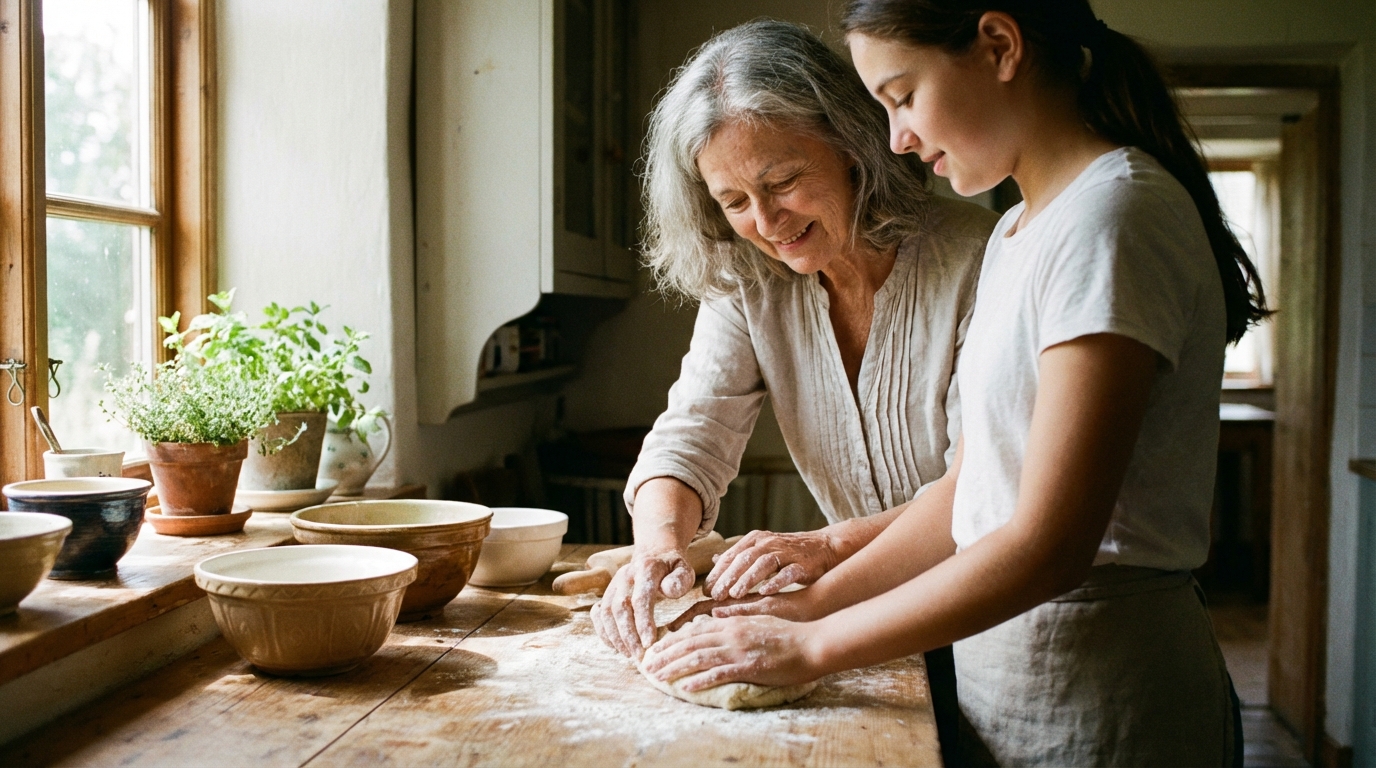
In many homes, skills are not learned from written instructions alone. They are absorbed through watching hands at work, noticing timing, and sensing when something feels right. Demonstration carries a quiet power because it shows the whole task as it truly happens, including the small adjustments that are hard to put into words. When skills are passed along this way, they tend to last, because they are learned through the body as much as through the mind.
Showing how something is done creates a shared moment of attention. It slows the pace and brings focus to the task at hand. Instead of abstract steps, there is a real example unfolding in front of the learner. This approach has been used in homes for centuries because it works with how people naturally learn practical tasks.
Why Hands-On Learning Sticks
Many home skills rely on senses that are difficult to describe. Texture, weight, resistance, and sound often matter more than measurements. Demonstration allows these details to be noticed naturally.
When someone watches a task being done, the brain connects movement with outcome. This builds a memory that words alone cannot create. The learner sees not just the action, but the rhythm and order of the steps. Over time, the body remembers these patterns.
Demonstration also reduces confusion. Spoken instructions can be misunderstood, especially if the listener has never done the task before. Showing removes much of that uncertainty. The learner can see what the finished step should look like before trying it.
Seeing Timing and Pace
Timing is one of the hardest things to explain. Words like slow, gentle, or firm can mean different things to different people. When a task is shown, timing becomes visible.
Consider kneading dough. A written instruction might say to knead until smooth. Demonstration shows how long the hands stay on the dough, how much pressure is used, and when to pause. The learner can see how the dough changes and understand what smooth really looks like.
This understanding prevents common mistakes. Dough that is rushed or overworked behaves differently. Seeing the correct pace helps the learner avoid these problems before they happen.
Understanding Pressure and Force
Many handcrafts depend on applying the right amount of force. Too much or too little can affect the outcome.
Sharpening a knife, for example, requires steady pressure. Explaining how hard to press is difficult. Demonstration shows the angle of the blade, the speed of movement, and the firmness of the grip. These details are absorbed visually and through imitation.
Once seen, the learner can try to match that pressure. Small corrections can be made by watching how the tool responds.
Demonstration Builds Confidence
Watching a skill performed calmly creates reassurance. The task no longer feels mysterious or risky. The learner sees that mistakes can be corrected and that the process is manageable.
This confidence encourages practice. When someone has seen a task done well, they are more willing to try it themselves. They know what they are aiming for.
Demonstration also shows that perfection is not required. Small adjustments and corrections are part of the process. This understanding reduces fear of failure.
Learning Through Repetition
Repeating a demonstration reinforces learning. Each time the task is shown, new details become noticeable.
The first time, the learner may focus on the overall process. Later, attention shifts to finer points, such as hand position or sequence. This layered learning builds depth over time.
Repetition also allows the learner to ask more specific questions. These questions are often more useful because they come from direct experience.
Everyday Skills That Benefit From Demonstration
Many household tasks are best taught by showing rather than telling. These skills often involve subtle judgments that cannot be captured in written form.
Hand Sewing and Mending
Sewing repairs are a common example. Explaining how to hold fabric, guide the needle, and keep stitches even can be confusing.
Demonstration shows how the thread is tensioned, how the fabric is turned, and how stitches are spaced. The learner sees how the hands move together smoothly.
Watching also reveals how to correct uneven stitches without undoing the entire seam. This practical knowledge saves time and fabric.
Folding and Storing Linens
Folding sheets and towels seems simple, yet it often leads to frustration. Demonstration shows how to align corners, smooth fabric, and fold in a way that saves space.
The learner notices how wrinkles are removed with a light sweep of the hand, not force. This small detail makes folding easier and results neater.
Seeing the finished stack also helps the learner understand why certain folds are used.
Cleaning With Care
Cleaning tasks involve knowing which surfaces need gentle treatment and which can handle more scrubbing.
Demonstration shows how to test a small area first, how to rinse properly, and how to dry surfaces to prevent streaks. These steps are often skipped when instructions are only spoken.
The learner also sees how tools are handled to avoid damage, such as wringing a cloth to the right dampness.
Why Explanation Alone Often Falls Short
Words are useful, but they have limits. Describing a physical process requires shared understanding that may not exist.
Terms like evenly, lightly, or until ready depend on experience. Without seeing the task, the learner may interpret these words incorrectly.
Explanation also assumes that the learner knows what to look for. Demonstration directs attention to the right details.
Reducing Cognitive Load
Listening to instructions while trying to remember steps can overwhelm the mind. Demonstration reduces this burden.
The learner can focus on observing rather than memorizing. Later, the memory of the demonstration guides action.
This makes learning feel calmer and more manageable.
How to Demonstrate Effectively at Home
Effective demonstration is not about speed or efficiency. It is about clarity and patience.
Slow Down the Process
Moving slowly allows the learner to see each step clearly. It also shows that there is time to adjust and correct.
Rushing through a task can make it seem more difficult than it is. Slowing down invites questions and observation.
Use Natural Language
While demonstrating, simple explanations can help connect action to purpose. Saying why a step matters makes it more memorable.
For example, noting that a jar lid is wiped before sealing explains how cleanliness affects storage. This context helps the learner understand the reason behind the action.
Invite Observation Before Participation
Allowing time to watch before trying builds understanding. The learner can see the full process without pressure.
Once they begin, gentle guidance can correct small mistakes early.
Learning Through Shared Routine
Skills are best passed along as part of regular routines. When tasks are done together, learning feels natural.
Routine creates familiarity. The learner sees the task repeated in the same way, which reinforces memory.
This approach also shows how skills fit into daily life, not just as isolated lessons.
Morning and Evening Tasks
Simple routines like preparing meals or tidying spaces offer many opportunities for demonstration.
Showing how to measure ingredients by sight or how to arrange items for easy access teaches practical organization.
These small lessons add up over time.
Seasonal Work
Certain skills appear only at specific times of year. Demonstration ensures they are not forgotten.
Tasks like preserving produce or repairing tools benefit from seeing the entire process once a year.
The learner understands not just how, but when and why these tasks are done.
The Role of Patience in Demonstration
Patience creates a safe space for learning. Mistakes are expected and treated as part of the process.
When demonstration is calm, the learner feels supported rather than judged.
This atmosphere encourages curiosity and persistence.
Allowing Mistakes
Demonstration should include showing how to fix errors. This builds resilience.
For example, showing how to unpick a stitch without damaging fabric teaches problem-solving.
The learner sees that mistakes are manageable.
Knowing When to Step Back
After demonstrating, stepping back allows the learner to try independently.
Observation continues, but intervention is minimal. This balance helps skills become their own.
Why Demonstration Preserves Nuance
Nuance is the difference between a task done and a task done well. Demonstration captures these subtle elements.
It shows how tools are cared for, how materials are respected, and how work is approached thoughtfully.
These values are often conveyed through example rather than instruction.
Tool Care and Handling
How tools are picked up, cleaned, and stored says much about their use.
Demonstration shows respect for tools, which extends their life.
The learner notices these habits and adopts them naturally.
Attention to Finish
Finishing touches often make the difference. Demonstration highlights these final steps.
Smoothing a surface or checking a closure shows care for the result.
These details are easy to overlook without seeing them done.
Passing Skills Through Daily Presence
Demonstration does not require formal lessons. It happens through daily presence and shared work.
Being present during tasks allows learning to occur organically.
This approach respects the rhythm of home life.
Quiet Observation
Sometimes the most effective learning happens quietly. Watching without interruption allows deeper focus.
The learner absorbs not just actions, but attitudes toward work.
This subtle learning shapes habits over time.
Consistent Example
Consistency reinforces learning. Doing tasks the same way each time builds trust in the method.
The learner knows what to expect and can anticipate steps.
This predictability makes skills easier to master.
Why Demonstration Endures
Demonstration endures because it aligns with human nature. People learn by watching and doing.
In the home, where skills are practical and ongoing, this method fits naturally.
It preserves knowledge in a living form, adaptable and resilient.
Adapting to Change
Demonstration allows skills to adapt to new situations. The learner understands principles, not just rules.
When materials or tools change, the underlying method remains.
This flexibility keeps skills relevant.
Building Continuity
Passing skills through demonstration creates continuity in home life.
Tasks are done with understanding, not guesswork.
This continuity brings a sense of steadiness and care into daily routines.