
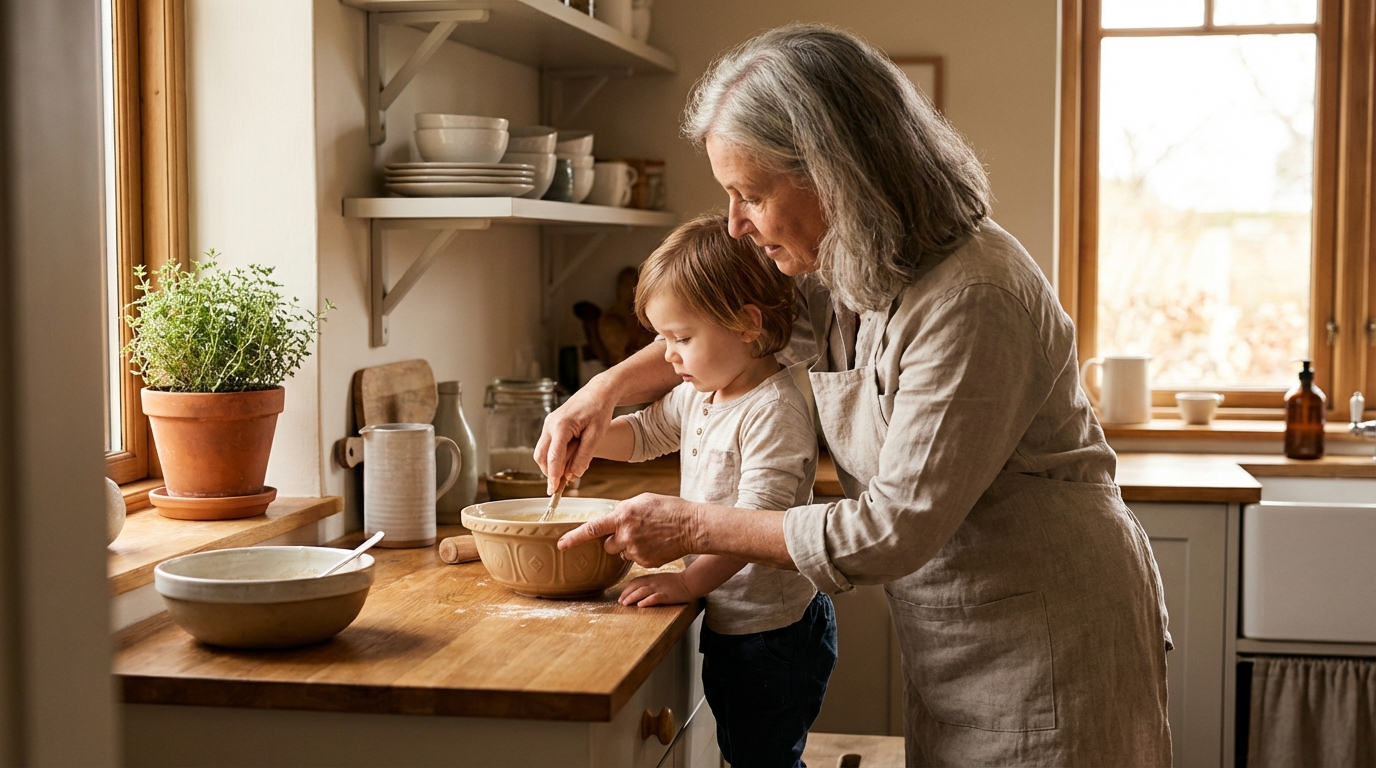
The kitchen has always been a place where everyday life unfolds in small, steady ways. Meals do not appear all at once. They come from a series of simple actions repeated often enough to feel natural. When children are invited into these routines, something important happens. The kitchen becomes less mysterious and more understandable. Structure gives them a sense of order, and order helps them feel capable.
Teaching kitchen routines is not about efficiency or speed. It is about helping children learn how daily work fits together, why certain steps matter, and how care shows up in small details. When routines are clear and predictable, children can focus on learning rather than guessing what comes next.
Why Kitchen Routines Matter for Children
Children learn best when expectations are steady. In the kitchen, routines turn a busy space into one that feels manageable. Instead of being told what to do each time, children begin to recognize patterns. They see that hands are washed before food is touched. They notice that tools go back to the same place after use. Over time, these patterns build confidence.
Structure does not limit curiosity. It supports it. When children know the basic flow of kitchen tasks, they are more willing to try new ones. They are not distracted by uncertainty about rules or safety. The routine holds the shape of the work, allowing curiosity to fill in the rest.
Another quiet benefit of routine is emotional steadiness. Kitchens can be noisy and busy. Clear steps help reduce overwhelm. When children know what is expected, they feel included rather than in the way. This sense of belonging encourages responsibility.
Starting with the Physical Space
Before teaching any routine, it helps to look at the kitchen from a child’s point of view. If tools are stored too high or supplies are hard to reach, routines become frustrating instead of empowering. Small adjustments can make a large difference.
Placing a sturdy step stool near the counter allows children to work at a comfortable height. Keeping a low drawer with basic tools such as measuring cups, wooden spoons, or napkins invites participation without constant asking. When items have a clear home, children learn where things belong and why order matters.
The physical layout supports routine by reducing unnecessary decisions. If the trash bin is always in the same spot and dish towels always hang on the same hook, children can act with confidence. They do not need reminders for every step.
Creating a Sense of Ownership
Children take routines more seriously when they feel the space belongs to them too. This does not require special equipment. It can be as simple as assigning one drawer or shelf where they are responsible for keeping things tidy.
Ownership teaches care. When a child knows that a drawer is “theirs” to maintain, they notice when something is missing or out of place. This awareness builds attention to detail, which carries over into other tasks.
Beginning with Preparation Habits
Many kitchen routines start before any food is touched. Preparation sets the tone for everything that follows. Teaching children to slow down at the beginning helps prevent mistakes and spills later.
Hand washing is often treated as a rule, but it works better as a habit tied to a moment. Washing hands as soon as someone enters the kitchen to help creates a natural pause. It signals a shift from play to work. Explaining that clean hands protect both food and people gives the action meaning.
Another preparation habit is clearing the workspace. Before cooking begins, the counter should be free of clutter. Children can learn to scan the surface and remove items that do not belong. This simple step teaches planning and foresight.
- Wash hands as the first step, not as a reminder later.
- Clear and wipe the work surface before starting.
- Gather all needed tools and ingredients in one place.
Gathering supplies is especially valuable. It shows children that tasks are easier when everything is ready. They learn to read a recipe or listen carefully to instructions before acting. This habit reduces frustration and builds patience.
Teaching One Routine at a Time
It can be tempting to teach many things at once, especially when children show interest. However, routines work best when they are introduced slowly. One clear routine practiced often becomes automatic.
For example, start with setting up for a simple task like making a sandwich. Focus only on the order: wash hands, lay out ingredients, prepare food, clean up. Once this flow feels familiar, new steps can be added.
Repeating the same routine allows children to notice small details. They learn how much pressure to use when spreading, how to keep crumbs contained, and how to wipe a surface properly. These details are easier to learn when the overall structure stays the same.
Why Repetition Builds Confidence
Repetition is often misunderstood as boring. In reality, it provides comfort. Each time a routine is repeated, the child’s mind has more space to observe and adjust. Mistakes become learning moments rather than sources of stress.
Confidence grows when children can predict outcomes. They know that if they follow the steps, the task will turn out well. This predictability encourages independence.
Explaining the Reasons Behind Steps
Children are more likely to follow routines when they understand why steps exist. Simple explanations are enough. There is no need for long lectures.
For instance, wiping a counter before cooking is not just about cleanliness. It prevents crumbs from sticking to fresh food. Drying dishes before putting them away keeps cabinets from smelling musty. When reasons are shared, routines feel purposeful rather than arbitrary.
Timing also matters. Explanations work best when given during calm moments, not in the middle of a spill or mistake. A quiet pause after finishing a task is often the best time to talk about what worked and why.
Including Children in Everyday Cooking Tasks
Children do not need special recipes to learn kitchen routines. Everyday meals provide enough opportunity. Simple tasks like rinsing vegetables, stirring batter, or tearing lettuce leaves teach coordination and attention.
Choosing tasks that match ability is important. If a task is too hard, frustration sets in. If it is too easy, interest fades. Observing how a child handles a task helps determine when to add complexity.
For example, measuring dry ingredients teaches both accuracy and patience. It shows that small differences matter. Pouring slowly and leveling a cup becomes a lesson in care.
Allowing Time for Learning
Kitchen routines take longer when children are involved. This extra time is not wasted. It is the space where learning happens. Rushing defeats the purpose.
Planning simpler meals on days when children help allows everyone to stay calm. Calmness keeps routines pleasant and sustainable.
Cleaning as Part of the Routine, Not an Afterthought
Cleaning is often treated as a separate chore, but in the kitchen it works best as part of the process. Teaching children to clean as they go prevents messes from becoming overwhelming.
For example, placing used utensils directly into the sink or dishwasher keeps counters clear. Wiping small spills immediately prevents sticky surfaces later. These habits show that care taken early saves effort later.
Children can learn that cleaning is not a punishment for making a mess. It is simply the final step of any task. When framed this way, cleaning feels fair and manageable.
- Return tools to their place after use.
- Wipe surfaces while waiting for food to cook.
- Check the floor for spills before leaving the kitchen.
Using Mistakes as Teaching Moments
Mistakes are inevitable in the kitchen. Spills, dropped utensils, and uneven results are part of learning. How these moments are handled shapes a child’s relationship with routine.
Staying calm when something goes wrong shows that mistakes are manageable. Instead of focusing on what went wrong, attention can be placed on how to fix it. This approach teaches problem-solving.
For example, if flour spills on the floor, the routine becomes: pause, get a cloth or broom, clean the area, and continue. The child learns that mistakes do not stop the work. They simply add a step.
Building Consistency Through Daily Meals
Daily meals offer natural repetition. Breakfast, lunch, and dinner each have their own rhythm. Teaching children to recognize these rhythms helps routines settle in.
Breakfast routines might focus on simplicity and speed. Setting out bowls, pouring cereal carefully, and wiping the table afterward create a gentle start to the day. Dinner routines might involve more steps and shared tasks.
Consistency does not mean rigidity. Some days will be different. What matters is returning to familiar steps whenever possible. This return reinforces stability.
Encouraging Independence Gradually
Independence grows in stages. At first, children may need reminders for each step. Over time, reminders can fade. Watching for signs of readiness helps determine when to step back.
When a child begins to start a routine without prompting, it is a sign that the structure has taken root. Allowing them to complete the routine on their own, even if it is imperfect, builds trust.
Correcting every small mistake can interrupt this growth. It is often better to focus on safety and basic order, leaving minor imperfections alone.
The Quiet Lessons of Patience and Care
Kitchen routines teach more than cooking skills. They teach patience. Waiting for water to boil, allowing food to cool, and taking time to clean properly all reinforce the idea that good results take time.
Care shows up in how tools are handled, how ingredients are measured, and how spaces are left for the next person. These lessons extend beyond the kitchen.
Children who learn to move through kitchen routines with care often carry that attentiveness into other parts of daily life. The routine becomes a way of thinking, not just a set of steps.
When Routines Need Adjusting
No routine works perfectly forever. As children grow and abilities change, routines may need small adjustments. Paying attention to frustration or boredom can signal when a routine needs refreshing.
Adding a new responsibility or changing the order of tasks slightly can renew interest. However, changes should be explained and introduced gently to maintain a sense of stability.
Flexibility within structure keeps routines useful rather than restrictive.
Keeping the Tone Supportive
The way routines are taught matters as much as the routines themselves. A calm tone encourages learning. Clear expectations paired with kindness create a safe space for trying.
Praise works best when it is specific. Noticing careful pouring or a well-wiped counter reinforces the behaviors that routines aim to build.
Support does not mean doing tasks for the child. It means standing nearby, ready to help if needed, while allowing space to practice.
How Structure Helps Children Feel Capable
Capability grows from knowing what to do and believing it can be done. Kitchen routines provide both. They break larger tasks into manageable pieces and show that effort leads to results.
Each completed routine, no matter how small, adds to a child’s sense of competence. Over time, this sense becomes internal. The child begins to approach new tasks with confidence rather than hesitation.
The kitchen, with its daily rhythms and simple needs, offers endless chances for this growth to happen naturally.
The Lasting Value of Simple Routines
Trends in cooking and home life come and go, but simple routines remain useful. Washing, preparing, cooking, and cleaning are constants. Teaching these in a steady, thoughtful way gives children tools they will use for years.
The value lies not in perfection, but in familiarity. Familiar routines create comfort. Comfort creates willingness. Willingness leads to learning.
In the end, the kitchen becomes more than a place to make food. It becomes a place where capability is practiced, one small routine at a time.