
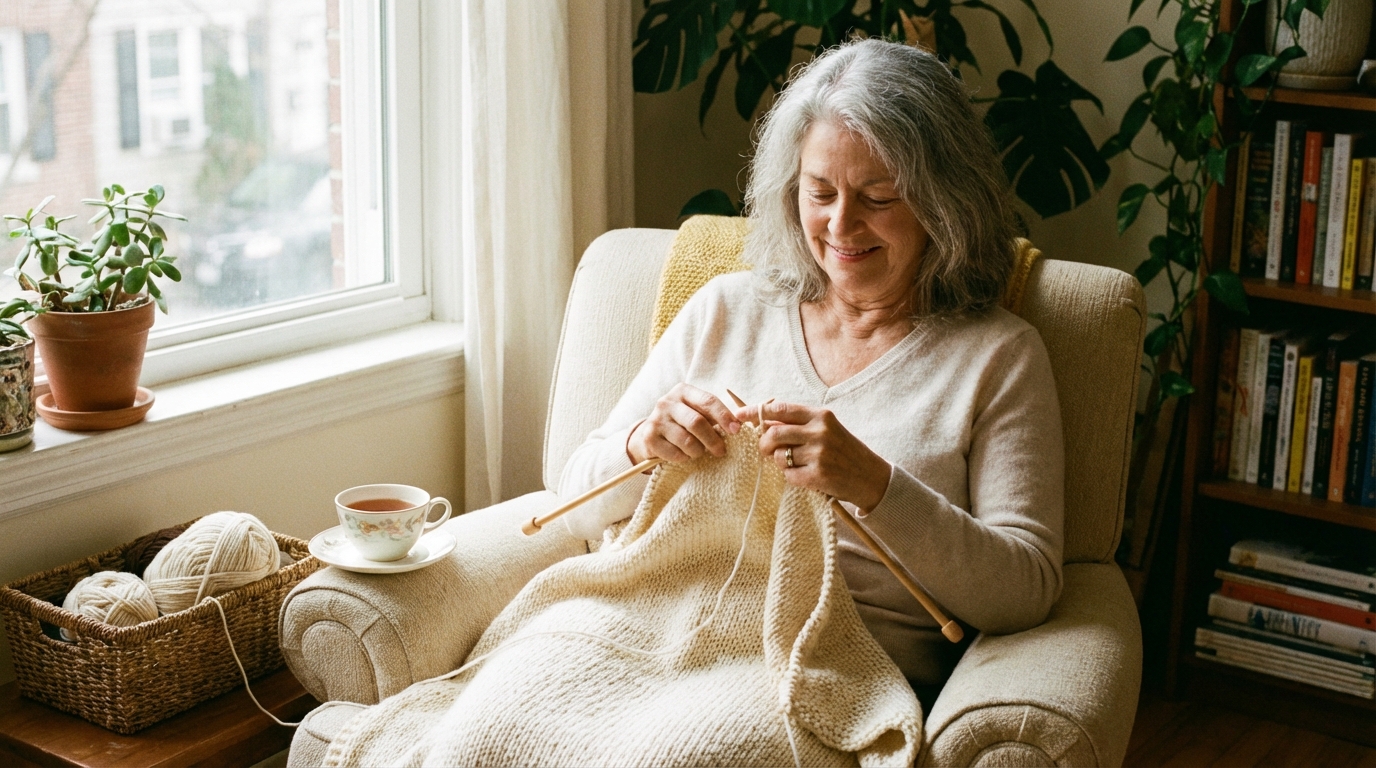
There is a quiet satisfaction that comes from finishing something by hand. It is not loud or dramatic. It settles in slowly, often noticed only after the work is done and the hands have paused. The feeling comes from knowing that time, care, and attention were given to something ordinary and made it whole. In daily home life, this kind of finishing shows up in small ways: smoothing a rough edge, stitching a loose seam, wiping a surface until it feels right. These moments may seem minor, yet they shape how a home feels and how daily routines carry meaning.
The Meaning of “Finished” in Everyday Life
To finish something by hand is not only to complete a task. It is to decide that something is ready to be used, touched, or lived with. In many homes, this sense of finished comes from touch rather than appearance. A shelf may look complete when installed, but it feels finished only after the hands have run along the edge and found no splinters. A pot of soup may be cooked, but it feels finished after it has been tasted, adjusted, and allowed to rest.
This idea of finished is deeply tied to care. Care takes time, and time allows small corrections. When work is rushed, mistakes are hidden or ignored. When work is slow, those same mistakes become invitations to adjust. Finishing by hand allows these adjustments to happen naturally, without pressure.
Why Hands Matter More Than Tools
Tools are useful, and many tasks depend on them. Still, the final stage of many household tasks benefits from the direct use of hands. Hands can feel things that tools cannot measure. They notice warmth, resistance, softness, and imbalance. These signals guide the final decisions.
When sanding a wooden surface, for example, a machine can remove material quickly. Yet the final pass by hand often makes the difference between a surface that looks smooth and one that feels inviting. The hand senses tiny ridges left behind, areas that need a little more attention, and spots that should be left alone.
This is why hand-finishing often happens at the end of a process. It is not about speed. It is about accuracy in a human way. Hands respond to feedback immediately, without interpretation.
The Pace That Allows Care
Finishing by hand naturally slows the pace of work. This slower pace is not a disadvantage. It creates space for noticing. When the pace slows, small details become visible. Threads that need trimming, edges that need rounding, surfaces that need wiping appear clearly.
In the home, this slower pace often fits better with the rhythm of daily life. Many tasks are done in short stretches between other responsibilities. Hand-finishing allows a task to be paused and resumed without losing its direction. A hem can be sewn a few stitches at a time. A piece of furniture can be sanded over several evenings.
This kind of work does not demand uninterrupted hours. It invites patience rather than urgency.
Examples from Common Home Tasks
Mending Fabric
When clothing or linens are mended by hand, the repair becomes part of the fabric’s story. A hand-sewn patch moves with the cloth rather than fighting it. The tension can be adjusted stitch by stitch. This prevents puckering and allows the fabric to lie flat.
Machine stitching is fast and strong, but it can be rigid. Hand stitching allows for flexibility, which is important in items that bend and stretch. This is why hand-mended areas often last longer than expected.
Food Preparation
Many foods benefit from being finished by hand. Dough that is kneaded by hand reveals its readiness through feel. Too stiff means it needs more moisture or rest. Too sticky means it needs more structure. These signals are difficult to read through a machine.
Chopping herbs by hand allows control over texture. A knife guided by hand can leave some pieces larger, releasing flavor gradually, while finer pieces release flavor quickly. This balance affects taste in subtle ways.
Cleaning and Care
Wiping a surface by hand, rather than relying solely on sprays or machines, allows attention to corners and edges. Hands notice residue and roughness. This is why hand-washed dishes often feel cleaner, even if a machine has done most of the work.
The act of drying dishes by hand is also a form of finishing. It prevents water spots, checks for cleanliness, and puts items away in a considered way. This small routine sets the kitchen in order for the next use.
The Role of Repetition
Hand-finishing often involves repeated motions. Stitching, sanding, polishing, folding. These motions become familiar over time. Familiarity reduces effort and increases confidence. The body learns the task and begins to perform it smoothly.
Repetition also creates consistency. When something is done the same way each time, results become predictable. This predictability builds trust in the process. A folded towel always fits the shelf. A polished surface always feels the same.
Consistency does not mean rigidity. Small adjustments are made as needed. The routine provides a foundation, not a rule.
Attention Without Strain
One reason finishing by hand feels satisfying is that it allows focused attention without strain. The tasks are often simple enough to be done without constant decision-making. This frees the mind to settle.
For example, shelling beans, peeling apples, or sorting hardware requires attention but not analysis. The hands stay busy while the mind rests. This balance is calming and productive at the same time.
This kind of attention supports patience. It trains the ability to stay with a task until it is complete, even when progress is slow.
Knowing When to Stop
Finishing by hand also teaches when to stop. Overworking something can cause damage. Too much sanding can thin wood. Too many stitches can stiffen fabric. Too much kneading can toughen dough.
Hands provide feedback that helps avoid these problems. When resistance changes, when texture shifts, when movement feels right, it is often time to stop. This sense develops with experience.
Learning when to stop is as important as knowing how to begin. It prevents waste and preserves the integrity of materials.
Materials Respond Differently to Hands
Different materials invite different kinds of hand-finishing. Understanding these differences improves results.
- Wood responds to gradual pressure and benefits from following the grain. Hands can feel when the grain changes direction.
- Fabric responds to tension. Gentle pulling and smoothing align fibers without stretching them.
- Metal responds to steady pressure and warmth. Polishing by hand can bring out a soft sheen that machines often miss.
- Clay responds to moisture and touch. Hands shape and compress it in ways that tools cannot fully replicate.
Working with materials in this way builds respect for their limits and strengths.
The Value of Small Corrections
Hand-finishing allows for small corrections that improve the final result. These corrections are often too minor to justify restarting a task, yet they make a noticeable difference.
Examples include trimming a thread that would otherwise catch, rounding a corner that feels sharp, or adjusting a knot so it lies flat. These changes take seconds but prevent irritation later.
Over time, these small corrections reduce wear and extend the life of household items.
Finishing as a Form of Care
Care is shown through attention, not perfection. Hand-finishing is rarely flawless. Stitches may be uneven. Surfaces may show slight variations. These marks are signs of human involvement.
In the home, this kind of care communicates that things are valued. A repaired chair, a polished table, a mended blanket all show that items are maintained rather than discarded.
This approach encourages repair over replacement. It supports patience and resourcefulness.
Building Confidence Through Completion
Completing a task by hand builds confidence in small, steady ways. Each finished piece reinforces the ability to see something through. This confidence carries into other areas of home life.
When tasks are finished rather than abandoned, the home feels more settled. Loose ends are tied. Partially done projects do not linger.
This sense of order reduces mental clutter. It becomes easier to begin new tasks when old ones are complete.
Passing Skills Through Observation
Hand-finishing skills are often learned through watching and doing rather than formal instruction. Observing how hands move, how pressure is applied, and how mistakes are corrected teaches more than written directions.
In shared living spaces, these skills are often absorbed naturally. Someone notices how towels are folded or how a seam is reinforced. Over time, these methods become familiar.
This quiet transfer of knowledge keeps practical skills alive.
When Hand-Finishing Is Not the Best Choice
There are times when hand-finishing is not practical. Large-scale tasks, repetitive production, or situations requiring exact uniformity may benefit from machines.
The key is knowing which stage of a task benefits from hands and which does not. Often, a combination works best. Machines handle the heavy work. Hands handle the final adjustments.
This balanced approach respects both efficiency and care.
The Relationship Between Time and Worth
Time spent finishing by hand often changes how something is valued. An item that required attention is treated more carefully. It is cleaned properly, stored thoughtfully, and repaired when needed.
This does not mean every item must be handmade to be valued. It means that involvement creates connection. Even a small amount of hand-finishing can change how an object is regarded.
This connection supports mindful use rather than careless consumption.
Everyday Routines That Include Hand-Finishing
Many daily routines already include hand-finishing, even if they are not recognized as such.
- Smoothing a bedspread after making the bed.
- Running a hand over a counter to check for crumbs.
- Adjusting cushions so they sit evenly.
- Sharpening a pencil with care rather than snapping it.
- Closing jars gently to protect threads.
These small actions shape the feel of a home. They are often done without thought, yet they reflect attention.
The Calm That Comes After
After something is finished by hand, there is often a brief pause. Hands rest. The result is observed. This pause allows satisfaction to settle.
This calm is not excitement. It is steadiness. It comes from knowing that care was given and the task is complete.
In a home filled with ongoing responsibilities, these moments of completion provide balance.
Learning to Enjoy the Process
Enjoyment in hand-finishing does not come from speed or praise. It comes from engagement. Feeling the material change under the hands, seeing progress slowly appear, and knowing when enough has been done.
This enjoyment grows with practice. Early attempts may feel awkward. Hands may tire. Results may be uneven. With time, movements become smoother and judgment improves.
This gradual improvement is part of the satisfaction.
Making Space for Hand-Finishing
Creating space for hand-finishing does not require special rooms or equipment. It requires small windows of time and a willingness to slow down.
A basket with mending supplies kept within reach invites repairs. A cloth kept near the sink encourages wiping and drying. A simple stool near a work area allows sanding or polishing to be done comfortably.
These small arrangements support consistent care.
The Lasting Impact on the Home
Over time, a home shaped by hand-finishing feels settled and lived in. Items fit together because they have been adjusted. Surfaces invite touch. Repairs blend in rather than stand out.
This does not happen all at once. It builds through many small acts of finishing. Each act leaves a trace of attention.
The result is a home that supports daily life quietly and reliably.