
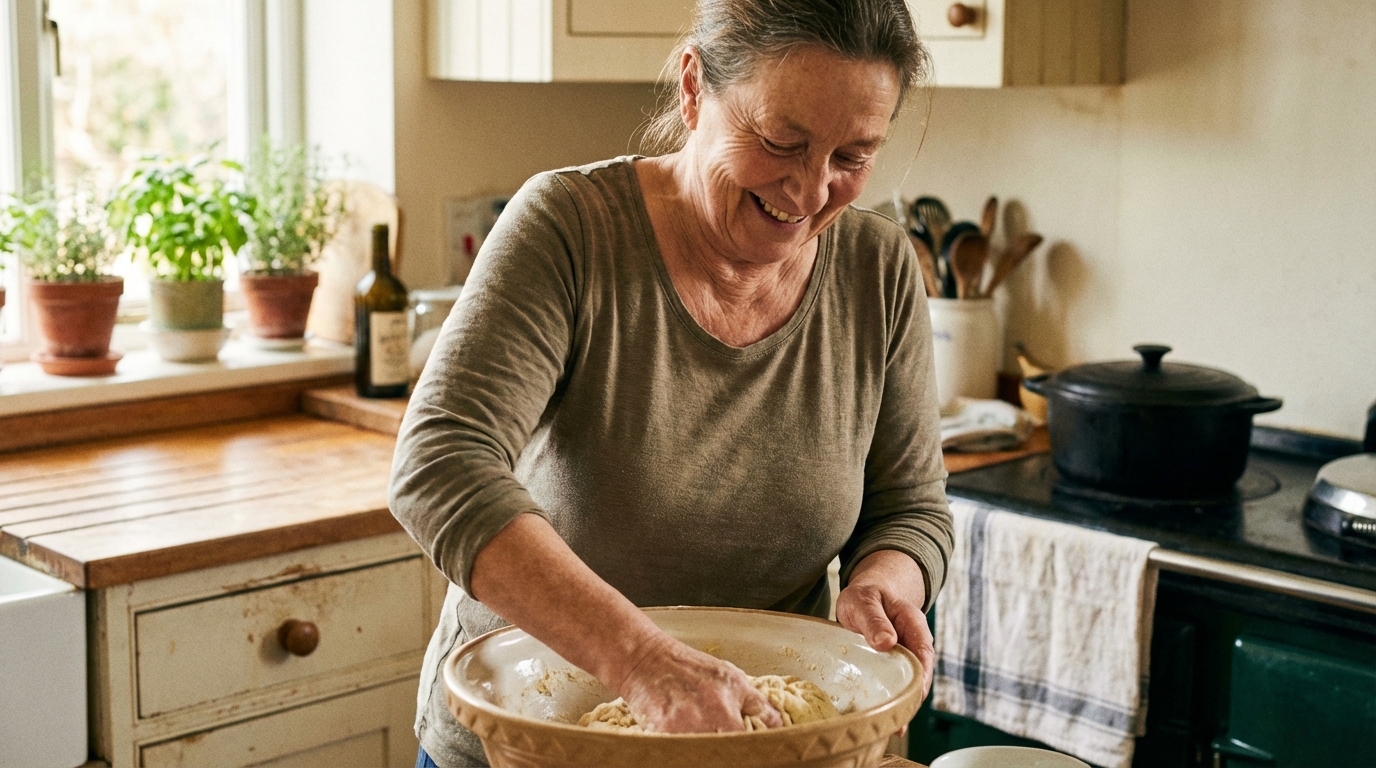
Cooking by feel is often described as a quiet skill, learned through repetition rather than instruction. It grows from standing at the stove often enough to notice how food behaves, how heat moves, and how timing shifts with small changes. This way of cooking does not reject recipes. It simply loosens their grip. Instead of following steps with tension, the cook begins to trust the signs happening right in front of them. Over time, this trust reduces stress and builds confidence in a steady, reliable way.
What Cooking by Feel Really Means
Cooking by feel does not mean guessing or ignoring knowledge. It means using the senses as guides while drawing on experience. A recipe might say to cook onions for five minutes, but cooking by feel notices when the onions turn soft, smell sweet, and begin to take on color. Time becomes a reference rather than a rule.
This approach relies on paying attention. The hand learns how dough should resist when kneaded enough. The ear learns the sound of a gentle simmer versus a rolling boil. The eye learns the difference between pale and ready. These observations are small, but they add up.
When cooking by feel, mistakes are still possible, but they become easier to correct. A sauce that thickens too much can be thinned. A soup that tastes flat can be adjusted. The cook is no longer locked into a plan but engaged in a conversation with the food.
Why It Feels Less Stressful
Strictly following instructions can create pressure. There is a sense that one wrong step will ruin everything. Cooking by feel shifts attention away from fear of error and toward awareness. The focus moves to what is happening now, not what is supposed to happen next.
This change reduces mental clutter. Instead of checking a list repeatedly, the cook looks, smells, listens, and tastes. These actions are grounding. They keep the mind present and calm, which naturally lowers stress.
There is also relief in knowing that many dishes are forgiving. Soups, stews, roasted vegetables, and simple baked goods often allow for variation. Recognizing this flexibility helps the cook relax.
The Role of Repetition in Building Confidence
Confidence in the kitchen does not come from one successful meal. It grows from doing similar tasks many times. Repetition builds familiarity, and familiarity builds ease.
Making the same dish often allows patterns to emerge. The cook begins to notice how long it usually takes for water to boil on that particular stove, or how quickly garlic browns in a certain pan. These details are specific to each kitchen, which is why experience matters more than instructions alone.
With repetition, hands move more smoothly. Measuring becomes less rigid. A pinch of salt becomes a known amount. The cook no longer second-guesses every decision.
Small Routines That Strengthen Skill
Simple routines create a stable base for cooking by feel. These routines do not need to be complex or time-consuming. They simply need to be consistent.
- Preparing ingredients before turning on the heat, so attention stays on the food once cooking begins.
- Using the same tools often, which builds familiarity with how they perform.
- Tasting at the same points each time, such as before simmering and again near the end.
- Cleaning as cooking progresses, which keeps the space calm and manageable.
These habits reduce distraction. When the environment feels orderly, the cook can focus on subtle changes in the food.
Understanding Heat Through Experience
Heat is one of the most important elements in cooking, yet it is often misunderstood. Recipes may say to use medium heat, but stoves vary widely. Cooking by feel teaches how heat actually behaves in a specific kitchen.
For example, a pan placed on high heat may heat unevenly at first. Watching how oil spreads and shimmers shows when the pan is ready. Listening for the sound of food hitting the surface reveals whether the heat is correct. A loud sizzle suggests enough heat to sear, while silence suggests the pan is still warming.
Over time, the cook learns how to adjust. Lowering heat early can prevent burning. Raising it briefly can encourage browning. These decisions come from observation rather than instruction.
When High Heat Helps and When It Hurts
High heat is useful for certain tasks, such as searing meat or quickly cooking vegetables to preserve texture. It creates color and flavor through browning. However, it can also dry out food or burn delicate ingredients.
Cooking by feel recognizes these limits. If food begins to darken too quickly or smell sharp rather than rich, the heat is likely too high. Lowering it in time prevents damage and keeps control in the cook’s hands.
The Importance of Touch
Touch is often overlooked in modern cooking, yet it is one of the most reliable guides. Hands can feel firmness, moisture, and temperature in ways tools cannot.
When kneading dough, the hands sense when it changes from sticky to smooth. When shaping patties, the hands know when they are too loose or too tight. When pressing gently on cooked meat, the resistance gives clues about doneness.
Using touch builds a direct connection to the food. This connection increases confidence because the information feels immediate and trustworthy.
Learning Through Simple Foods
Certain foods are especially helpful for learning by touch. They respond clearly to handling and provide fast feedback.
- Rice, which shows doneness through texture rather than appearance.
- Potatoes, which soften gradually and teach patience.
- Bread dough, which changes noticeably with proper kneading and rest.
- Eggs, which shift quickly from liquid to solid and reward close attention.
Working with these foods repeatedly sharpens awareness and builds skill that carries into other dishes.
Taste as a Guide, Not a Judgment
Tasting during cooking is one of the most important habits for building confidence. It turns cooking into an active process rather than a gamble at the end.
Cooking by feel treats taste as information, not criticism. If something tastes bland, it is not a failure. It is a signal that salt, acid, or time may be needed.
Regular tasting also teaches how flavors develop. A soup may taste sharp early on but mellow as it simmers. A sauce may seem thin until it reduces. Knowing this prevents overcorrection.
Understanding Balance Over Precision
Recipes often list exact amounts, but flavor balance is more important than precision. Cooking by feel focuses on the relationship between salty, sour, sweet, and bitter.
If a dish tastes heavy, a small splash of vinegar or lemon can lift it. If it tastes harsh, a pinch of sugar or longer cooking can soften it. These adjustments are small but meaningful.
Learning balance takes time, but each tasting builds understanding.
The Quiet Value of Patience
Patience is central to cooking by feel. Many problems in the kitchen come from rushing. Heat needs time to work. Flavors need time to blend. Dough needs time to rest.
Waiting can feel uncomfortable at first, especially when there is a desire to finish quickly. However, patience often prevents mistakes that require even more time to fix.
Cooking by feel teaches when to wait and when to act. This judgment grows through observation. If a stew smells raw, it needs more time. If vegetables are soft but pale, they may need higher heat rather than more time.
Knowing When to Leave Food Alone
Some foods improve when disturbed less. Meat browns better when left untouched for a few minutes. Rice cooks more evenly when the lid stays on. Stirring too often can cool the pan and slow progress.
Cooking by feel recognizes these moments. The cook learns to trust the process and resist unnecessary вмешательство. This restraint builds calm and confidence.
Letting Go of Perfection
Cooking by feel encourages acceptance of variation. Not every meal needs to look identical to a picture. Slight differences in color, texture, or shape are natural.
This acceptance reduces pressure. When perfection is not the goal, learning becomes easier. Mistakes turn into lessons rather than disappointments.
For example, a loaf of bread that rises unevenly still teaches how dough behaves. A soup that turns out thicker than expected still feeds and informs future adjustments.
Using Mistakes as Information
Every outcome provides clues. Food that burns too quickly suggests too much heat or too thin a pan. Food that tastes dull suggests under-seasoning or lack of contrast.
Cooking by feel pays attention to these clues without blame. Over time, the cook begins to anticipate issues before they arise.
Why Familiar Dishes Teach the Most
Confidence grows fastest when cooking familiar foods. Repeating the same meals removes uncertainty and allows deeper learning.
With familiar dishes, the cook notices small differences. How weather affects dough. How ingredient quality changes results. How timing shifts with batch size.
These observations are subtle but powerful. They turn cooking into a practiced skill rather than a set of instructions.
Building a Personal Reference Point
Each kitchen develops its own rhythm. The stove, cookware, and even water quality influence cooking. Cooking by feel creates a personal reference point based on these factors.
This reference point cannot be copied from a book. It must be built through experience. Once established, it makes new recipes less intimidating because the cook knows how to adapt them.
The Comfort of Predictable Processes
While cooking by feel allows flexibility, it still relies on predictable processes. Certain steps remain consistent, such as heating oil before adding food or allowing baked goods to cool before cutting.
These predictable moments create comfort. They anchor the cook even when improvising.
Knowing that some things always work provides a sense of safety. It frees attention for creative or responsive choices.
Simple Processes That Rarely Fail
- Starting with moderate heat and adjusting as needed.
- Seasoning gradually rather than all at once.
- Allowing cooked food to rest briefly before serving.
- Cleaning and resetting the space after cooking.
These processes support consistency and reduce stress.
How Cooking by Feel Changes the Kitchen Atmosphere
A kitchen where cooking by feel is practiced often feels calmer. Movements are slower and more deliberate. There is less rushing to meet exact times and more attention to what is happening.
This atmosphere affects everyone present. The cook appears more at ease, and the process feels less tense. Meals become part of the day rather than a task to complete.
This calm comes from confidence built through experience. It cannot be forced, but it can be encouraged through regular practice.
Creating Space for Awareness
Reducing distractions helps cooking by feel. Turning down background noise or setting aside phones allows focus to remain on the food.
Clear counters and organized tools also help. When the space feels manageable, the mind follows.
Why This Skill Lasts
Cooking by feel endures because it adapts. Ingredients change, kitchens change, and routines change. The underlying skill remains useful.
This approach does not depend on specific tools or trends. It depends on attention, patience, and care. These qualities are always relevant.
As confidence grows, cooking becomes less about following and more about understanding. This understanding supports calm, capable cooking day after day.