
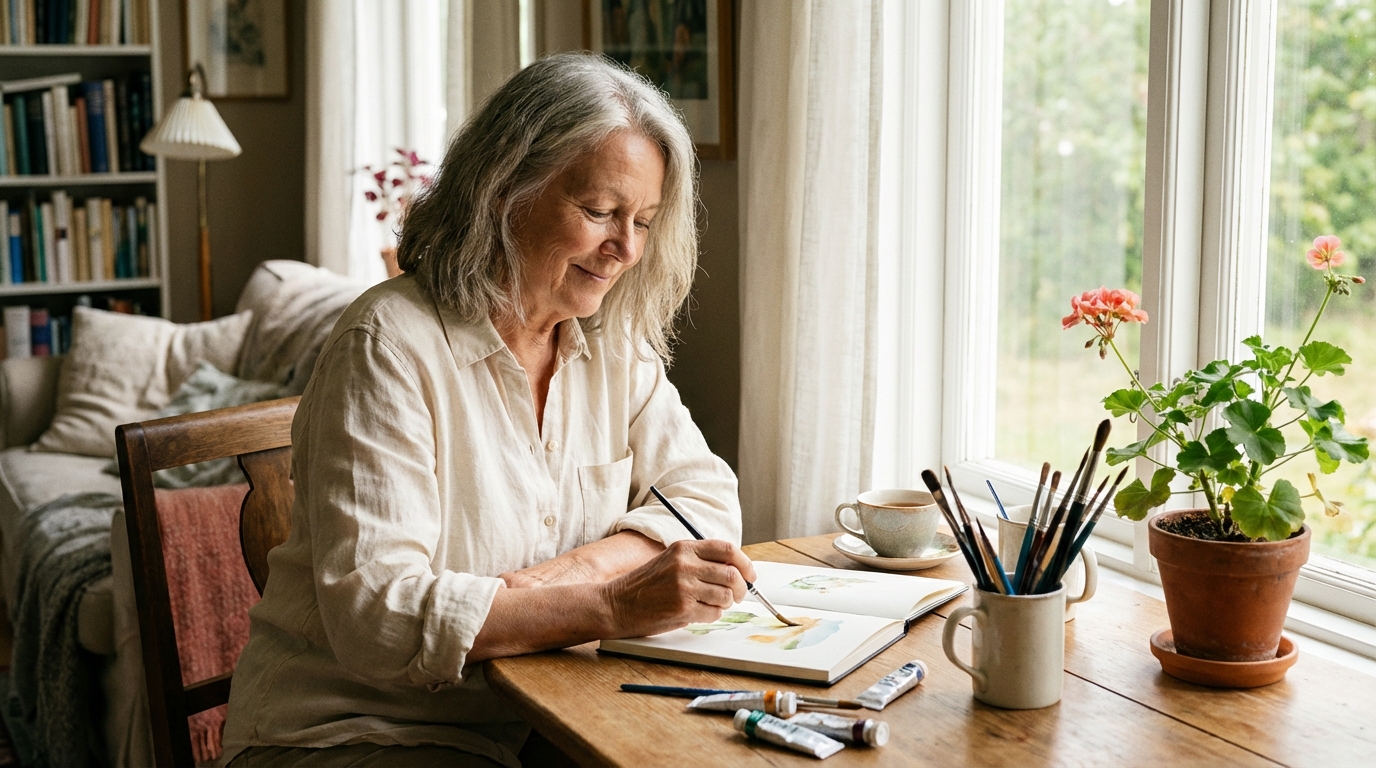
Handcraft has long been part of ordinary home life. It sits quietly alongside cooking, cleaning, mending, and arranging a room. It fills small spaces of time and attention. When approached gently, it offers rest for the hands and mind at the same time. When approached with pressure, it can become another task that asks for results instead of offering comfort. Understanding the difference matters, especially in a home where time and energy are already divided among many responsibilities.
The quiet difference between making and producing
Crafting often shifts without notice from simple making into producing something that must turn out a certain way. This shift can happen through small expectations: a deadline, a comparison, or the hope that the finished piece will look impressive. The hands may still be moving, but the feeling changes. Instead of curiosity and patience, there is a sense of watching the clock or checking progress.
Making is open-ended. Producing is narrow. When the goal is simply to engage with materials, the process allows for pauses, adjustments, and changes of mind. When the goal becomes a result, those same pauses can feel like failures. The body responds to this difference. Shoulders tense, breathing becomes shallow, and mistakes feel heavier than they need to be.
Removing pressure does not mean removing care. It means allowing care to show up as attention rather than urgency. A carefully stitched seam done slowly often holds better than one rushed to meet a self-imposed standard. A clay bowl shaped without hurry tends to feel balanced in the hands. These results come from steadiness, not force.
Why expectations change how the hands work
The hands are sensitive to emotion. Tight expectations send signals that speed and control matter more than feeling and adjustment. When pressure is present, the hands grip tools more firmly, movements become smaller, and flexibility decreases. This often leads to more mistakes, not fewer.
When expectations are eased, the hands move more freely. Muscles relax, allowing smoother motion. This is especially noticeable in crafts that require repetition, such as knitting, sanding, or hand sewing. A relaxed rhythm keeps movements consistent. A tense rhythm introduces unevenness.
This difference is not abstract. It shows up in frayed thread, uneven edges, or tired wrists. Removing pressure improves physical comfort as well as enjoyment. Over time, this comfort allows longer and more frequent crafting sessions without fatigue.
Creating space that invites calm work
The environment where crafting happens shapes the experience more than many realize. A space that feels rushed or cluttered encourages hurried work. A space that feels settled supports calm attention.
This does not require a special room. A corner of a table or a chair near a window can be enough. What matters is consistency and readiness. When tools are stored in the same place and surfaces are kept reasonably clear, starting feels easier. There is no need to rearrange or search before beginning.
Lighting also matters. Soft, steady light reduces eye strain and supports longer focus. Harsh or flickering light increases tension and shortens patience. Natural light is helpful, but a simple lamp positioned to avoid shadows can work just as well.
Sound plays a role too. Some crafts benefit from quiet, while others pair well with gentle background noise. The key is choosing sound that does not demand attention. This allows the mind to stay with the hands instead of being pulled away.
Setting gentle intentions instead of goals
Pressure often enters through goals that are too specific or too large. A plan to finish an entire project in one sitting can create strain. A gentler intention focuses on time or engagement rather than outcome.
An intention such as spending twenty minutes shaping wood or stitching a few rows allows for stopping without disappointment. The work can end at a natural pause rather than being forced to continue. This respects both the craft and the body.
Intentions also leave room for discovery. A pattern may suggest one direction, but materials sometimes lead elsewhere. Yarn may behave differently than expected. Fabric may drape in a surprising way. Allowing these shifts can lead to more satisfying results than strict adherence to a plan.
The value of unfinished work
Unfinished pieces often carry unnecessary weight. They sit in drawers or baskets as reminders of something not completed. In a pressure-free approach, unfinished work is simply paused work.
There are many reasons to pause a project. Materials may run out. Interest may fade temporarily. A mistake may need time to consider. None of these mean the work has failed. Setting a piece aside protects enjoyment and prevents resentment toward the craft.
Returning later often brings fresh perspective. What felt like a problem before may appear manageable after rest. Sometimes the best solution becomes obvious only after stepping away. Allowing this cycle respects the natural rhythm of attention.
Learning through repetition, not correction
Pressure often shows up as constant correction. Every small error is fixed immediately, sometimes repeatedly. This interrupts flow and increases frustration.
Learning happens more smoothly through repetition. Making the same movement many times allows the body to adjust naturally. Small errors often correct themselves as familiarity grows. This is especially true in handcrafts where muscle memory plays a role.
Allowing a few imperfections to remain can be instructive. They show how materials respond and where adjustments help. Over-correcting can hide these lessons. A slightly uneven stitch or brush stroke reveals more than a perfectly controlled one achieved through strain.
Understanding when care becomes strain
Care and pressure can look similar on the surface. Both involve attention and effort. The difference lies in how they feel over time.
Care feels steady. It allows for breaks and respects limits. Pressure feels urgent. It pushes past comfort and ignores signals from the body. Recognizing this difference helps prevent burnout, not only in crafting but in other home tasks as well.
A simple way to tell is to notice breathing. Care allows breathing to stay even. Pressure often shortens it. Hands may feel colder or more rigid under pressure. These signs suggest it is time to pause or soften expectations.
Choosing materials that support ease
Some materials invite calm work more than others. This does not mean avoiding challenging materials, but it does mean understanding their demands.
Natural fibers often respond gently to handling. They stretch, compress, and adjust with the hands. Synthetic materials may resist and require more force. Choosing materials that suit the desired pace helps reduce frustration.
Tools matter as well. A sharp blade requires less pressure than a dull one. A well-fitting needle moves smoothly through fabric. Maintaining tools is part of removing pressure. When tools work properly, the hands do not have to compensate.
Working with time instead of against it
Time pressure is one of the strongest sources of discomfort in crafting. When crafting is squeezed into a rigid schedule, it can feel like another obligation.
Allowing crafting to fit into natural breaks in the day supports enjoyment. Short sessions can be just as satisfying as long ones. Ten minutes of calm stitching can restore focus more effectively than an hour of rushed work.
Seasonal rhythms also influence energy. Some times of year invite indoor, detailed work. Other times favor simpler, repetitive tasks. Paying attention to these shifts helps match craft choices to available patience and light.
Mistakes as part of the material’s story
Mistakes are often treated as problems to erase. In handcraft, they are part of how materials and hands learn to work together.
Wood grain may pull a cut slightly off line. Clay may collapse if too wet. Fabric may pucker where tension changes. These moments offer information. They show how materials behave under certain conditions.
Responding calmly allows adaptation. Adjusting technique, changing direction, or reinforcing a weak spot can lead to stronger results. Treating mistakes as failures increases pressure and reduces curiosity.
The role of repetition and routine
Routine supports pressure-free crafting by removing decisions. When crafting happens at a familiar time or place, the mind settles more quickly.
This does not mean rigid scheduling. It means having a usual rhythm. Perhaps crafting fits best in the quiet after dinner or in the early light of morning. Returning to the same rhythm helps the body associate that time with calm work.
Repetition of simple tasks builds confidence. Doing the same stitch or cut many times reduces the urge to control every movement. Trust develops between the hands and the process.
Sharing work without expectation
Sharing handcrafted items can introduce pressure if approval becomes the goal. When sharing is done as an offering rather than a test, it feels different.
Offering something made by hand does not require explanation or justification. The value lies in the care taken, not in perfection. Allowing the piece to speak for itself removes the need to defend or apologize.
It also helps to choose carefully when and how to share. Not every piece needs an audience. Some work is best kept as practice or personal comfort. This choice protects the joy of making.
Teaching through presence, not instruction
When crafting is done around others, pressure can increase if teaching becomes performance. Demonstrating calmly without constant correction allows others to learn at their own pace.
Showing rather than explaining often works better. Slow, visible movements communicate more than words. Allowing others to make their own adjustments respects their process and reduces tension for everyone involved.
This approach also reinforces personal habits. Teaching through presence encourages steadiness and patience in one’s own work.
Knowing when to stop
Stopping at the right time is part of pressure-free crafting. Fatigue leads to mistakes and frustration. Ending a session while still feeling comfortable leaves the work inviting rather than burdensome.
Signs that it is time to stop include stiff fingers, wandering attention, or irritability. These are not failures of discipline. They are signals from the body.
Respecting these signals allows return with renewed interest. Work left in a good place feels welcoming later.
Allowing craft to serve the home, not compete with it
Crafting fits best into home life when it supports daily rhythms rather than competing with them. Simple projects that mend, repair, or add comfort often feel more satisfying than complex ones that demand extended focus.
This does not mean avoiding ambitious projects. It means choosing when to take them on. Balancing larger efforts with small, useful tasks keeps crafting grounded in everyday life.
A hand-sewn patch, a knitted dishcloth, or a repaired handle carries quiet usefulness. These pieces blend into the home and remind that crafting can be both practical and calming.
Patience as a skill that grows
Patience in crafting is not fixed. It grows with practice and gentle attention. Each pressure-free session builds trust in the process.
Over time, the urge to rush lessens. The hands learn that there is enough time. The mind learns that mistakes are manageable. This patience often extends beyond crafting into other household tasks.
By removing pressure, crafting returns to its original place in home life: a steady, comforting practice that supports care, routine, and quiet satisfaction.