
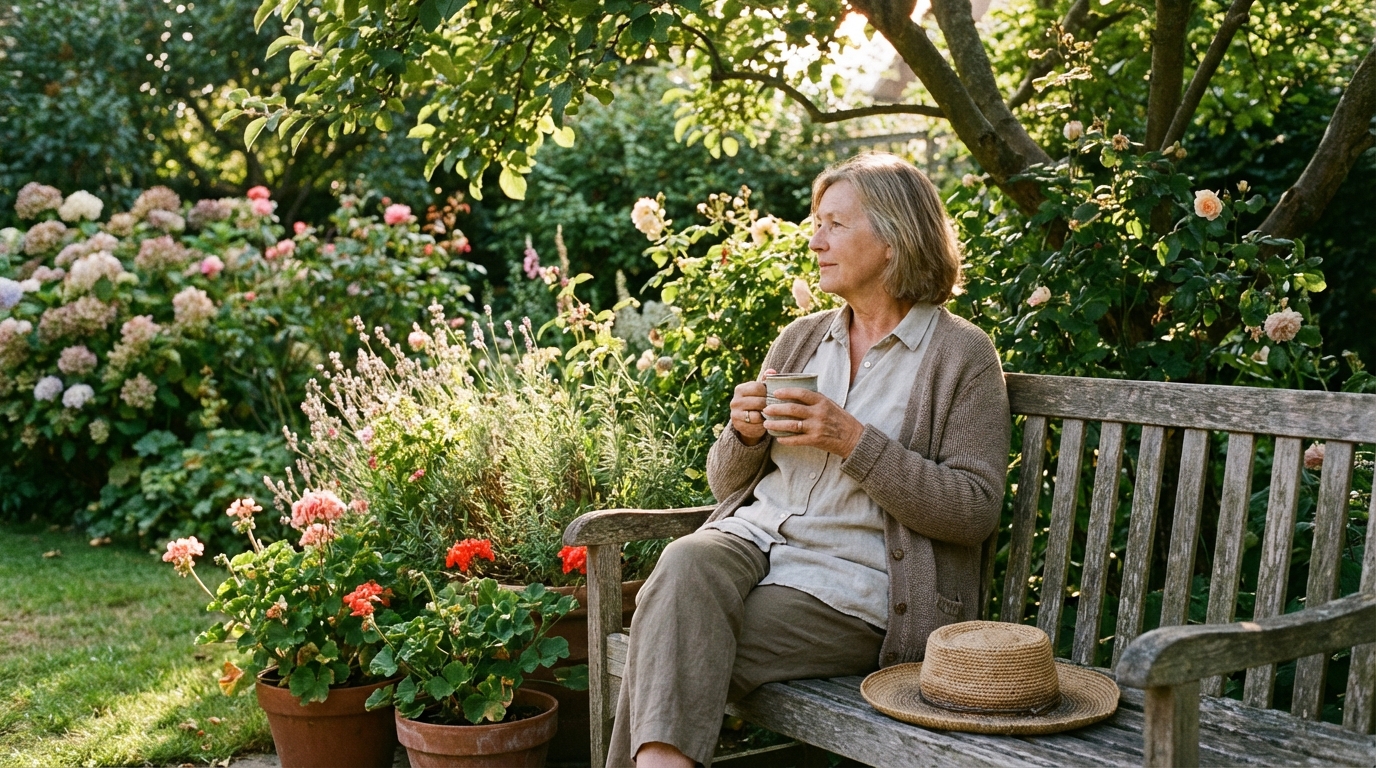
There is a quiet comfort found in certain outdoor spots that never seems to fade. A familiar corner of the garden, even a small one, can feel like a place where the day slows down. It may not be the most impressive part of the yard. It might sit behind a shed, beside a fence, or under a tree that has seen many seasons. What gives it its calm is not design or decoration, but familiarity built through repeated care and everyday use.
These known garden corners often feel restful because they ask nothing new of the mind. The path is already known. The plants behave in expected ways. The light falls there in patterns that repeat through the year. When the body knows a place well, the senses relax. Attention softens. This is not something that happens all at once, but slowly, through small daily encounters.
Familiarity Lowers Mental Effort
A well-known garden space reduces the need to make choices. There is no need to decide where to step or what might be hiding behind the leaves. The mind recognizes the space and settles into it. This matters more than it may seem.
Much of daily tension comes from constant decision-making. Even simple choices require energy. A familiar corner removes many of these small demands. The eyes know where to look. The hands know what they might touch. The body moves with ease.
This effect is stronger in outdoor spaces because nature already asks for gentle attention. When paired with familiarity, that attention becomes restful instead of alert.
Why Repeated Use Matters
Passing through the same garden corner each day builds a quiet rhythm. Over time, the body remembers the space even before the mind does. This creates a sense of safety that is felt rather than thought.
- Footpaths worn smooth become easier to walk without looking down.
- Plants are recognized by shape before they are seen clearly.
- Seasonal changes are noticed without effort.
These small recognitions reduce mental noise. The space becomes a pause rather than a task.
Predictable Growth Creates Trust
Plants that return each year or grow in expected ways help create a sense of order. This does not mean the garden must be neat or controlled. It means the patterns are known.
When a vine reaches for the same fence each season, or a shrub fills out slowly over time, the mind learns what to expect. This predictability creates trust. Trust allows relaxation.
New or constantly changing spaces can be interesting, but they often keep the mind alert. A familiar corner does the opposite. It signals that things are as they should be.
Understanding Seasonal Signals
A known garden corner teaches the seasons quietly. The soil dries at a certain time. Shade shifts as leaves appear or fall. These changes are not surprising because they have happened before.
This steady cycle helps ground attention in the present moment without effort. There is no need to track dates or plan ahead. The garden itself provides the cues.
- Early spring moisture lingers longer in shaded corners.
- Summer heat settles in low spots by afternoon.
- Autumn light becomes softer and shorter.
Recognizing these patterns builds confidence and calm.
Small Boundaries Create a Sense of Shelter
Many restful garden corners are not wide open. They are defined by something simple: a hedge, a fence, a wall, or even a change in ground level. These boundaries do not need to block views. They only need to suggest a contained space.
Contained spaces help the body feel held. This is not about isolation. It is about having a place where the surroundings feel close and manageable.
In a small corner, sounds are softened. Wind feels gentler. Light becomes more focused. These changes help the senses settle.
Why Corners Feel Different Than Open Areas
An open lawn invites movement and activity. A corner invites stillness. The difference lies in how the body reads the space.
- Corners limit visual distractions.
- They reduce the sense of exposure.
- They create a natural stopping point.
Even a narrow strip along a fence can feel restful if it is cared for and visited often.
Care Builds Connection
A garden corner that is tended regularly becomes familiar not just visually, but through touch and effort. Pulling weeds, trimming branches, or adjusting stones builds a physical relationship with the space.
This kind of care is not rushed. It happens in short moments. A few minutes here and there add up. Over time, the corner reflects that attention.
The act of caring also creates calm. Hands busy with simple tasks allow the mind to slow down. The results may be subtle, but they are felt.
Small Tasks That Deepen Familiarity
Large projects can overwhelm a garden space. Small, repeated actions do the opposite.
- Removing only the most obvious weeds.
- Adjusting one stone or edging at a time.
- Watering slowly rather than quickly.
These actions build trust between the caretaker and the space. The garden responds in gentle ways.
Known Sounds and Smells Anchor Attention
Familiar garden corners often have a consistent soundscape. Leaves rustle in a certain way. A nearby structure blocks louder noises. Birds visit at predictable times.
Smells also play a role. Damp soil, warm leaves, or a nearby flowering plant can signal calm before the mind registers it.
When these sensory cues repeat, they become anchors. They draw attention back to the present moment without effort.
Why Sensory Consistency Matters
Sudden or unfamiliar sounds keep the nervous system alert. Familiar ones allow it to rest.
The same is true for smells. A known scent can bring a sense of ease because it signals safety and continuity.
- Soil that smells richer after rain.
- Leaves that release scent when warmed by sun.
- Wood or stone that holds a steady, neutral smell.
These details often go unnoticed until they are missing.
Light Patterns Create Rhythm
A familiar corner receives light in predictable ways. Morning sun may reach it at an angle. Afternoon shade may settle there reliably. These patterns create a natural rhythm.
Knowing when a space will be bright or shaded helps the body relax. There is no need to adjust or adapt. The timing is understood.
This rhythm also encourages pauses. A shaded corner in late afternoon naturally invites rest.
Using Light to Support Calm
Light does not need to be controlled to be helpful. Simply noticing how it moves through a space is enough.
- Observe where shadows fall at different times.
- Notice which plants thrive in the available light.
- Allow the space to change rather than forcing consistency.
Over time, the light becomes part of the corner’s character.
Memory Without Nostalgia
Familiar garden corners often hold quiet memories. These are not dramatic or emotional. They are simple moments repeated many times.
Standing in the same place while watering. Sitting briefly to rest. Watching weather pass through. These moments layer gently.
The comfort comes not from remembering specific events, but from knowing that the space has been there through many ordinary days.
Why Ordinary Moments Matter
Extraordinary events can be unsettling. Ordinary routines create stability.
A garden corner that has been part of daily life becomes a witness to routine. This builds a sense of continuity that feels grounding.
- Tasks completed there feel easier over time.
- Time spent there feels unmeasured.
- The space feels dependable.
This dependability is deeply restful.
Limited Change Encourages Acceptance
Not every part of a garden needs improvement. A familiar corner often stays mostly the same. Small changes happen, but the core remains.
This limited change teaches acceptance. Plants may struggle or thrive. Weather may leave marks. These changes are observed, not resisted.
When a space is allowed to be as it is, it becomes easier to be present there.
When Change Disrupts Calm
Frequent redesign or constant adjustments can prevent familiarity from forming.
Calm grows when changes are slow and purposeful.
- Replace plants only when necessary.
- Allow natural wear to show.
- Let the space age naturally.
This patience allows the corner to develop its own quiet strength.
Physical Comfort Supports Mental Ease
A restful garden corner often includes simple physical comforts. A flat stone to stand on. A low wall to lean against. A patch of ground that stays dry.
These details matter because discomfort pulls attention away from calm.
When the body is at ease, the mind follows.
Simple Comfort Adjustments
Comfort does not require furniture or decoration.
- Level uneven ground where feet rest.
- Trim back branches that brush unexpectedly.
- Clear sharp stones or debris.
These small adjustments make the space welcoming without changing its character.
Time Spent Without Purpose
One of the most restful qualities of a familiar garden corner is that it does not demand productivity. Time spent there does not need to achieve anything.
This lack of purpose is rare in daily life. It allows attention to wander gently.
Standing or sitting there for a few minutes can feel like a reset.
Allowing Unstructured Moments
It can help to visit the space without a task in mind.
- Pause there briefly while passing through.
- Notice without adjusting or fixing.
- Leave when ready, without planning.
These unstructured moments deepen the sense of ease.
Why These Corners Endure
Familiar garden corners endure because they are built slowly. They are shaped by routine, care, and attention rather than design.
They reflect patience. They reward it quietly.
Over time, they become places where the outside world feels manageable and the present moment feels enough.
Such spaces do not call attention to themselves. They wait, offering rest to those who know them well.