
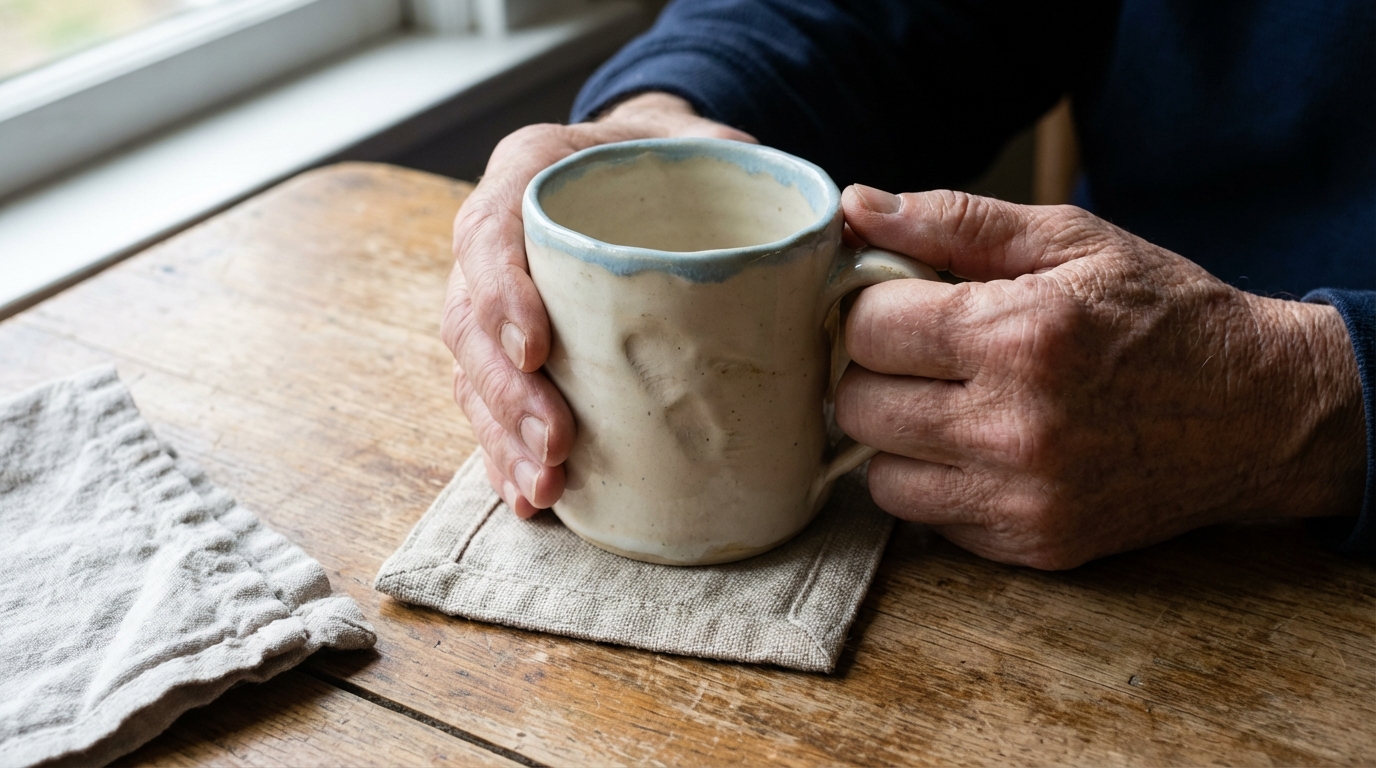
There is something quietly reassuring about a handmade object that shows its work. A stitch that leans slightly to one side. A glaze that gathers a bit thicker along the rim. A wooden edge that is smooth but not perfectly straight. These small variations are not flaws in the usual sense. They are signs of attention, patience, and human presence. In a home, such details often carry more meaning than polished perfection.
Handwork has always been part of daily life. It fills cupboards, shelves, drawers, and closets. It appears in things used every day: cloths, baskets, bowls, and mended garments. Over time, it becomes clear that the pieces most often kept and cared for are not the ones that look factory-made. They are the ones that feel personal, familiar, and quietly alive.
The Comfort of Seeing the Hand Behind the Work
When an object shows slight irregularities, the mind understands that a person made it. This recognition happens without much thought. A seam that is not perfectly even suggests hands guiding fabric, adjusting tension, and responding to small changes. These signs tell a story of attention rather than speed.
Perfectly uniform objects can feel distant. They are often designed to disappear into the background. Imperfect handwork does the opposite. It invites noticing. The eye lingers, not because something is wrong, but because something is real.
This sense of reality creates comfort. In daily life, very few things are exact. Rooms settle, wood expands and contracts, fabrics soften with use. An object that already carries variation feels more at home in this environment. It does not demand careful handling or constant protection. It fits into life as it is lived.
Why the Mind Responds to Small Variations
The human mind is skilled at recognizing patterns, but it also responds warmly to gentle breaks in those patterns. Small differences signal care and decision-making. They suggest that someone adjusted along the way instead of following a fixed mold.
In handwork, these adjustments are often responses to materials. Thread may be slightly thicker in one section. Clay may hold more moisture at one edge. Wood grain may curve unexpectedly. A person working by hand notices these things and responds. The result is an object shaped by conversation between maker and material.
This conversation leaves traces. Those traces feel honest. They help the object feel grounded rather than abstract.
Imperfect Work and Everyday Use
Objects meant for daily use benefit from a certain forgiveness. A hand-thrown bowl with a slightly uneven rim can still hold soup comfortably. A hand-sewn towel with irregular stitches still dries dishes just as well. In many cases, the slight irregularity improves the experience.
For example, a mug that is not perfectly symmetrical may fit the hand more naturally. A handle shaped slowly and adjusted by feel often rests better against the fingers. These small comforts are rarely measured or planned in advance. They emerge from paying attention during making.
Everyday use also brings wear. Scratches, softening, and fading happen over time. An object that begins with visible handwork often accepts this wear more gracefully. New marks blend with old ones. The piece continues to tell a story instead of trying to hide change.
When Imperfection Becomes a Strength
There are times when precision matters. A door needs to close properly. A shelf must be level. Handwork does not mean carelessness. It means understanding where precision supports function and where flexibility supports comfort.
In textiles, for instance, a perfectly straight stitch may look neat, but fabric shifts with washing and use. A slightly varied stitch, adjusted along the way, can actually hold better over time. The maker notices tension changes and responds before problems develop.
In woodworking, leaving a faint tool mark can help a surface resist slipping. It can also make small dents less noticeable later. These choices come from experience and observation, not from aiming for flawlessness.
Emotional Value Grows From Attention, Not Perfection
People often form attachments to handmade objects without fully understanding why. The attachment grows from use, but it also comes from knowing that time and attention went into the making. Imperfections act as reminders of that time.
A visible repair stitch on a well-loved cloth shows that someone chose to mend rather than discard. That decision carries meaning. It reflects patience and care. Each time the cloth is used, that choice is quietly remembered.
Objects made quickly and replaced easily rarely gather this kind of emotional weight. They do their job and then disappear. Handwork stays. It becomes part of routines and seasons.
The Role of Memory in Handmade Objects
Memory attaches more easily to objects that have distinct features. A small unevenness becomes a reference point. It helps the mind recall when the piece was made, where it is usually kept, or how it has been used.
This is why a hand-knit scarf with a few noticeable variations can feel more familiar than a store-bought one. The variations mark moments in the making process. They may correspond to pauses, changes in light, or shifts in attention. Even if these moments are not consciously remembered, their traces remain.
Over time, the object becomes a quiet record of care. This record deepens its personal value.
Learning Through the Hands
Handwork teaches through doing. Each small imperfection provides information. A stitch that puckers slightly shows where tension was too tight. A glaze that runs reveals how gravity and heat interact. These lessons are difficult to learn from instructions alone.
By allowing imperfections to exist, the maker gains understanding. The next piece improves not because a rule was followed more strictly, but because the hands learned to respond more skillfully.
This process builds confidence. It encourages patience rather than frustration. Instead of discarding work at the first sign of unevenness, the maker learns to assess what matters and what does not.
Why Hiding Imperfections Can Slow Learning
When imperfections are immediately concealed or corrected without reflection, valuable information is lost. Covering a seam without understanding why it wandered prevents improvement. The same mistake may happen again.
Leaving small marks visible allows for observation. Over time, patterns become clear. Certain conditions lead to certain results. This understanding grows quietly and steadily.
In a home setting, this approach supports steady skill-building. It reduces pressure and keeps handwork enjoyable rather than stressful.
The Quiet Beauty of Repetition
Many handcrafts involve repeated motions. Stitch after stitch. Stroke after stroke. With repetition, small differences naturally appear. Hands tire, attention shifts, materials respond.
These differences do not interrupt the overall pattern. Instead, they soften it. The finished piece feels less rigid and more natural.
In everyday surroundings, this softness matters. A home is a place of movement and change. Objects that echo this rhythm tend to feel more comfortable.
How Repetition Builds Calm
Repetitive handwork often brings a sense of calm. The mind settles into the rhythm. Perfection becomes less important than continuity. This mental state shows in the finished work.
An object made in this way carries a settled feeling. Even with imperfections, or perhaps because of them, it contributes to a sense of ease in the space.
This calm presence is one reason such objects are often chosen again and again for daily use.
Care Over Time Reveals True Quality
The value of handwork is not fully visible when it is new. It emerges through use and care. Washing, mending, adjusting, and cleaning all become part of the object’s life.
Imperfect pieces often invite this ongoing care. A small flaw does not discourage use. Instead, it signals that the object can be handled, repaired, and adapted.
This relationship between object and caretaker deepens over time. Each interaction reinforces familiarity.
Repair as an Extension of Making
Repair is a natural continuation of handwork. A loose stitch is tightened. A worn edge is reinforced. These actions add new layers to the object’s story.
In many cases, repairs become visible features. They may not match exactly. They may even stand out slightly. This visibility does not reduce value. It increases it.
The object shows that it was worth the effort. It shows that care did not stop at completion.
Why Perfect Uniformity Can Feel Cold
Uniform objects often aim to please everyone by offending no one. Their surfaces are smooth, their shapes predictable. While this has its place, it can also create distance.
In a home, warmth often comes from variety. Different textures, subtle differences, and signs of use make a space feel lived in. Handwork contributes to this feeling naturally.
Imperfect details break the sense of sameness. They invite touch and attention.
The Difference Between Order and Liveliness
Order does not require uniformity. A room can be orderly while still containing varied and imperfect objects. In fact, these objects often make the order feel more human.
Liveliness comes from small contrasts. A slightly uneven basket next to neatly folded linens. A handmade bowl among smooth plates. These combinations create balance.
The imperfections act as gentle anchors, keeping the space from feeling too rigid.
Materials Respond Differently to the Hand
Each material used in handcraft responds in its own way. Fabric stretches and relaxes. Clay shrinks and hardens. Wood shifts with humidity. These behaviors cannot be fully controlled.
Working with these materials means accepting their nature. Imperfections often result from honoring what the material needs rather than forcing it into a fixed shape.
This respect shows in the finished piece. It feels settled and appropriate.
Listening to Materials During Making
Experienced handwork involves listening. Not with ears, but with attention. A fabric may resist a certain stitch length. Clay may need a pause before shaping continues.
Responding to these signals leads to better results, even if the surface is not perfectly even. Ignoring them in pursuit of perfection often leads to cracks, puckers, or weakness.
Objects made with this kind of listening tend to last longer and feel more comfortable to use.
Small Choices That Add Character
Character does not come from large gestures. It comes from small choices made along the way. Choosing to leave a stitch as it is rather than unpicking it. Allowing a natural curve instead of forcing a straight line.
These choices often come from understanding what matters most. Function, comfort, and durability take priority over appearance alone.
Over time, these decisions create a distinct presence.
Knowing When to Adjust and When to Leave Things Be
Part of handwork is judgment. Some imperfections affect use and should be corrected. Others do not. Learning the difference takes experience.
A handle that feels uncomfortable needs adjustment. A slightly uneven surface that does not affect use may be left alone. This discernment prevents unnecessary work and preserves the natural flow of making.
It also keeps the process enjoyable and sustainable.
The Personal Nature of Handmade Objects in Shared Spaces
In shared spaces, handmade objects often become quiet points of connection. They are noticed, handled, and commented on. Their imperfections make them approachable.
People tend to handle such objects with more care, not because they are fragile, but because they feel personal. The presence of handwork encourages gentler routines.
This influence extends beyond the object itself. It shapes how the space is used.
How Imperfect Objects Encourage Slower Habits
Using a handmade bowl or cloth often slows small actions. There is a tendency to place it down carefully, to wash it thoughtfully, to store it properly.
This slowing is not forced. It arises naturally from the object’s character. Imperfections remind the user that care is part of the object’s life.
Over time, these small pauses add calm to daily routines.
Passing Down Practical Understanding Through Objects
Handmade items often carry practical lessons. A well-shaped handle teaches how weight should be balanced. A sturdy seam shows how tension should be managed.
These lessons are learned through use rather than instruction. The object demonstrates what works.
Imperfect examples can be especially instructive. They show both strengths and limitations.
Learning From What Could Be Better
An object that is almost right invites observation. A basket that tilts slightly shows where structure could be improved. A lid that does not fit perfectly reveals the importance of measurement and patience.
These insights are valuable. They guide future efforts without discouragement.
Because the object still functions, its imperfections feel like guidance rather than failure.
The Enduring Appeal of Honest Work
Honest work shows itself plainly. It does not pretend to be something it is not. Imperfect handwork fits this description.
In a home, such honesty feels grounding. It reflects daily life, with its small adjustments and ongoing care.
This is why imperfect handwork continues to feel personal across time. It aligns with how life is actually lived, not how it is idealized.
Living With Objects That Reflect Real Effort
Objects that reflect real effort invite respect. They remind the user that time and attention matter. They quietly encourage the same care in return.
This exchange between object and caretaker creates a steady, supportive presence in the home.
Through everyday use, imperfect handwork proves its worth again and again, not by being flawless, but by being real.