
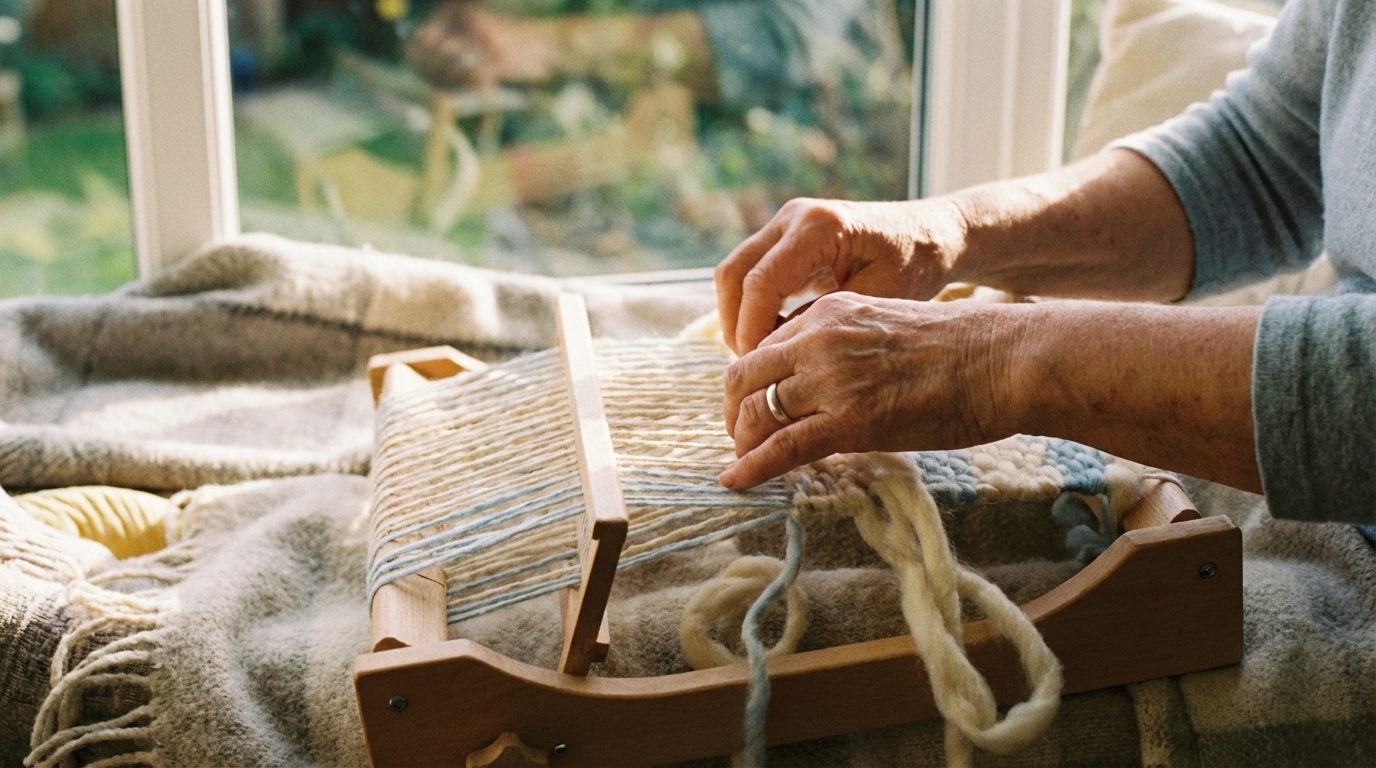
There is something quietly steady about working with the hands in the same way, again and again. A stitch pulled through fabric. A strip of wood smoothed with a plane. Clay pressed and turned on a wheel. These repeated motions do more than shape materials. They shape the mind’s pace, bringing it into a calmer rhythm that feels familiar and grounded.
In homes where handcraft has always been part of daily life, repetition was never treated as something dull or mindless. It was understood as a way to settle the thoughts, to make room for attention, and to carry a task through to completion without hurry. This understanding did not come from books or studies. It came from noticing how the body responds when the same movement is done with care.
Crafting offers a clear place to see how repetition calms the mind. Not through excitement or novelty, but through steady effort and small, reliable actions. Understanding why this works can help anyone use handwork as a source of focus and quiet, rather than frustration.
The Mind’s Response to Repeated Motion
The human mind is always looking for patterns. When movements are unpredictable, the mind stays alert, scanning for what comes next. This is useful when learning something new or reacting to danger. But it also keeps the mind busy, sometimes restless.
Repeated motion tells the mind that things are under control. When the hands move in the same way over and over, the brain no longer needs to plan each step. It recognizes the pattern and eases its grip. This is why familiar tasks often feel soothing, even if they require effort.
In crafting, repetition often follows a simple structure. The same stitch. The same cut. The same press and release. Once the body learns this structure, the mind can rest inside it. Thoughts slow down because they no longer need to direct every movement.
This does not mean the mind shuts off. Instead, it shifts into a quieter form of attention. Awareness stays present, but without strain. This balance between focus and ease is what many people describe as calming.
Why Familiar Movements Reduce Mental Noise
Mental noise often comes from decision-making. Even small choices, when piled up, can create tension. Crafting routines remove many of these choices.
When a knitter knows the next stitch without thinking, or a woodworker knows the pressure needed for a smooth pass, there is no question to answer. The hands already know. This frees the mind from constant checking and adjusting.
Familiar movements also limit distraction. The body stays occupied, and the task is clear. This makes it easier to stay present, rather than drifting into worries or unfinished thoughts.
Over time, this pattern teaches the mind that it is safe to slow down. That safety is a large part of what feels calming.
Repetition as a Gentle Form of Structure
Many people associate structure with rules and rigidity. In crafting, structure is softer. It comes from the order of steps and the predictability of motion.
A simple craft routine might involve setting up tools the same way each time, sitting in the same place, and beginning with the same first movement. These small consistencies act like a frame, holding the activity steady.
This gentle structure helps the mind settle because it reduces uncertainty. The mind knows what is expected, and there is comfort in that knowledge.
How Structure Supports Focus Without Pressure
Pressure often comes from trying to control outcomes. In repetitive craft work, attention is placed on the process instead. Each movement matters, but only in the moment it is done.
For example, when weaving, the focus is on passing the shuttle through the warp. The outcome, the finished cloth, comes later. The repetition allows attention to stay with what is directly in front of the hands.
This kind of focus is supportive rather than demanding. It encourages steady effort without urgency.
The Body Learns, So the Mind Can Rest
When learning a new craft, repetition can feel tiring at first. The hands may be awkward, and the mind has to guide every step. This is a natural stage.
With time, the body begins to remember. Muscles learn the distance, pressure, and timing of each movement. This is sometimes called muscle memory, but it is more accurately a shared memory between body and mind.
Once this memory forms, the mind no longer needs to supervise closely. It can step back, allowing the body to take the lead.
The Transition From Effort to Ease
The shift from effort to ease is gradual. It happens quietly, often without being noticed until the work feels smoother.
In pottery, this might show up when centering clay no longer requires constant correction. In sewing, it might appear when the needle finds its path without strain.
This transition is important for calming the mind. Effort requires attention. Ease allows relaxation.
However, ease does not mean carelessness. The hands still need guidance, especially when conditions change. The calm comes from knowing that the body can handle most of the work.
Repetition Creates a Sense of Time That Feels Safe
Modern life often divides time into sharp pieces. Deadlines, alarms, and schedules can make time feel like something to race against.
Repetitive crafting introduces a different sense of time. Instead of minutes and hours, time is measured in rows, passes, or layers.
This shift can be deeply calming. It moves attention away from the clock and toward the rhythm of the task.
Working Within a Natural Pace
Each craft has its own natural pace. Trying to rush against it usually leads to mistakes or tension.
For example, carving wood too quickly can cause slips. Stitching too fast can lead to uneven tension. Repetition teaches respect for this natural pace.
When the hands settle into that pace, the mind follows. Time feels less urgent and more supportive.
This is one reason repetitive crafting can feel like a pause from the rest of the day, even if it is productive.
Small Successes Build Quiet Confidence
Repetition allows for frequent, small successes. Each completed stitch, each smooth surface, each even row provides a sense of completion.
These small moments matter. They offer reassurance that effort leads somewhere, even if the final result is still far away.
The mind responds to this reassurance by relaxing. There is less need to doubt or push.
Why Small Wins Matter More Than Big Achievements
Large goals can feel overwhelming. They require holding many steps in mind at once.
Repetitive crafting breaks work into manageable pieces. The focus stays on the next movement, not the entire project.
This approach keeps the mind from jumping ahead and becoming anxious. It reinforces the idea that steady work is enough.
Attention Without Overthinking
Repetition does not mean lack of attention. In fact, good crafting requires awareness.
The difference is that attention becomes simpler. Instead of juggling many thoughts, attention rests on a narrow set of sensations.
The feel of yarn between fingers. The sound of a tool against material. The slight resistance that tells when to adjust pressure.
These sensory cues guide the work gently.
How Sensory Feedback Anchors the Mind
Physical sensations provide immediate information. They keep attention in the present moment.
When the mind drifts, the hands feel it right away. A stitch tightens. A cut goes off line. This feedback brings focus back without judgment.
Over time, the mind learns to stay close to the senses. This reduces wandering thoughts and supports calm awareness.
Routine as a Source of Comfort
Craft routines often involve more than the craft itself. Preparing tools, arranging materials, and cleaning up afterward all follow familiar patterns.
These routines add to the calming effect. They mark a clear beginning and ending.
The mind finds comfort in knowing what comes next.
Setting Up and Putting Away With Care
Taking time to set up tools in the same order each time helps signal that it is time to begin.
Putting tools away carefully afterward signals completion. This closure matters.
When routines are rushed or skipped, the mind can feel unsettled. Taking a few extra moments with these steps supports the overall calm of the activity.
When Repetition Becomes Restless
Repetition is calming when it matches the worker’s state of mind and skill. There are times when it can feel irritating instead.
This usually happens when the repetition is too demanding or too mindless.
Signs the Balance Is Off
If movements require constant correction, the mind may feel strained. This often happens when working with unfamiliar materials or techniques.
On the other hand, if repetition requires no attention at all, the mind may grow bored and restless.
Both situations can break the calming effect.
Adjusting the Task to Restore Calm
When a task feels too demanding, slowing down can help. Fewer repetitions done with care are better than many done in haste.
When a task feels too dull, introducing a small variation can help. Changing color, pattern, or sequence slightly can bring attention back without losing the overall rhythm.
The goal is not perfection, but balance.
Patience Grows Through Repetition
Patience is not something that appears all at once. It is built through practice.
Repetitive crafting trains patience by showing that progress happens step by step.
There is no shortcut. Each movement must be made.
Learning to Stay With the Process
Staying with a repetitive task, even when results come slowly, teaches endurance.
The mind learns that discomfort passes, and that steady effort leads to completion.
This lesson often carries into other areas of life, making it easier to approach daily tasks with the same calm persistence.
The Quiet Satisfaction of Useful Work
Many crafts produce items meant to be used. This adds another layer of calm.
Working toward something useful gives repetition a purpose beyond itself.
The mind finds satisfaction in knowing that the effort will serve everyday needs.
Usefulness Grounds the Mind
When work has a clear function, it feels anchored in reality.
This grounding effect helps prevent overthinking. The focus stays on doing the work well, rather than worrying about its value.
Even simple items can carry this sense of usefulness.
Respecting Limits and Knowing When to Stop
Repetition calms the mind when it is balanced with rest.
Ignoring fatigue can turn calm into strain.
Listening to Physical Signals
The body gives signals when it needs a break. Stiffness, loss of precision, or irritation are signs to pause.
Stopping at the right time preserves the positive effects of repetition.
It also ensures that returning to the work feels inviting rather than burdensome.
Carrying Calm Into the Rest of the Day
The calm developed through repetitive crafting often lingers.
The steady rhythm and focused attention can influence how the rest of the day feels.
Tasks may be approached with more patience. Small problems may feel less urgent.
This is not because the craft solved everything, but because it reminded the mind how to move at a steady, workable pace.
Repetition in crafting shows that calm does not require silence or stillness. It can be found in movement, effort, and care, repeated as many times as needed.