
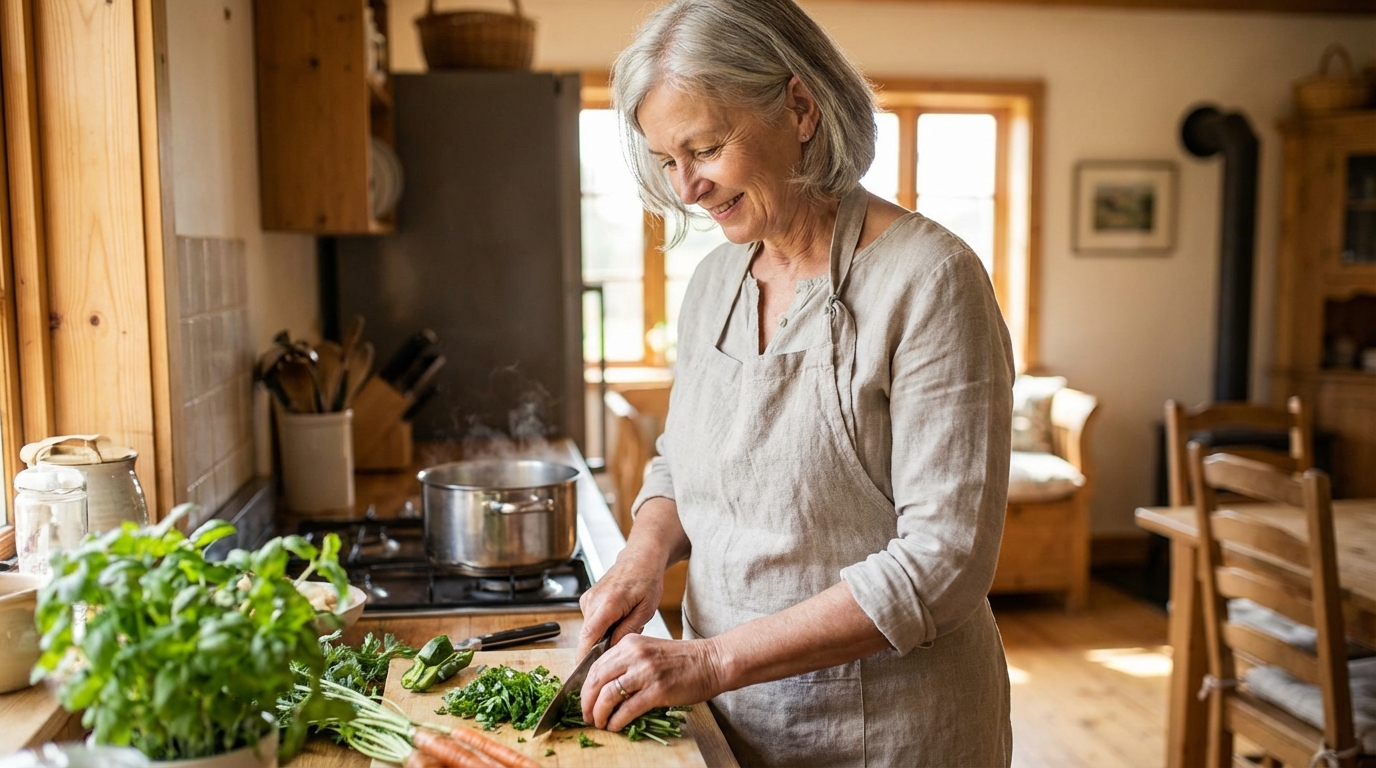
There is a quiet confidence that grows in kitchens where meals are kept simple. It does not come from showing off skill or chasing complicated recipes. It comes from knowing how food behaves, understanding timing, and trusting steady routines. Simple cooking builds confidence because it allows attention to settle on the basics that matter most: heat, seasoning, patience, and care.
When meals are uncomplicated, the kitchen becomes a place of calm rather than pressure. The cook is not rushing to keep up with long instructions or unfamiliar steps. Instead, there is room to notice small changes, make gentle adjustments, and learn through repetition. Over time, these small experiences add up to something sturdy and reliable.
Simple Cooking Lowers the Mental Load
Complicated recipes often demand constant decision-making. What comes next, how long to wait, what tool to use, and what to do if something goes wrong. Each choice pulls attention in a new direction. This can make cooking feel tense, especially on ordinary days when energy is already limited.
Simple meals reduce this mental strain. Fewer steps mean fewer chances to feel unsure. With less information to hold in mind, it becomes easier to stay present. The hands move with purpose, and the mind stays calm.
This calm is not accidental. The brain learns best when it is not overwhelmed. Simple cooking creates space for learning by removing unnecessary complexity. Instead of memorizing instructions, attention can focus on observing the food itself.
- Listening for the sound of vegetables hitting a warm pan
- Noticing how oil shimmers before it smokes
- Watching how color changes as food cooks
These observations form the foundation of cooking skill. They cannot be rushed or skimmed over. Simple meals make them easier to notice.
Repetition Builds Trust in the Process
Confidence grows through repetition. Cooking the same few meals regularly allows patterns to become familiar. Timing starts to feel natural. Portions become easier to judge. Adjustments happen almost without thought.
When a dish is cooked many times, small variations become less alarming. A slightly hotter pan or a different brand of ingredients no longer causes worry. The cook knows what matters and what does not.
Simple dishes are ideal for repetition because they do not rely on precise tricks or rare ingredients. A pot of soup, a tray of roasted vegetables, or a pan of eggs offers endless chances to practice the same skills.
Through repetition, confidence becomes grounded in experience rather than hope. There is no need to wonder whether a meal will turn out well. The outcome is familiar, and familiarity is reassuring.
Understanding Ingredients Instead of Following Instructions
Simple cooking shifts attention away from written directions and toward ingredients themselves. This change is important. Instructions can be followed without understanding, but ingredients teach through direct experience.
When working with a short list of ingredients, each one matters more. The cook notices how salt sharpens flavor, how fat carries aroma, and how heat transforms texture.
For example, cooking a pot of beans from start to finish reveals several lessons:
- Dry beans soften gradually, not all at once
- Salt added early affects texture differently than salt added at the end
- Gentle heat produces more even cooking than a rolling boil
These lessons carry over into many other dishes. Simple cooking allows them to be learned clearly, without distraction.
Fewer Tools, Clearer Movements
Complex cooking often requires a crowded counter and many specialized tools. This can create physical clutter, which adds to mental clutter. Simple cooking usually relies on a few dependable items used well.
When the same pan, knife, or pot is used regularly, hands become familiar with their weight and balance. Movements grow more efficient. There is less fumbling and fewer mistakes.
This familiarity matters. Confidence is closely tied to physical ease. When tools feel predictable, the cook feels capable. The kitchen becomes a place of steady work rather than uncertainty.
Using fewer tools also means fewer things to manage during cooking. Attention stays on the food instead of on equipment.
Simple Meals Invite Patience
Many uncomplicated dishes require waiting rather than constant action. A pot simmering on the stove or bread rising on the counter teaches patience through practice.
This waiting is not idle. It is an opportunity to observe small changes over time. Steam increases, aromas deepen, and textures soften. These gradual shifts teach that good results often come from allowing processes to unfold at their own pace.
Patience in cooking builds confidence because it replaces urgency with trust. There is no need to rush when the cook understands that time itself is an ingredient.
Learning when not to interfere is just as important as learning when to act. Simple cooking makes this lesson clear.
Mistakes Feel Manageable, Not Defeating
When a complicated recipe fails, the disappointment can feel heavy. So much effort and planning may seem wasted. Simple cooking changes the scale of mistakes.
In a simple dish, errors are usually small and easy to fix. Soup can be thinned, seasoned, or simmered longer. Vegetables can be chopped smaller and cooked a bit more. Even if something does not turn out perfectly, it is often still usable.
This teaches an important lesson: mistakes are part of learning, not signs of failure. Confidence grows when the cook sees that problems can be addressed calmly.
Over time, this mindset carries beyond the kitchen. The habit of adjusting rather than giving up becomes natural.
Everyday Meals Reduce Performance Pressure
Cooking can feel intimidating when it is tied to expectations. Special occasions, unfamiliar dishes, or imagined judgment can turn the kitchen into a stage.
Simple cooking removes this pressure by focusing on nourishment rather than performance. The goal is to feed people well, not to impress. This shift in purpose makes a significant difference.
When the meal is meant to support daily life, there is freedom to keep things modest. Confidence grows when success is defined by comfort and reliability instead of novelty.
This approach also makes cooking more sustainable. It is easier to cook regularly when the bar is set at care rather than perfection.
Learning Heat Control Through Basic Dishes
Heat is one of the most important elements in cooking, yet it is often misunderstood. Simple dishes provide a clear way to learn how heat behaves.
Cooking eggs, for example, teaches how different temperatures affect texture. High heat firms quickly and can become rubbery. Lower heat allows for tenderness and control.
Similarly, sautéing vegetables shows how overcrowding a pan lowers temperature and causes steaming instead of browning. These lessons become obvious when the recipe is not complicated.
Understanding heat builds confidence because it gives the cook control. Instead of guessing, adjustments are made with intention.
Simple Cooking Encourages Tasting and Adjusting
Complex recipes sometimes discourage tasting until the end, either because of timing or fear of disrupting the process. Simple cooking invites frequent tasting.
Tasting teaches how flavors develop and change. Salt may seem strong at first and then fade as ingredients release moisture. Acidity may need balancing near the end rather than at the beginning.
By tasting often, the cook learns to trust the senses. This trust is essential for confidence. Written measurements become guidelines rather than rules.
Over time, the cook begins to adjust instinctively. This ability grows only through regular, uncomplicated practice.
Routines Create a Sense of Belonging in the Kitchen
Simple cooking often follows predictable patterns. Certain meals appear on certain days. Preparation follows a familiar rhythm.
These routines create a sense of belonging in the kitchen. The space feels known and welcoming. Confidence grows when the environment feels supportive rather than demanding.
Routine also reduces decision fatigue. Knowing what to cook removes daily uncertainty, making it easier to begin.
This steady rhythm allows cooking to fit naturally into daily life instead of competing with it.
Simple Ingredients Teach Seasonality and Timing
Working with a small number of ingredients highlights their natural qualities. Fresh produce behaves differently depending on the time of year, and simple cooking makes these differences noticeable.
Tomatoes, for example, may need little more than gentle heat and salt when they are at their best. At other times, longer cooking brings out sweetness and depth.
Learning when to use quick methods and when to rely on slow cooking builds understanding. Confidence grows from knowing how to adapt rather than forcing ingredients to behave the same way year-round.
Clean-Up Is Part of the Confidence Loop
Simple cooking usually means simpler clean-up. This matters more than it may seem.
A manageable clean-up makes cooking feel less daunting. When the kitchen returns to order easily, the memory of cooking remains positive.
This encourages regular practice, which in turn builds confidence. The process feels complete rather than exhausting.
Keeping clean-up simple also teaches respect for tools and space. Wiping as you go and using fewer items creates a sense of care and control.
Simple Cooking Supports Consistency Over Time
Confidence is not built in one impressive meal. It grows through steady practice over weeks and months.
Simple cooking supports this consistency by fitting into daily routines. It does not require special preparation or extra energy.
Because the effort is manageable, cooking becomes a regular habit rather than an occasional project. Each repetition strengthens skills and reinforces trust.
Over time, this consistency leads to quiet assurance. The cook knows that a meal can be prepared even on challenging days.
Teaching the Hands as Well as the Mind
Cooking is a physical skill. Hands learn through doing, not through reading.
Simple tasks such as chopping onions, stirring a pot, or kneading dough teach coordination and timing. These movements become smoother with repetition.
As hands learn what to expect, the mind relaxes. Confidence grows from this partnership between thought and movement.
Complex recipes often interrupt this learning by constantly shifting tasks. Simple cooking allows skills to deepen.
Simple Cooking Builds a Reliable Inner Reference
When cooking is uncomplicated, the cook develops an internal sense of what is right. This inner reference replaces constant checking and second-guessing.
The smell of something nearly done, the sound of simmering at the correct pace, and the look of properly cooked food become familiar signals.
Trusting these signals is a sign of confidence. It comes from repeated exposure to the same basic processes.
This internal reference cannot be rushed or borrowed. It must be built through steady, simple practice.
Why Simple Cooking Lasts
Trends in cooking come and go, but simple methods remain useful. They adapt to changing needs and circumstances.
Simple cooking builds confidence because it is flexible. Ingredients can change, portions can grow or shrink, and methods can adjust without losing their foundation.
This flexibility allows the cook to respond to daily life with ease. There is no fear of deviation because the basics are understood.
Confidence rooted in simplicity is quiet and enduring. It does not need constant reinforcement. It is carried in the hands, the senses, and the steady rhythm of everyday meals.