
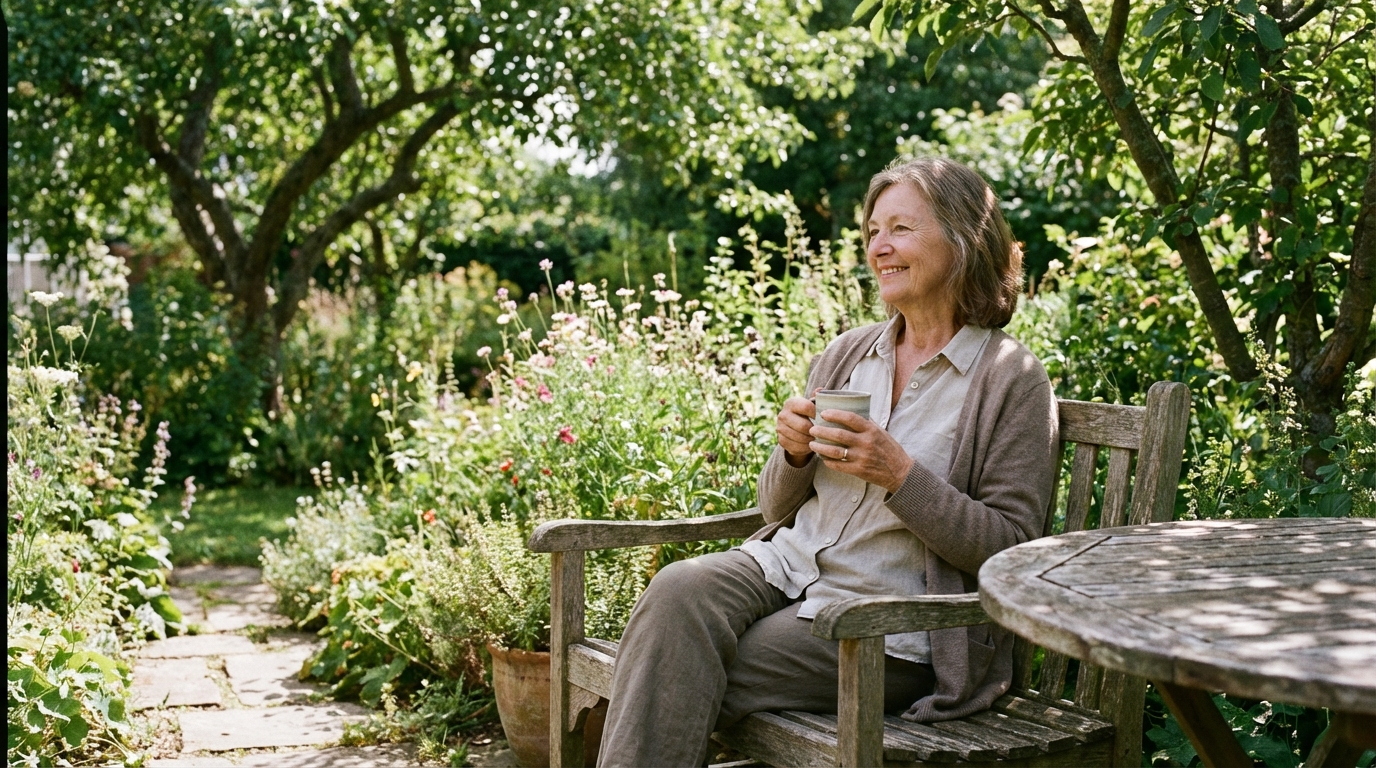
There is something quietly steady about sitting in a garden. Not working it, not fixing anything, not even planning. Just sitting. This simple act has been part of home life for as long as people have kept a patch of ground nearby. It asks for very little, yet it gives back more than expected. The value is not in making the garden better, but in letting the garden make a small adjustment in the person who sits there.
Sitting outdoors does not need a special chair, a perfect view, or a carefully planned time of day. It only needs a pause long enough for the body and mind to notice where they are. The benefits unfold slowly, often without clear markers. Over time, they show up in calmer reactions, steadier routines, and a quieter sense of perspective that carries into the rest of the day.
The Difference Between Being Outside and Sitting Outside
Many people step outside several times a day. They check the weather, hang laundry, take out the rubbish, water a plant. These moments are useful, but they are usually rushed. Sitting outside is different because it removes purpose. There is no task to complete. This absence of urgency allows the senses to settle.
When there is no goal, attention widens. The eyes stop scanning for what needs doing. The ears stop listening for the next interruption. Breathing slows because it no longer needs to match a schedule. This shift is subtle, but it matters. The body begins to read the environment as safe and steady, which changes how the nervous system behaves.
This is why sitting matters more than standing or pacing. Standing suggests readiness. Pacing suggests restlessness. Sitting suggests arrival. It tells the body that it can pause here for a while.
Why Gardens Feel Different From Other Outdoor Spaces
A garden is not wild land, but it is not fully controlled either. This middle ground is important. Paths may be planned, but plants grow in their own way. Weather leaves its marks. Insects come and go. This mix of care and unpredictability creates a gentle lesson in balance.
Unlike streets or parks, a home garden carries familiar patterns. The same fence, the same patch of soil, the same tree that shades the bench in late afternoon. Familiarity reduces mental effort. The mind does not need to orient itself. It can rest within known boundaries.
At the same time, a garden is always changing. Leaves turn, flowers fade, light shifts across the ground. These changes are slow enough to observe without urgency. Sitting allows these details to register. Over time, this trains patience and attention in a quiet way.
How Sitting Supports Calm Without Trying to Create It
Calm is often chased through techniques, but sitting in a garden works by removing pressure rather than adding effort. There is no instruction to follow. The body adjusts on its own.
Natural light plays a role. Even on overcast days, outdoor light helps regulate daily rhythms. This supports better sleep later on, which affects mood and focus the next day. The benefit is not immediate, but it builds with regular exposure.
Sound also matters. Gardens hold softer noises than indoor spaces. Leaves moving, distant birds, the hum of insects. These sounds are irregular but not demanding. They give the mind something to rest on without pulling it into thought.
The ground itself has an effect. Being near soil and plants changes posture. Shoulders often drop. Hands rest instead of gripping. These physical shifts send signals that reduce tension.
Choosing a Place to Sit
The best place to sit is not always the most attractive one. It is the place that feels easy to return to. Ease is more important than beauty.
A chair near the door is often better than a bench at the far end of the garden. When sitting requires effort, it becomes a rare event. When it is simple, it becomes part of the day.
Shade matters more than many realize. Sitting in direct sun can be pleasant for a short time, but it often leads to restlessness. Partial shade allows longer stays. Morning light and late afternoon light are usually more forgiving than midday sun.
The ground beneath the chair matters too. A stable surface helps the body relax. Wobbling chairs or uneven stones keep the muscles alert. Comfort here is not indulgence; it supports stillness.
Timing and Frequency
There is no perfect length of time for sitting in the garden. What matters is regularity. Five minutes each day can have more impact than an hour once a week.
Early morning sitting sets a tone for the day. The garden is often quieter, and the air feels settled. This can help thoughts arrange themselves before the day begins.
Late afternoon or early evening sitting helps mark the end of active hours. It creates a clear transition between doing and resting. This can prevent the feeling that the day never truly ends.
Sitting at the same time most days helps the habit take root. The body begins to expect the pause. Over time, this expectation alone can bring relief during busy hours.
What to Do While Sitting
The simplest answer is nothing. But this can feel uncomfortable at first. The mind looks for tasks. Gentle anchors can help without turning sitting into another form of work.
Watching light move across leaves is one option. It gives the eyes something soft to follow. Listening for the farthest sound and then the nearest sound can also help attention settle.
Some people hold a warm cup or rest hands on their knees. This gives the body a sense of grounding. The key is to avoid activities that pull attention away from the surroundings, such as reading messages or planning tasks.
If thoughts wander, there is no need to correct them. The value of sitting is not in emptying the mind, but in letting thoughts pass without needing action.
The Role of Weather
Good weather is pleasant, but it is not required. Sitting in different conditions builds resilience and appreciation.
On cool days, a coat or blanket makes sitting possible. The contrast between cool air and warm clothing sharpens awareness. On warm days, slower breathing helps the body adjust.
Light rain can be surprisingly calming if there is shelter. The sound of rain on leaves or a roof creates a steady rhythm. Heavy rain or strong wind, however, can keep the body tense. In those conditions, shorter sitting times are better.
Seasonal changes teach acceptance. The garden does not look the same all year, and sitting through these changes reinforces the idea that quiet presence does not depend on perfection.
Sitting as Part of Daily Routines
Sitting in the garden works best when it is woven into existing routines. Adding it onto an already full day makes it feel optional. Attaching it to something already happening makes it natural.
Sitting after the morning drink, before the first indoor task, is one option. Sitting after dinner, before cleaning up, is another. These moments already involve a pause.
Some people sit while waiting for something, such as food in the oven or laundry in the washer. This reframes waiting time as resting time.
Over time, the routine itself becomes comforting. The body recognizes the pattern and settles more quickly each day.
How Sitting Affects Decision-Making
Regular quiet sitting changes how decisions are made. It slows the urge to react. When the mind is used to pauses, it becomes easier to step back before responding.
This does not mean decisions take longer. Often they become simpler. Sitting creates space where priorities can sort themselves out without force.
Problems that feel heavy indoors sometimes feel lighter outdoors. The garden does not offer solutions, but it changes perspective. Seeing growth and decay side by side reminds the mind that many things pass on their own.
The Subtle Physical Benefits
Sitting outside supports the body in small, practical ways. Fresh air encourages deeper breathing. Natural light supports eye health by giving the eyes a break from close focus.
Posture often improves without effort. The body aligns itself when there is no desk or screen to lean toward. Even short periods can counteract hours of indoor sitting.
Movement around sitting also matters. Standing up from a garden chair, walking a few steps, and sitting again keeps joints gently active.
When Sitting Feels Difficult
There are times when sitting feels uncomfortable or pointless. Restlessness, worry, or a sense of wasted time can arise. This is common, especially at first.
In these moments, shortening the sitting time helps. One or two minutes still counts. The habit is more important than the duration.
Another option is to sit with a simple task that does not demand attention, such as shelling peas or brushing dirt from tools. This keeps the hands busy while the mind rests.
It also helps to remember that the effects of sitting are cumulative. They may not be felt immediately, but they build quietly over days and weeks.
Children and Shared Spaces
Sitting in the garden does not require solitude. Shared sitting teaches patience and observation through example.
When others are present, expectations matter. Sitting does not mean silence. Light conversation can happen without turning the time into a meeting.
For children, sitting nearby while they play allows observation without interference. This gives them space while keeping a steady presence.
Shared sitting can become a gentle anchor in family routines, offering connection without demands.
Gardens Without Plants
A garden does not need to be lush to offer value. A small yard, a paved area, or even a few pots can serve the purpose.
The key elements are open air, natural light, and some sign of life, such as a tree, sky, or birds passing through.
Even a simple view of changing shadows can support the same quiet attention. The garden is less about what is grown and more about what is noticed.
How Sitting Shapes Long-Term Outlook
Over months and years, regular sitting in the garden shapes how life is approached. It reinforces the idea that not everything needs improvement or response.
This outlook carries into other parts of home life. Chores are done with less rush. Interruptions feel less disruptive. Rest becomes something allowed rather than earned.
The garden becomes a place associated with steadiness. Returning to it during difficult times feels natural, not forced.
Respecting the Space
Respecting the garden supports the sitting practice. Keeping the area tidy enough to feel welcoming matters, but perfection is unnecessary.
Leaving a chair where it is easy to use encourages consistency. Clearing obvious hazards supports relaxation.
At the same time, allowing some wildness keeps the space honest. Fallen leaves, uneven growth, and seasonal mess remind the sitter that control is partial and that this is acceptable.
Quiet Observation as a Skill
Sitting in the garden builds the skill of observation. This skill transfers to daily life.
Noticing small changes in plants sharpens awareness of small changes in mood or energy. This makes it easier to adjust routines before strain builds.
Observation without judgment becomes easier with practice. This reduces unnecessary self-criticism and fosters patience.
The Garden as a Steady Presence
Above all, sitting in the garden matters because it offers a steady presence in a changing world. It does not demand attention, praise, or productivity.
It simply waits. Sitting there, day after day, allows the body and mind to remember how to wait too.
This quiet remembering supports calm, reflection, and a sense of belonging that extends far beyond the garden gate.