
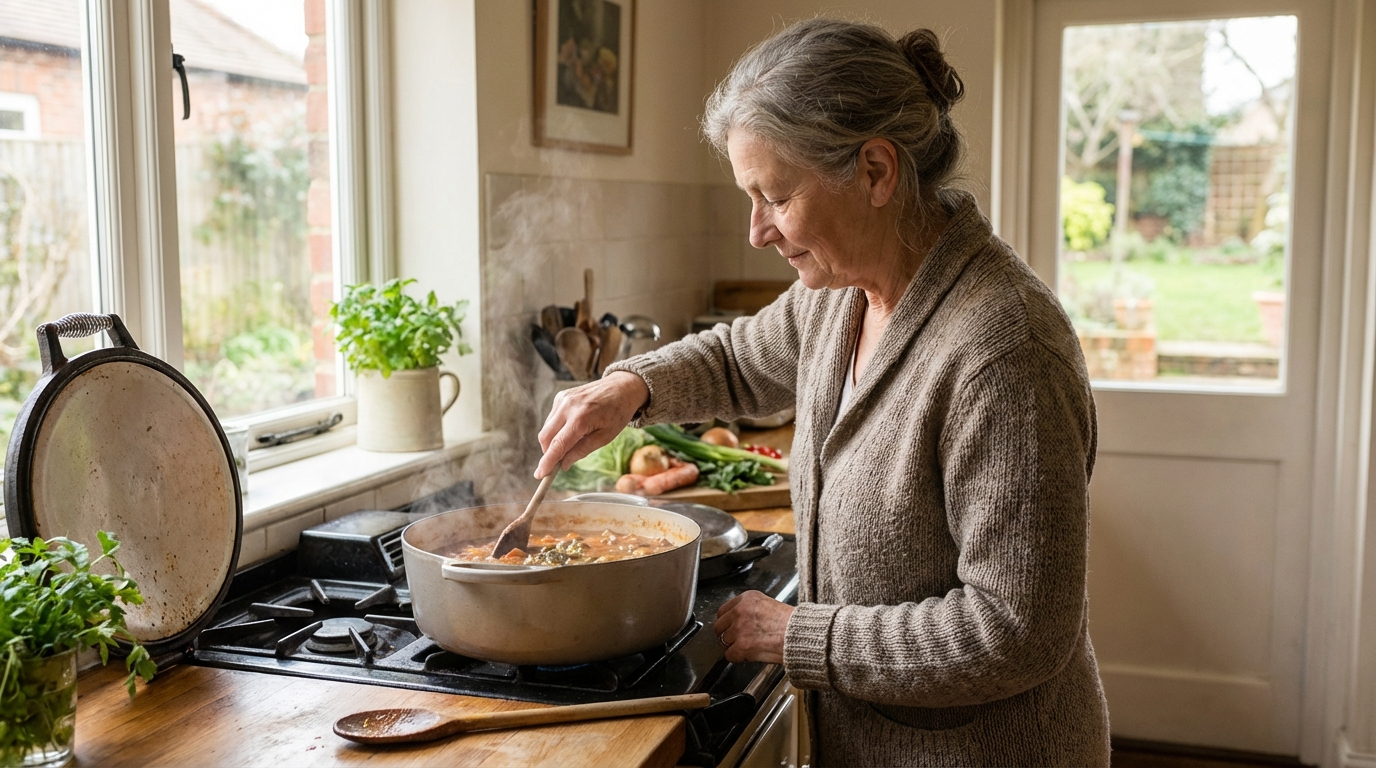
In many homes, the kitchen sets the rhythm of the day. The pace of chopping, stirring, waiting, and cleaning creates a quiet structure that reaches far beyond food. When meals are prepared slowly, with steady attention and predictable steps, that rhythm can gently support a child’s ability to focus. This connection is not about special recipes or strict rules. It grows from calm pacing, clear sequences, and the way everyday routines shape attention over time.
The link between pace and attention
Focus is not only a mental skill. It is also a response to the environment. When a space feels hurried or noisy, attention scatters easily. When a space moves at a steady pace, the mind has fewer signals pulling it in different directions.
Slow cooking naturally reduces urgency. A pot that simmers for an hour does not demand constant action. Dough that rests cannot be rushed. These moments teach that not everything needs immediate response. For children, this helps attention settle instead of jumping from one stimulus to another.
This effect works quietly. There is no need to explain it. The body learns first. When the kitchen moves at a measured speed, the nervous system follows. Over time, this makes it easier for children to stay with one task, whether it is homework at the table or building something on the floor nearby.
Predictable steps create mental order
Slow cooking usually follows a clear sequence. Ingredients are prepared, heat is applied gradually, and time does the rest. This order matters.
Children benefit from seeing tasks broken into steps that unfold in a predictable way. When a recipe follows the same pattern each time, it becomes familiar. Familiar patterns reduce mental strain. The brain does not have to guess what comes next, which frees attention for the task at hand.
In contrast, rushed cooking often skips steps or changes plans quickly. This can feel exciting, but it also teaches that plans are unstable. A steady routine in the kitchen quietly shows that careful order leads to reliable results.
Why repetition matters more than explanation
Explaining focus does little on its own. Repetition does more. When children see the same slow process repeated, day after day, they learn how long things take and what patience feels like in real time.
For example, a soup that simmers every week teaches that waiting is part of making something good. The smell changes gradually. The liquid thickens slowly. Nothing dramatic happens all at once. This teaches attention to stay with subtle changes instead of constant novelty.
The role of waiting in building focus
Waiting is often seen as empty time. In reality, it is active training for attention.
Slow cooking creates natural waiting periods. While something cooks, there is time to set the table, wash a few dishes, or simply sit nearby. These pauses teach that it is acceptable to be present without constant stimulation.
This matters because focus depends on tolerance for stillness. A child who learns to wait comfortably is better able to stay with tasks that do not provide instant feedback.
When waiting works best
Waiting supports focus when it is calm and predictable. If waiting is filled with noise, screens, or constant interruptions, the benefit is lost.
In the kitchen, this means keeping the environment steady during cooking time. The radio can be low. Conversations can be unhurried. Movements can be deliberate. These small choices turn waiting into a gentle exercise in attention.
Hands-on preparation and steady focus
Slow cooking often involves hands-on preparation that is simple but absorbing. Washing vegetables, peeling, measuring, and stirring all require light attention without pressure.
These tasks are especially helpful because they sit between boredom and stress. They are not difficult, but they are not passive. This middle ground is ideal for building focus.
When children help with these tasks, they practice staying with one action for a short period. The goal is not speed or perfection. It is continuity.
Choosing the right tasks
Not every kitchen task supports focus equally. Tasks that are too complex can cause frustration. Tasks that are too easy can lead to distraction.
Good choices are tasks with a clear start and finish:
- Rinsing rice until the water runs clear
- Stirring a pot at regular intervals
- Arranging chopped vegetables in a bowl
- Counting spoonfuls of ingredients
These tasks give the mind something steady to hold onto without overwhelming it.
Smell, sound, and quiet sensory cues
Slow cooking engages the senses in a gentle way. The smell of food changes gradually. The sound of simmering is soft and repetitive. These cues anchor attention without demanding it.
This matters because focus improves when the senses are not overloaded. Loud, sharp sounds and strong, sudden smells can pull attention away. Slow cooking avoids this by unfolding gradually.
Children who spend time in this environment learn to notice small changes. This strengthens the ability to stay attentive to subtle details in other areas of life.
The comfort of familiar sensory patterns
When the same dishes are cooked regularly, the sensory experience becomes familiar. Familiarity reduces alertness to potential disruption. This allows attention to relax instead of staying on guard.
For example, a stew that smells the same each time becomes a background signal of safety and routine. This frees mental space for focus on other tasks.
Why slow meals lead to calmer transitions
Transitions are often where focus breaks down. Moving from play to homework or from school to home can be difficult.
Slow cooking helps because it creates a long, gentle lead-up to mealtime. Instead of a sudden announcement that food is ready, there is an extended period of anticipation.
This gradual build-up allows the mind to shift gears slowly. By the time the meal is served, attention has already begun to settle.
Using cooking time as a bridge
Cooking time can act as a bridge between activities. For example, the smell of food cooking can signal that playtime is ending soon, without abrupt interruption.
This reduces resistance and helps children practice shifting focus smoothly, a skill that carries into other parts of the day.
The importance of unhurried meals
The benefits of slow cooking extend into the meal itself. When food has taken time to prepare, meals are often eaten more slowly.
Eating slowly supports focus by encouraging awareness of taste, texture, and fullness. This kind of attention is grounding and steady.
Rushed meals, on the other hand, teach the body to move quickly from one thing to the next without noticing details.
Creating a steady mealtime pace
A steady meal does not require silence or strict rules. It requires time.
Allowing enough time to eat without pressure helps children practice sustained attention in a natural way. Conversation flows more easily. Movements slow down. This reinforces the calm pacing established during cooking.
Consistency over variety
Modern advice often emphasizes variety. While variety has its place, consistency is more important for building focus.
Slow cooking often relies on a small set of familiar dishes prepared regularly. This repetition strengthens routine.
When children know what to expect, attention does not have to work as hard to adjust. This allows focus to deepen.
When variety becomes distracting
Too much variety can keep attention in a constant state of adjustment. New flavors, new textures, and new schedules require mental effort.
By repeating meals and methods, slow cooking reduces this load. This does not mean food must be dull. Small variations within a familiar structure keep interest without disrupting focus.
The quiet lesson of effort and reward
Slow cooking teaches that effort and reward are connected through time. The reward does not come immediately. It arrives after steady care.
This lesson supports focus because it encourages staying with a task even when results are not visible right away.
Children who experience this regularly learn that attention has value beyond immediate gratification.
Making the connection visible
The connection between effort and outcome does not need to be explained. It can be shown.
Letting children see ingredients transform slowly reinforces this idea. Raw vegetables become tender. Simple grains become filling. These changes happen because time and attention were given.
Why calm kitchens support calmer minds
The kitchen is often the busiest room in the home. When it is also the calmest, it sets a powerful example.
Slow cooking reduces clutter, noise, and urgency. Fewer tools are used at once. Movements are purposeful. This order supports mental clarity.
Children absorb this atmosphere without effort. Over time, it shapes how they approach tasks elsewhere.
Small changes that make a difference
Calm does not require perfection. Small adjustments matter:
- Starting cooking earlier to avoid rushing
- Cleaning as you go to reduce visual clutter
- Keeping voices at a steady volume
- Allowing pauses without filling them
These choices support focus by reducing background stress.
The role of patience in daily routines
Patience is not taught in lessons. It is practiced in routines.
Slow cooking builds patience into the day. There is no shortcut for a dish that needs time. Accepting this becomes part of the routine.
This acceptance carries over into other tasks. Homework, reading, and creative play all benefit from the same patience learned in the kitchen.
When patience is tested
There are days when waiting feels difficult. Hunger, fatigue, or excitement can make patience harder.
On these days, slow cooking still helps by providing structure. The routine remains the same even when feelings fluctuate. This stability supports attention during emotional shifts.
Why slow cooking works better than reminders
Reminding children to focus often increases tension. Slow cooking works differently.
It shapes the environment so that focus becomes the natural response. There is less need for correction because the pace supports attention on its own.
This approach respects the way attention develops gradually, through repeated experience rather than instruction.
The power of indirect teaching
Indirect teaching is often more effective. When children learn through observation and participation, skills develop without resistance.
Slow cooking offers daily opportunities for this kind of learning, embedded in necessary work.
Long-term effects of steady kitchen rhythms
The effects of slow cooking accumulate over time. One meal does not change attention. A pattern does.
Regular exposure to calm pacing, waiting, and steady routines builds a foundation for focus that supports learning and self-regulation.
These effects appear quietly. Tasks become easier to start. Attention lasts a little longer. Transitions become smoother.
Why this approach lasts
Because slow cooking is part of daily life, it does not rely on special effort. It fits naturally into routines that already exist.
This makes it sustainable. The benefits continue as long as the rhythm is maintained, without the need for constant adjustment.
Integrating slow cooking into busy days
Slow cooking does not require extra time. It requires different timing.
Meals that cook slowly often need less active attention. This makes them suitable even on full days.
Using early preparation and allowing food to cook unattended frees mental space while preserving calm pacing.
Choosing the right moments
Not every meal needs to be slow. The benefit comes from regular inclusion.
Even one slow-cooked meal a day, or a few each week, can establish a rhythm that supports focus.
The quiet strength of ordinary routines
Slow cooking shows that ordinary routines can carry deep influence. The way food is prepared shapes more than taste.
By moving at a steady pace, allowing time to work, and respecting natural processes, the kitchen becomes a place where focus is practiced daily.
This practice does not demand attention. It offers it gently, through warmth, rhythm, and care.