
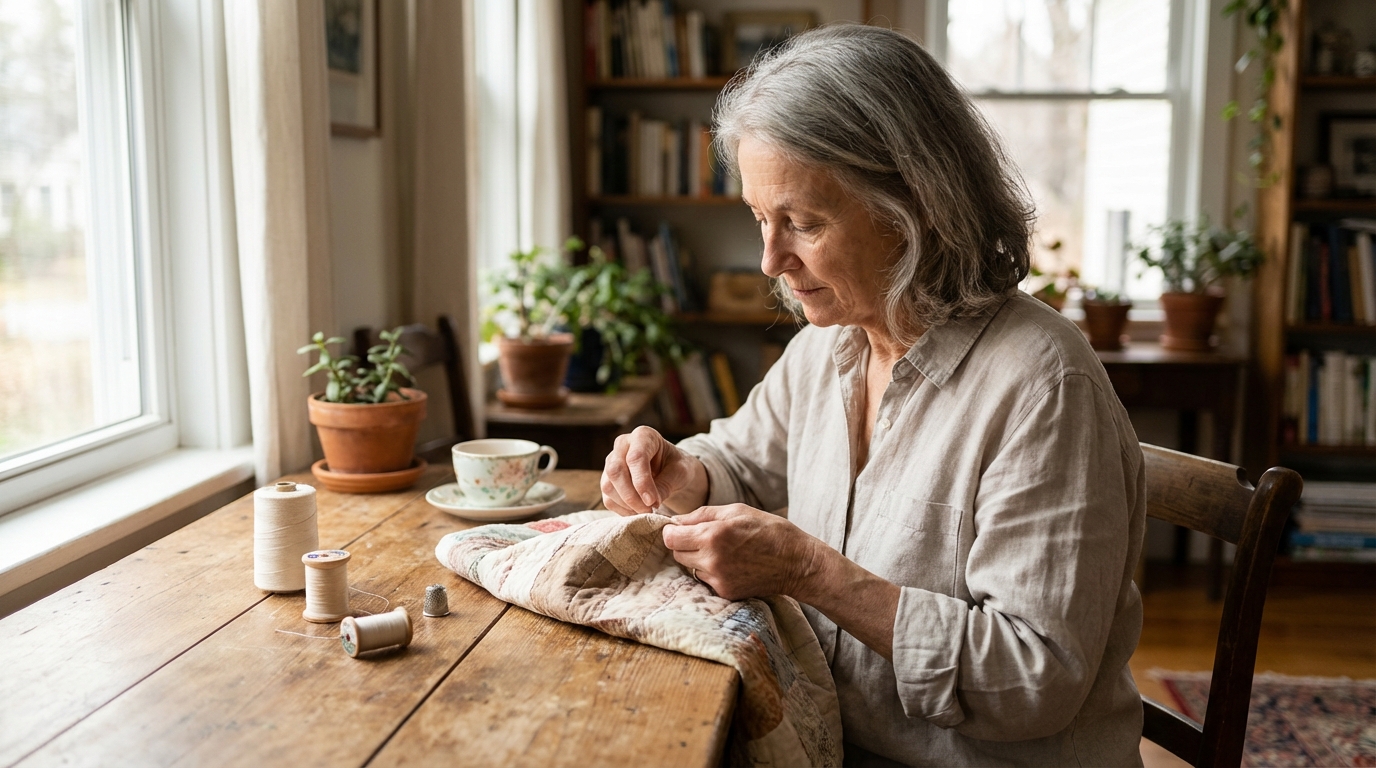
In many homes, making something by hand has never been about speed. It has been about care, attention, and the quiet satisfaction of doing a thing properly. Whether the task is sewing a button, shaping dough, sanding wood, or mending a cracked handle, the pace chosen often decides the outcome. Working slowly is not about wasting time. It is about giving the hands and mind enough room to do their work well.
A relaxed pace allows materials to respond naturally. It gives the maker time to notice small changes, adjust pressure, and correct mistakes before they grow. Craft quality improves not because more effort is added, but because the effort is better placed. This article explores how working slowly supports better results, with practical explanations rooted in everyday home crafts and routines.
The Relationship Between Pace and Attention
Attention is not a fixed resource. It expands and contracts depending on how a task is approached. When work is rushed, attention narrows. The mind jumps ahead to the finish instead of staying with the step at hand. This often leads to uneven results, missed details, and small errors that weaken the final piece.
Working slowly widens attention. It allows the eyes to follow the hands and the hands to respond to what they feel. In sewing, this might mean noticing when fabric begins to pull slightly off-grain. In woodworking, it could be sensing a change in resistance as a tool moves across the surface. These signals are easy to miss when speed becomes the goal.
Attention also settles the body. Muscles relax when movements are unhurried. Relaxed muscles move with more control. This is why slow stitching looks more even, careful sanding feels smoother, and measured stirring prevents scorching. The body knows how to do many tasks well, but it needs time to communicate its signals.
Why Materials Respond Better to Patience
Every material used in handcraft has its own limits and preferences. Fabric stretches, wood swells, clay softens, and metal resists. Working slowly gives time to respect these properties instead of fighting them.
Fabric, for example, shifts easily under tension. Pulling too quickly can distort seams and cause puckering that remains even after pressing. When fabric is guided gently, it settles into place and holds its shape. This is not only about neatness. It also affects durability. Seams sewn with steady, even motion tend to last longer because the stress is distributed evenly.
Wood responds strongly to pressure and direction. Rushing a cut can cause splintering or tear-out, especially along the grain. Moving a tool slowly allows the blade to slice rather than tear. It also gives time to feel when the tool needs sharpening or adjustment. This awareness protects both the material and the maker.
Clay and dough both carry moisture that reacts to warmth and pressure. Quick handling warms them too fast, changing their texture. Slow shaping keeps the material cool and workable. This results in smoother surfaces and fewer cracks once the piece rests or dries.
Small Mistakes Grow When Speed Leads
Most flaws in handcraft begin small. A stitch placed slightly off, a measurement read too quickly, a corner rounded more than intended. When work is rushed, these small issues stack on top of each other.
Working slowly creates natural checkpoints. Each step finishes cleanly before the next begins. This makes it easier to correct a problem while it is still simple. Removing a single misplaced stitch takes moments. Fixing an entire seam takes much longer and often weakens the fabric.
In careful work, mistakes become part of the learning process instead of a source of frustration. The slower pace allows time to understand why something went wrong. Was the fabric stretched? Was the tool dull? Was the surface uneven? These questions lead to better habits over time.
How Slowness Builds Consistency
Quality in craft is often measured by consistency. Even stitches, smooth finishes, steady shapes. Consistency comes from repeated actions performed with similar pressure, angle, and timing. Speed makes this difficult.
When movements are hurried, each repetition varies slightly. The hands do not have time to reset. This creates uneven results, especially in tasks that rely on rhythm, such as knitting, carving, or brushing on a finish.
A slower pace encourages a natural rhythm to develop. The hands fall into a pattern that can be repeated comfortably. Over time, this pattern becomes reliable. The maker no longer needs to correct each step because the steps align on their own.
Consistency also affects how a piece wears over time. An evenly finished surface resists dirt and moisture better. Balanced tension in stitching reduces strain on individual threads. These qualities may not be obvious at first glance, but they reveal themselves through use.
The Role of Breathing and Body Awareness
Working slowly often leads to calmer breathing. Calm breathing supports steady hands and clear judgment. This connection is easy to overlook, yet it influences every handcraft.
When breath becomes shallow, hands tend to grip more tightly. This increases fatigue and reduces control. A relaxed pace allows breathing to remain even. Shoulders drop, wrists loosen, and fingers move with greater precision.
Body awareness also improves. The maker notices when posture begins to strain or when eyes need rest. Pausing to adjust position prevents soreness and mistakes. These pauses are not interruptions. They are part of the work.
Time as a Tool, Not an Obstacle
Time is often treated as something to overcome. In handcraft, time is a tool that shapes the outcome. Allowing time for steps to unfold naturally often shortens the total effort because fewer corrections are needed.
For example, allowing glue or paste to set fully before moving to the next step prevents weak joints. Rushing this stage often leads to repairs later. Similarly, letting paint or finish dry between coats produces a stronger surface than trying to build coverage quickly.
Time also supports judgment. Stepping back between stages allows the maker to see the piece clearly. Fresh eyes catch uneven edges and imbalances that are invisible during continuous work.
Learning Happens in the Spaces Between Steps
Skill grows not only through action but through reflection. Working slowly creates space to think about what is happening. The maker begins to notice patterns.
Perhaps a certain stitch always tightens at the end. Perhaps a tool works better at a slightly different angle. These observations are easy to miss when rushing from start to finish.
Over time, this awareness builds quiet confidence. The hands begin to anticipate what the material needs. Adjustments happen naturally instead of through force. This is how simple crafts deepen into reliable skills.
Why Rushing Often Comes From Discomfort
Rushing is sometimes a response to discomfort. A task may feel unfamiliar or tedious, leading to the urge to finish quickly. Slowing down can make this discomfort more noticeable at first.
However, staying with the process often reveals that the discomfort fades as understanding grows. The task becomes easier because the maker learns how to work with it instead of against it.
This is especially true for repetitive tasks such as sanding, stitching, or shaping. At first, they may seem dull. With a slower pace, small improvements become visible. The surface smooths, the line straightens, the shape balances. These changes provide quiet satisfaction that replaces impatience.
Creating a Calm Working Environment
Working slowly is easier in a space that supports calm attention. This does not require special equipment. Small adjustments make a difference.
Good lighting reduces eye strain and helps catch details early. A clear work surface prevents tools from being misplaced, reducing interruptions. Comfortable seating supports steady posture.
Noise also affects pace. A quieter environment encourages focus. When background noise is unavoidable, choosing steady sounds rather than sudden interruptions helps maintain rhythm.
Keeping tools within reach reduces hurried movements. Reaching and searching break concentration and encourage rushing. A simple habit of returning tools to their place supports a smoother pace.
The Value of Starting Before Feeling Ready
Working slowly does not mean waiting for perfect conditions. It means beginning with care. Starting before feeling fully prepared often leads to unnecessary speed as the maker tries to catch up.
Taking a few moments to prepare materials, review steps, and adjust the workspace saves time later. This preparation sets the tone. The work begins calmly instead of reactively.
Preparation also includes understanding the limits of the day. Fatigue reduces patience. Choosing a task that fits available energy prevents rushing. Small tasks completed well build more satisfaction than large tasks completed poorly.
How Slowness Supports Problem Solving
Problems are part of handcraft. Materials behave unexpectedly. Measurements change. Tools slip. A slow pace allows space to respond thoughtfully.
Instead of forcing a solution, the maker can pause and consider options. Is there a way to adjust the design? Can the material be trimmed, reinforced, or repurposed? These decisions often lead to creative solutions that improve the final piece.
Rushing tends to narrow choices. The quickest fix is chosen, even if it weakens the result. Slowness keeps options open.
Teaching the Hands Through Repetition
Hands learn through repetition, but only when repetition is attentive. Fast repetition teaches speed, not accuracy. Slow repetition teaches control.
For example, practicing a stitch slowly allows the fingers to learn the correct tension and spacing. Once this pattern is learned, speed increases naturally without loss of quality. The same applies to cutting, shaping, and finishing.
This approach prevents the need to unlearn bad habits. Skills built slowly rest on a stronger foundation.
When Speed Has a Place
There are moments when speed is appropriate. Certain stages benefit from continuous motion once control is established. For example, long straight seams or broad brush strokes can be done efficiently after careful setup.
The key difference is that speed follows understanding, not the other way around. When the process is clear and the hands are confident, moving a bit faster does not harm quality. Without this foundation, speed creates problems.
Knowing when to slow down and when to move steadily comes from experience built at a calm pace.
Patience as a Form of Care
Patience in handcraft is a form of care. It shows respect for the materials, the tools, and the time invested. This care is visible in the finished piece.
Items made slowly often feel better to use. Handles fit the hand. Edges feel smooth. Joints hold firm. These qualities contribute to comfort and longevity.
Care also extends to the maker. Working at a gentle pace reduces strain and fatigue. This allows crafting to remain a sustaining activity rather than a draining one.
Building Trust in the Process
Trust develops when results consistently match effort. Working slowly builds this trust. Each completed piece reinforces the connection between patience and quality.
Over time, the urge to rush fades. The maker knows that taking time leads to better outcomes. This confidence carries into other areas of home life, encouraging thoughtful routines and steady habits.
Trust in the process allows enjoyment of the work itself, not just the finished object. The hands move with purpose, and the mind stays present.
Everyday Examples of Slowness at Work
Consider mending a tear in fabric. A rushed repair might hold for a short time, but careful stitching that follows the weave lasts longer. The difference lies in observing the fabric and matching the stitch to its structure.
In sharpening a knife, moving slowly across the stone allows the edge to form evenly. Rushing creates uneven angles that dull quickly. The time spent sharpening carefully saves time later in use.
When shaping a piece of wood, taking light passes instead of deep cuts reduces the risk of splitting. Each pass informs the next, guiding the final shape.
These examples show how slowness improves both the process and the result.
The Quiet Satisfaction of Finished Work
There is a particular satisfaction in finishing a piece made with care. It comes from knowing that each step was given attention. This satisfaction is steady and lasting.
Fast results may bring brief relief, but carefully made items continue to serve well over time. They fit into daily routines without causing trouble. They age gracefully because their foundations are sound.
This sense of reliability supports a home where objects are used, repaired, and valued rather than replaced.
Letting Craft Fit Into Daily Life
Working slowly allows craft to fit naturally into daily routines. Tasks can be picked up and set down without stress. There is no pressure to finish everything at once.
This flexibility makes it easier to maintain regular practice. Small amounts of steady work add up. Over time, many useful and beautiful items are created without disruption.
Craft becomes a companion to daily life rather than a separate project requiring special conditions.
Respecting Natural Limits
Every person has limits of energy and focus. Working slowly respects these limits. It allows rest before exhaustion sets in.
Stopping at a natural break point preserves the quality of work. Fatigue often leads to mistakes in the final stages. Ending early protects the piece and makes returning to it more pleasant.
Listening to these signals is part of skilled work. It prevents frustration and supports long-term practice.
Passing Down Skills Through Example
Skills are often learned by watching. A calm, unhurried approach teaches more than instructions alone. It shows how to hold tools, how to pause, and how to correct mistakes gently.
This way of working creates an environment where learning feels safe. Errors are seen as part of the process, not failures.
The example of patience leaves a lasting impression, shaping how others approach their own work.
The Enduring Value of Taking Time
Working slowly improves craft quality because it aligns effort with understanding. It allows materials to behave as they should and hands to respond with care.
This approach builds reliable skills, durable results, and quiet confidence. It fits naturally into home life, supporting routines based on patience and common sense.
In a world that often pushes for faster results, choosing a slower pace preserves the integrity of both the work and the worker.